


Weekly insights about property in France!
Subscribe and don't miss an issue!
France’s Property Market: A Recovery, But Not a Runaway Train
Volume XXIV, Issue 18

By Jay Corless, Edited by Adrian Leeds
There is a sentence in the latest “Note de conjoncture immobilière” from the Notaires de France that says almost everything we need to know about the French property market right now: “Reprise sans excès et sous contraintes.” (A recovery without excess, and under constraints.)
(Download the PDF Conjuncture [in French])
That is France in a nutshell.
After the very difficult years of 2022, 2023, and part of 2024, the market is clearly moving again. According to the April 2026 report from the Notaires de France, the number of existing-home sales reached 958,000 transactions over the 12 months ending in February 2026, an annual increase of about 11 percent. That confirms that the market has been gradually emerging from the real estate slowdown that began in 2022.
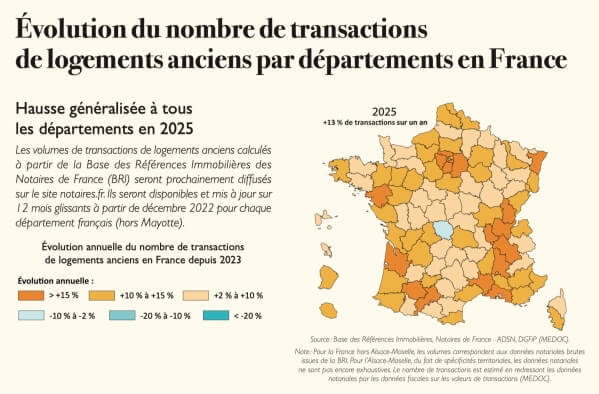
But this is not a speculative boom. The Notaires are careful to point out that, over a longer period, the rebound remains modest. Between 2023 and 2025, transaction volume increased by only about 2 percent, suggesting not a dramatic catch-up, but rather a return toward a more normal rhythm. They describe the current level as approaching an equilibrium zone of around 975,000 transactions—a market of real users, not feverish speculators.
For buyers, that distinction matters.
We are not in the frantic post-COVID market where buyers had to leap blindly at every opportunity, nor are we in a frozen market where sellers refuse to negotiate and buyers cannot borrow. We are in something more balanced, more French, and perhaps more sustainable: a market in which people are buying because they need or want a home, because they believe in the long-term security of stone and mortar, and because real estate in France remains what it has always been—a form of patrimony.
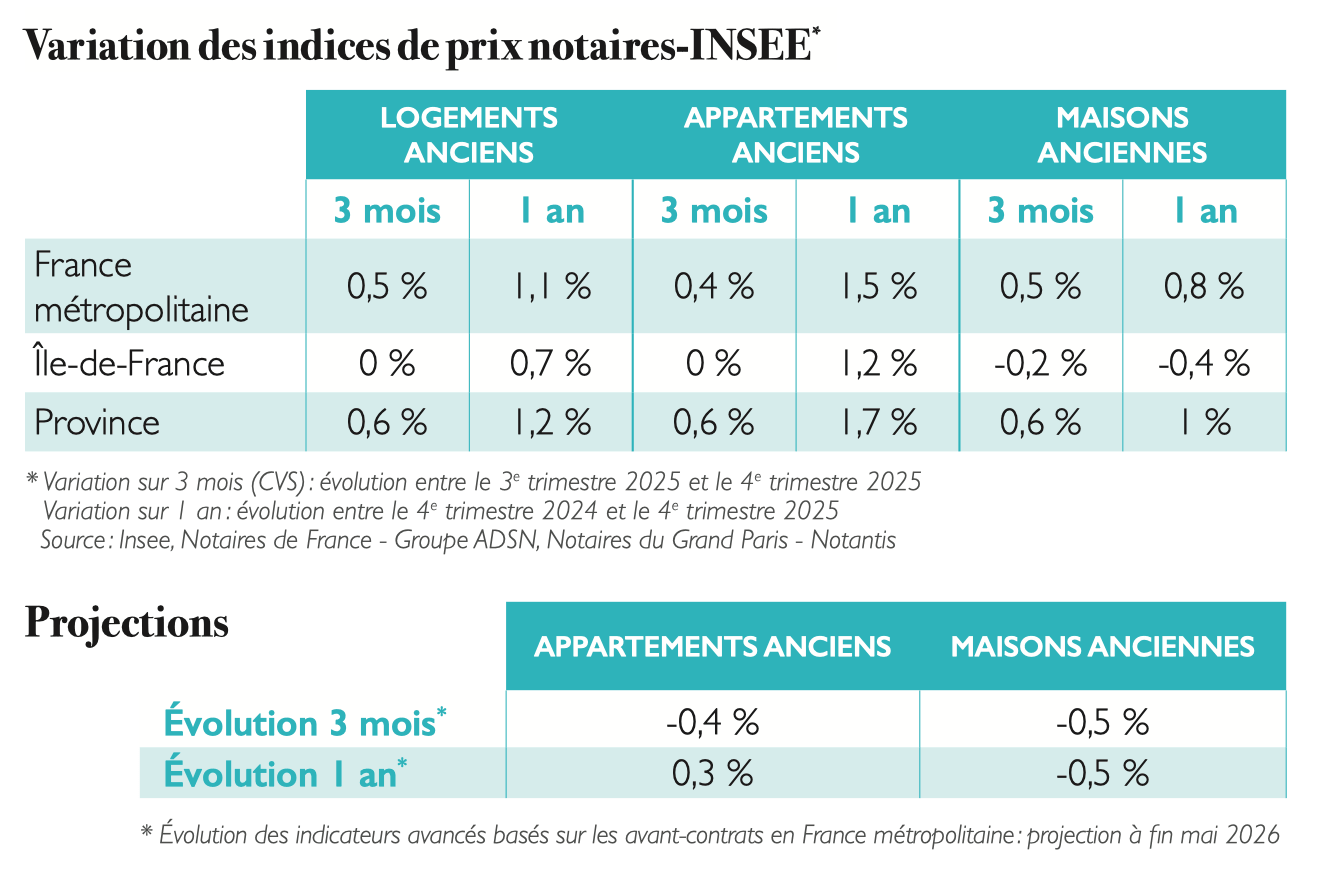
Prices tell the same story. In metropolitan France, prices of existing homes rose 1.1 percent year-on-year in the fourth quarter of 2025, the fourth consecutive quarterly increase. Apartment prices rose 1.5 percent, while house prices rose 0.8 percent. In the provinces, prices increased by 1.2 percent, with apartments again outperforming houses.
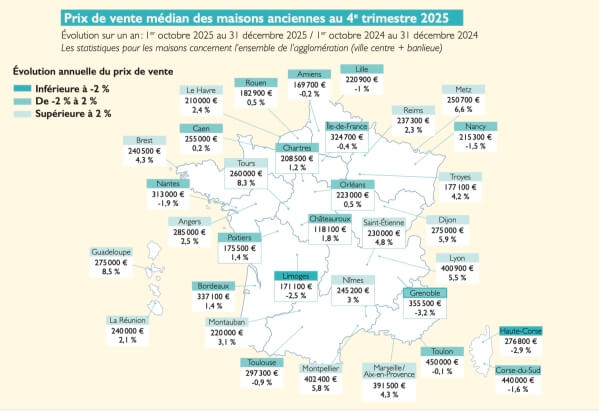
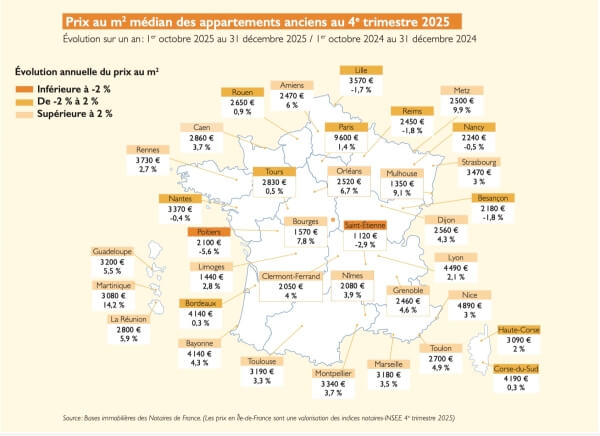
In Île-de-France, the annual increase was more modest at 0.7 percent, but here, too, apartments drove the market. Apartment prices rose 1.2 percent across the region, while house prices continued to fall slightly, down 0.4 percent. Paris apartment prices rose 1.4 percent year-on-year, after a 1.9 percent increase in the previous quarter.
That is hardly explosive growth, but it is meaningful. Paris, in particular, appears to have found a floor after several years of correction. For those waiting for a major collapse in Paris prices, the moment may already have passed. Paris rarely becomes “cheap.” It briefly becomes less expensive, then quietly reasserts itself.
The Notaires’ forward-looking indicators, based on preliminary sales agreements, suggest that prices should remain broadly stable through the spring. By the end of May 2026, they project a slight annual change of -0.2 percent for existing homes in metropolitan France, with apartments up 0.3 percent and houses down 0.5 percent. In other words, the market is not racing upward, but it is no longer falling apart.
And that is actually good news.
A sudden price surge would be dangerous in the current environment. The recovery depends heavily on buyers’ purchasing power, and purchasing power depends heavily on financing. The report notes that after some relief in 2024 and 2025, interest rates ticked up again in early 2026, reaching around 3.3 percent over 20 years in April. Banque de France data cited in the report show new housing credit production of €11.6 billion in February 2026, up from €10.9 billion in January, and an average rate on new home loans, excluding renegotiations, rising to 3.23 percent.
This is the key constraint. Banks are lending again, but the market remains very sensitive to rates. A further increase would quickly reduce household solvency, especially for first-time buyers. This is why the current balance is so delicate: prices must remain realistic enough for buyers to buy, while sellers must accept that 2021 is not coming back.
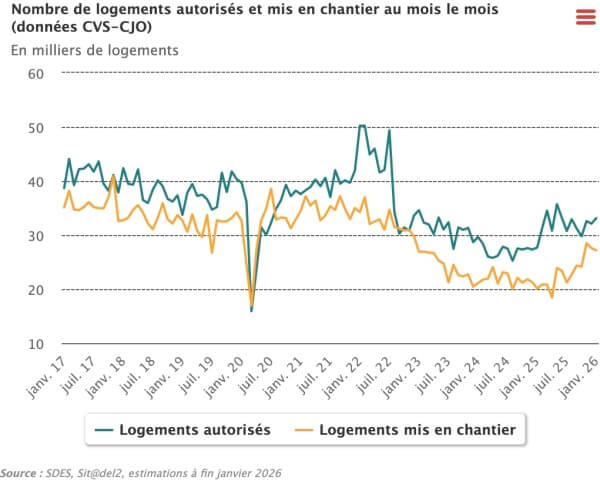
The new-build market remains another weak point. The report notes that housing authorizations rose 3.3 percent in February 2026 compared with January, but housing starts fell 1.6 percent. New-home sales reservations were up 12 percent year-on-year, but the overall level of new construction remains low and constrained.
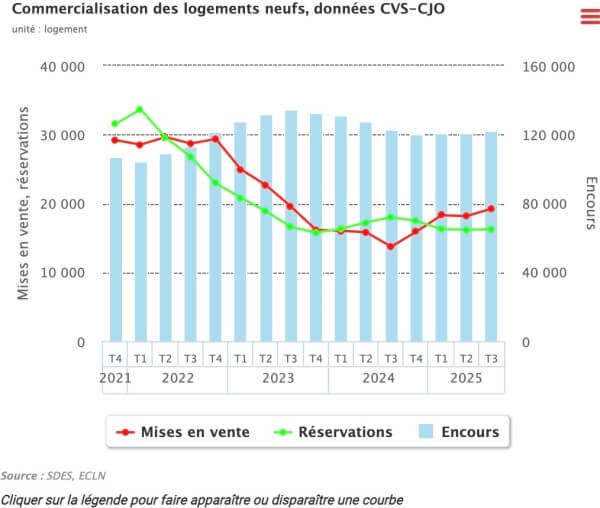
This matters because when the new-build sector fails to produce enough housing, pressure remains on the existing housing stock. In France, and especially in Paris, we already have a structural shortage of desirable, well-located, well-maintained housing. If new supply remains limited, the existing market becomes even more important—and competition for quality properties can remain strong even in a “stable” market.
The regional picture is also telling. The report shows that 2025 brought a broad-based rebound in transaction volume across French departments, with old-home sales up 13 percent year-on-year nationally. Île-de-France stood out, with sales volumes rising at least 15 percent in every department except Paris, where the increase was still a solid 12 percent. The Hauts-de-Seine and Seine-et-Marne recorded increases of around 20 percent.
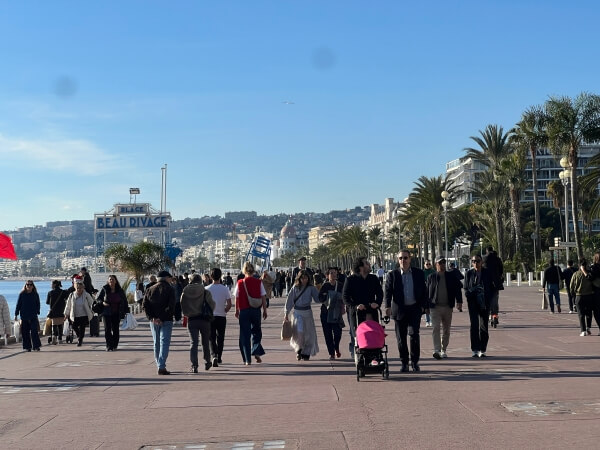
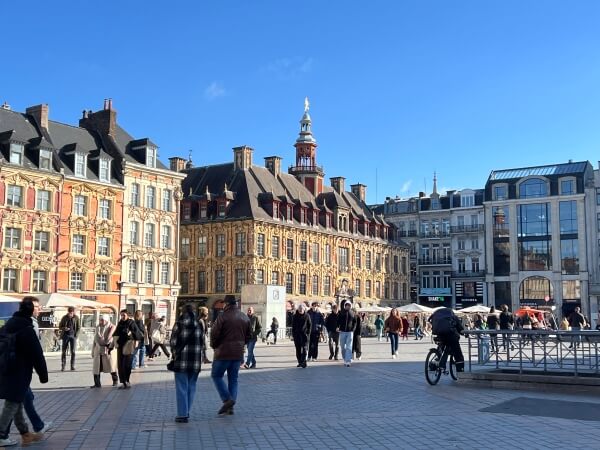
This does not mean every local market is behaving the same way. France is never one market. Paris is not the Dordogne. Nice is not Limoges. Bordeaux is not Lille. Each has its own rhythm, buyer profile, and supply problem. But the national direction is clear: after the contraction, activity has returned.
For foreign buyers, this is a moment to pay attention.
The window of maximum hesitation may be closing. The market is not overheated, prices are not running away, and sellers are often more realistic than they were a few years ago. At the same time, the data no longer supports the idea that buyers can wait indefinitely for dramatic discounts. The better properties, especially in Paris and other high-demand cities, are moving again.
That means strategy matters. Buyers should be ready before they shop: financing pre-approved if borrowing, proof of funds organized if buying in cash, and a clear understanding of notarial fees, taxes, diagnostics, and the timing of the French purchase process. A good property in France is not purchased in a panic, nor out of hesitation.
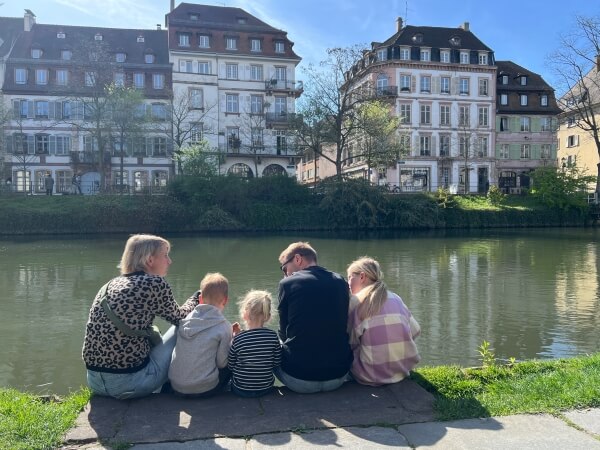
The French market is convalescing, as the Notaires put it. It is recovering, but still fragile. It depends on interest rates, household confidence, inflation, energy costs, and public policy. But beneath those uncertainties lies the constant that has always defined French real estate: the enduring belief that property is not merely an investment, but a form of security, heritage, and belonging.
And that is why, even after a crisis, the market comes back.

For those dreaming of a place in France, the message is simple: this is not a market to fear. It is a market to understand. It rewards preparation, realism, and good advice. And for those who are ready, France is once again opening the door.
And now we have a specialist in Regional France to work with you on finding property anywhere in France that you heart desires. Stay tuned for more information about this and our upcoming webinar on May 21st when we will be discussing the best cities in France in which to live and why!
Sources:
Notaires de France, Note de conjoncture immobilière n°71, April 2026
Banque de France, Crédit aux particuliers, February 2026 data
SDES, Construction de logements, February 2026 data
SDES, Commercialisation des logements neufs, Q4 2025 data
A bientôt,
 Adrian Leeds
The Adrian Leeds Group®
P.S. We’re the folks who can make your French property investment dream come true, while protecting you from making serious mistakes. Review the services we offer to help you find the perfect property in France!

Let Us create a custom strategy for you
You can live or invest in France-now.
Property for sale
what's happening
Check out upcoming events, conferences, or webinars. Join us!
GET FINANCING
Learn about French Property Loan Information.

Read & Subscribe
Dive into more by reading the Adrian Leeds Nouvellettre®
Better yet, subscribe to both and get the updates delivered to your inbox.

Get started with your dream of owning property in Paris.
Join us on Youtube
Dive into more on how to live, invest & escape to France
Be sure to subscribe!
To read more, click the links below.