Weekly insights about property in France!
Subscribe and don't miss an issue!
Learn to Speak Up…in French!
Volume XXIV, Issue 26
By Jay Corless and Adrian Leeds
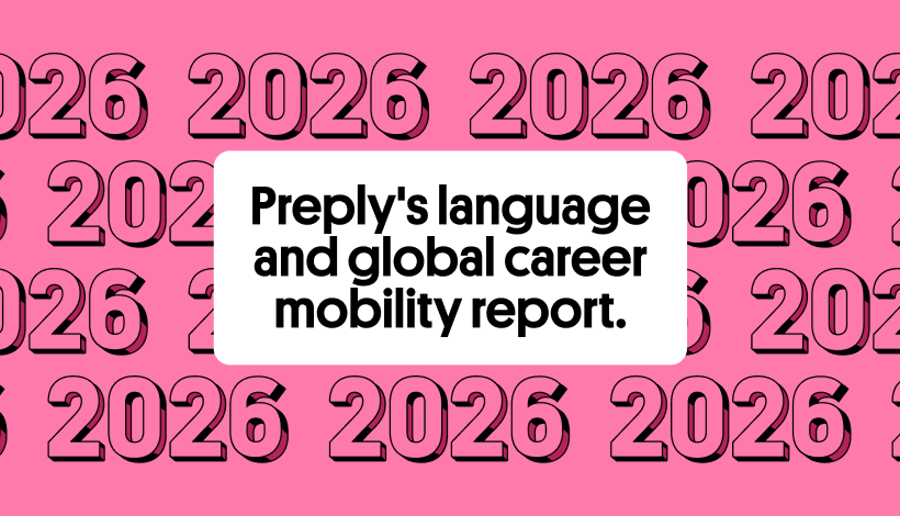
According to Preply’s 2026 Language and Global Career Mobility Report, 81 percent of people open to relocation say they are more likely to move abroad now than they were just two years ago. Among Americans, that number rises to 84 percent.
That’s not a passing daydream. That’s a movement.
And the reasons are not hard to understand. The top two drivers for moving abroad are quality of life and cost of living. In other words, people are not simply looking for a change of scenery.
The political climate in the U.S. has added a whole new dimension to the cause. They are looking for a better and more fulfilling way to live.
That may mean more affordable housing, better healthcare, safer cities, more walkable neighborhoods, a slower rhythm, richer culture, or simply the chance to live each day with a little more pleasure and a little less pressure.
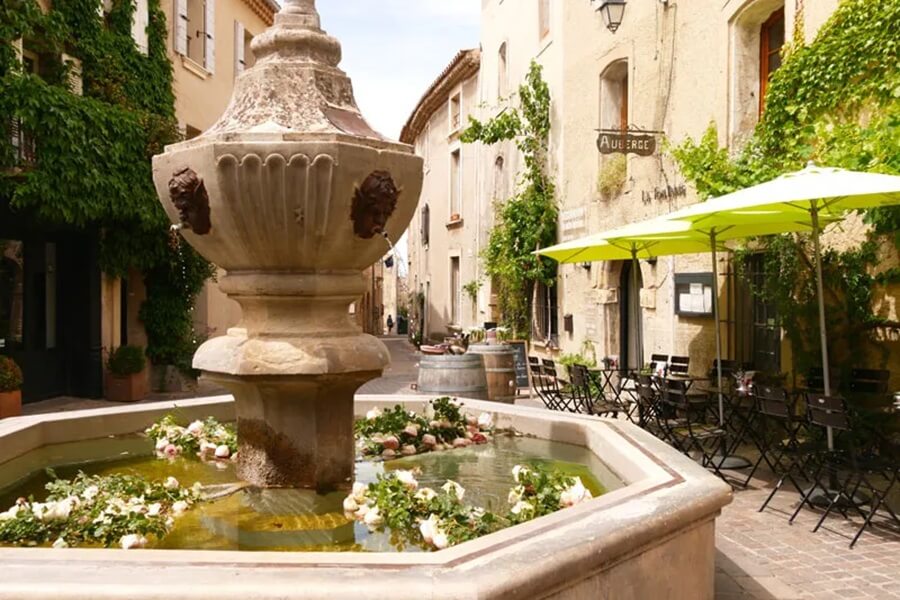
We, of course, chose France.
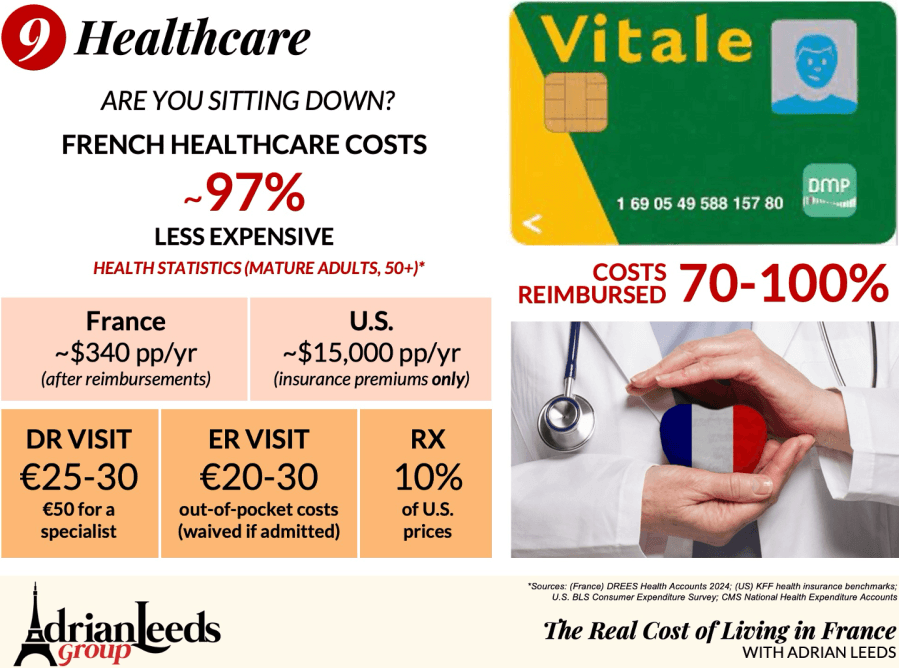
Why France? Because France still offers so much of what people are seeking: beautiful cities and villages, excellent healthcare, deep culture, extraordinary food, strong and efficient public transportation, and a way of life that still makes room for the market, the café, the long lunch, the museum visit, the Sunday stroll, and the pleasure of simply being where you are.
On top of that, no other country in Europe can claim as good a tax treaty with the U.S., such outstanding healthcare (at nominal cost), high quality free education and a cultural life beyond belief.
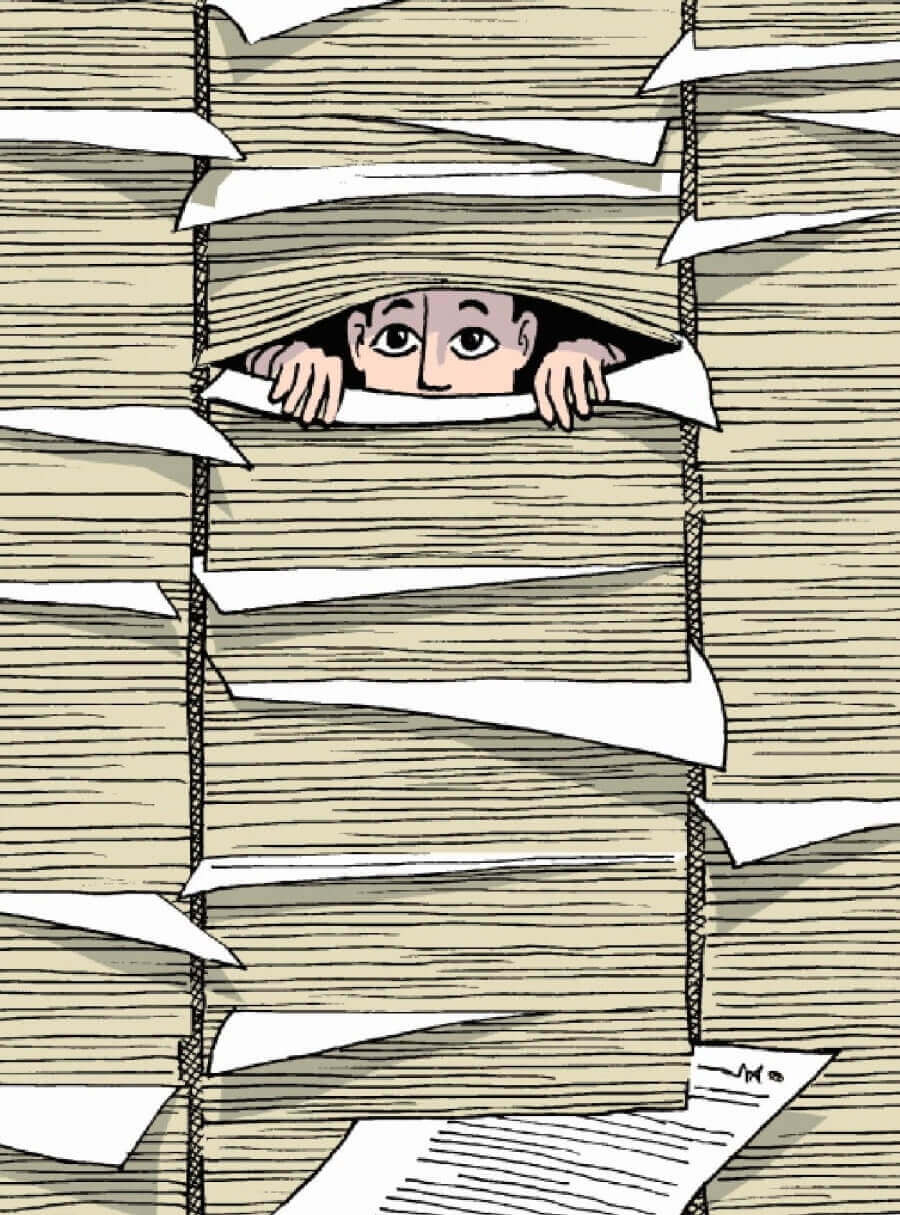
But, France is not perfect. No country is. And anyone who has tried to open a bank account, signed a lease, filed a tax declaration, dealt with French administration, or attended a “copropriété” (homeowner) meeting knows that life here comes with its own learning curve.
But that is also part of the point.
France asks you to participate. It asks you to understand its systems, its manners, its rituals, its rhythms, and yes—its language.
You can visit France with very little French. You can spend a week in Paris, order dinner, visit museums, take taxis, and manage quite nicely with English. In Paris, especially, English can carry you surprisingly far.
But living here is different.
Living here means understanding the letter from the syndic. It means speaking with the plumber. It means calling the electric company, reading a lease, talking to the doctor or pharmacist, asking the neighbor about the building code, understanding a tax notice, greeting the baker properly, and defending your place in line when someone tries to pretend they were there first.
That is not tourism. That is life in France.
And life in France rewards participation.
According to the same Preply report, 92 percent of respondents say knowing the local language is critical for success abroad. And 75 percent say that acquiring a new language has had a profound impact on their confidence.
That rings very true.
Learning French is not simply about grammar, vocabulary, or passing an exam. It is about confidence. It is about independence. It is about being able to ask a question, solve a problem, understand a nuance, or share a small joke with someone who might otherwise remain a stranger. (Although our jokes in French don’t have the same thunder as in English.)
It changes the way you walk into a room. It changes the way you ask for help. It changes the way France responds to you.
Your French does not need to be perfect. Far from it. The French will forgive many grammatical sins if they sense goodwill, effort, and respect. A clumsy sentence delivered with sincerity is often more powerful than silence.
A simple bonjour, a heartfelt merci, or a brave je suis désolé, je suis en train d’apprendre can open doors.
The goal is not to sound like Molière. The goal is to engage.
For those thinking seriously about moving to France, this is where the dream becomes practical. Finding the right apartment or buying the right property is only part of the journey. The bigger question is: what kind of life are you trying to build?
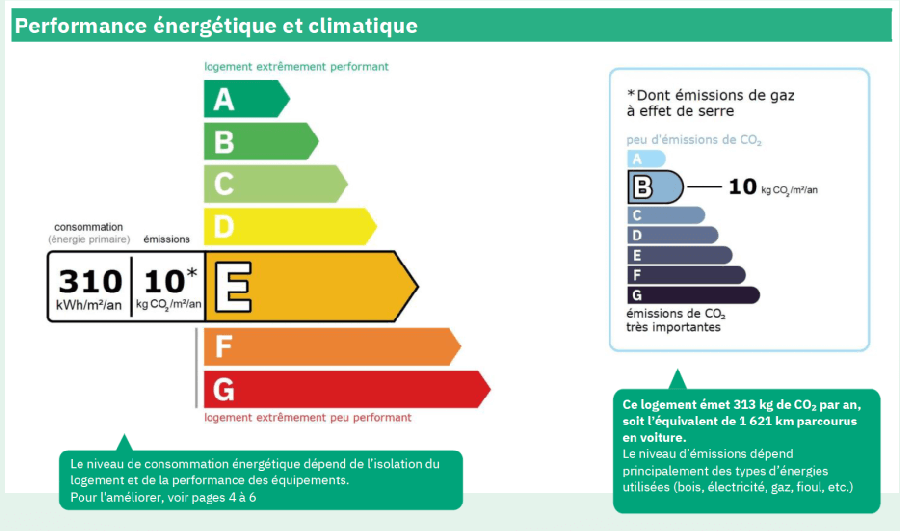
The apartment matters, of course. We spend plenty of time talking about elevators, floor levels, DPE ratings, heating systems, agency fees, furnished versus unfurnished leases, and whether the second bedroom is truly a bedroom or simply a poetic interpretation of one.
But underneath every property search is a deeper desire: to belong somewhere.
Language is one of the first keys to that belonging.
That is why learning French before you arrive—or as soon as you decide France may be in your future—is one of the best investments you can make in your new life.
It helps you read the signs, literally and figuratively. It helps you understand the rules, written and unwritten. It helps you participate in the country you have chosen, rather than simply observe it from the outside.
And the good news is that there are many ways to begin.
ADRIAN’S STORY
Before I came to France, I had the (totally unrealistic) idea that I’d take an intensive course and be fluent in three months. What did I know? Clearly nothing!
First, I certainly didn’t want to hole myself up in a classroom many hours day learning French while missing life in Paris. Then, I quickly learned that being fluent in such a short amount of time would be near to impossible, even if I had taken that intensive course.
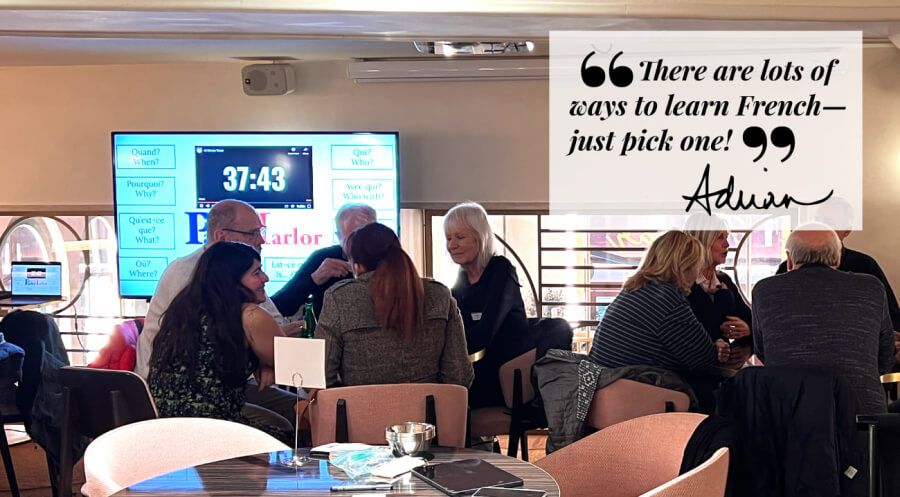
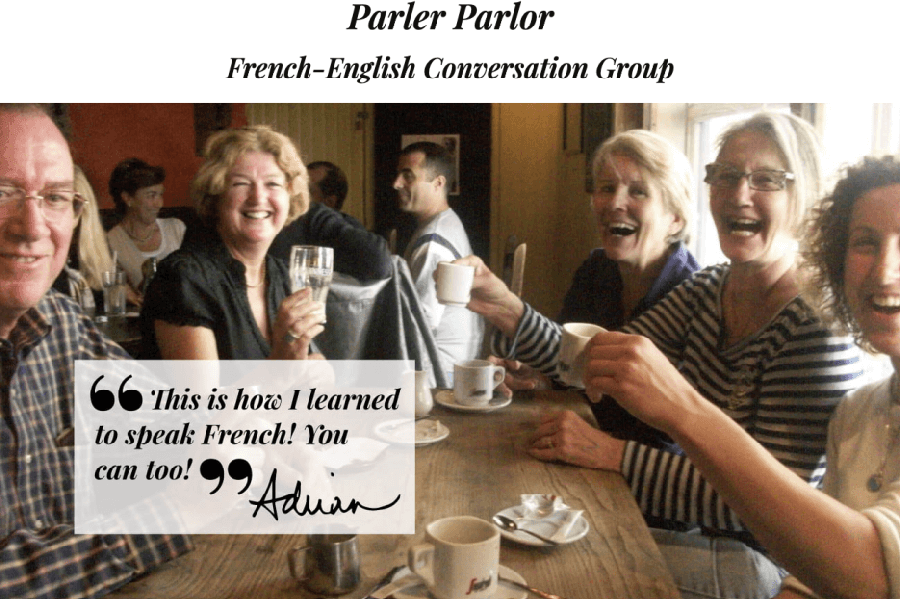
So, what did I do? I participated in a French-English conversation group, then later started my own group. With a partner from Berlitz, we called it Parler Parlor and ran it for 20 years, three times a week!
It was two years before I could say just about anything in French beyond un verre de vin, s’il vous plaît. Those three months in my head to be fluent became three years.
At the three-year mark, I realized it might be 10 years before I’d feel comfortable in French and after 10 years, I calculated 20. Now at 30+ years, I can finally speak French, but certainly not as well as I’d like, and never learned to read or write French. If it weren’t for Google Translate, DEEPL and now Chat GPT, I’d be at a total loss.
Most importantly, I can communicate in French. And yes, it made all the difference in the world. Being charming is what gets you everything you want in France, not your money, so being able to joke in French is essential. And it doesn’t have to come with a perfect accent or even correct grammar—although be prepared to be corrected, or reprimanded for making mistakes, more for cultural than grammatical errors.
We have good news for you. The Adrian Leeds Group has partnered with several trusted French-learning resources to help you prepare, whether you are still abroad, have just arrived, or are already living here and ready to go deeper.
ALLIANCE FRANÇAISE
For structured learning, the Alliance Française remains a classic, with chapters around the world and online options. We work very closely with their federation in the U.S. that sponsors about 100 Alliances Françaises across the nation.
Alliance Française is one of the world’s oldest and most influential cultural and language organizations dedicated to promoting the French language and French-speaking cultures. It was founded in 1883 in Paris by a group of prominent French intellectuals and public figures, including Louis Pasteur, Jules Verne, and Ferdinand de Lesseps.
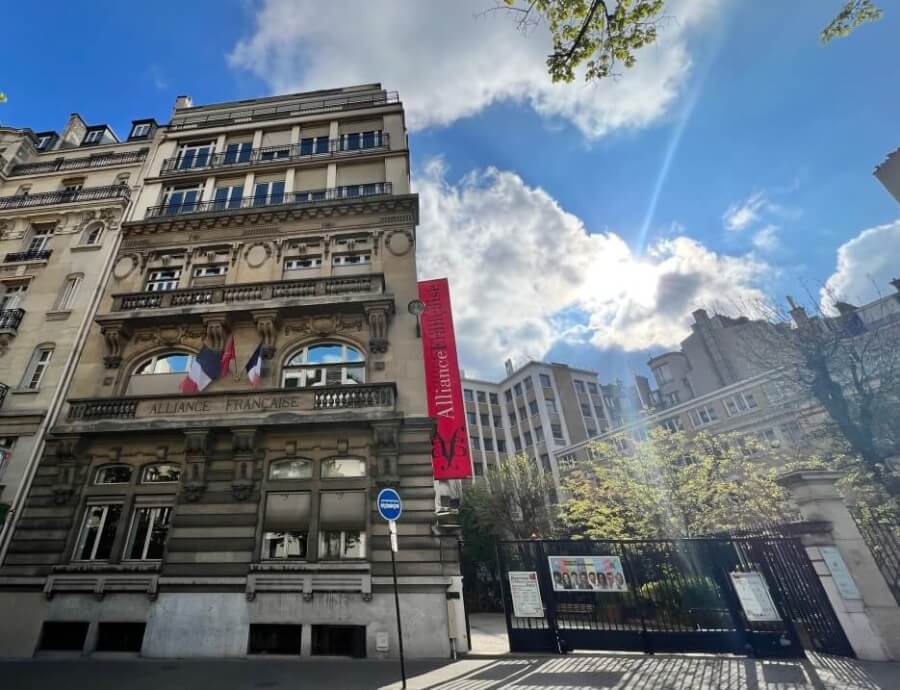
Its original mission was to promote the French language abroad, foster cultural exchange between France and other countries, strengthen ties between France and the rest of the world through education and culture. What began as a Paris-based initiative quickly expanded internationally. Today, the Alliance Française network includes more than 800 centers in over 130 countries, making it one of the largest cultural networks in the world.
Start NOW with the AF! It’s the best way to get your foundation before you arrive.
DAMON DOES IT
For a lively approach, Damon Dominique offers French courses designed to help you sound like yourself rather than like a textbook. “Everything I wish I learned in French class” has become one of the most popular online courses, particularly for Americans. Damon teaches French the way people actually use it rather than the way it’s often taught in school. His course is available through his website.
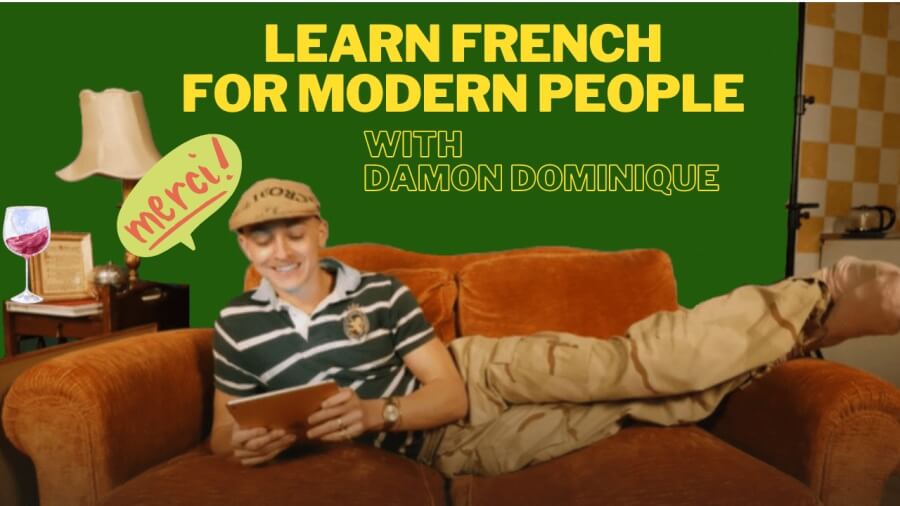
Damon is an American YouTuber, travel personality, and longtime Paris resident who learned French as an adult himself. That gives him an advantage many native French teachers don’t have: he understands exactly why English speakers struggle with things like tu/vous, y/en, object pronouns, and French sentence structure.
His approach aligns remarkably well with our philosophy that helping Americans understand not just France itself, but the cultural gaps between American expectations and French realities. It’s what he does and it’s what we do.
Try it, you’ll like it.
FULL IMMERSION
Okay, so you really want to get ahead, and fast? For those ready for a true immersion experience, the Institut de Français in Villefranche-sur-Mer—and now with a location in Nice—offers intensive French programs in one of the most beautiful corners of the Riviera.

It has one of the strongest reputations in the world for intensive French immersion. The school was founded in 1926 and developed the “direct method” long before immersion became fashionable. Students are expected to speak French from the first day, even as beginners.
Many diplomats, executives, military personnel, and expatriates have studied there over the decades. The pedagogical director, Frédéric Latty, and I have decided that we have more people in common than any two humans on the planet because so many of our clients are his students.
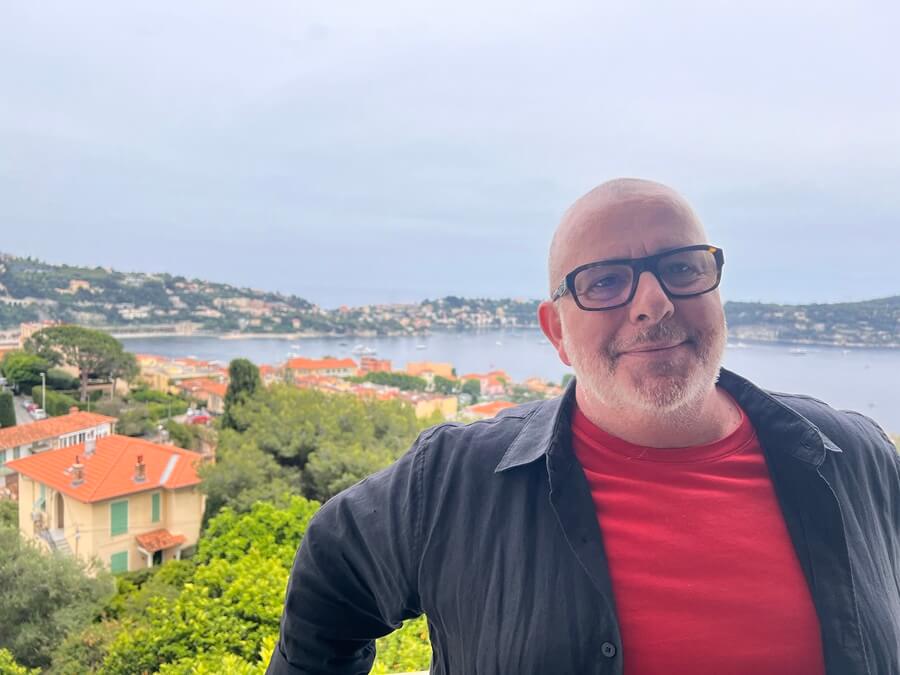
Frédéric Latty
But, it’s not for everyone. It’s not inexpensive, the pace can be exhausting. Some people find the immersion approach stressful. It works best if you’re willing to be uncomfortable and make mistakes constantly! But IT DOES WORK.
PARLER POWER
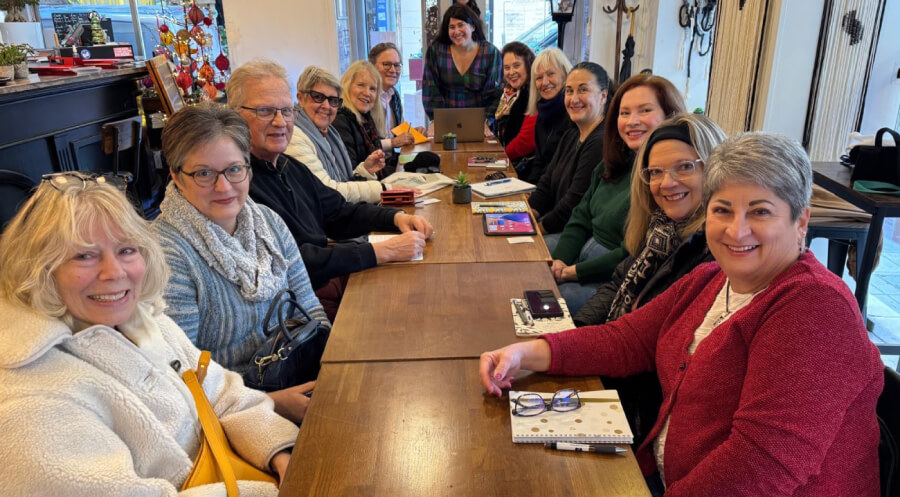
Our own Katie Friedland runs a group called “Parler Power” in Nice! Katie, is not only one of our top Search Consultants, she’s also a certified French teacher (Massachusetts), and naturalized American-French citizen. She resurrected Parler Parlor then took it a big step further.
What makes Parler Power different is that Katie is teaching people who are often already living in France and frustrated that years of lessons haven’t translated into real-life confidence. That’s actually a very common problem among long-term expatriates. They may know a lot of grammar but still hesitate when calling a plumber, speaking at a copropriété meeting, chatting with neighbors, handling a banking issue, or even participating naturally in French social situations.
It’s the opposite of my problem. I have no trouble calling the plumber, but reading a book in French…forget it! Or watching a French sitcom? Impossible.
The point is that everyone learns differently. Some need grammar. Some need conversation. Some need immersion. Some need confidence. Some simply need to survive their first trip to the “boulangerie” without panic.
The important thing is to start.
Because moving to France is not a single event, it is a transition. And the people who thrive are usually not the ones who arrive knowing everything. They are the ones who arrive ready to learn.
They learn the market. They learn the paperwork. They learn the customs. They learn the language. And slowly, France begins to feel less intimidating and much more generous.
So, if France is calling you, answer in French—even if it’s imperfect.
Say bonjour. Say merci. Say, “I’m learning.” Say it with a smile. Say it again tomorrow.
The move begins long before the moving truck arrives.
And perhaps the first property you truly acquire in France is not an apartment at all, but a voice.
Learn more about our French-learning partners at Adrian Leeds Group—Learn French.
One last important note: there’s some great and helpful reading that takes you beyond language.
READ THEM BOTH:
• Demystifying the French: How to Love Them, and Make Them Love You (What You’ve Heard About Them is not Entirely True…) by Janet Hulstrand
Janet Hulstrand

• The Bonjour Effect: The Secret Codes of French Conversation Revealed by Julie Barlow and Jean-Benoit Nadeau

A bientôt,
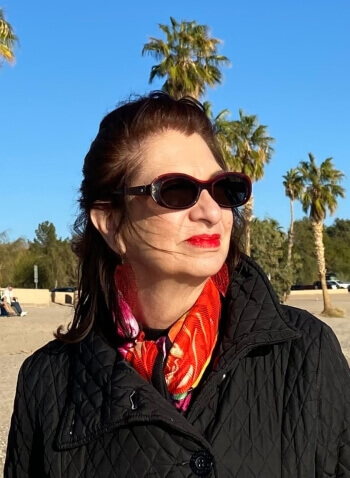 Adrian Leeds
The Adrian Leeds Group®
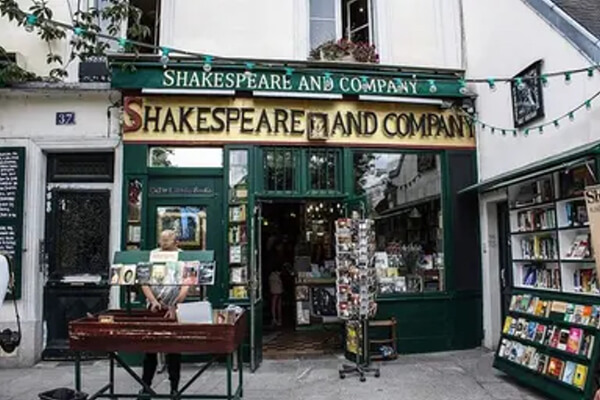 P.S. To read a recent interesting and comprehensive article titled “The Yanks Are Back!” by Edward Girardet in the Global Geneva, visit the Global Geneva website.
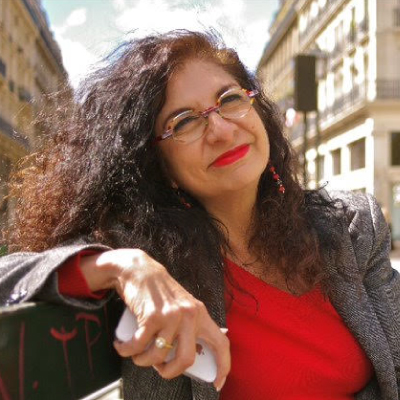
Let Us create a custom strategy for you
You can live or invest in France-now.
Property for sale
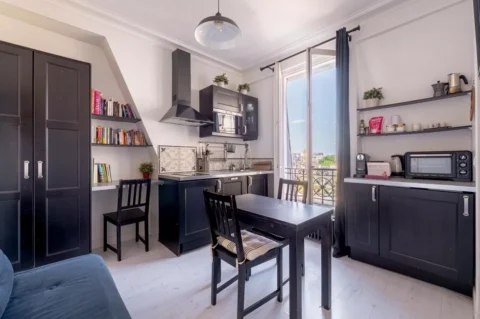
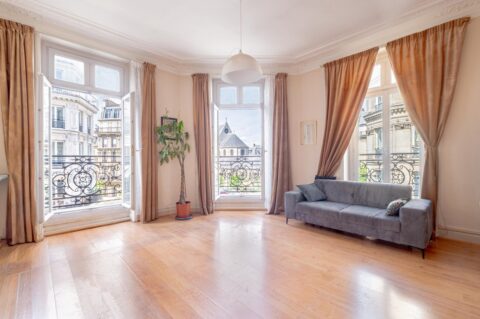
what's happening
Check out upcoming events, conferences, or webinars. Join us!
GET FINANCING
Learn about French Property Loan Information.
Read & Subscribe
Dive into more by reading the Adrian Leeds Nouvellettre®
Better yet, subscribe to both and get the updates delivered to your inbox.

Get started with your dream of owning property in Paris.
Join us on Youtube
Dive into more on how to live, invest & escape to France
Be sure to subscribe!
To read more, click the links below.