


Weekly insights about property in France!
Subscribe and don't miss an issue!
The New Property Premium in France: Staying Cool
Volume XXIV, Issue 33
By Jay Corless, edited by Adrian Leeds
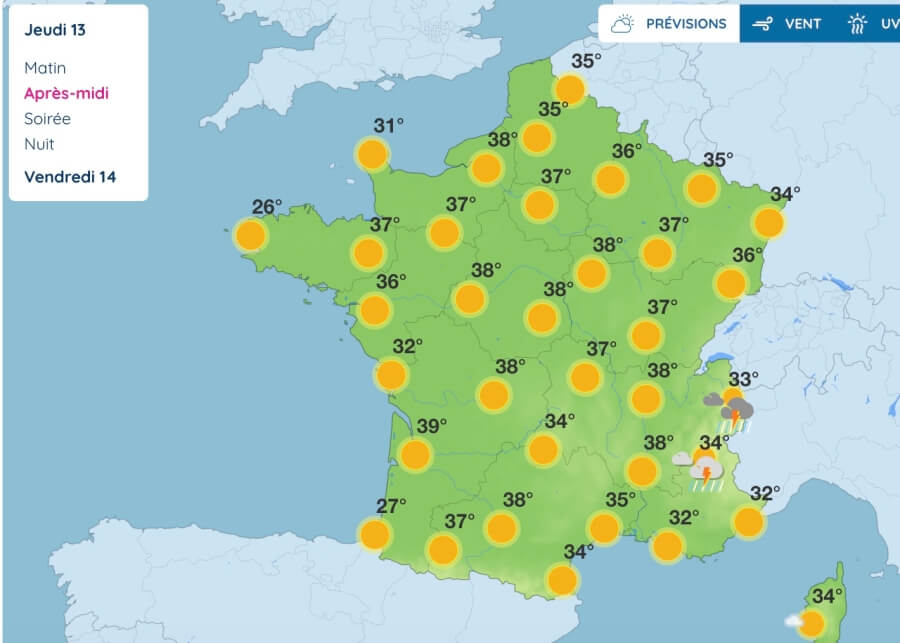
France is once again baking. Météo-France has extended its orange heatwave warning to 78 départments for yesterday, August 12, with temperatures expected to reach 95°F to 102°F across large parts of the country, and Paris forecast to reach about 91°F, while temperatures elsewhere will climb even higher.
After several bouts of extreme heat this summer, it is becoming increasingly difficult to treat these temperatures as anything other than unusual events. They are beginning to change the way we live in our homes and, perhaps more importantly for those of us in real estate, the way we should choose them.
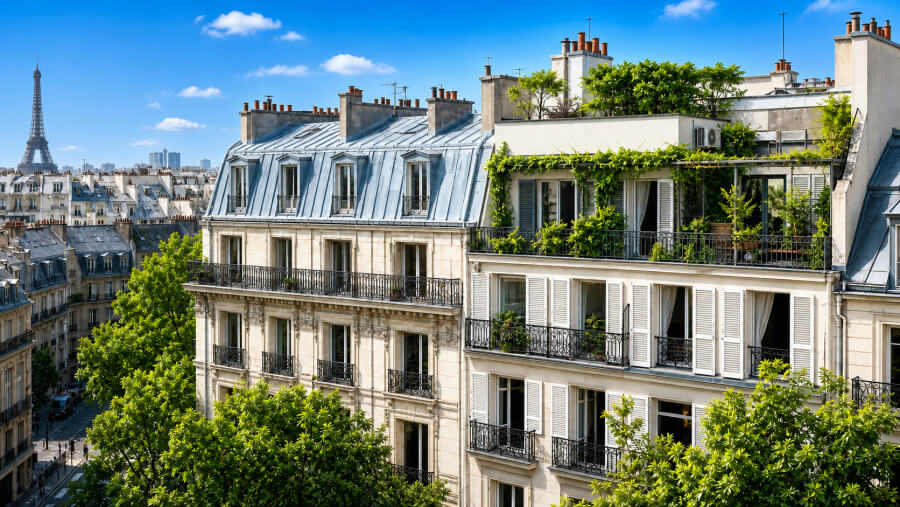
For generations, we have had a fairly clear idea of what makes a desirable Paris apartment. A high floor. Lots of light. Large windows. Southern exposure. Rooftop views. Perhaps a romantic little apartment tucked beneath those beautiful zinc roofs that make the Paris skyline unmistakably Parisian.
But what happens when some of the very features that made an apartment desirable start making it unbearable?
Welcome to the newest consideration in French real estate: summer comfort.
FROM PASSOIRE THERMIQUE TO BOUILLOIRE THERMIQUE
Anyone who has purchased or rented property in France recently has become familiar with the the Diagnostic de Performance Énergétique (DPE). We have spent years talking about the infamous passoires thermiques, or thermal sieves: poorly insulated properties that leak heat during the winter and consequently consume large amounts of energy.
But there is another expression you may want to learn: bouilloire thermique. Literally, a thermal kettle.
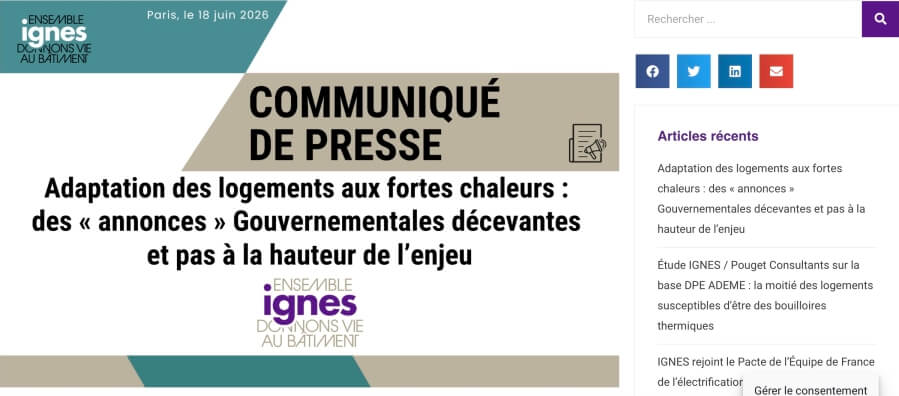
These are homes that become dangerously or intolerably hot during periods of high temperatures. And there are a lot of them. A June 2026 study by Pouget Consultants and IGNES analyzed approximately nine million “summer comfort” indicators from DPE reports produced since 2021. The conclusion was startling: nine out of 10 homes analyzed were not adequately adapted to high temperatures, and approximately one out of two could be considered a bouilloire thermique.
Even more interesting is that the problem isn’t restricted to old, poorly rated buildings. The researchers found inadequate summer comfort even among newer and otherwise energy-efficient properties.
One of the biggest culprits? Insufficient exterior protection from the sun—particularly shutters and blinds. This exposes an important weakness in the way we have learned to think about energy efficiency. A home can be quite good at keeping heat inside in January but not particularly good at keeping heat out in August. For a buyer planning to own a property for 10, 15 or 20 years, both questions increasingly matter.
THE PARIS APARTMENT HIERARCHY MAY BE CHANGING
Consider the classic top-floor Paris apartment. We love them. Most of us do. You step out of the elevator, enter an apartment flooded with sunlight, look through the windows and see chimneys, rooftops and perhaps the Eiffel Tower in the distance. It’s difficult not to fall in love.
Now come back for a second viewing at 4 p.m. on a 98.6°F afternoon in July. Suddenly that magnificent southern exposure looks a little different. Paris’s famous zinc rooftops absorb tremendous amounts of solar heat. An apartment immediately beneath one, particularly without good insulation, exterior shutters, or cross-ventilation, can become extraordinarily hot.
And overnight cooling can be surprisingly difficult. This suggests that we may gradually see a subtle repricing of what constitutes a “premium” property. The sunny top floor won’t stop being desirable. A gorgeous view isn’t suddenly worthless. But other characteristics may become more valuable than they were before.
An apartment with windows on opposite sides of the building, allowing air to move through it, has an advantage. So does an apartment with exterior shutters. A bedroom overlooking a quiet, shaded courtyard may prove considerably more comfortable than one facing a sun-baked boulevard.
Thick stone walls, trees outside the windows, east rather than west exposure, and the ability to ventilate safely at night may all become part of the calculation. And then, of course, there is air conditioning.
AIR CONDITIONING: THE NEW LUXURY?
For years, many French people regarded air conditioning with something approaching suspicion. Americans, meanwhile, would arrive in Paris in July and ask us the same question: “Where’s the air conditioning?”
Increasingly, the French are asking it, too. But there is an important distinction when purchasing property in France. The question isn’t simply, “Does this apartment have air conditioning?” It should also be: Could I legally and practically install it?
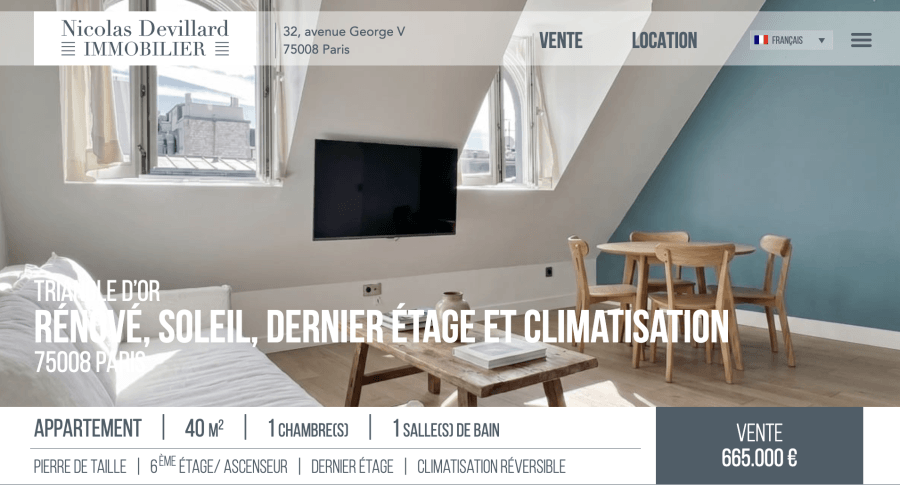
This can be particularly complicated in Paris.
A conventional split air-conditioning system requires a place to install an exterior compressor. Depending on the building and installation, that can involve copropriété rules and approvals and potentially urban-planning restrictions, particularly where the equipment alters the exterior appearance of the building.
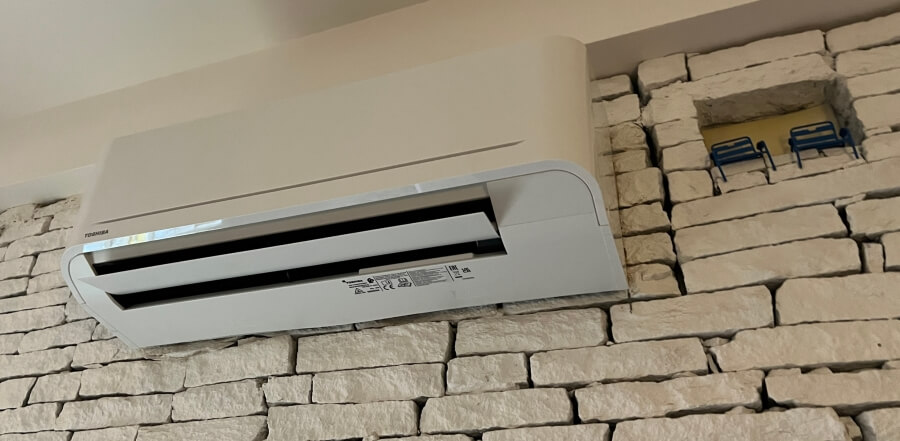
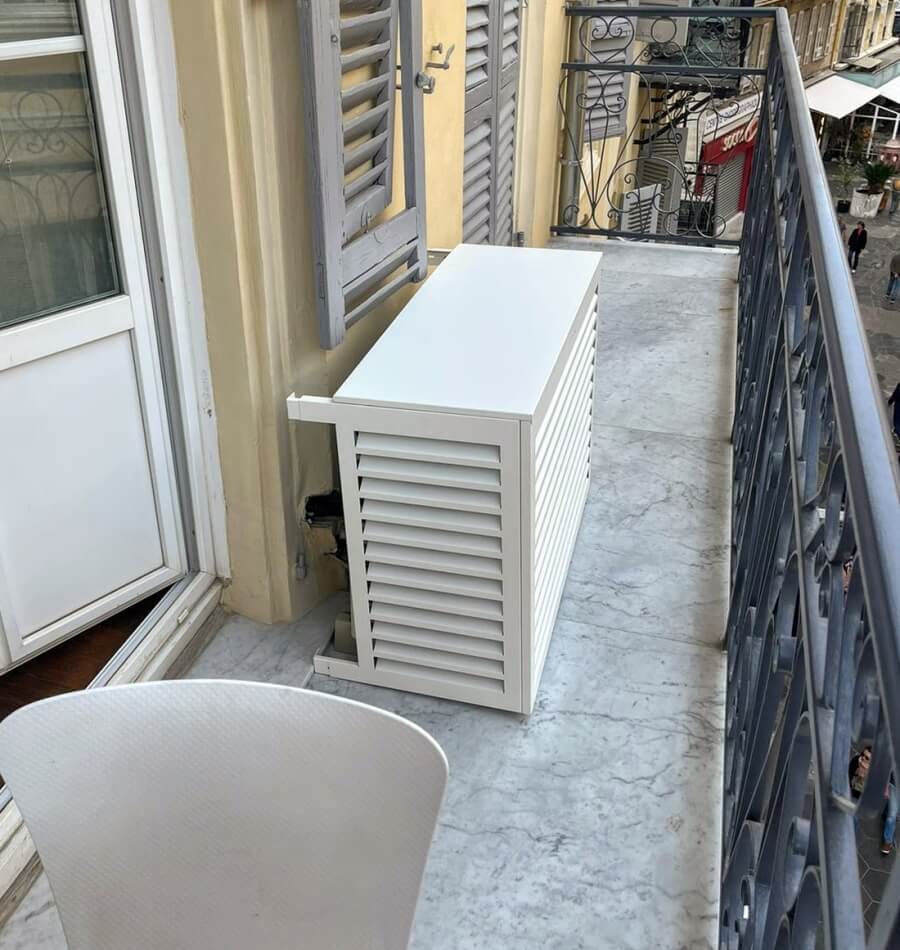
An exterior AC compressor
So when we encounter a Paris apartment with an effective air-conditioning system already installed and approved, I think we should increasingly regard it as an asset. It is one less uncertainty for the buyer.
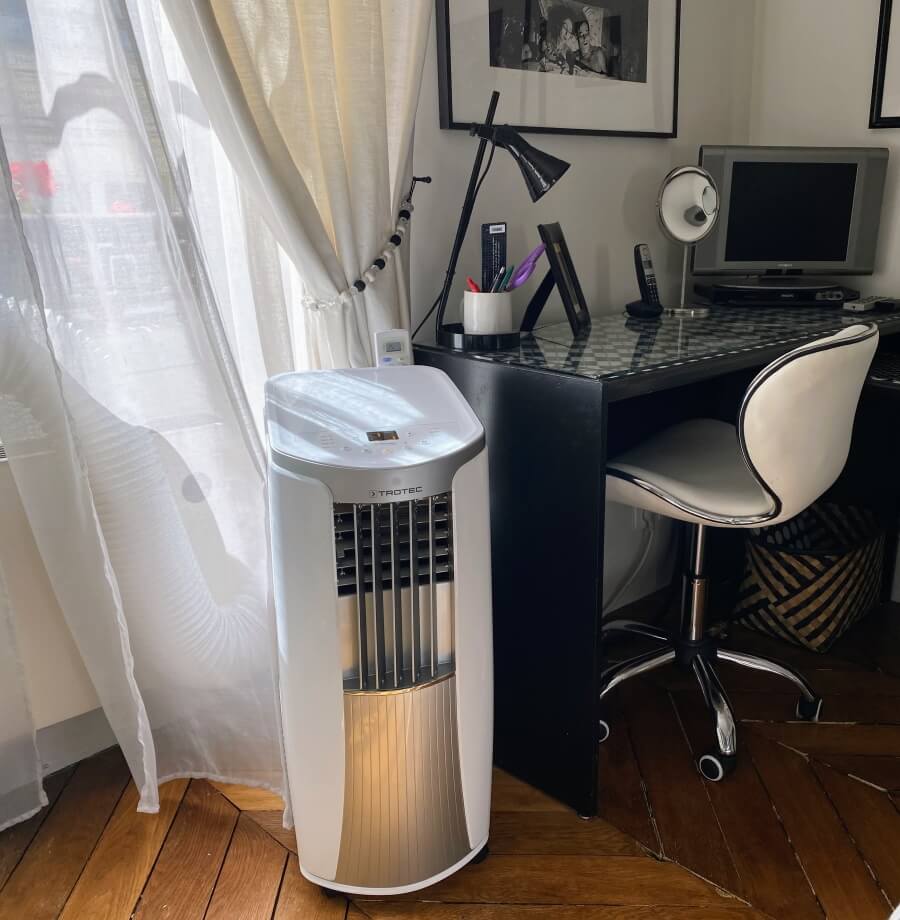
A portable AC unit piped out the window
ADD A “SUMMER AUDIT” TO YOUR PROPERTY VISIT
We already examine properties carefully before recommending that a client purchase one. But perhaps it is time to add another informal inspection to the checklist: the summer audit.
When viewing a property, consider:
– What floor is the apartment on, and what is directly above it?
– Which direction do the principal windows face?
– Are there exterior shutters or blinds?
– Can you open windows on opposite sides of the apartment and create cross ventilation?
– Do the bedrooms receive direct afternoon sun?
– Can bedroom windows safely and comfortably remain open at night?
– Is the courtyard shaded or filled with heat-absorbing surfaces?
– Are there mature trees outside?
– What type of roof is above the apartment?
– Is air conditioning already installed?
– If not, would installation realistically be possible?
And here is one question we particularly like: “What was this apartment like during the last heatwave?” Ask the owner. Ask the tenant. Ask the agent. You may get a surprisingly informative answer.
LOCATION, LOCATION, LOCATION…AND TEMPERATURE
There is another change taking place outside the apartment itself. We usually evaluate a neighborhood according to transportation, shops, schools, restaurants, architecture, and lifestyle. We may increasingly need to add microclimate.
Walk down a heavily paved Paris boulevard without shade on a 96.8°F afternoon and then turn onto a tree-lined street or enter a planted courtyard. The difference can be remarkable. Trees, parks, vegetation, shade and the amount of exposed asphalt around a building increasingly affect everyday comfort.
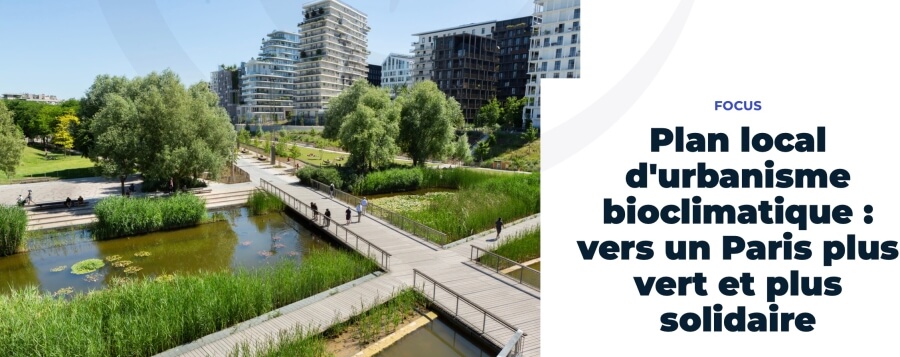
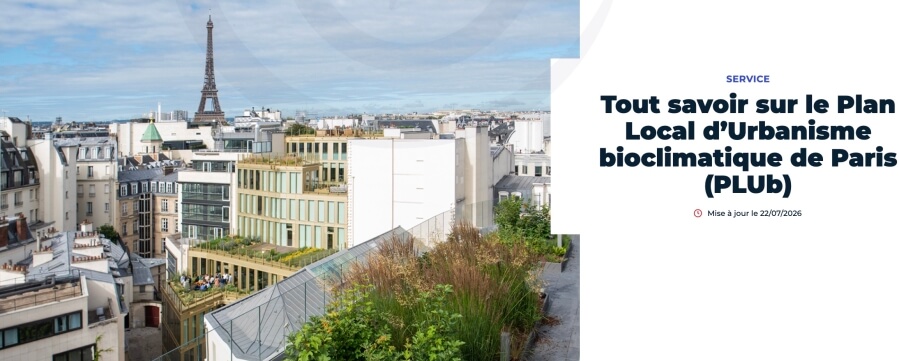
The City of Paris itself recognizes this. Its Plan Local d’Urbanisme bioclimatique, Bioclimatic Local Urban Plan—PLUb—explicitly incorporates climate adaptation into the city’s planning strategy. Paris is adding vegetation, removing some paved surfaces, creating shade and developing cooler public spaces as it prepares for a hotter climate.
And hotter is what Météo-France expects.
Under France’s official climate-adaptation trajectory, metropolitan France and Corsica could be approximately 36.86°F warmer in 2050 than in the pre-industrial period. Météo-France estimates that heatwaves could become about five times more frequent, while very warm nights—when temperatures fail to fall below 68°F—would become considerably more common, particularly in cities and southern France.
For someone taking out a 20-year mortgage today, 2050 isn’t really the distant future. It is roughly the end of the loan.
OUTSIDE PARIS, THERE IS ANOTHER CLIMATE QUESTION
Heat inside the home is only one part of the changing property equation. Drought is creating another. France has recently updated its official map for retrait, gonflement des argiles, the shrinking and swelling of clay soils as they dry during drought and expand again when water returns.
This movement can damage houses and foundations. The government updated the national exposure map in January 2026 specifically to better incorporate the effects of climate change and the significant losses experienced in recent years. The new zoning became applicable to certain property and construction transactions beginning July 1, 2026.
For buyers of houses, particularly outside central Paris, checking Géorisques and understanding the property’s environmental exposure should therefore be just as natural as checking the roof, septic system or property taxes. Climate risk is gradually moving from the footnotes of a French property purchase to the due-diligence checklist.
A NEW KIND OF PROPERTY PREMIUM
We don’t think we’re at the point where we can say that air conditioning adds X percent to a Paris apartment or that a western exposure reduces its value by Y percent. Real estate isn’t that simple. But we do think we are witnessing the beginnings of what we might call a summer comfort premium and, conversely, a heat discount. Imagine two otherwise similar apartments.
One has exterior shutters, bedrooms facing a quiet courtyard, windows on both sides, mature trees outside and legally installed air conditioning. The other sits directly beneath a zinc roof, faces west, has windows only along one façade and cannot easily accommodate an exterior air-conditioning unit.
On paper, they may both be 70 square meters in the same arrondissement with the same DPE rating. In August, they are most definitely not the same apartment. That distinction will matter more as buyers become aware of it. And sellers are likely to notice, too.
We have spent years advertising “south-facing,” “sunny,” “top floor” and “exceptional light” as unquestioned positives. Perhaps future property advertisements will boast just as enthusiastically about double exposition, exterior shutters, natural ventilation, shaded terraces and climatization.
BUY FOR THE CLIMATE YOU’RE GOING TO OWN IN
None of this means we should abandon the sunny Paris apartment. We certainly haven’t! It simply means that the definition of a good property is evolving.
When buying real estate, particularly as a long-term investment, we shouldn’t evaluate the property solely based on the conditions on the day we visit it. We have to think about how that property will perform throughout the year and throughout the years we expect to own it.
That may be particularly important for our North American buyers purchasing a pied-à-terre or retirement home they hope to enjoy for the next 15 or 20 years.
So, add another question to your property search. Don’t just ask whether you love the view. Don’t just ask about the DPE. Don’t just ask how much it costs per square meter. Ask how you’re going to feel sleeping there on a 100.4°F night in August.
Because if you’re buying a home in France today, you’re not buying for the French climate you remember. You’re buying for the French climate you’re going to own it in.
À bientôt,
 Adrian Leeds
The Adrian Leeds Group®
P.S. The ability to air condition an apartment is top of our list when searching properties for our clients. We know what to look for that makes it possible. We also have resources that are specialists in air conditioning who can asses if a property meets the requirements or not. Visit our website to learn more about our property-finding service.

Let Us create a custom strategy for you
You can live or invest in France-now.
Property for sale
what's happening
Check out upcoming events, conferences, or webinars. Join us!
GET FINANCING
Learn about French Property Loan Information.

Read & Subscribe
Dive into more by reading the Adrian Leeds Nouvellettre®
Better yet, subscribe to both and get the updates delivered to your inbox.

Get started with your dream of owning property in Paris.
Join us on Youtube
Dive into more on how to live, invest & escape to France
Be sure to subscribe!
To read more, click the links below.