


Weekly insights about property in France!
Subscribe and don't miss an issue!
Six “Heart of the City” Markets to Watch
Volume XXIII, Issue 47
Preliminary Remarks by Adrian:
The following information was compiled and written by Jay Corless, one of our best agents. While everything he writes here about “Six ‘Heart of the City’ Markets to Watch” is true and sound, I’d like to personally offer another point of view, based on the experience I’ve had working with North American clients since 2002.
Read through it, then note my Final Remarks explaining my point of view. This will give you some real food for thought and hopefully help you make the best decisions.
Adrian
SIX “HEART OF THE CITY” MARKETS TO WATCH
By Jay Corless
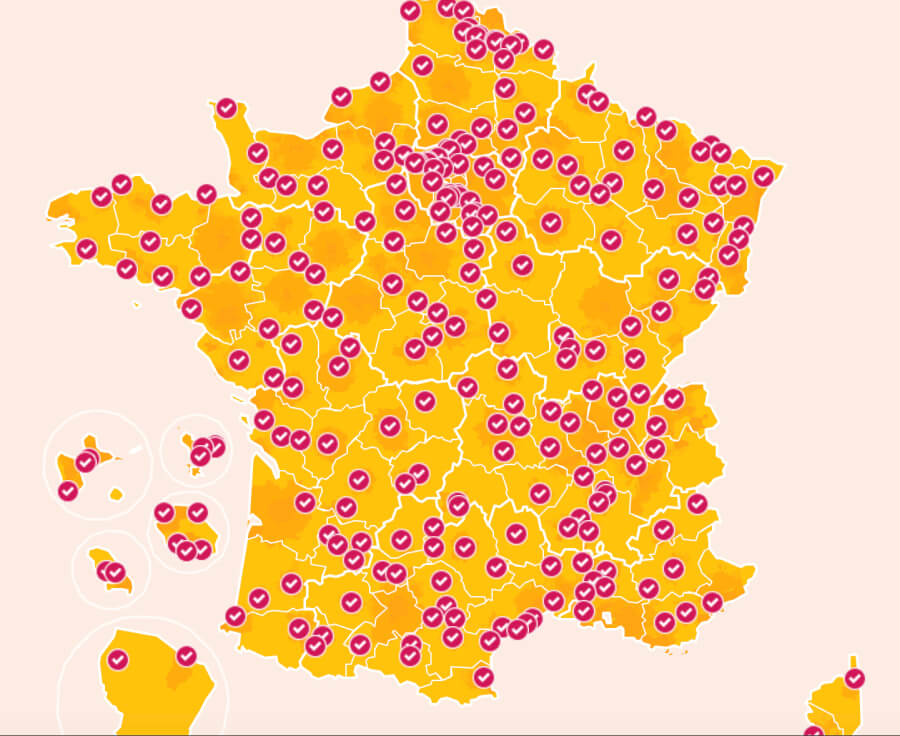
The French real estate headlines have been gloomy for months now—“market in crisis,” “sales collapsing,” “prices crashing.” If you stopped there, you might think this is a terrible time to buy. But when you dig into the latest Baromètre Immobilier des Villes Action Cœur de Ville, the annual snapshot produced by the Notaires and the Agence Nationale de la Cohésion des Territoires, you discover a much subtler reality—especially in the medium-sized cities most North Americans never think to look at.
These “Action Cœur de Ville” (ACV) cities are places where the state is actively investing to revive the historic center: upgrading housing, rethinking public space, supporting local commerce, and making the heart of the city livable again. They represent roughly 11% of the French population and about 12% of all property transactions. In other words, they’re not marginal. They’re a sizable piece of the real estate market—and, increasingly, one of its most resilient parts.
The barometer confirms that 2024 was a slower year. Nationally, property transactions fell by around eight percent compared to 2023. In the ACV cities, sales volumes dropped by about ten percent. That sounds painful until you step back to 2018, when the program began. Since then, the total number of transactions in France has declined by more than fourteen percent. In the ACV cities, the drop is only about one percent. Over six years, these “medium” cities have essentially held their ground while the rest of the country has sagged.
Prices tell a similar story of correction rather than collapse. House prices in ACV cities slipped a bit more than the national average in 2024, but over the 2018–2024 period as a whole, they are still up slightly more than house prices in France overall. Apartments in ACV cities are even more interesting: after a strong run-up to 2022, they eased only slightly in 2023–2024, yet they have gained well over twice the national average since 2018. They started from a lower base, they have “caught up” to some extent, and yet they remain dramatically cheaper than the rest of the country. The average price per square meter for an apartment in an ACV city is still far below the national figure, despite years of outperformance.
For our American and Canadian readers used to New York, San Francisco, Toronto, or Vancouver prices, this is where your jaw should drop. In these cities, it is still possible to buy a comfortable apartment in a walkable historic center for sums that would not buy a studio in Paris or Nice. And these are not sleepy villages: they have schools, hospitals, courts, shops, and increasingly modernized infrastructure, thanks in part to the ACV program itself.
Another feature of these markets is that they are genuinely urban. While France as a whole still sees the majority of sales in houses, the ACV cities are dominated by apartments. Nearly two-thirds of their transactions concern flats, not houses, which means a lifestyle many of you are looking for: cafés downstairs, the “boulangerie” around the corner, a weekly market, and no need to own a car. When you overlay that with access to regional trains, TGV lines, and, in some cases, airports, you begin to see why these cities are such good candidates for North American expats.
The barometer also devotes important space to energy performance: the now-famous DPE labels that run from A to G. For houses, the ACV cities have essentially caught up to similar cities outside the program in recent years. For apartments, the situation is more mixed: the share of properties in the lowest-rated bands (E and F–G) has increased, particularly in the older urban cores. Many buyers see this as a warning sign. We see it as a negotiation tool and a value-creation opportunity. An “F” or “G” label often pushes the price down; with thoughtful improvements to insulation, windows, and heating, you can both raise the rating and future-proof your investment against tightening rules on renting energy-inefficient homes. We’ve done this many times for clients in Paris and on the Riviera; the principle is precisely the same in these medium-sized cities.
So what does all of this mean in practice? It means that while the national market is steady, the medium-sized cities at the heart of the Action Cœur de Ville program are behaving like the strong, patient middle children of French real estate: not the flashy eldest (Paris, Nice) nor the forgotten youngest (rural France), but the solid, dependable ones who quietly get on with things. They have weathered the downturn better than average; they remain far more affordable than the big metros, and their historic centers are being actively upgraded with public money. That combination should make any savvy buyer sit up and pay attention.
From that universe of 217 cities, we’ve chosen six that we think deserve a prominent place on your radar: three in the gravitational field of Nice, and three in the orbit of Paris. These are not official “top picks” of the Notaires; they are our own choices based on the criteria we always apply for North American clients—walkability, transport, healthcare, price level, and at least the potential for an international or cosmopolitan life.
Grasse, perched above Cannes and Nice, may be the best known of the southern trio. Long famous as the perfume capital of the world, it is also one of the flagship ACV cities in the Alpes-Maritimes. Significant funding has gone into its narrow, often neglected streets to restore façades, reopen ground-floor shops, and make the center more attractive to residents rather than just tourists. From Grasse, you can be in Nice in under an hour, with the international airport and the entire Riviera at your feet. Yet you still pay lower prices than in Nice, Antibes, or Cannes. You live in a real city with courts, schools, and hospitals. Still, you can dip into the large Anglophone community scattered along the coast whenever you like.
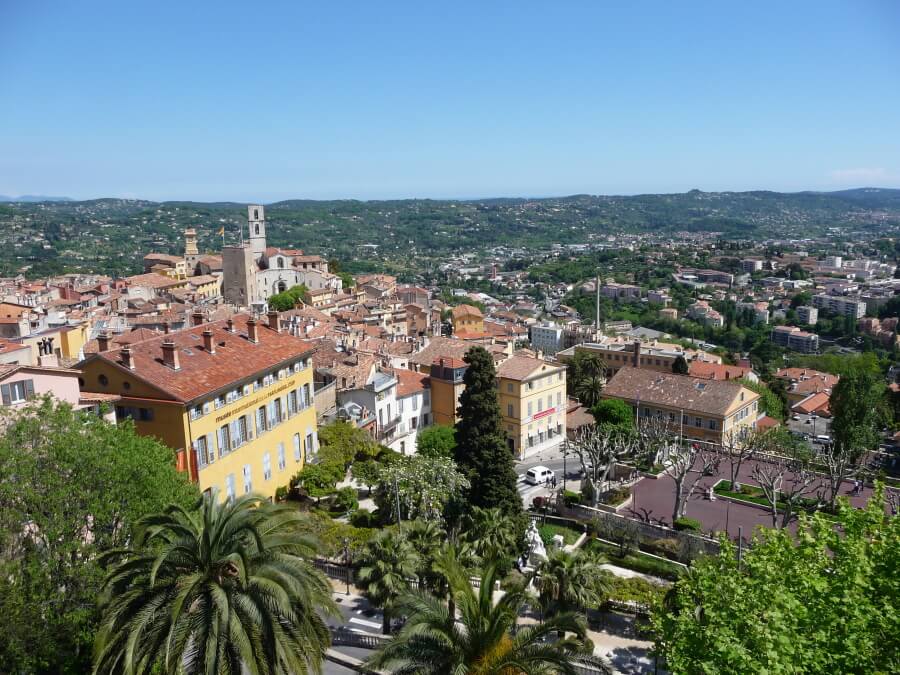
Grasse, perched above Cannes and Nice
A little closer to the sea, between Antibes and Cannes, lies Vallauris–Golfe-Juan, also in the ACV program. It has long been overshadowed by its glamorous neighbors, which is precisely why we like it. Here you are on the same coastal rail-and-road axis, with frequent trains and buses and an easy hop to Nice airport, but you are not paying the full Côte d’Azur premium. As the ACV projects gradually refresh streets, squares, and commercial premises, everyday life becomes easier and more pleasant, and well-located apartments in the older core begin to look like very sensible buys. For someone who dreams of Mediterranean sun, a beach within walking distance, and the ability to rent seasonally when they are back in North America, Vallauris–Golfe-Juan is a compelling compromise.
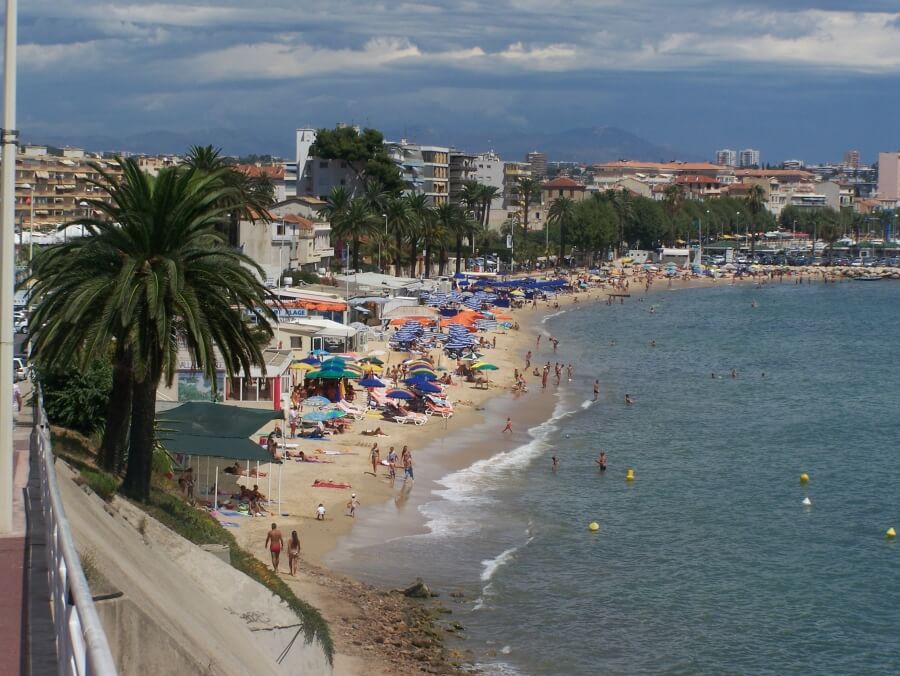
Seaside, Vallauris–Golfe-Juan
Further inland in the Var, Draguignan offers yet another version of southern life. It is an administrative and judicial center for its département, with all the services that imply: courts, schools, hospitals, and government offices. It, too, is part of Action Cœur de Ville and has renewed its partnership for the coming years, which means continued investment in the town’s fabric. The climate is Mediterranean, the hills of Provence are on your doorstep, and the coast is reachable in about an hour. Yet, property prices remain far more forgiving than along the shore. If your fantasy is less about posing on the Croisette and more about shopping at the weekly market, chatting with your butcher, and living like a local in “real” southern France, Draguignan deserves a serious look.
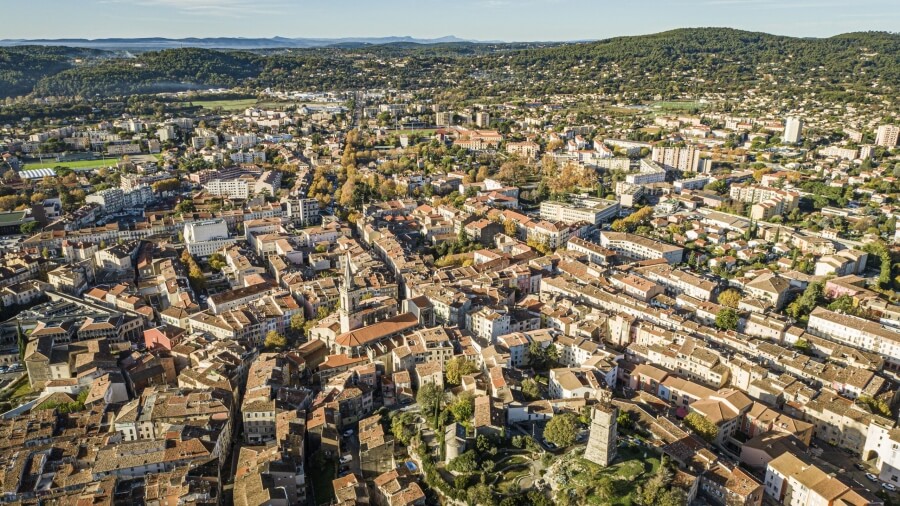
A drone view of Var
North of the Loire, the atmosphere changes—but the ACV logic remains. Fontainebleau–Avon, south of Paris, is a paired territory within the program and something of a showcase in Île-de-France. Many of you already know Fontainebleau for its spectacular château and magnificent forest. What the ACV program adds is very concrete support for projects that make everyday life better: redesigned public squares, improved connections between the train station and the town center, new pathways, and “soft mobility” links. From the station at Avon, you can reach Gare de Lyon in about 45 minutes, making a part-time or even full-time commute realistic. At the same time, you live in a town that feels like a destination in its own right, with a rich cultural scene, excellent schools, and open space that Parisians can only dream of.
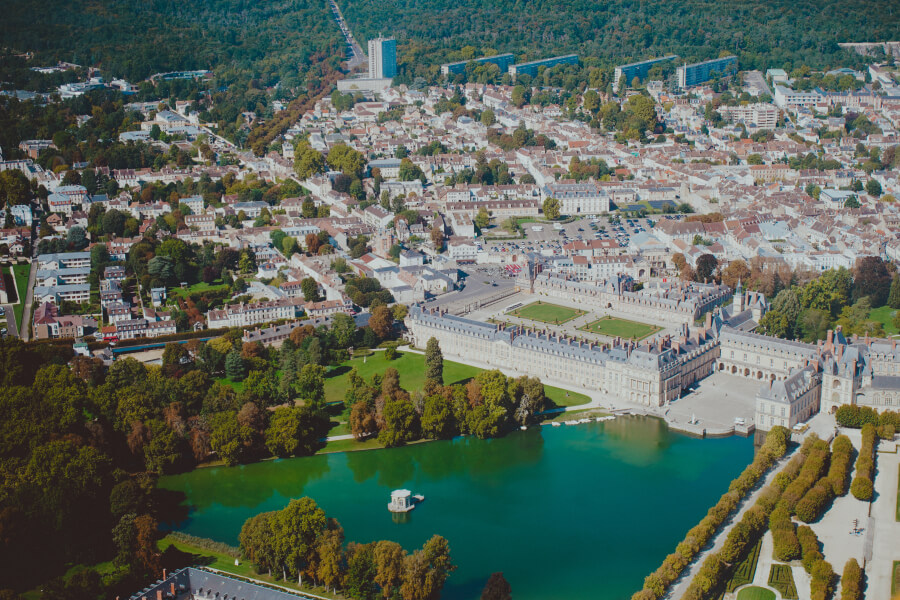
Aerial view of Fontainebleau–Avon
To the east of Paris, Meaux offers a more down-to-earth version of the same story. It is a solid, workaday town with a cathedral, a hospital, full everyday commerce, and a strong local identity (you may already know its brie and mustard). It has been working with the ACV program to rehabilitate older housing, upgrade markets, and improve public spaces. Fast trains to Gare de l’Est put central Paris roughly 30 minutes away. Yet housing costs remain grounded in the budgets of ordinary French families. For North Americans who want to live a very French, non-touristic daily life, while keeping easy access to the capital for work or pleasure, Meaux is the kind of place that can make a great deal of sense.
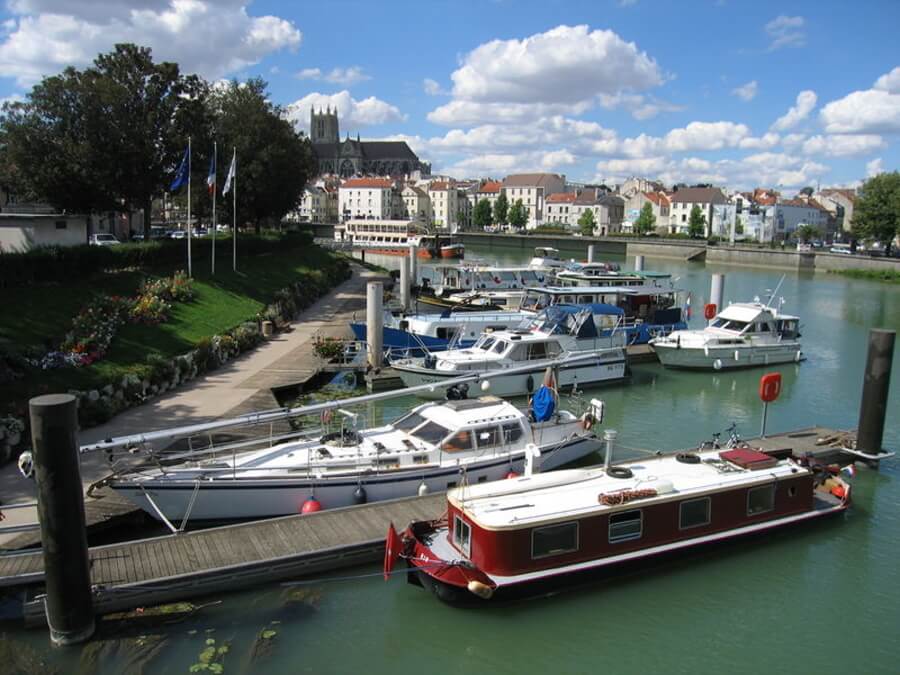
Vessels docked on the river in Meaux
Finally, further north, Arras sits almost equidistant between Paris and Lille, with fast trains to both. Its Flemish baroque squares and arcades make it one of the most architecturally charming medium-sized cities in France. It has also been an active participant in Action Cœur de Ville, using the program to support renovation of older buildings, encourage investment in the center, and modernize public spaces. For an expat, the geography is beautiful: Paris is under an hour, Lille is roughly forty minutes, and Brussels and London are not far beyond. You live in a human-scaled city with a strong cultural life and relatively modest prices, while having two major metro areas—and multiple international gateways—at your disposal.
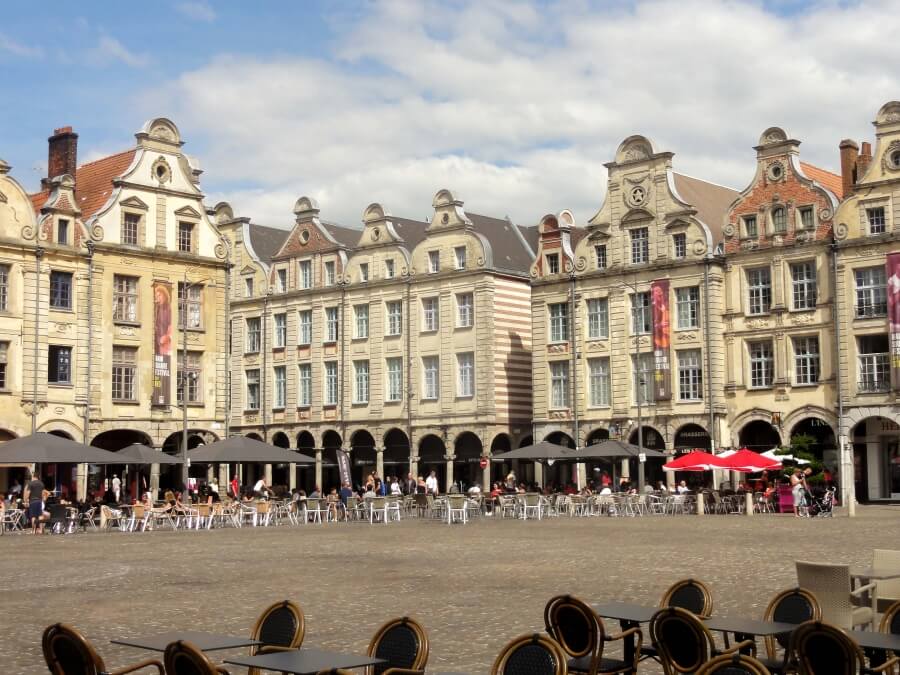
A large village square in Arras
What links these six very different places—Grasse, Vallauris–Golfe-Juan, Draguignan, Fontainebleau–Avon, Meaux, and Arras—is the combination of four things. First, they are part of the Action Cœur de Ville program, meaning their historic centers are not left to decline but are the focus of sustained public investment. Second, they are connected: by regional trains, TGV lines, or simple, fast commuter routes to one or more major cities. Third, they are priced at levels that, even after several years of growth, remain more affordable than in Paris, Nice, or other first-tier markets. And fourth, they are genuinely livable: walkable cores, real services, local culture, and, in many cases, at least the beginnings of an international presence.
The barometer gives us the macro picture: a national market that has cooled, medium-sized cities that have proven more resilient, prices that are adjusting rather than collapsing, and energy performance that is both a challenge and an opportunity. Our job is to translate that into real options for real people. That means taking the statistics and acronyms and turning them into streets, buildings, and neighborhoods you can actually imagine yourself living in.
If you are dreaming of France but daunted by Paris prices, or if you like the idea of keeping one foot in a global city and the other in something smaller, calmer, and more affordable, these ACV cities are exactly where you should be looking. We can help you identify which one fits your lifestyle, budget, and appetite for renovation, and guide you through the process from the first exploratory visit to the signed deed. While everyone else is anxiously watching Paris price charts, the “hearts of the city” are quietly beating stronger—and, for now, they’re still very much within your reach.
Note: The ACV map is quite interesting!
Final Remarks by Adrian:
There isn’t a single city on the list I don’t love. It’s a problem all of us living in France face—it’s too easy to fall in love with just about every town…for different reasons. These six offer some very practical reasons for considering them, starting with affordability and practicality. But the barometer is designed for a very broad market. Our barometer is much narrower: North Americans moving to France who tend to be over the age of 50 and finally free to live where they want and do whatever they choose.
So, if you fit that category, consider some of these ideas:
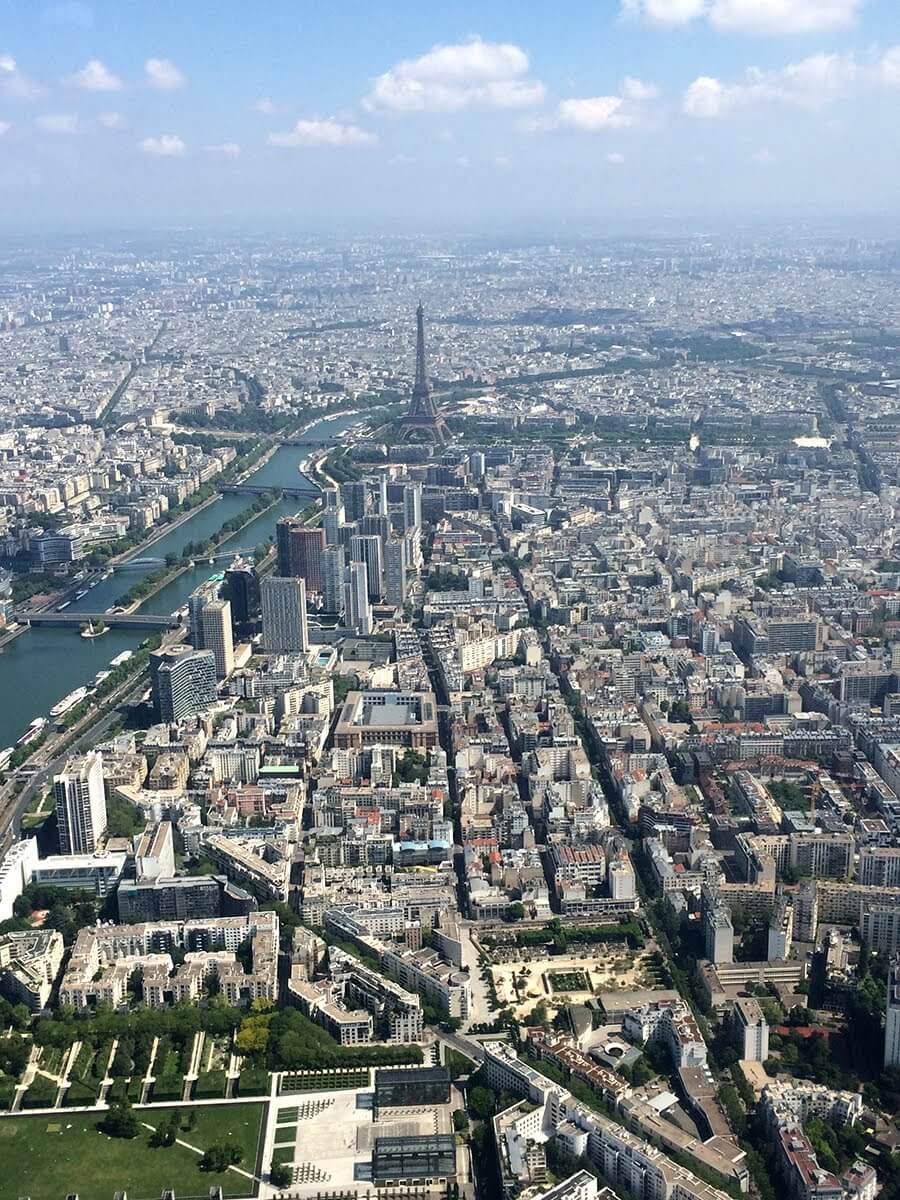
1) Most people we help are retirees seeking an exciting new life in France with access to all of Europe and beyond so they can finally do the kind of traveling they always dreamed of. If you’re living in Paris or Nice, International airports are readily available to whisk you to anywhere you want to go, and to large train hubs that can rail you all over Europe. Living in any of these towns means taking an added step to get to the airport or train station that takes both time and money, reducing the ability to be very free and mobile. It’s a downside. Just know that it’s never going to be simple or inexpensive to “go to Venice for the weekend” if living in any of these towns, like it would be if living in Paris or Nice…or even Lille where the TGV speeds its way to Charles de Gaulle Airport directly in one hour.
2) While it’s true that these six cities are connected by regional trains, TGV lines, or simple, fast commuter routes to one or more major cities, residents will either be dependent on the schedules of those transport systems or they will feel the need to own a car. I’ve seen too many residents of such cities get “stuck” somewhere they were visiting because the trains were no longer running for one reason or another, or they missed the last train, only to end up staying overnight in a hotel or taking an expensive Uber home. Ridding oneself of owning and operating a car is one of the greatest pleasures of a move to France, where one can be free of the high cost and maintenance burden of the car, especially older residents who either don’t want to or can no longer drive. You can live to be 100 in an urban environment in France as long as you don’t need a car! Another feature of eliminating the car “bubble” is just that—exchanging the “bubble” we’ve lived in all our lives for “café life,” being a part of the public scene and communing with other residents freely and easily. Try it; you’ll like it!
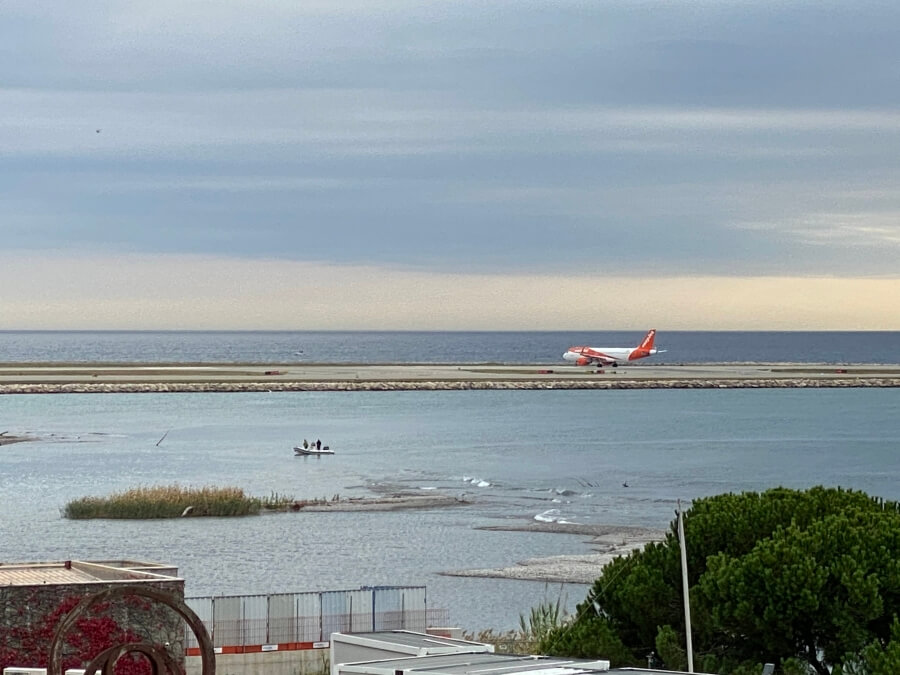
3) If older than 60, you will want (an maybe need) immediate access to good healthcare. Major hospitals are not located in these towns and alternative medicine will be harder to find. You may find yourself traveling often to the larger cities for doctor appointments, and when it comes to an emergency…how far from a well-equipped hospital is too far? I have friends who live out in the countryside who come often to Paris specifically because specialists are in Paris and nowhere near their small towns. Just be prepared to travel for healthcare.
4) These cities are not teeming with Expats with whom you can relate. I hope your French is really good, because you’ll have a tougher time acclimating, being understood, making friends and feeling comfortable if not. Crossing the cultural divide will be more of a challenge and will take longer. If you’re in a city with a large Expat community, you can make more friends than you’ve had in your entire life…and feel at home instantly. I worry that you could end up feeling very lonely, indeed, in some of these smaller communities. Couples may have an easier time than singles as they won’t be quite as dependent on making friends.
5) Cultural attractions in these towns are slim. If you love art, culture, theater, dance, etc., then plan on traveling to the larger cities to find this kind of entertainment. Yes, there will be local festivals of sorts and they can be loads of fun, but lets, face it, they can’t compete with either Paris or Nice for fabulous things to do and experience.
6) The property pickings are slimmer in these towns. There are few rentals to choose from and the landlords are hesitant to rent to foreign tenants. We have a very hard time convincing the landlords to take a risk on our clients. You may have a better chance of getting a house with a bit of land in these towns, vs an apartment, but then there’s the house and land to take care of! Are you sure you really want that? Know what you’re getting into.
My personal bottom line is that the additional cost of a more urban life for the 60-year-old-plus person is well worth the exchange. I lived in a small American town for 14 years and while it was very beautiful, I couldn’t relate to the locals because they were so provincial. (I could count my friends on one hand.) After being completely bored, I couldn’t wait to soak up more of life in a place that offered more. First we moved to Los Angeles. Then we moved to Paris and that was the best move I ever made.
A bientôt,
 Adrian Leeds
The Adrian Leeds Group®
P.S. In addition to our property services, we also focus on living in France on a practial level based on our own experiences and the advice of a variety of those-in-the-know. Our website is the perfect place to begin your education into everyday life in France.
1 Comment
Leave a Comment

Let Us create a custom strategy for you
You can live or invest in France-now.
Property for sale
what's happening
Check out upcoming events, conferences, or webinars. Join us!
GET FINANCING
Learn about French Property Loan Information.

Read & Subscribe
Dive into more by reading the Adrian Leeds Nouvellettre®
Better yet, subscribe to both and get the updates delivered to your inbox.

Get started with your dream of owning property in Paris.
Join us on Youtube
Dive into more on how to live, invest & escape to France
Be sure to subscribe!
To read more, click the links below.
We love living in Draguignan at the age of 57 and 64. We have museums, a theatre, and cinema, plus local drs and a hospital. Plus it is an easy and cheap bus ticket to Les Arcs train station. There are excellent expat associations here too! We keep a busy schedule.
Yes, it requires some work with the language but locals are patient with us. And it forces us to learn French! We are only 35 minutes to St Maxime and the beach. And we are near the Verdon du Gorge. We were happy our town was noticed in the article. Thanks!