


Weekly insights about property in France!
Subscribe and don't miss an issue!
The Truth About the French Code of Construction and Housing
Volume X, Issue 25

Monday evening I spoke at the Property Investors Network meeting about the truth about the legislation prohibiting rental of property for less than one year. And I vowed not to publicize the issue, because the fewer people who know about it, the better, but to this exclusive audience, it’s best if you know the truth.
The laws exist, and according to our attorneys, they are unconstitutional, impossible with which to comply and are refutable. Nonetheless, now that the ‘cat is out of the bag’ (these regulations have been dormant on the ‘books’ since 1948 with amendments periodically throughout the years), neighbors are using the regulation against their neighbors in the form of denouncements.
Two bloggers started it all in November of 2009. One who had a vendetta against a rental agency who fired him (for just cause) who denounced all their owners and the other who believed it would strengthen her long-term rental business by exposing short-term rentals as ‘illegal.’ Unofficially, their message went out to the media who in turn spread it like wildfire.
Until then no one knew the laws existed…not the notaires, not the attorneys, not the industry professionals…only the department of housing and the mayor. The headline read” “Crackdown on Private Landlords” and the media loved the ‘sound bite.’ Even the New York Times used this in their headline of an article published in July 2010, regurgitating the words of the bloggers, with little investigative reporting or fact-finding.
The regulation in the French Code of Construction and Housing applies to cities with over 200,000 inhabitants and those of the
Hauts-de-Seine, Seine-Saint-Denis and Val-de-Marne. But Paris has adopted them for their own purposes — to be used as a way to find badly needed housing. The conditions are virtually impossible to meet. In effect, if you own a property in Paris that you use some of the time and wish to rent while unoccupied, you can’t ‘legally’ do it… unless you change the usage to commercial (almost impossible) and then place on the market another similar property of equal surface on the market for long term occupancy and in the Marais, two properties! Note: this does not apply to ground level properties.
To provide a perspective, it was illegal for women in France to wear pants until recently. A law on the books since 1799 to outlaw pants on women took more than two centuries to appeal, but as we all know, women didn’t comply nor did the authorities prosecute them! And as with this law, the same might have taken place if it were not for jealous or unhappy neighbors who simply want to exercise their power and cause others problems.
For non-compliance, the fines are steep which may easily frighten owners, particularly foreign owners who aren’t familiar with the way things ‘work’ in France. We have a saying here: “If you play by the rules, you lose.” Every Frenchman knows this, but Anglo Saxons tend to ‘play by the rules’ to ease their delicate consciences and therefore, to them the game seems terribly risky.
Licensed French-based agencies are at risk — these are agencies sanctioned by the French government to operate and perform the very service for which they have now been deemed “illegal.” Can you imagine? So, naturally, they are moving ‘off shore’ to avoid prosecution.
 They have subsequently formed a federation to fight the battle with the city to amend the laws and regulate the industry in a reasonable way: the APLM, l’Association des Professionnels de la Location Meublée. Visit their site for information on what they are doing to get the message across.
Here are a few facts from a study taken January 2011 by the APLM:
• There are an estimated 20,000 short-term rental apartments in Paris
• Short-Term Apartment Owners: 82% French, 17% Italian, 15% American, 13% Suisse, 10% British, 6% Australian
• 64% of the owners use their apartments part of the year and therefore would have no ability to rent them full-time
• 97% of the owners live in France
• 64% of the owners occasionally rent their principal residence, 29% are for pure investment
• 40% of the owners advertise on two or more Web sites
• A vast majority rent their principal residence to augment their income or for temporary reasons, such as divorce, death, etc.
• 53% are rented more than one month
• 35% of the tenants are French, 14% American, 6% Australian, 5% Canadian, 5% British
• 49% of the tenants rent to economize – less expensive than hotels or other accommodations
• 44% of the tenants want to live like Parisians
• 30% of the tenants need to house a large group of people
• 87% of those interviewed (1,959) believe renting an apartment is an attraction to visiting Paris
And the city also did a study. Here are a few facts from the Study taken February 2011:
• There are 300 Web sites devoted to short-term rental apartments
• There are an estimated 20,000 apartments on the market, making up only 1.5% of the capital city
• A majority of the properties are in districts 1 through 8
• The average rental is 813€/week, 140€/night compared to hotels averaging 150€-200€/night and is approximately twice the price of furnished rentals offered monthly
• There are two types of rental clients: tourists and professionals
• Half of the stays are less than two weeks, all others rent between 3 and 6 months
• The increase in short-term rental properties grew most between 2000 and 2005
• The increase in short-term rental properties grew most between 2000 and 2005
• Demand explains the growth. Tourists like to experience the city as Parisians
• Owners have the advantage of usage and revenue
The APLM has made recommendations to the city:
• Review the taxes to be on an equal footing with other furnished accommodations.
• Adapt the law of 1989 to market realities and further promote the return of vacant apartments or offices to the rental market.
• License the apartments that are not the principal residences to operate as furnished accommodations and distinguish them as small business owners.
• Create a quality rating system where professionals can adhere to ethical rules.
What you can do:
• Stand strong and “fight city hall” — something’s ‘gotta’ give!
• Consult an attorney to find ways of protecting yourself
• Respect your neighbors and ensure that your tenants are as respectful as possible
• Ally with other rental apartment owners in your building
• Advertise circumspectly and do not show or describe areas outside the realm of the apartment, such as the building façade or courtyard.
As an owner, you…
• have the choice of renting long term
• have the choice of attempting change of usage
• can openly report your property to the city officials and ask for a legal sanction to rent it on occasion*
(*We have no proof this will work!)
Should you be denounced and receive a letter from the city, do not panic! We highly recommend that you consult a property attorney before attempting to reply yourself. There are ways to protect and defend yourself and your property.
The bottom line is that we do not believe that the rental of apartments for less than one year will stop, regardless of the laws, and that the laws will be amended and regulated in a way in which we can live with them effectively. But we need owners, agencies and renters to stand together to make this happen. We intend to be among those who do.
A bientôt,
 Adrian Leeds
Editor, French Property Insider
Email: [email protected]

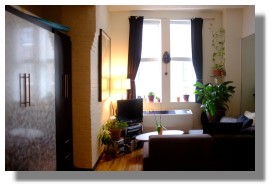 P.S. Take advantage of our West Village New York City studio apartment (with a perfect view of the Empire State Building) is available for vacation rental July 11 TO 22 (22nd is departure date) for as little as $195/night, $1225/week (7 nights or more — $175/night). Located in the heart of the coolest ‘hood’ in the city. “It’s super cozy, clean and comfortable.” A 50% deposit reserves your stay. Visit West Village Studio for more information.

Let Us create a custom strategy for you
You can live or invest in France-now.
Property for sale
what's happening
Check out upcoming events, conferences, or webinars. Join us!
GET FINANCING
Learn about French Property Loan Information.

Read & Subscribe
Dive into more by reading the Adrian Leeds Nouvellettre®
Better yet, subscribe to both and get the updates delivered to your inbox.

Get started with your dream of owning property in Paris.
Join us on Youtube
Dive into more on how to live, invest & escape to France
Be sure to subscribe!
To read more, click the links below.