

Adrian Leeds Nouvellettre®
Your taste of life in France!
Subscribe and don't miss an issue!
Lille for a Day
THE NEW AMERICAN RESISTANCE
Monday evening at Treize au Jardin, the “Resistance Reading Room” held a meeting, one of their twice-monthlies (second and fourth Mondays of the month), to share and discuss relevant readings for this particular moment in U.S. politics, and what can be done from Paris…with eyes on helping Democrats take back the House and the Senate in 2026. The events and the group are a product of Veterans and Military Families Caucus and the Chapter of Democrats Abroad France. It is essentially a political discussion and mobilization platform about staying politically informed, organizing overseas voters and building a Democratic community abroad.
The speakers were two journalists, Diane de Vignemont and Phineas Rueckert, on the topic of Supporting Résistance from Abroad. Diane de Vignemont is a historian-turned-journalist based in Paris whose writing has appeared in outlets like Prospect Magazine, Jacobin, L’Humanité, and Libération. Her work spans themes of history, memory, women’s rights, and political movements. Phineas Rueckert is an investigative journalist, also based in Paris, covering human rights, migration, and the rise of the far-right. He also has a Substack where he writes about politics and related issues affecting both the U.S. and Europe. The topic for the evening was “Minneapolis and Resistance.”
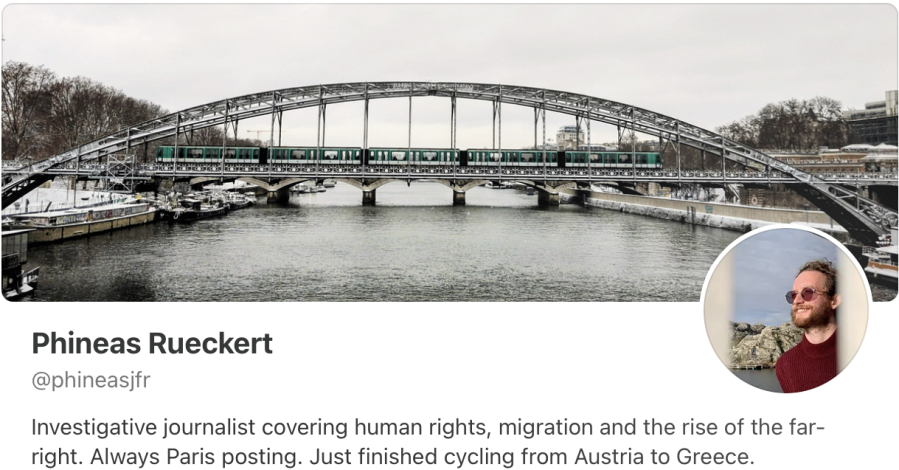
New Lines Magazine recently published an article by de Vignemont, “Minneapolis Protests Sound a Lot Like the French Resistance“—Minnesota is not occupied France, but historians see some parallels with the neighborhood groups and solidarity networks responding to federal operations today.

“In Paris, the history of France’s resistance to the Nazi occupation is omnipresent — the heroics and horrors of World War II are folded into street names, plaques, school curricula and a certain moral comfort that comes from believing the worst has already happened.”
I hadn’t participated in a political event in a long time, so it was enlightening to see so many Americans come out to discuss what can be done, even from Paris, to RESIST such atrocities occurring in our home country as the Minneapolis-ICE killings…in the footsteps of our French compatriots, as they did against Hitler during World War II.
One thing we all can do, and this is VOTE. Be sure to register from wherever you live. Here’s how. Do it now!
TALKING TAXES FOR EXPATS
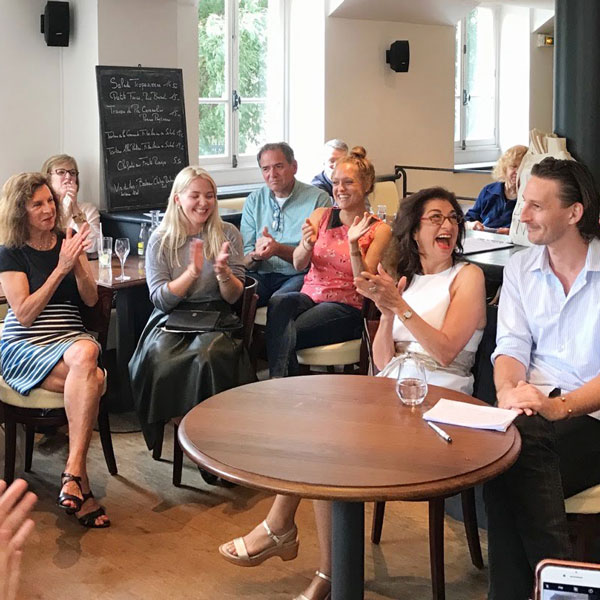
Last Tuesday, tax attorney and advisor, Jonathan Hadida, spoke at length at Après-Midi, our monthly coffee gathering, on the subject of…guess what? Taxes. Taxes for Expats.
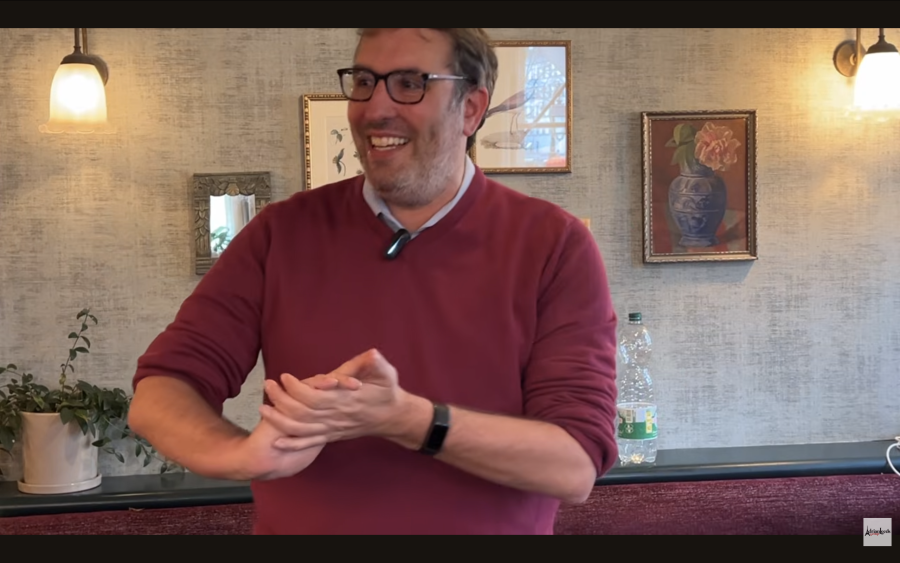
Jonathan LOVES to talk tax, and talk he did, from beginning to end, in a way that every Expat should be listening. It’s the number one conversation among Expats. So if you are one, or are thinking of becoming one, be sure to watch the video, now on our YouTube channel.
You are sure to learn everything you need to know about the taxes you will pay, and the taxes that you WON’T PAY!
IS FRANCE A SAFE PLACE TO LIVE?
A journalist from The Local called to ask a simple question: Is France a safe place to live? Samantha David was doing an opinion piece about this question, since so many Americans ask it. What she discovered was: “Dear Americans moving to France, yes, you’ll be safe here.”
“Dear Americans looking to move to France,” she begins…and ends with, “But above all, relax. You are in France: enjoy!”
Why ask me? Well, as a single American woman of a certain age having lived in France more than 30 years and having so many of our clients ask the same question, it was likely I’d have plenty to say about it and I did.
I can remember living in Los Angeles, refusing to walk even four blocks to the nearby shopping center because even in our own well-heeled neighborhood, it wasn’t safe. I grew up in New Orleans, and this is a place you don’t go anywhere unescorted at any hour of any day. One of my friends, about 13 years old, found his mother stabbed multiple times in her own bed for no good reason at all. Women reluctantly drive at night alone for fear of having a flat tire and losing their life in the process. In today’s American world, you don’t even send your kids to school unless they go through a security check for fear of an armed nutcase who can’t wait to mow down a few kiddies. The violence is rampant and out of control. Look what happened in Minneapolis with trigger-happy ICE agents who couldn’t wait to show their power?
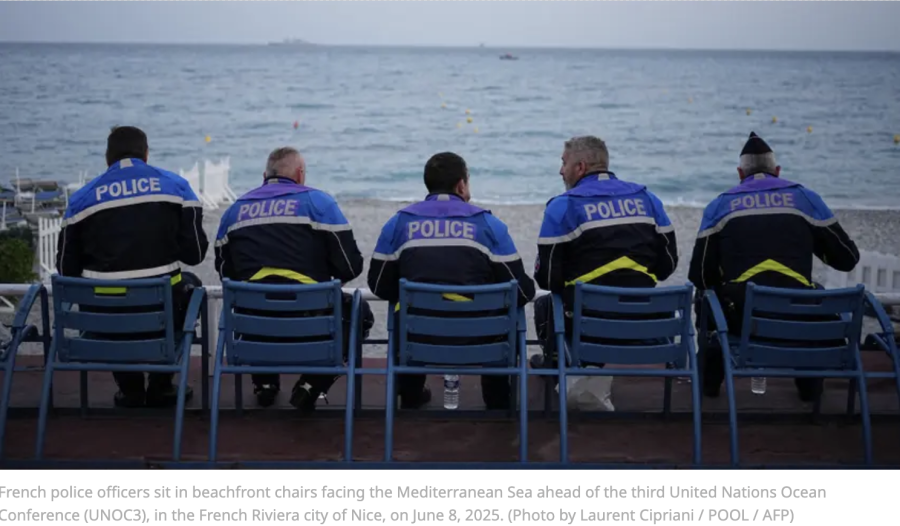
Is France safe. You can bet your bottom dollar. Here are the statistics:
• The U.S. homicide rate is typically 4–6 times higher than France’s.
• The U.S. reports significantly higher rates of gun assaults, armed robberies, aggravated assaults while France experiences lower levels of lethal violence, more petty crime (pickpocketing, scams, car break-ins—especially in large cities like Paris and Marseille).
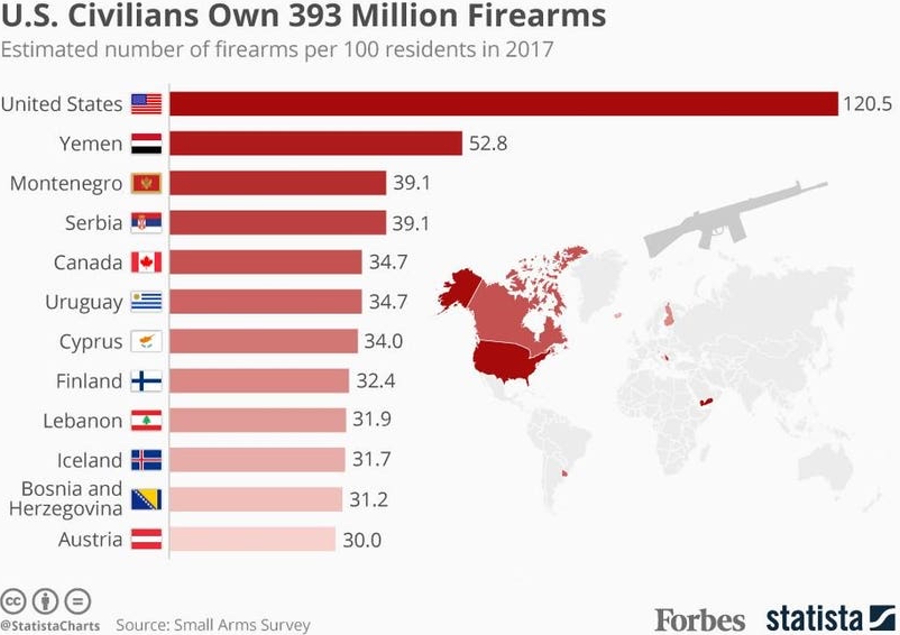
There’s no single reason France is safer, but gun availability is the biggest factor. The U.S. has 120 firearms per 100 residents (more guns than people) while France has strict gun laws and far lower civilian gun ownership. When conflicts happen in France, they are far less likely to become fatal because firearms are less accessible.
The social safety net plays a big role. France has universal healthcare, strong unemployment benefits, housing protections and lower extreme poverty rates. Socioeconomic stress correlates with violent crime and France’s welfare system cushions economic shocks more effectively. France also has a centralized national police structure, a lower incarceration rate than the U.S. and a different sentencing philosophy (less punitive overall).
The urban structure plays a role because French cities are more mixed-income with less suburban sprawl, more walkable and less segregated by race and income (though not perfectly integrated). The U.S. has deep residential segregation in many cities, which correlates with concentrated violence.
On top of it all, the U.S. has a strong gun culture, a higher tolerance for armed self-defense, and a long history of firearm normalization, that France does not.
But, France is not crime-free. Organized drug crime exists (Marseille in particular), terrorism has been a major security issue and petty theft is common in tourist zones. But statistically, you are far less likely to be killed in France than in the United States.
As I told Samantha, I have never once been fearful of my life at any time or any place in France. But, in the U.S…always and everywhere.
LILLE FOR A DAY
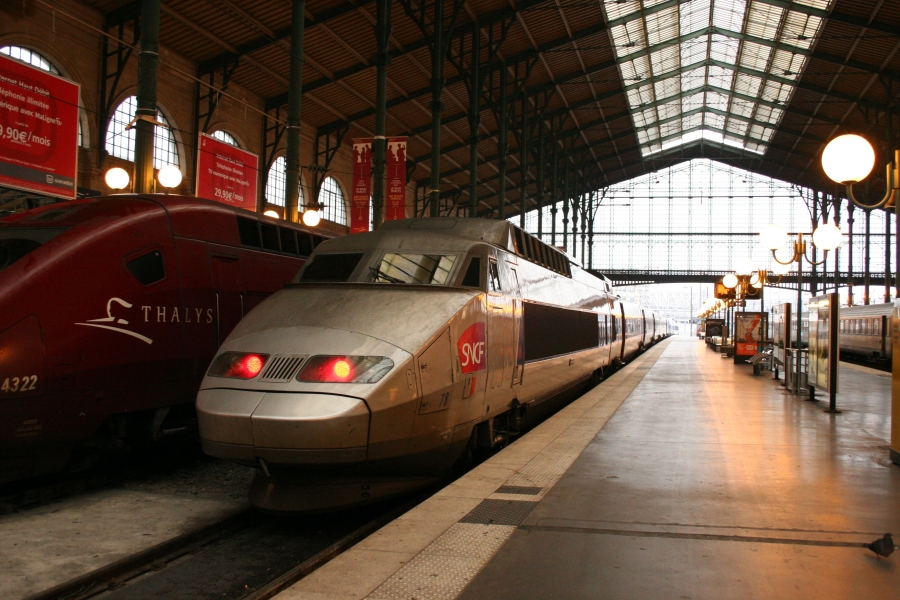
Friday, Janet Hulstrand and I went to Lille for a day. It’s so easy. In one hour, the TGV takes you from the Gare du Nord to Central Lille for very little money. The ticket was 30€ first class with my senior discount (30% off for 60 years old+ with a senior card that cost 49€ per year).
Our goal was to hear her son, Sam, play in his band. It was also his 30th Birthday. Sam lives and teaches grammar school kids in Lille, when he’s not composing songs and playing electric guitar.
When you leave the Lille-Flandres station, you run right into a yellow sculpture of a woman called “Romy” that was created by the French contemporary artist, Xavier Veilhan. Veilhan installed Romy on the station’s forecourt in 2019 as a striking public artwork—a large, melon-yellow bust of a young woman that seems to emerge from the ground and greet visitors arriving in Lille.
Janet remarked about Romy, “This is the type of woman who should be running the country.” (I think she meant the U.S.) I agreed.
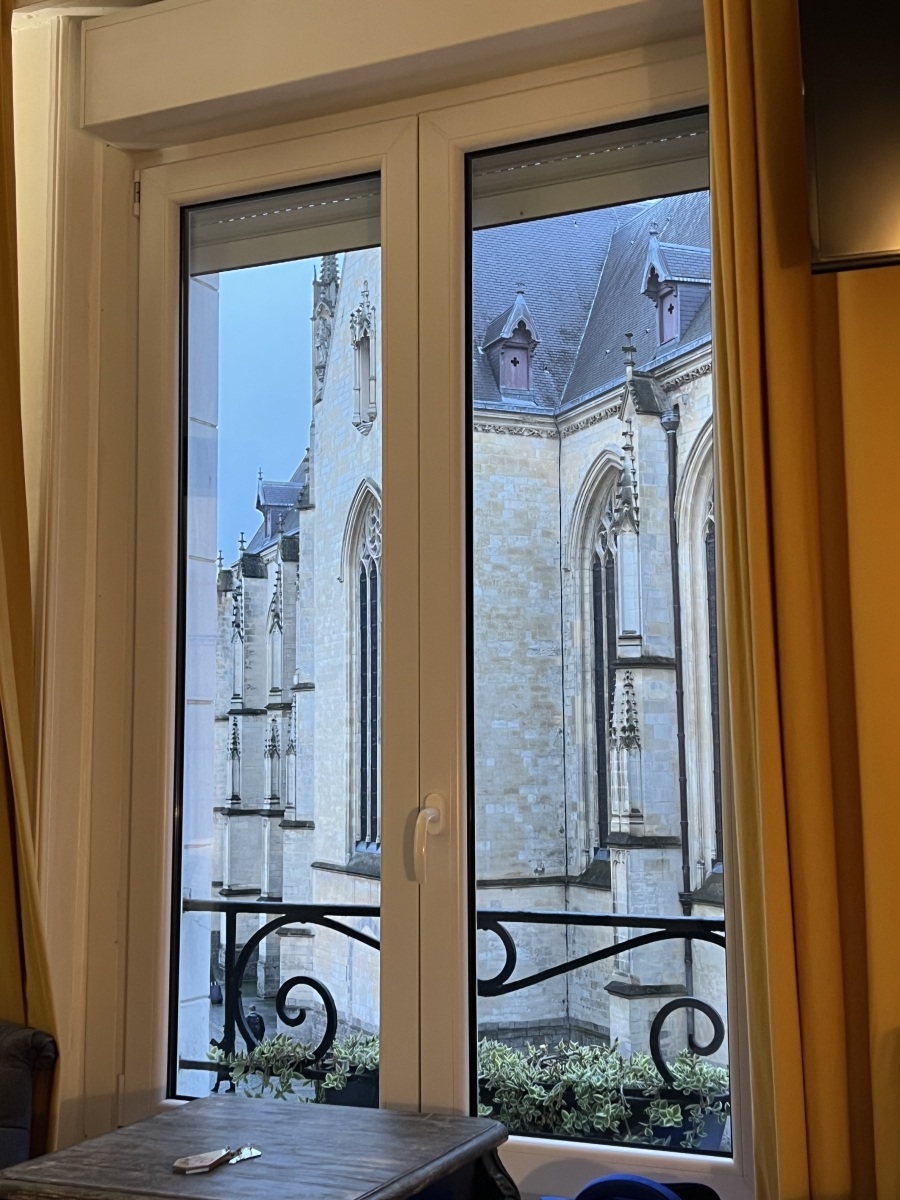
We booked a small typically Lillois hotel steps from the train station that was very inexpensive, the Hôtel Brueghel. Our room on the corner overlooked the Église Saint-Maurice de Lille, a Gothic-era church with five naves, vivid stained glass and local artwork from the 17th and 18th centuries. The view on the church was impressive and afforded us complete privacy. Simple, it was. Missing anything extraneous, it had what was most important: electric plugs next to the bed, good WiFi, a big bath tub (my idea of heaven), a comfortable bed and it was quiet to a fault. The location was ideal.
Before the concert we set out to find a typical Lillois dinner in an “estaminet.” In Paris, you might call it a “brasserie.” In Lille, this is a traditional Flemish tavern or café, the kind you find in Belgium, warm in atmosphere, wood-beamed, regional, and deeply local. On the menu are the local specialties.
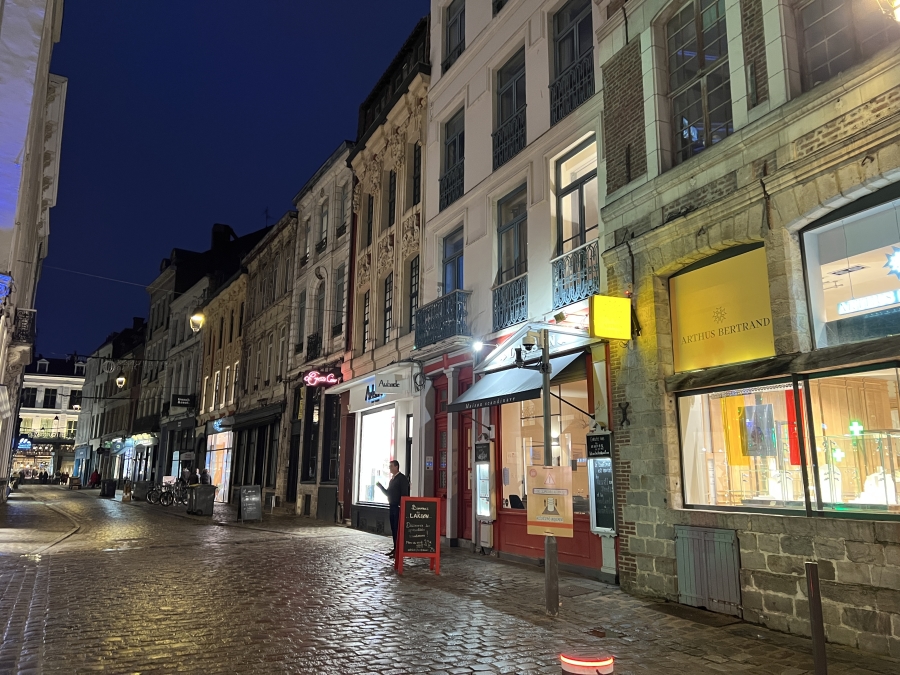
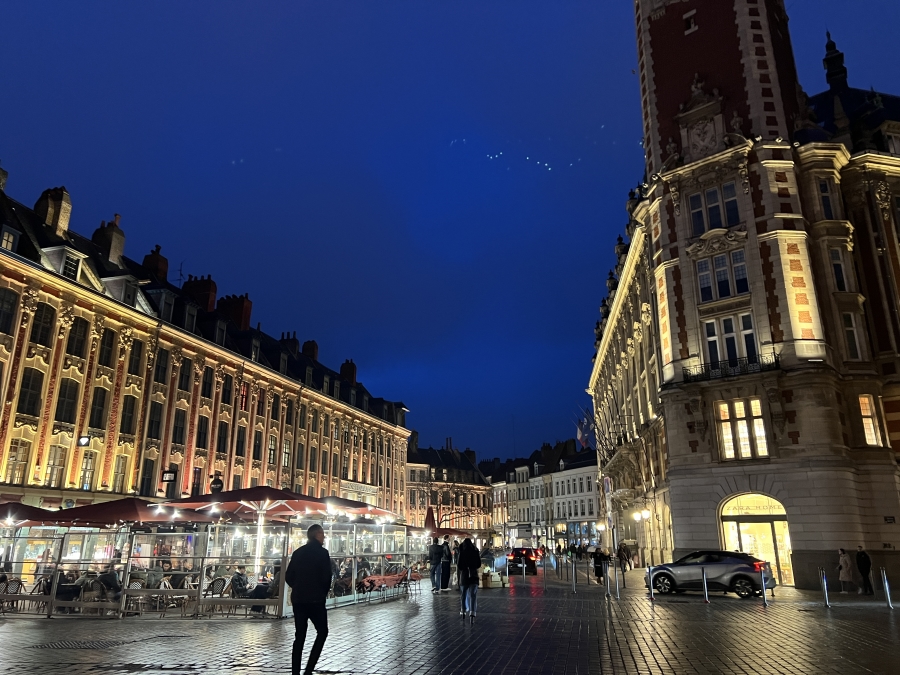
Thanks to the desk clerk, Google Maps and ChatGPT, we found our way to the Brasserie Campion, a few minutes walk from the hotel. The walk itself took my breath away. The city, beautifully and softly lit, is drop-dead stunning. I hadn’t remembered it being so pristine, so manicured before. Then, realized that perhaps in my absence, much had been done to improve the streets, like Nice has undergone the last ten years.
Brasserie Campion is located on rue Lepelletier right in the heart of Vieux-Lille, the historic and charming old town district of the city. It is a small street that connects Place du Théâtre with Rue Basse, and is part of the network of cobblestoned lanes that make the old town so atmospheric. Vieux-Lille is even more perfect than I remembered it. Teeming with elegant stores, both chains and independents, the district is a wonderland of beautiful things. The cobblestones can be tough on tender feet, so wear thick-soled shoes to trek around the old part of the city.
On the menu was the famous “Carbonnade Flamande,” what might be thought of as “Lille in a Bowl.” If you really want to understand Lille, don’t start with a museum—start with this stew. It’s the North’s answer to boeuf bourguignon, but instead of wine, it’s made with dark Belgian beer, slow-cooked onions, and a slice of mustard-slathered bread melted into the sauce. The result is rich, slightly sweet, deeply comforting and utterly convivial. Served bubbling hot with a generous bowl of “frites,” it’s more than a meal—it’s considered a taste of a region that proudly blends French elegance with Flemish heartiness. One spoonful and you may fully understand the North.
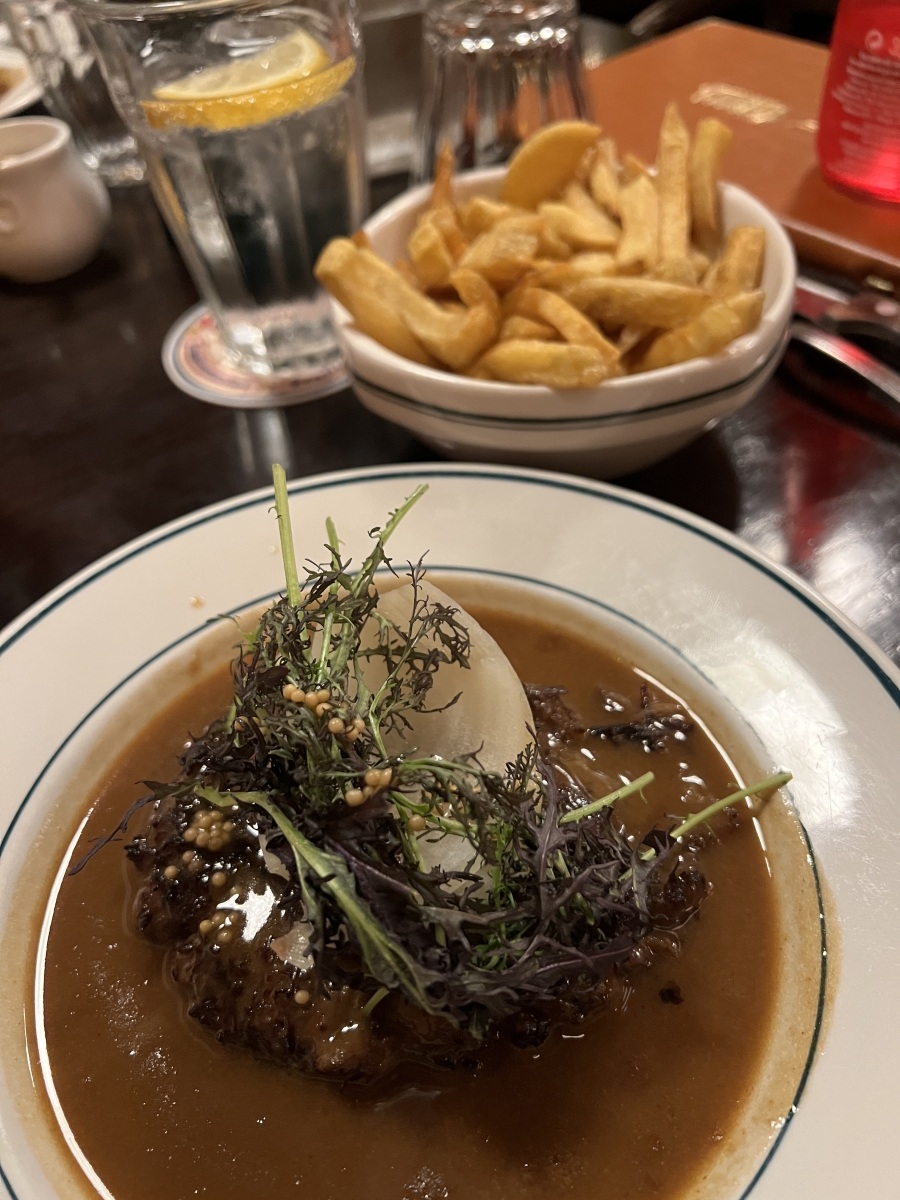
The serving at Campion was extraordinarily delicious, but I’m no expert on the matter. The fries were equally perfect and the entire atmosphere made for a ideal introduction to the city. We were charged up for what was to come.
Sam’s original venue cancelled his concert on the last minute, so he and his friends scrambled to find another—the living room of the apartment of one of his band members, up four flights of steep stairs in a typical old central Lille flat. In a flash they managed to set up enough electronic equipment to accommodate two band performances—one band made up of three women and two men, all very talented musicians who played guitar, sax, flute and drums which performed first. Then, Sam’s band followed, led by himself, with a drummer and two other guitar-players. Sam composed all of his own music and lyrics, wowing us all until close to midnight.
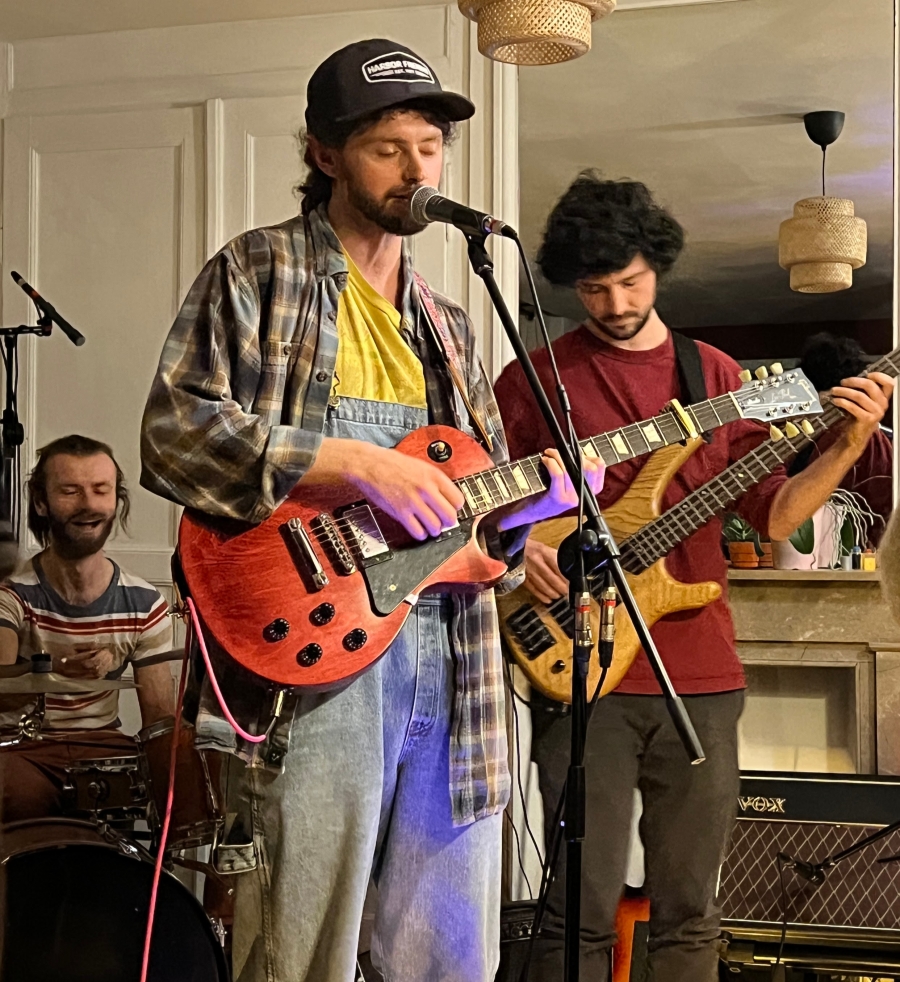
The audience of their peers (except for a few parents such as ourselves) stood around in close quarters to hear them all, dance to the music and enjoy their Friday night with their friends. Thirty-year-olds in Lille seemed very much okay in their own skins, regardless of their sexual orientation, and were dressed a whole lot more casual than their Parisian counterparts might have been. The performance was the reason we came to Lille and it didn’t disappoint.
The next morning, I headed out early to explore the Wazemmes Market, but that turned out to be a mistake on my part. The Marché de Wazemmes is a large, traditional both covered (Halles de Wazemmes) and open-air marketplace held around the Place de la Nouvelle-Aventure in the Wazemmes district. It’s one of the city’s most iconic and lively weekly events—and historically one of the most important markets in northern France. But, I trekked out on a Saturday morning, when nothing is going on there. Normally, it operates three mornings a week—Tuesday, Thursday and Sunday—with Sunday being the busiest and most extensive day when the market can grow to over 400 stalls and draw tens of thousands of visitors.
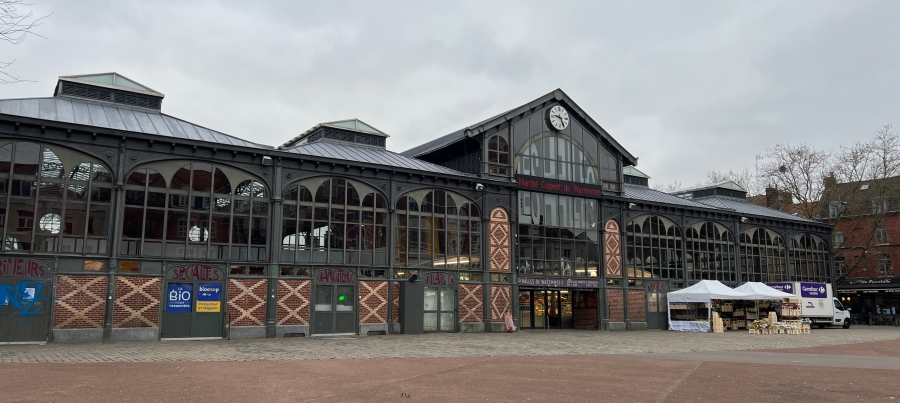
Saturday morning, in freezing cold weather, I walked all the way down from the hotel, a 25-minute walk, schlepping my computer, hoping to get some great photos and find a place to have breakfast nearby while getting a few emails out of the way. Open-air markets in France tend to have a lot of activity around them, with a bevy of cafés and at least one or two willing to cook up omelets. I found nothing resembling my imagination. I walked from café to cafe, only to find coffee and beer, so I hopped in an Uber and headed back to the hotel.
Around the hotel, there were plenty of coffee shops with food. A few had no available tables. Others only served pastries. And one wouldn’t allow computers on a Saturday. (Really?) After many tries, two-and-a-half-hours later, in 33° weather, I landed in a spot where they were able to find me one available table, then served up scrambled eggs cold. The door designed to open to motion nearby meant that the door was non-stop opening-closing and the restaurant was always cold.
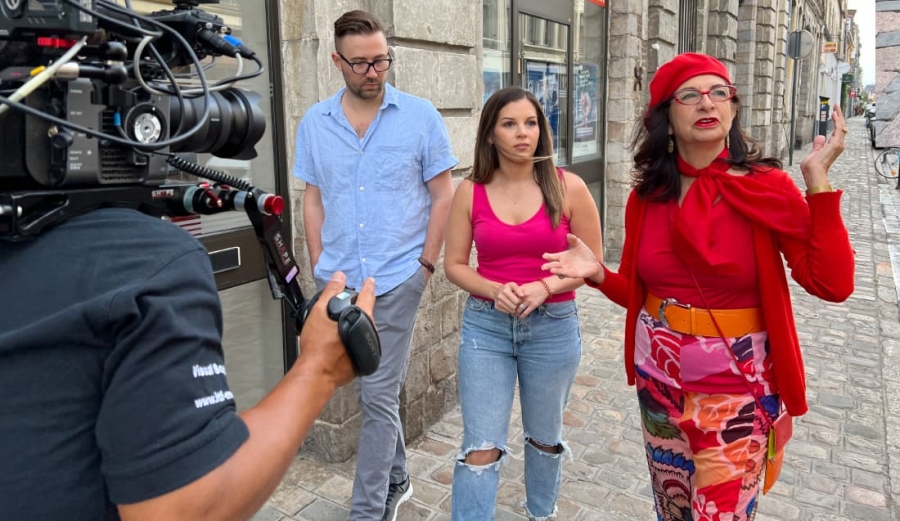
The lesson to be learned is to plan ahead. I wanted an adventure and I got it, for better or for worse. I wanted to get to know Lille better, and that I did. Along the way, I passed lots of parts of the city I remembered from when we filmed a House Hunters International years ago, “Learning a Thing or Two in Lille”—Season 180, Episode 1.” It started to come back to me—the reasons I like the city during that first encounter, and why I still liked it in spite of my Saturday morning debacle.
In recent Nouvellettres® I invited our readers to meet me Saturday afternoon at La Place on Place du Général de Gaulle in the heart of the city. We had a mixed group of Expats who have been living in Lille a long time, others who had just recently arrived and one gentleman in town to scope it out. All of those who already knew the city had nothing but wonderful things to say about life in Lille, and in particular, the easy access it provides to all of Europe thanks to the TGV. They all agreed that the Lillois were friendly people and it was amazingly inexpensive and definitely safe. They told us about the local American Club and all it does, and how “Lille, on a froid dehors mais chaud au cœur” (in Lille, it’s cold outside but warm at heart). Among them they exchanged information about doctors and other recommendations, just like Expats do.
This is what I wanted to learn by inviting our readers to meet up—to learn what they thought about life there. So, while my morning adventure was challenging, I didn’t hold it against the city for my own bad judgment. And yes, it was very cold.
Saturday early evening we returned to Paris, taking just one hour to be back in the City of Light. The train left from the alternate station, Lille Europe, just a few steps further on the same path. Today, as you read this, I’m on a train to Nice for the week. Thanks to the TGV (Train à Grande Vitesse), we can be just about anywhere…in France and beyond. Don’t we love it?
Note: By coincidence (or not), Phineas Rueckert and Sam are brothers, both sons of Janet Hulstrand, author of Demystifying the French.
A la prochaine…
 Adria Leeds
The Adrian Leeds Group®
P.S. In addition to our property services, we also focus on living in France on a practical level—like moving, renovating, etc. Our website is the perfect place to begin your education into everyday life in France.

Let Us create a custom strategy for you
You can live or invest in France-now.
Join us at our monthly Après-Midi.
Become a part of the Paris community.
Property for sale
Read & Subscribe
Dive into more by reading the French Property Insider
Better yet, subscribe to both and get the updates delivered to your inbox.
Global Money Services
Our contacts will help you invest in France.


See Adrian on HHI

Join us on Youtube
Dive into more on how to live, invest & escape to France
Be sure to subscribe!
To read more, click the links below.