

Adrian Leeds Nouvellettre®
Your taste of life in France!
Subscribe and don't miss an issue!
Saved the Best for Last
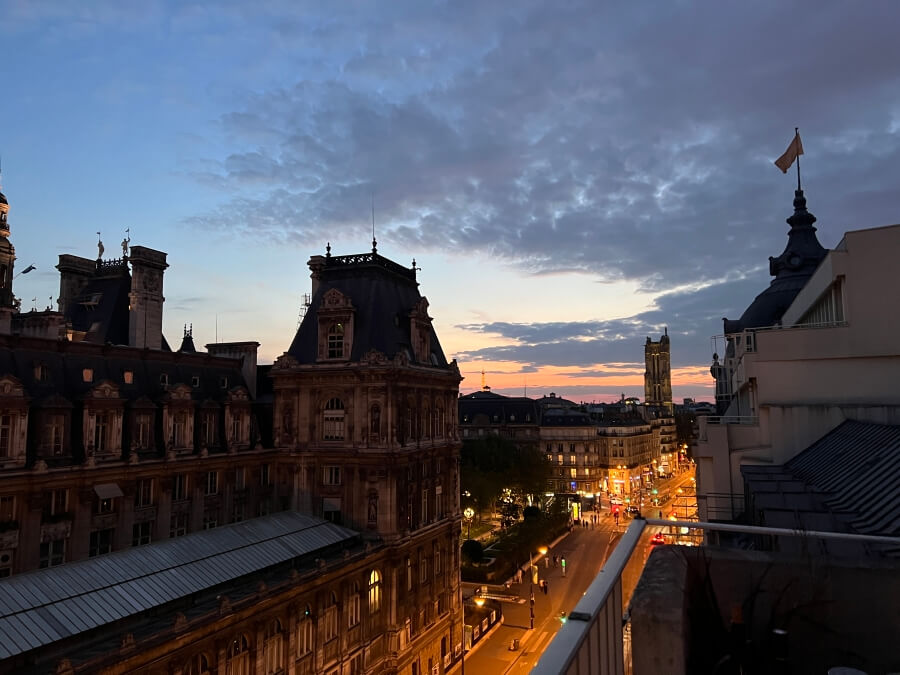
There’s plenty here to sink your teeth into, but be sure not to miss the last bit. I’ve saved the best for last!
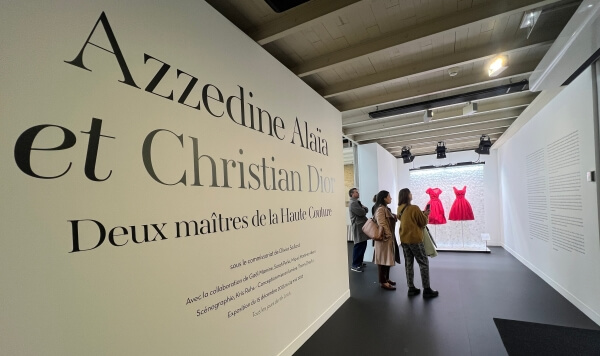
TWO MASTERS: AZZEDINE ALAÏA AND CHRISTIAN DIOR, “Azzedine Alaïa and Christian Dior, Two Masters of Haute Couture” is the current exhibition lighting up the Fondation Azzedine Alaïa through May 24th, 2026. I’ve passed the space perhaps hundreds of times on rue de la Verrerie, but never noticed it. It was his home and atelier at number 18—originally an industrial hall with a glass roof, later a warehouse for the Bazar de l’Hôtel de Ville—when the site was acquired and meticulously restored by Alaïa beginning in the late 1980s. It wasn’t just a showroom or atelier: it was his home, studio, workspace, and social hub all under one roof. Within its ensemble of vast, interconnected rooms and buildings, he lived, created, entertained, taught, and welcomed clients and friends.
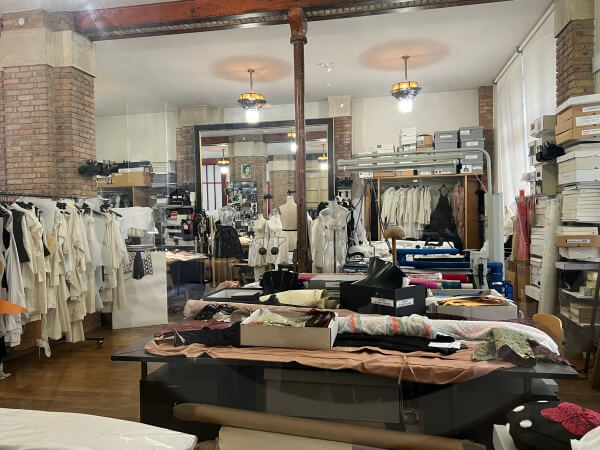
That alone is worth a visit, and as a special treat. You get a glimpse into his studio, left exactly as it was at the time of his death in 2017. This was the beating heart of Alaïa’s world. The long worktables remain scattered with scissors, pins, measuring tapes, spools of thread, and half-finished ideas. Patterns lie where they were last handled. Chairs are pushed back as if the seamstresses have just stepped out for a coffee. There is no theatrical staging here, no attempt to “museum-ify” the moment. It feels paused, not preserved.
This is more than a museum show—digging deep into the heart of two of fashion’s greatest geniuses in a way that feels personal, historical, and beautifully Parisian. You’ll discover a carefully curated dialogue between nearly 70 exquisite garments—some by Christian Dior, others by Azzedine Alaïa himself—drawn from the collection the Tunisian couturier obsessively built over his life. These aren’t random pieces: they’re treasures Alaïa protected, admired, and considered kindred spirits with his own work.
I found it relatively easy to determine which were Alaïa’s and which were Dior’s. Dior’s groundbreaking silhouettes from the 1940s and 1950s—the age of the New Look—stand shoulder to shoulder with Alaïa’s meticulously cut modern forms, but together they whisper tales of Paris ateliers, architectural precision, and the ceaseless pursuit of form, volume, and feminine power. I’d be happy wearing either’s wearable art.
Alaïa revered Dior not just as history, but as teacher and muse. His admiration began when he arrived in Paris and saw Dior’s work dominate fashion’s imagination—and blossomed into a lifelong commitment to preserving those creations long before fashion archives were fashionable. This is couture without glass cases—sensual, contemplative, and alive with lineage. You can almost hear the whisper of silk and the memory of scissors cutting through tulle. It’s a conversation across generations, set in the elegant intimacy of the Marais.
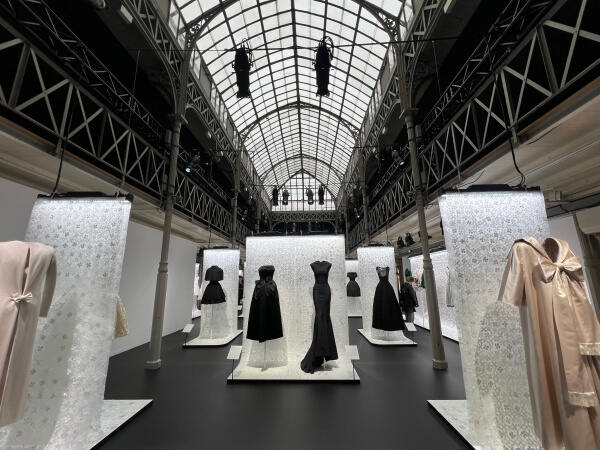
This isn’t just fashion history on display—it’s an ode to Parisian craft, legacy, and the invisible threads that link couture icons across time.I dare you to choose your favorites from among the collection.
As I wandered through the collection, I wondered if I had stuck with my childhood dream to become a fashion designer—after having studied at FIT in New York with some of the world’s most respected designers (Calvin Klein and Betsy Johnson were among our visiting professors)—if I would ever have achieved such acclaim. And no, I didn’t think so.
FLAMENCO A LA SARA BARAS
The first time I saw Sara Baras perform was in 1999 at the Théâtre du Châtelet in Paris at Christmas time. A friend offered me a 20€ ticket in nose-bleed seats, and at the time, flamenco was completely foreign to me. We gazed from the top floor box with our tongues hanging out in amazement of what we witnessed and that hooked me forever.
Since that time, I’ve attended her performances in Paris every opportunity, including taking a special trip to Madrid with a friend to see her in her native Spain—just before the Covid-19 pandemic rendered us all imprisoned in our homes. When we saw this most recent performance advertised at the Folies Bérgère, we couldn’t grab the tickets fast enough—to help her celebrate the 25th anniversary of her company in which she pays tribute to the paragon of guitar genius, Paco de Lucía. Thus was born “Vuela,” a show she created to be unforgettable, and to transport us once again to that magical world that only Sara Baras is capable of creating.
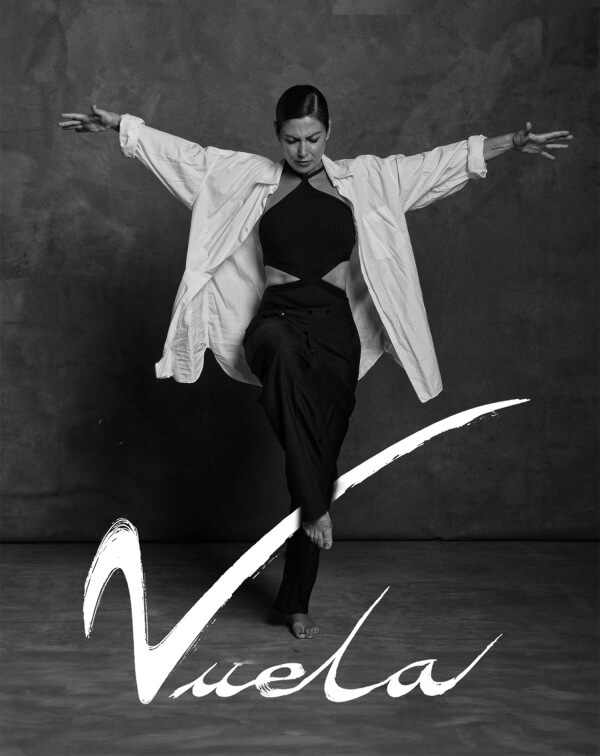
I know. Flemenco is not at the top of your list, is it? But, in a world where flamenco is often defined by passion alone, Sara Baras brings something rarer to the stage: command. Yes, there is fire—plenty of it—but what truly distinguishes Sara Baras is her authority over space, rhythm, and silence. She doesn’t simply dance flamenco; she constructs it, piece by piece, like a master architect. Every movement is intentional. Every pause speaks. Nothing is accidental.
Her famed “zapateado”—the rhythmic stamping, tapping, and striking of the feet against the floor, is not a show of speed or bravado, but a kind of orchestration. The floor becomes an instrument, and her footwork a carefully composed score—powerful, precise, and unmistakably musical. You don’t just watch it; you hear it. She can tap a note with her foot like a pick that plucks a guitar string. As the show opened, the moment I heard the clear notes of a Spanish guitar (the sexiest sound in the world), the tears ran down my cheeks…and they didn’t stop throughout the entire performance.
Unlike many flamenco stars, Baras is not merely the interpreter of someone else’s vision. She is the author. She choreographs, directs, and shapes her productions into full theatrical experiences, closer in ambition to ballet or opera than to traditional “tablao” (the wooden planks). Her shows unfold with narrative clarity, sculpted lighting, and emotional arcs that stay with you long after the curtain falls.
What may surprise first-time viewers is her restraint. In an art form famous for excess, Sara Baras knows when to be still. That stillness—charged, deliberate, unapologetic—can be as riveting as the most thunderous footwork. It gives her presence a regal quality, a quiet confidence that says she owns the stage before she ever moves.
And it’s not just the sounds or choreography that lift your spirit. The costuming is intentionally both stunning, yet simple and contemporary. In this year’s performance of Vuela, she dances in black pants, white cotton shirt and black vest—a masculine form she and all of her co-dancers take until she gradually introduces her iconic whirling dervish style flowing skirts and a medley of colors. I remained mesmerized in spite of the large man behind us who continually kicked the back of our seats.
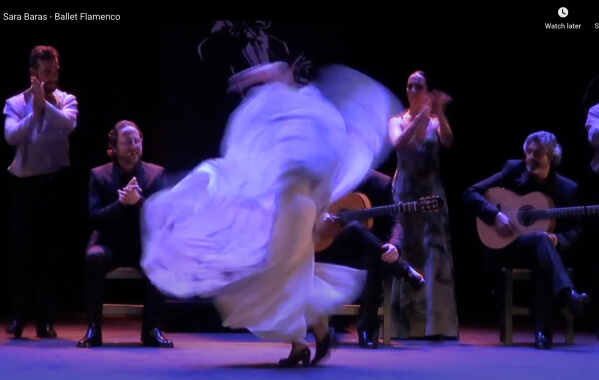
Her musicians and singers are as accomplished as she is in dance. Her violinist, Alexis Lefevre, made sounds from his instrument I didn’t think possible. He plucked it like one would a flamenco guitar, and I had to take a double take to believe it was a violin with a very different voice.
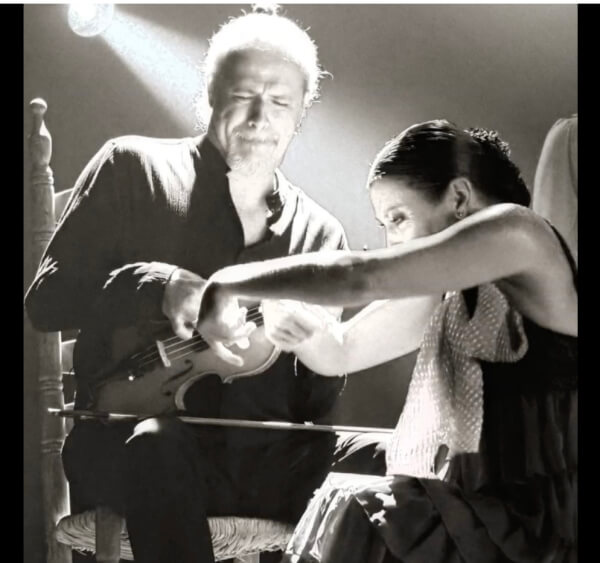
Most importantly, Baras has brought flamenco onto the world’s great stages without diluting it. There is nothing “watered down” for international audiences. The soul remains Andalusian, proud, uncompromising—simply presented with clarity, scale, and elegance. In short, many dancers ignite the flamenco flame, but Sara Baras builds the fire and controls the heat.
The audience didn’t want to let her go. There were numerous curtain calls. She wanted to give her all to the audience and gave their all to her. In typical French audience fashion, they applauded, they stood up and like aficionados of flamenco, they yelled “¡Olé!” (oh-LAY).
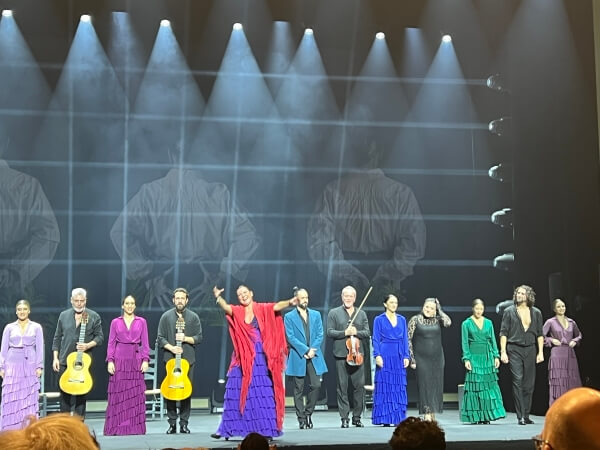
I raised my arm and gave her a big wave. She caught the wave and waved back. I felt the connection, even from row J. And now I can’t wait till she performs again in a city anywhere near me.
Want to get a taste? Watch a bit of it on YouTube.
LE BON MARCHE
A visiting friend and I set out to peruse Le Bon Marché’s holiday theme as usually, it’s among the best. This year’s overall theme for the holiday décor and windows is a “warm, enchanting traditional Christmas—inspired by a festive Christmas market and village atmosphere with a poetic and cozy spirit.” That’s what their intentions were, certainly, but no offense, but it’s downright boring. Even the kids outside on the street gazing at the windows thought so.
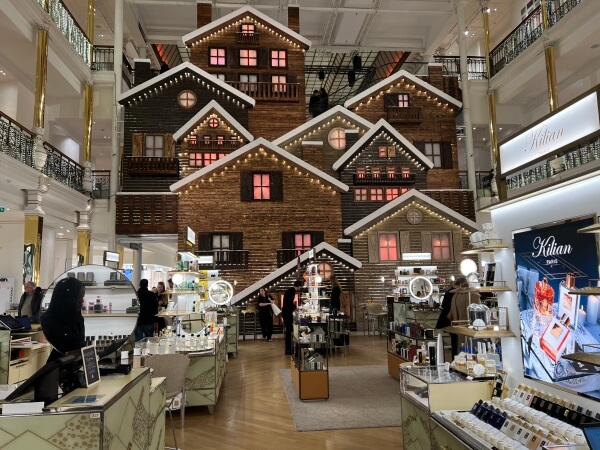
The windows are designed to transform into a picturesque Christmas village with snow-topped wooden chalets and sparkling lights, evoking the classic charm of Alsatian Christmas markets. Animated displays feature playful scenes with plush rabbits and other whimsical characters bringing the festive storyworld to life. Perhaps, but they are colorless and relatively lifeless. I didn’t even bother to take photos.
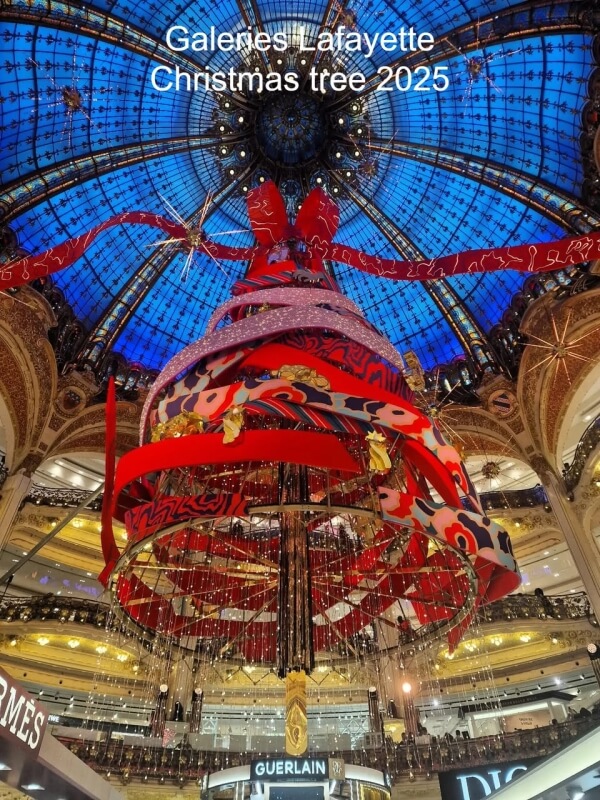
Inside, the central escalator becomes part of a village tableau with chalet facades, golden cobblestones, and seasonal details. Again, a lot of wood, browns and certainly not as exciting at Galeries Lafayette’s annual Christmas Tree.
It didn’t matter. What’s most exciting is what’s going on across the street at La Grande Epicerie which was wall-to-wall with holiday shoppers grabbing up gourmet goodies at no bargain. And the upper floors are filled with some of the most beautiful housewares on the market today. Go shop till you drop, have lunch at La Table, the on-site restaurant in the courtyard on the first floor which is both lovely and delicious.
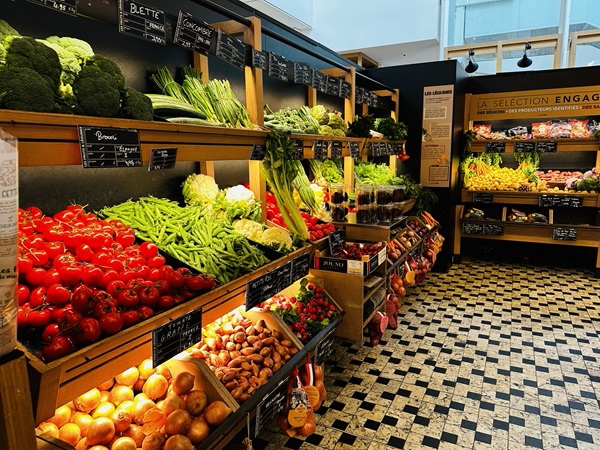
While the prices might break the bank, the quality lives up to them. Spice up your holiday with a few goodies and enjoy the atmosphere of Paris’ best gourmet market.
THE CDG EXPRESS
Paris is about to get a very un-Parisian luxury: simplicity. A new train line, the CDG Express, is currently under construction and promises to whisk travelers from Gare de l’Est straight to Charles-de-Gaulle Airport in just 20 minutes—no stops, no detours, no nail-biting traffic jams. Trains will depart every 15 minutes, from 5 a.m. to midnight, seven days a week. In other words, designed not for commuters, but squarely for flyers.
Think airline-lounge sensibility on rails: Wi-Fi, generous luggage space, and real-time flight information screens so you can check your gate while still in Paris. A far cry from the often overcrowded RER B or the unpredictable crawl of the A1 and A3 autoroutes. The CDG Express will also plug neatly into the existing transport web at Gare de l’Est and neighboring Gare du Nord, making connections easy—at least in theory.

There is, of course, a catch. The line is scheduled to open in early 2027, and the price tag is expected to be around 24€ one way, compared to roughly 13€ on the RER B. Navigo passes won’t be accepted. Critics have already dubbed it “a train for the rich.” Still, for travelers who value time, predictability, and a calmer start (or end) to a journey, the CDG Express may well become one of those Paris conveniences you didn’t know you needed—until you try it.
Meanwhile, I’m spoiled. I figure that at this age, I’ve earned the rights to a private taxi…but this is a big improvement over the current RER offerings!
LE BIJOU DE L’HOTEL DE VILLE
I’ve left the best news for last. It’s a Christmas gift for all of you who are dreaming of a small, inexpensive pied-à-terre in Paris for the few weeks a year if you want to get your “fix” of the City of Light. The idea started with our own staff living in Nice full-time and some of our clients who love coming to Paris every now and then.
So, I set out to find a jewel of a studio apartment in central Paris that would be the perfect answer as a Fractional Ownership property with 13 4-week shares.
This isn’t easy, mind you. While there may be a sizable inventory of apartments from tiny (10–15 m²) to Standard (20–30 m²) to larger (30 m²+), those that I might consider are one in a thousand because it has to be a JEWEL.
What does that mean? It means it has to shine in every respect. The apartment must:
• Be very well located
• Have an elevator
• Have lots of light and beautiful views
• Be situated in a good building
• Have a flexible floor plan that allows for being fully equipped
Remember, you buy what you cannot change, so as long as decor can turn it into a palace, the basic attributes must be there. And we found it!
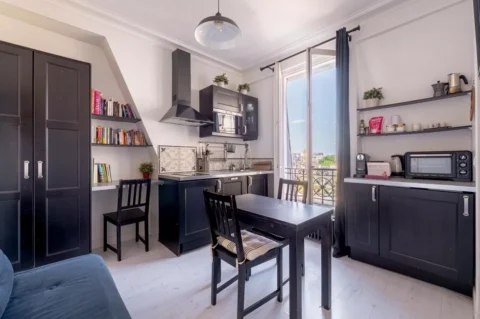
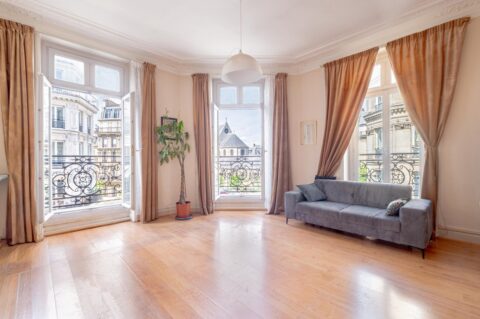
Located on rue du Temple at the back corner of the Bazar de l’Hôtel de Ville department store (BHV), steps from the Hôtel de Ville with views from the windows of the City Hall, Notre Dame de Paris and of course the BHV, not to mention the pedestrian part of rue du Temple (a Métro entry is just there), this large studio apartment fits the bill.
The building is a 6-story residential and commercial building built around 1930, with about 18 apartments plus commercial spaces at the ground level. It was just sold in late 2024 after nearly 100 years without a sale—marking a new chapter for the property. According to urban-planning filings for the property, the project wasn’t a full demolition and reconstruction—it was a significant rehabilitation of the existing building that included structural refreshes (roof and floors), full façade restoration, and modernization of exterior elements like windows and chimneys.
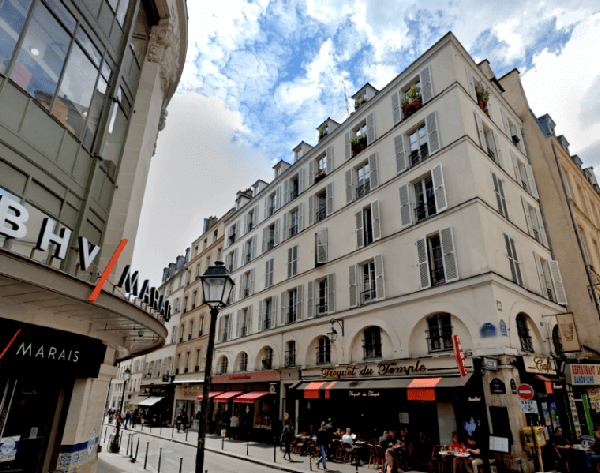
What this means is that everything in the building is new, but it maintains it’s historic and intrinsic value.
Rue du Temple is one of the oldest thoroughfares in Paris, running north–south through the historic Marais district (3rd and 4th arrondissements). Its origin dates back to the Middle Ages and earlier, when the area was becoming integrated into the expanding medieval city. The street’s name comes from the Order of the Knights Templar (Templiers), a powerful medieval military and religious order founded in the early 12th century. They established a major “commanderie” (headquarters and fortified complex) in the Marais around 1140, which became one of their key European centers. The Templars’ domain, known as the “Enclos du Temple,” included churches, towers, gardens, and workshops. This is reflected in many place names in the area (like Temple and rue Vieille-du-Temple).
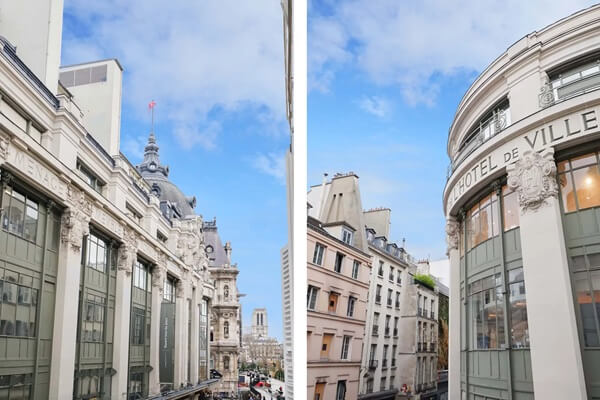
Over time, several smaller medieval streets and lanes in this area were merged, renamed, and extended to form what became the long, unified rue du Temple as we know it today. Early names included rue des Coquilles, rue Sainte-Avoie, and rue de la Milice du Temple, among others. The street runs roughly from rue de Rivoli near the Hôtel de Ville up to Place de la République, tracing an old historic axis through Le Marais. The street has always been an important urban spine, lined with shops, residences, churches, and civic buildings.
According to urban records, the existing building at 9 rue du Temple was constructed in phases typical of central Paris—many parts may date from the 19th century, when much of the Marais took its current built form. Like other buildings in the area, it occupies a lot shaped by medieval property boundaries and was integrated into the modern Paris street grid as those old streets were formalized.
Rue du Temple is not just a street—it’s a tapestry of Parisian history. Named for the Knights Templar and tied to one of medieval Paris’s most powerful institutions; shaped by centuries of urban change—medieval lanes, classical hôtels particuliers, and 19th-century urban planning; today, it connects major civic points like the Hôtel de Ville and Place de la République and remains a vibrant urban artery.
Owning a property on this street at this location simply doesn’t get better. If you want to really feel connected to the City of Light, this is where you will want to be. And at this part of the street, it’s pedestrian, so you won’t hear traffic noise…just the sounds of the people below.
The apartment is 25m2 (270 square feet) on the second floor, with an elevator, with two large windows overlooking the street. We will renovate it and decorate it to the highest of standards and quality, with that magic touch of Martine di Mattéo—the best designer in Paris. It will be outfitted with twin beds that convert to a single queen-sized bed so that you’ll have your choice (sleeps two). The kitchen will be fully equipped with a stove, microwave/oven, washer/dryer, refrigerator and all of the fixin’s. The bathroom will have all the best and finest of fixtures. The windows will be doubled-paned to keep out the noise. And we’ll ensure there is air-conditioning for those few weeks a year it gets warm.
Owners will have four weeks a year based on our fully rotational calendar, just like our other Fractional Properties. This is France’s smartest usage calendar; proven by the success it has had with other properties on the market we developed. Occupancy for the 13 owners begins on Thursday and ends on Thursday, in two-week intervals, 26 weeks apart. Each year, the rotation moves forward by 10 weeks to allow for a full mix of seasons. Owners may trade weeks with other owners as they like throughout the year. And it’s easy to plan as the calendar is set for the next 13 years. Owners who wish to have four weeks consecutive usage, may choose a share adjacent to another owner with the same request. By trading weeks between them, each can have four weeks of consecutive usage.
Our fractional properties all meet our exacting standards: a property that is highly desirable, well located, well designed, decorated, and appointed—a “jewel” that is unlike any other of its category; a usage calendar that is attractive to a wide variety of owners; legal structure and supporting documents must be 100% correct to avoid any conflicts among owners, quality management must be in place to keep the property running smoothly and remove any unnecessary obligations by the owners; owners should be like-minded.
This is going to be that and much more. The price? We haven’t set it yet because we’re still working on the budgeting, but we expect it to be somewhere between 65,000€ and 85,000€ per share—highly affordable! The first four shares will be at the lowest price, the second five shares will be at an average price and the last four shares at the highest price, so the earlier you buy, the more you save.
And the name? That’s not set yet either, but for now, we know it’s really “Le Bijou de l’Hôtel de Ville.”
It’s the perfect answer for our clients and friends living in other parts of France, or anywhere for that matter, who want their fix of Paris from time to time.
Think you might want a share? Better get on our special mailing list NOW. It will be sold on a first-come, first-serve basis, so the sooner you put in your name/email, the better. Email us now to let us know!
To learn more about Fractional Ownership, visit our website.
Happy Holidays and Merry Christmas to all of you!
A la prochaine…
 Adria Leeds
The Adrian Leeds Group®
P.S. Our offices close between Christmas and New Year’s. So, if you want to book your consultations, try to do that soon! Complete this form to get on the roster! (I’ll still be writing that week…but this year from Tel Aviv!)
P.P.S. Don’t miss this opportunity for a share (or two) of Le Bijou de l’Hôtel de Ville. Email us now to let us know you want to be one of the first!

Let Us create a custom strategy for you
You can live or invest in France-now.
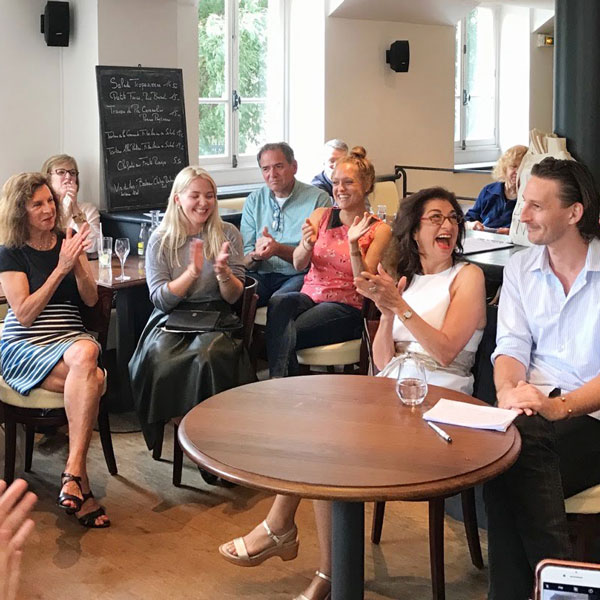
Join us at our monthly Après-Midi.
Become a part of the Paris community.
Property for sale
Read & Subscribe
Dive into more by reading the French Property Insider
Better yet, subscribe to both and get the updates delivered to your inbox.
Global Money Services
Our contacts will help you invest in France.


See Adrian on HHI

Join us on Youtube
Dive into more on how to live, invest & escape to France
Be sure to subscribe!
To read more, click the links below.