
Adrian Leeds Nouvellettre®
Your taste of life in France!
Subscribe and don't miss an issue!
Seeing Clearly
SEEING CLEARLY
While you were reading last week’s Nouvellettre®, I was at my third ophthalmologist to get an opinion on the goings on inside my left eye.
Seeing perfectly is high on my list—one reason to wear progressive lens glasses that have become a fixture on my face all these years.
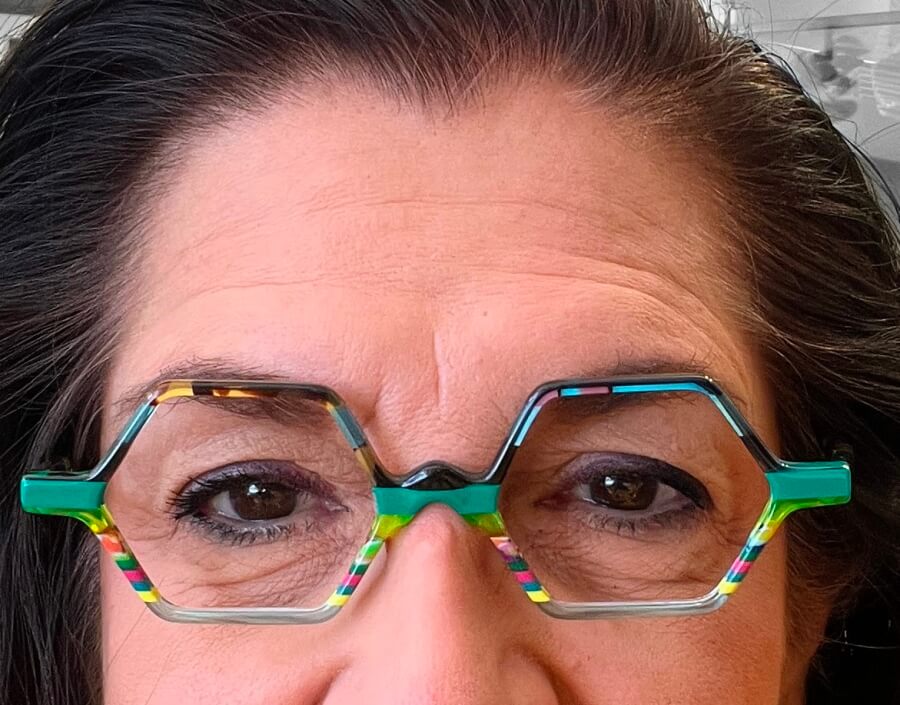
Not long ago, little specs of what seemed like dust started floating by my left eye. My ophthalmologist sent me to a vision center for some serious tests, and lo and behold, not only was a cataract forming, but so had a membrane over the retina. As a result, his answer was a prescription for reading glasses for use when working on the computer, and said we should wait until the cataract had matured more.
A visit to my favorite optician (Optique des Vosges) produced a smashingly fun new pair of readers (not cheap, of course), only to discover that they were unusable. Returning to Sabine (the optician at Optique des Vosges) with the defunct glasses, she referred me to a cataract specialist not far away (who was excellent), who then referred me to a retina specialist.
This now has become a string of doctors, tests and events. The retina specialist is the ophthalmological surgeon I saw last Monday. One look at my tests and he said, “I guess we’re going to do the surgery on Friday.”
Just like that. “Friday?! This Friday?! Why so soon?!”
OMG, imagine the old ticker ticking louder than ever at the thought of having eye surgery only a few days later.
“Are you good?,” I asked, almost jokingly. But, not really joking when it comes to screwing around with your eyes.
He chuckled, then showed me a video of the surgery he was going to perform and exactly how it is done. The guy has a big organization and an amazing reputation, so I said okay and began to rearrange my life to make time for the surgery on Friday.
COMPUTING THE COMPUTER
You may remember that last week my computer screen went black and an Apple iPad came to the rescue for the week in Nice. It was quite clever how the screen of the iPad could double for the computer screen, almost seamlessly. It came to the rescue long enough to visit the authorized Apple dealer down the street for my computer to be diagnosed and repaired.
Yep, it needs a new screen, but it also needs a new battery. “Give it five to seven days for the repair,” they said, “but here’s the price…” almost as much as buying a new computer.
Now, you ask, “Why didn’t you just buy a new computer?”
Because…a new computer with a Qwerty keyboard takes weeks to get, not the quick repair I could live with. Plus, my laptop will be like new once this is done and maybe last another couple of years.
“Proceed,” I said and forked over the credit card.
IS FRACTIONAL OWNERSHIP RIGHT FOR YOU?
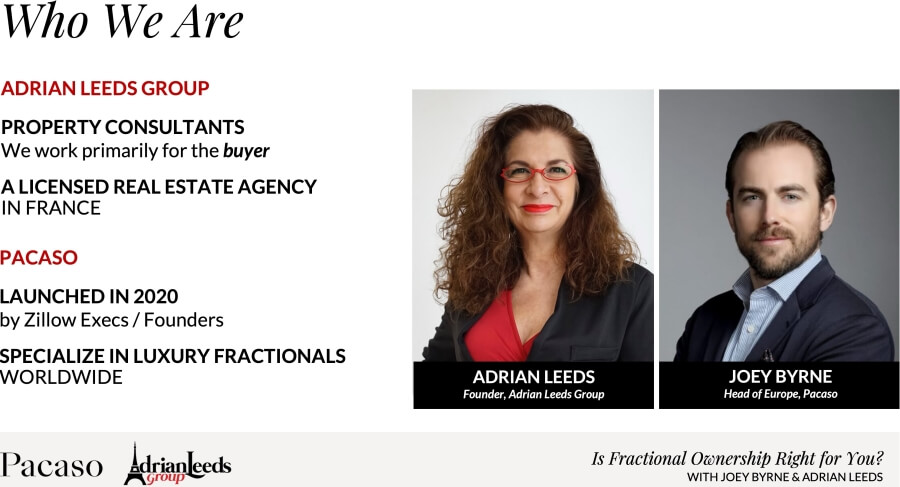
We admitted the registrants to the Webinar, “Is Fractional Ownership Right for You” at 7 p.m. on the dot on Thursday evening, with a presentation given by Joey Byrne, Head of Europe for Pacaso, and myself. We outlined what a fractional property is, what are the benefits, what makes a quality property and how it all works. Then we offered up the shares we currently have on the market and opened the floor to questions.

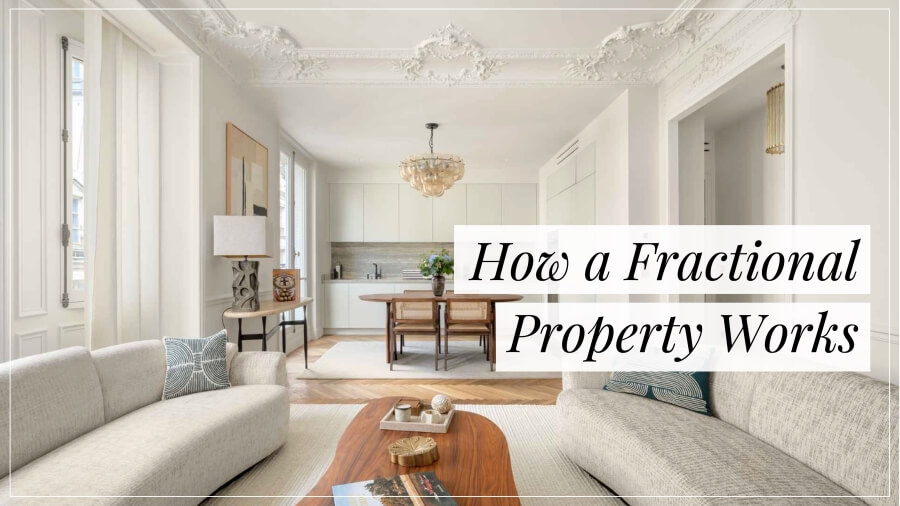
Fractional Ownership makes it possible to own a luxurious home in France for a fraction of the cost—without sacrificing the benefits of true property ownership. Unlike a timeshare, you purchase a real ownership interest in the property, sharing expenses, maintenance, and use with a small group of like-minded owners while enjoying the potential for appreciation.
Every Adrian Leeds Group fractional property is carefully selected, beautifully renovated, professionally managed, and designed for effortless ownership. With a thoughtfully structured rotating calendar, owners enjoy different seasons each year, making it an ideal way to experience France regularly while avoiding the financial and practical burdens of owning a second home outright.
Our newest one is still on the drawing boards: La Perle du Port. It’s a two-bedroom apartment on the 4th floor of a newly renovated building overlooking Nice’s Old Port with its own parking space (not that you’ll ever even need it!). We think the shares will be sold very quickly, so if you want to be on the exclusive mailing list to be the first to know when it’s on the market, email us today.
To learn more about Fractional Ownership and our properties, visit our website.
To watch the video in its entirety, go to our YouTube channel.
EYE OPENING
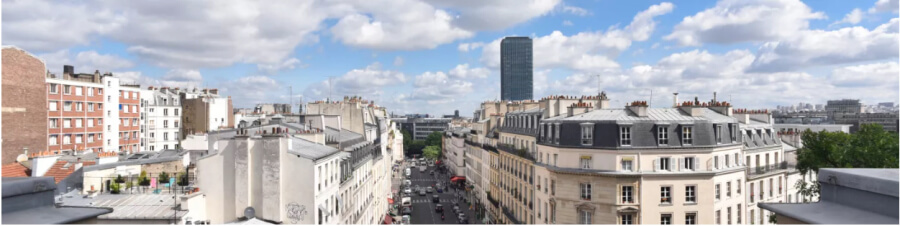
The eye surgery Friday took place at Ramsay Santé Hôpital Privé Geoffroy Saint-Hilaire‘s ophthalmological department which runs the show like a factory. Older (mostly) people are lined up one after another for their surgeon to perform what is almost always cataract surgery. It’s one of France’s highest-volume ophthalmic surgery centers, particularly for cataract and retinal surgery, performing more than 24,000 surgical procedures each year. Across all specialties, cataract surgeries account for 30% of the clinic’s entire volume.
This is where the costs were insanely small. The cost of the brief out-patient stay at the hospital, the anesthesiologist’s job and the surgeon’s were at least one-tenth of the cost of the U.S. Maybe even less. Plus, it will be fully covered under French social security and a mutuelle (top up) insurance policy.
During the surgery, I could actually see the procedure to remove the membrane. A colored liquid washed over my eye then I could actually see the instrument used to grab it and peel it off! At that point, the surgeon said to me, “Don’t look at the tongs!” He could see that I was watching! How crazy is that?
About four hours from admission into the hospital, a taxi took us home, with me wearing an eye patch, and a big bag of eye medication to use over the course of the next few weeks. The doctor hadn’t prepared me for the vision I’d have the next day…and stupidly, I didn’t ask.
As I write this, all the normal symptoms are there including a large dark circle or bubble that moves as I move my head, almost like looking through a fishbowl. The doctor texted to assure me it was normal, calling it a l’aquarium lié à l’air, which will go away in about seven days, he said.

“l’aquarium lié à l’air
Can I see to write this? The answer is, “Not very well.”
MAISON GAINSBOURG MEETS ALEXANDER CALDER IN PARIS
Life didn’t stop when the surgery was scheduled. Nothing deterred me from using the tickets I had to visit Maison Gainsbourg on Saturday with friends, and the Alexander Calder exhibition, “Calder. Rêver en Equilibre” at the Fondation Louis Vuitton on Sunday.
Dedicated to preserving the legacy of Serge Gainsbourg, the Maison Gainsbourg is a cultural institution at two locations on Rue de Verneuil in Paris in the 7th arrondissement—the historic house where Serge Gainsbourg lived for 22 years, with its legendary interior preserved intact since his death in 1991—and across the street, a museum chronicling the artist’s life and career, a bookstore-boutique, and the Gainsbarre—a restaurant and cocktail bar—where you can extend your visit…which we did (and it’s a highlight of the entire experience).
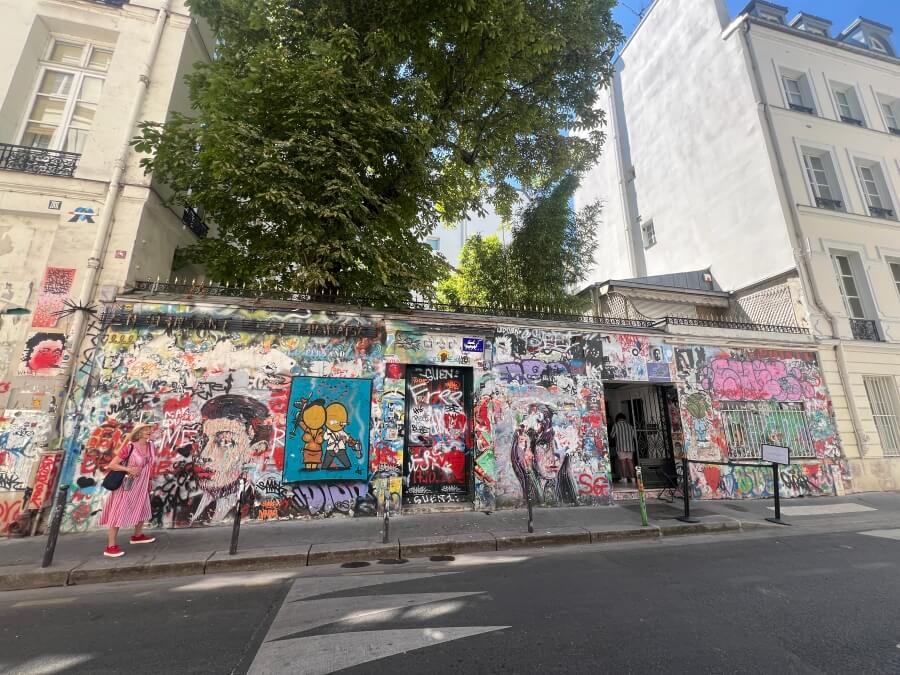
The exterior to the Maison Gainsbourg museum
It’s not easy to admit that I knew very little about Gainsbourg, other than he was a nice Jewish French boy who took France by storm. Born Lucien Ginsburg, he was one of France’s most influential and provocative singer-songwriters. Known for his poetic lyrics, musical experimentation (from chanson to reggae and rock), and headline-making relationships (the most interesting part of his life), he died in 1991 at the age of 62. (Too young.)
His father was a Russian Jewish pianist who fled the Russian Empire and settled in Paris. His mother was a Russian Jewish singer. He had a twin sister, Liliane, and an older sister, Jacqueline. His Jewish immigrant background profoundly influenced his identity and later work.
A lot of interesting women were in his life as both wives and partners. His first wife, Élisabeth Levitsky, had no children. His second wife, Béatrice Pancrazzi had two children before divorcing. The most famous was, of course, Jane Birkin, although they never married. They became France’s iconic artistic couple and collaborated on many songs, including the legendary “Je t’aime… moi non plus.” They had one daughter together. Then, there was “Bambou” (Caroline von Paulus) who had one with him and remained with him until his death.
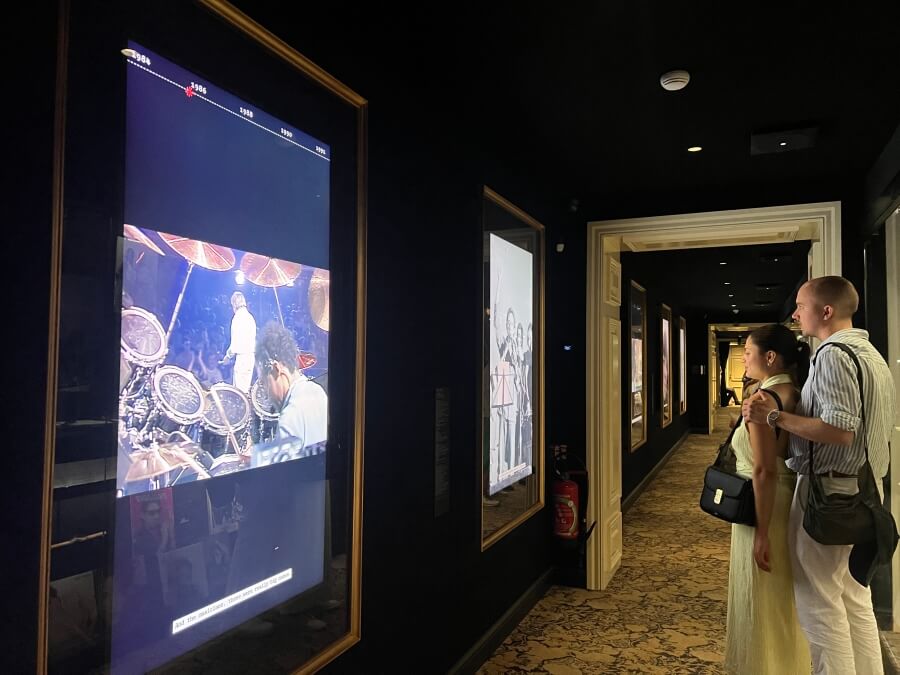
Charlotte, Birkin’s daughter, is the most well known as an internationally acclaimed actress and singer. It’s thanks to Charlotte that the Maison was opened, dedicated to preserving her father’s artistic legacy. When you take the tour through the house, they provide audio guides in her voice that are programmed to talk about the very spot where you are standing at the time. Very clever.
The house isn’t really large, but it’s very unusual in its floor plan and decor. It’s not what you would expect, nor will be the stories they tell, such as how according to both his daughter Charlotte and his longtime partner Jane Birkin, he preferred washing himself in a bidet instead of taking baths or showers.
Jane Birkin echoed this many years earlier, saying: “In their 13 years together, she never saw him take a bath, but he was “the cleanest man I ever knew.” He performed what the French call a toilette de chat (what we might call a “chorus girl’s bath”)—washing carefully in sections rather than immersing himself. She also said she never saw him completely naked because he was extremely pudique (modest about his body).
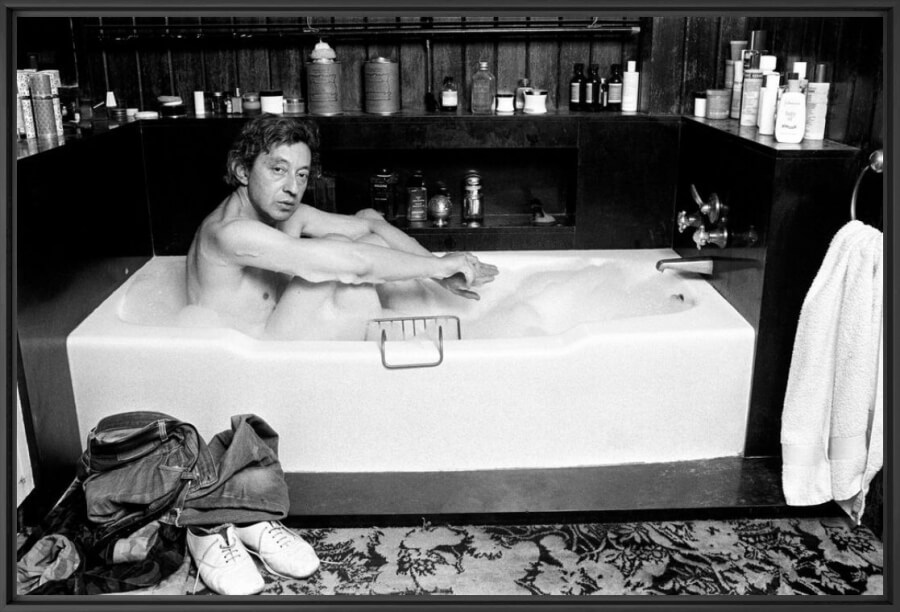
The irony is that his Paris house actually contains a distinctive, custom-designed bathtub inspired by one he admired in the home of Salvador Dalí—yet he almost never used it. Visitors to Maison Gainsbourg can still see both the bathtub and the bidet, the latter having become something of an unexpected symbol of his daily routine.
In 1980 Xavier Martin convinced Gainsbourg to pose sitting in his bathtub to counter the rumor that he never bathed. Gainsbourg reportedly joked that it would “stop people saying I’m filthy.” After the shoot, he laughed when the old bathtub leaked through the ceiling because the plumbing hadn’t yet been repaired.
Visit the house, take in the memorabilia in the museum and then do yourself a favor and have a drink at the Gainsbarre! It’s sensational.
Time slots are available for the “Maison & Museum” and “Museum Only” tours during the summer and through October 11, 2026, so you want to act now to get your tickets.
The Calder exhibition on Sunday did not disappoint. Everyone said it was fabulous, and it was more than that—it’s a must-see!
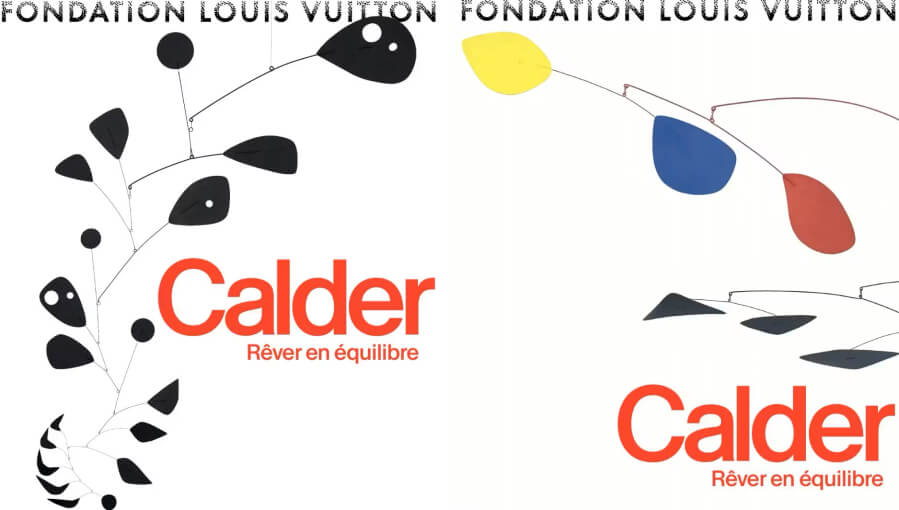
Celebrating the 100th anniversary of Calder’s arrival in France and the 50th anniversary of his death, this retrospective brings together nearly 300 works spanning his entire career—from the whimsical Cirque Calder miniature performances that captivated the Parisian avant-garde in the 1920s to the monumental mobiles and stabiles that transformed modern sculpture.
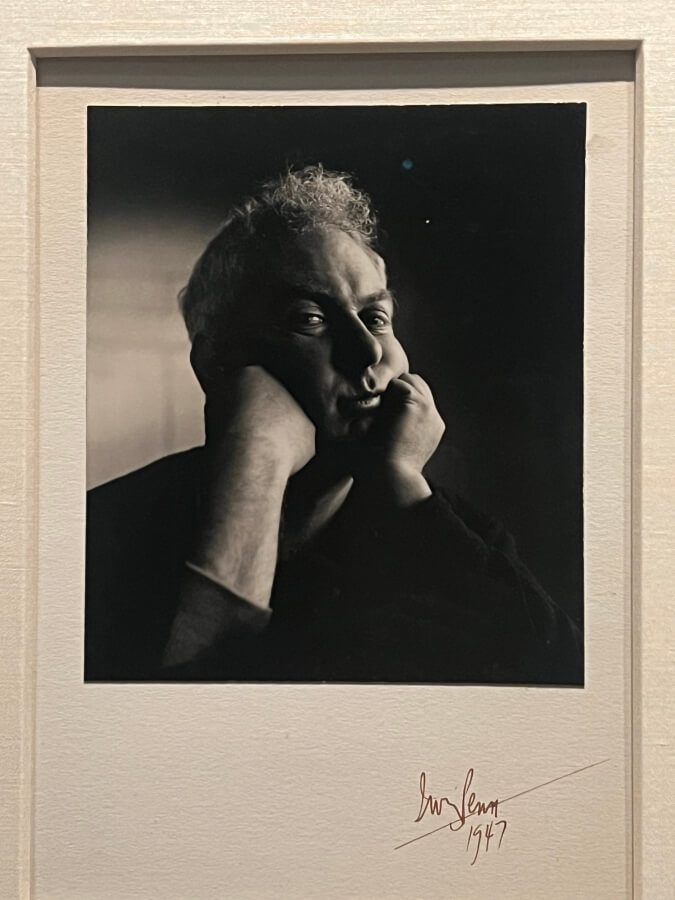
Alexander Calder, photo by Irving Penn
The venue, Frank Gehry’s soaring architecture of the Fondation Louis Vuitton is the perfect showcase for such works. His colorful mobiles seem to float effortlessly through the galleries, moving gently with the air and reminding visitors that sculpture doesn’t have to stand still. Alongside the iconic kinetic works are wire portraits, paintings, jewelry, and rarely seen early pieces that reveal the remarkable imagination of an artist who forever changed the way we think about movement, space, and balance.
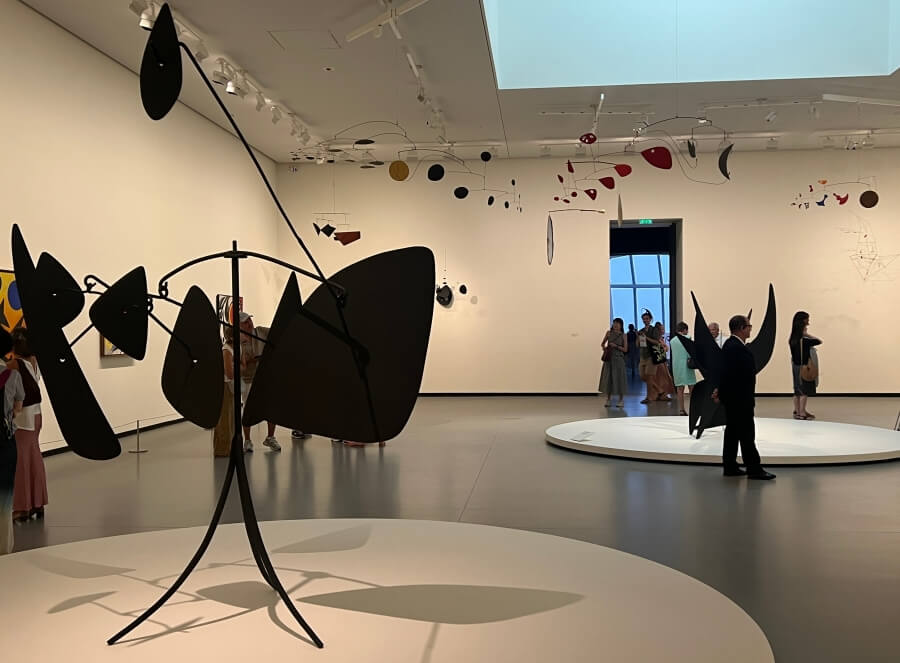
One of the most delightful stories from the exhibition is that the word “mobile”—now used around the world for hanging kinetic sculptures—was born in Paris through the friendship between Alexander Calder and Marcel Duchamp. As Duchamp watched his kinetic works sway and rotate, he is said to have remarked that they were mobiles. Hence, the birth of the word “mobiles” to describe such creations.
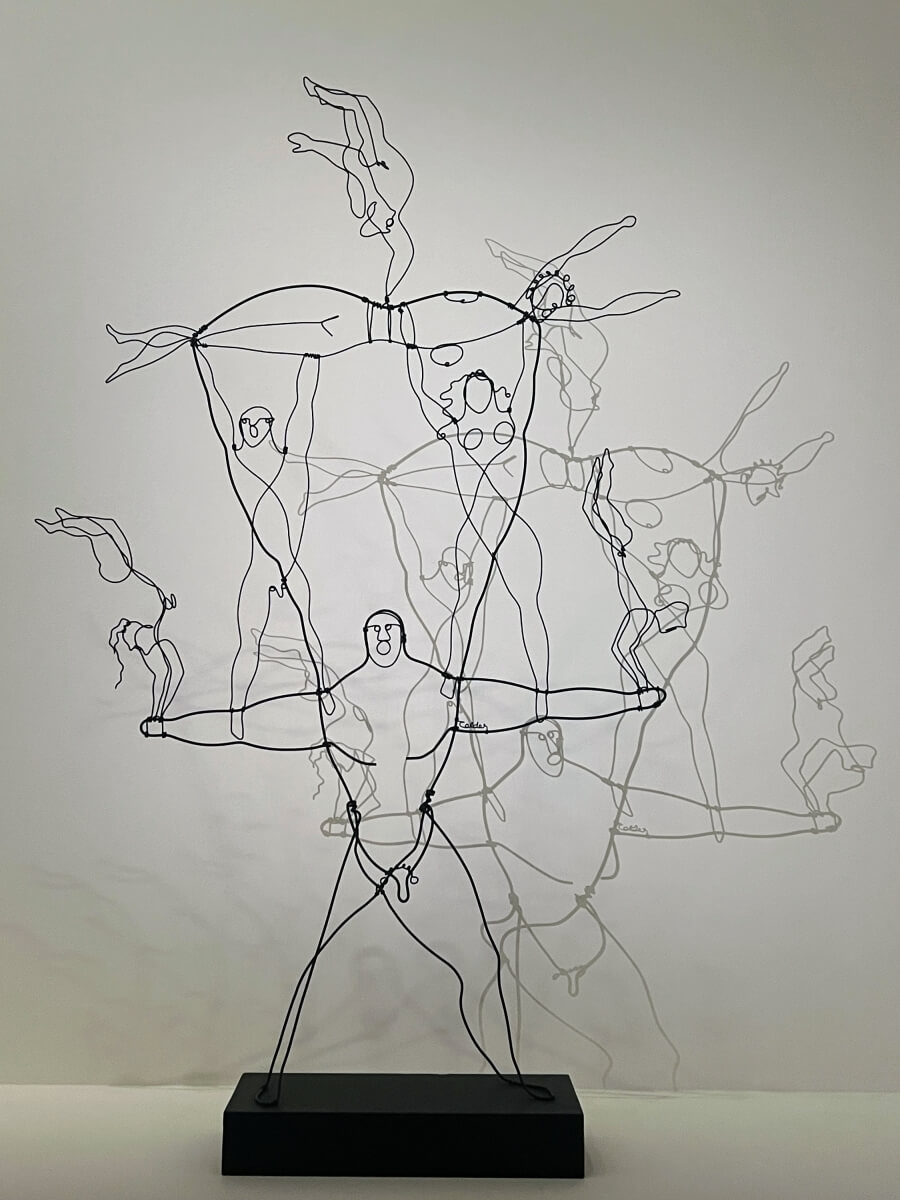
A wire sculpture by Calder
It closes on August 16th, so hurry to Paris to see it!
A la prochaine…
 Adrian Leeds
The Adrian Leeds Group®
P.S. In addition to our property services, we also focus on living in France on a practical level—like getting around, cultural events, healthcare, etc. Our website is the perfect place to begin your education into everyday life in France.
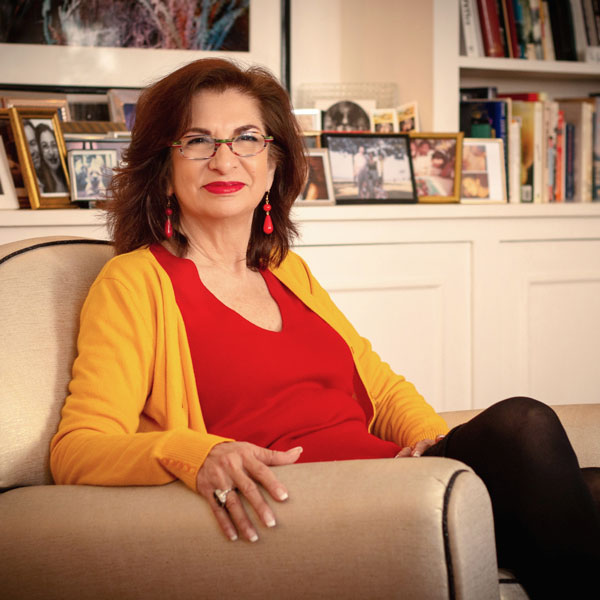
Let Us create a custom strategy for you
You can live or invest in France-now.
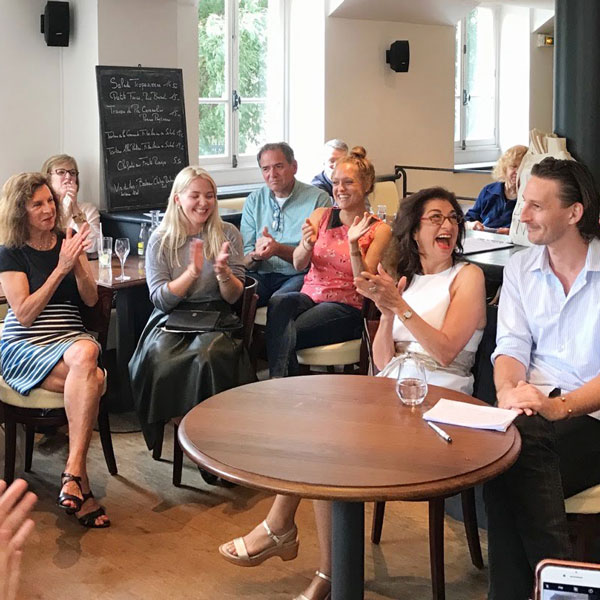
Join us at our monthly Après-Midi.
Become a part of the Paris community.
Property for sale
Read & Subscribe
Dive into more by reading the French Property Insider
Better yet, subscribe to both and get the updates delivered to your inbox.
Global Money Services
Our contacts will help you invest in France.


See Adrian on HHI

Join us on Youtube
Dive into more on how to live, invest & escape to France
Be sure to subscribe!
To read more, click the links below.