

Adrian Leeds Nouvellettre®
Your taste of life in France!
Subscribe and don't miss an issue!
The Ides of March
It’s the middle of the month of March. The weather hasn’t decided if it’s still winter or now spring as the temperature jumps around like a yo-yo. The term, the “Ides of March” refers to March 15, 44 BC, when a group of Roman senators—calling themselves the “Liberatores”—stabbed Caesar to death in the Theatre of Pompey. There were reportedly “23 stab wounds.” The conspirators, led by Brutus and Cassius, believed they were saving the Roman Republic from a tyrant. Instead, they triggered a civil war that ended the Republic and gave birth to the Roman Empire under Augustus.
Shakespeare coined the phrase. It comes from his “Julius Caesar,” spoken by a soothsayer as a warning to Caesar—who famously ignored it. What it symbolizes today are several layered ideas:
* Betrayal – being stabbed in the back by those closest to you
* Hubris – the danger of believing you’re untouchable
* Turning points – moments when history pivots irreversibly
* Ignored warnings – the cost of dismissing signs of danger

The Sousse mosaic calendar for the month of March
This was also the birthdate of one of my pets, who we named “Silva,” after the late-1st-century Roman general, Lucius Flavius Silva Nonius Bassus. And every March 15th, I mark the date to refresh my geraniums. Stay tuned!
Since just yesterday was March 15, 2026, I’m writing on the actual Ides—a date that comes pre-loaded with drama, wit, and universal recognition. Read on.
1ST QUARTER FINANCIAL FORUM
Last Wednesday, five of us hosted the 1st Quarter North American Expat Financial Forum, a joint effort between Dunhill Financial and the Adrian Leeds Group which has been providing these webinars since 2015. Each quarter, we organize our best experts to discuss a particular, meaningful topic, something to which Expats can relate.
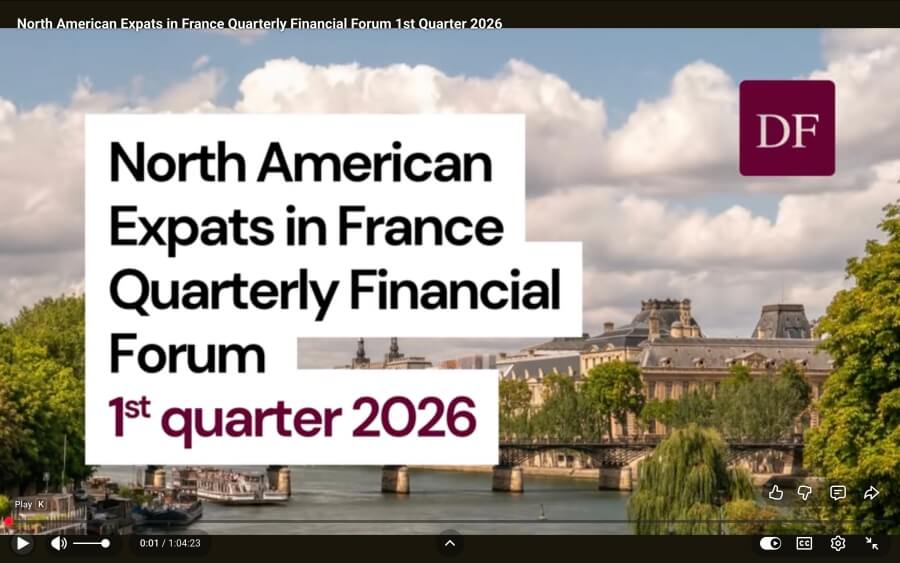
This last forum was devoted to “Living, Working and Investing in France the Easy Way” with Special Guests: Jonathan Hadida, of Had Tax Advisors, and Daniel Tostado, Immigration Attorney. It was an open discussion among all of us that presented a kind of “Moving to France 101″—the basics anyone must know about planning a move to France.
We always have a lot of fun doing the webinars—this is a seasoned and experienced group of professionals who work regularly together and seriously respect one another’s opinions. The audience benefits from our banter, even if it goes off topic every now and then, as it did in this case, with an aside about there to find the best donuts!
Either way, it sure to enlighten you. So, for just one hour, you can watch it in its entirety on our YouTube channel, or on Dunhill Financial’s channel.
You can also participate in our next one, on June 3rd, when we talk about how…”It Costs Half as Much to Live in France…Learn Why!”
SALGADO AT THE SALLE SAINT-JEAN
It could be the most awe-inspiring photo exhibition I’ve ever seen, and that says a lot, as I try to see every photo exhibition in my line of sight. It’s the exhibition on now at the Hôtel de Ville—a free tribute to Sebastião Salgado, running through May 30, 2026 in the Salle Saint-Jean. It’s free, but it’s reservation-only.
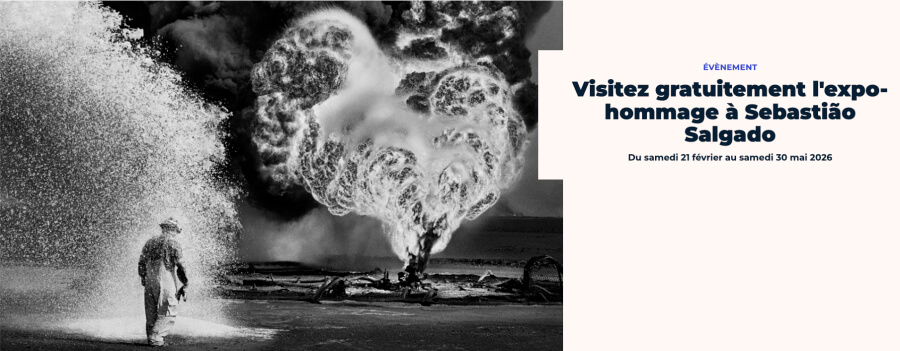
This is not just a photography exhibition. It’s a deeply emotional encounter with a body of work that reminds us how vast, vulnerable, and profoundly interconnected our world really is. Surely you know his work, even if you never cared about photography, as I do. But this extraordinary breadth of his work, from the late 1970s onward, tracing a career devoted to documenting humanity, labor, migration, nature, and the fragile relationship between people and the planet, is as mind-blowing as one can imagine.
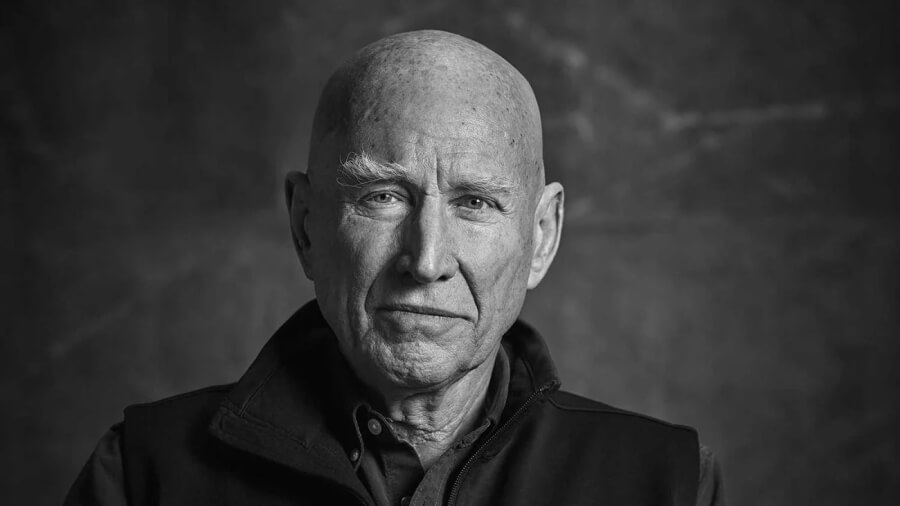
Sebastião Salgado
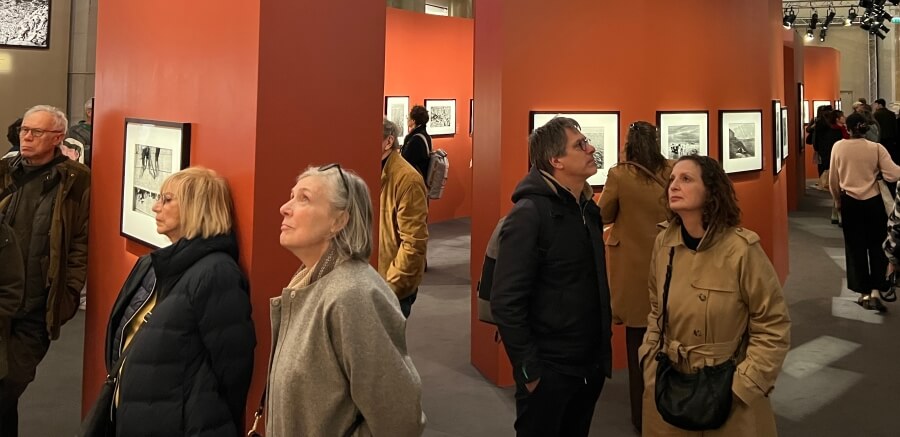
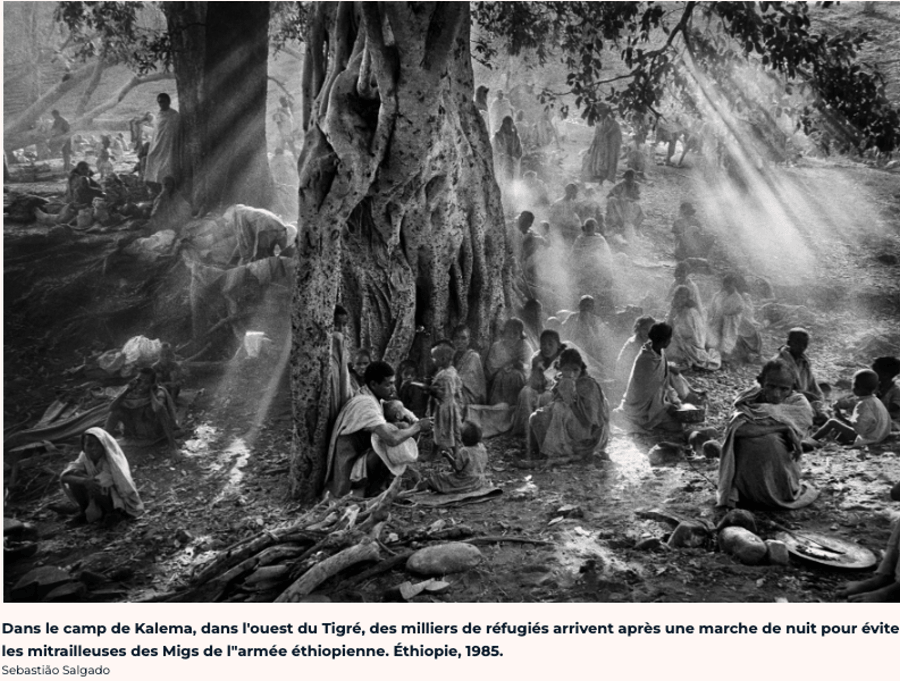
First off, it’s beautifully staged and curated, as only the French know how to do…so well. As you move in circular motion from one image to the next, reading the description of the photo in either French or English, not only will you be overwhelmed by his ability to be there in that place at that time capturing that moment, but by the sheer magnificence of the image itself. It is simply incredulous. It is as moving as it is monumental—a rare chance to encounter the power, compassion, and visual majesty of Salgado’s photography in one of Paris’s most emblematic civic spaces.
If this is the first encounter with the artist, Sebastião Salgado (1944–2025) was one of the world’s most celebrated documentary photographers, known for his monumental black-and-white images capturing the dignity of workers, migrants, and Indigenous cultures across the globe. Born in Brazil and originally trained as an economist, he turned to photography in the 1970s and went on to create some of the most powerful photographic projects of our time, including Workers, Migrations, Genesis, and Amazônia. In later years, he and his wife founded the Instituto Terra, reforesting thousands of hectares of Brazil’s Atlantic Forest.
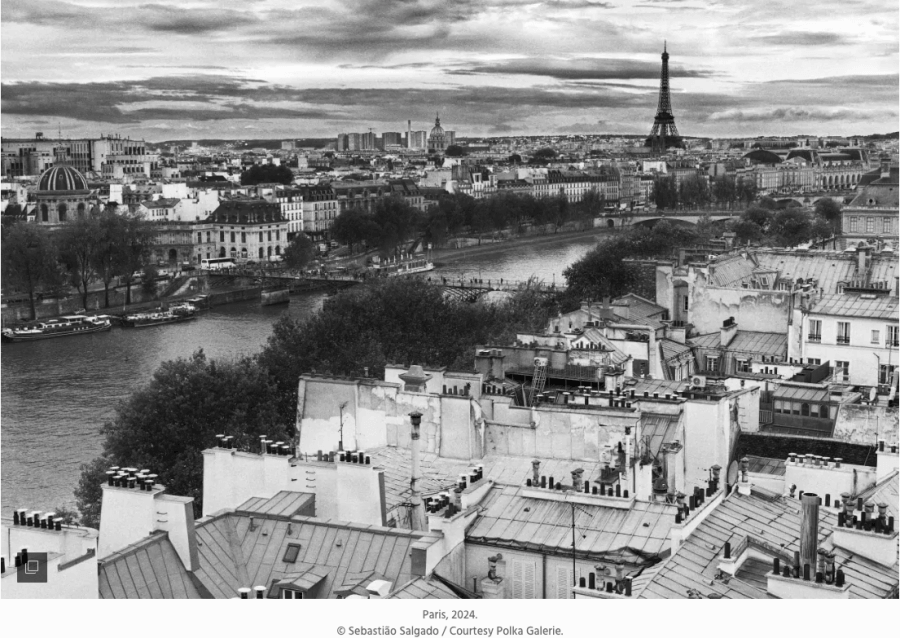
As you near the end, you will encounter beautiful images of Paris, taken as little as two years ago, not long before his death in 2025. Then comes a big surprise. Mount the stairs and discover one of the most memorable parts of the tribute—an installation on the upper level, where you will be transported—almost physically—into the Amazon rainforest itself.

This installation highlights the work of Salgado’s son, Rodrigo Salgado, who played an important role in documenting and communicating his father’s projects through film and multimedia, helping bring global attention to both the photography and the environmental message behind it. The installation also connects to the broader mission of the Instituto Terra, the reforestation initiative created by Salgado and his wife. Through this foundation, millions of trees have been replanted in Brazil’s degraded Atlantic Forest—turning Salgado’s work from observation into direct environmental action.
Walking through this “forest” installation becomes a quiet reminder that Salgado’s legacy is not only about photographing the natural world, but also about helping restore it—a mission now shared across generations of his family.
Do not miss this exhibition if you can help it—even a special trip to Paris just for this would be well worth the effort.
OPEN IT, SORT IT, SHRED IT
When moving back into my Paris apartment, we discovered about 20 boxes of files. The files had come out of the wall-to-wall desk system that had been designed and built about 20 years earlier—a brilliantly executed single unit that housed an unbelievable amount of files, plus allowed for two desks and convenient workspaces, all while hiding all of the equipment and cables.
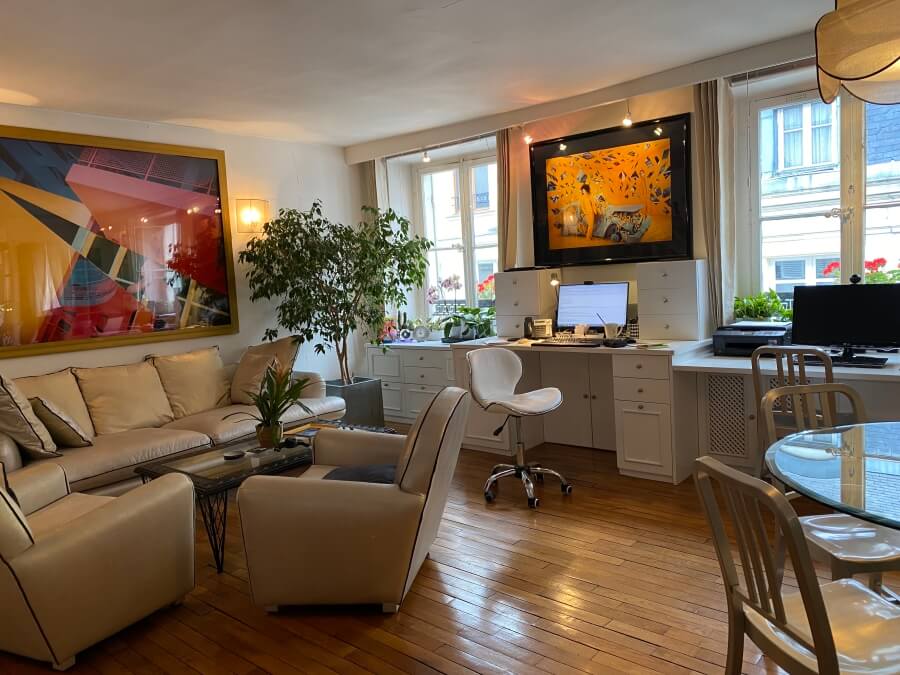
I LOVED this desk and called it “Control Central.” It wasn’t cheap to build, but worth every penny.
All of the files came out of their drawers and boxed, then carried off to be stored until they were returned upon moving back 14 months later. How much the desk housed was incredulous…but as I said, it was brilliantly designed (by Martine di Mattéo and the company that fabricated it.)
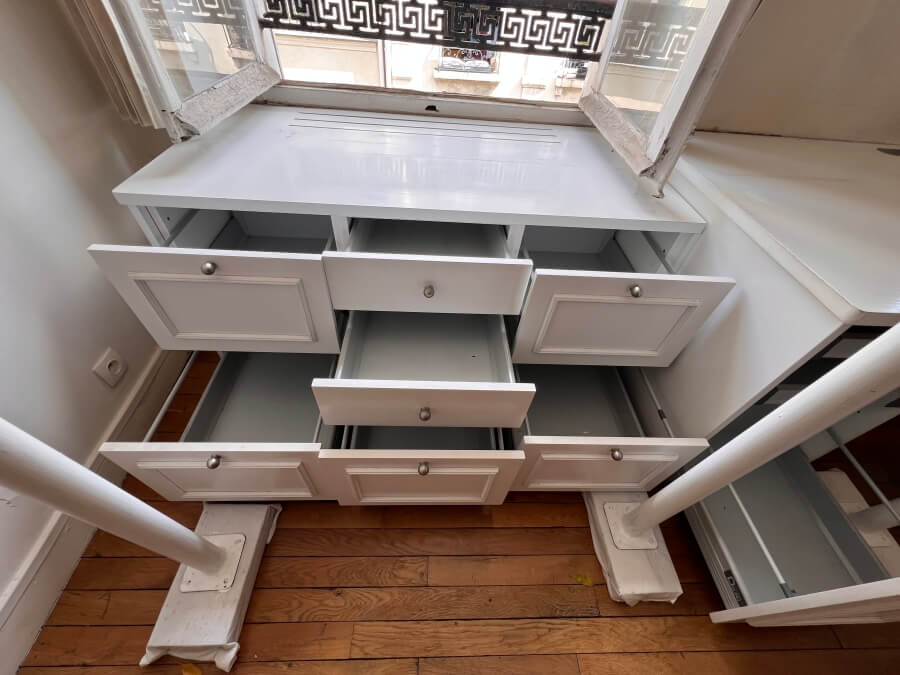
When the contractors hired by the Syndic began the reconstruction of the beams in the ceiling, I was told that only the custom built-in cabinetry that touched the ceilings would be affected. It was on that basis that my lawyer and I negotiated for compensation.
They lied. They destroyed every inch of the apartment, including the desk, which I personally discovered in pieces on the street waiting to be hauled away.
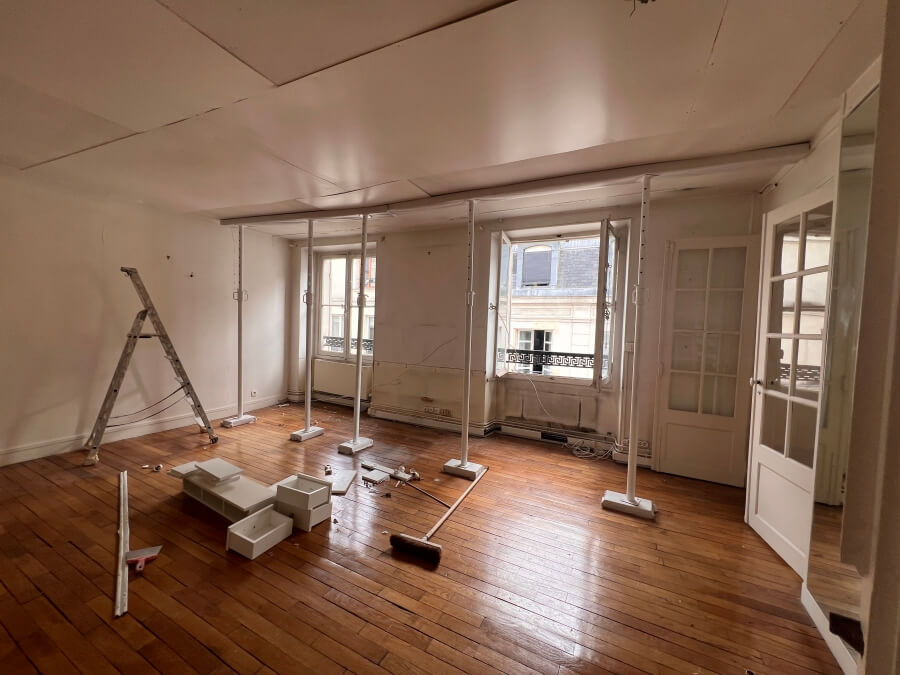
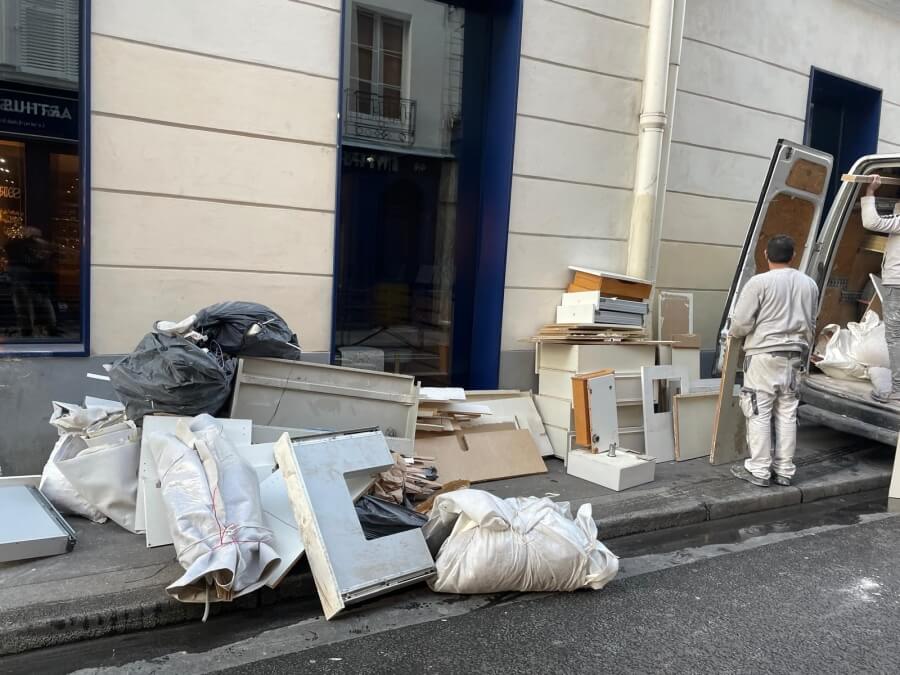
First, I screamed (loud), then I cried (like a baby), then gave hell to the Syndic and the contractors (who didn’t care). There was nothing I could do about it, but live with it. There was no way of being compensated for it without creating a lawsuit, and opted out of that choice when weighing the potential gain against the costs of legal fees, etc.
Unfortunately, reproducing the desk was unaffordable, so we recreated it using seven different white pieces of furniture, some of which had been independent units of the original desk, strung together to look as symbiotic as possible. The bottom line, however, was giving up about 80% of the storage…maybe even more than that.
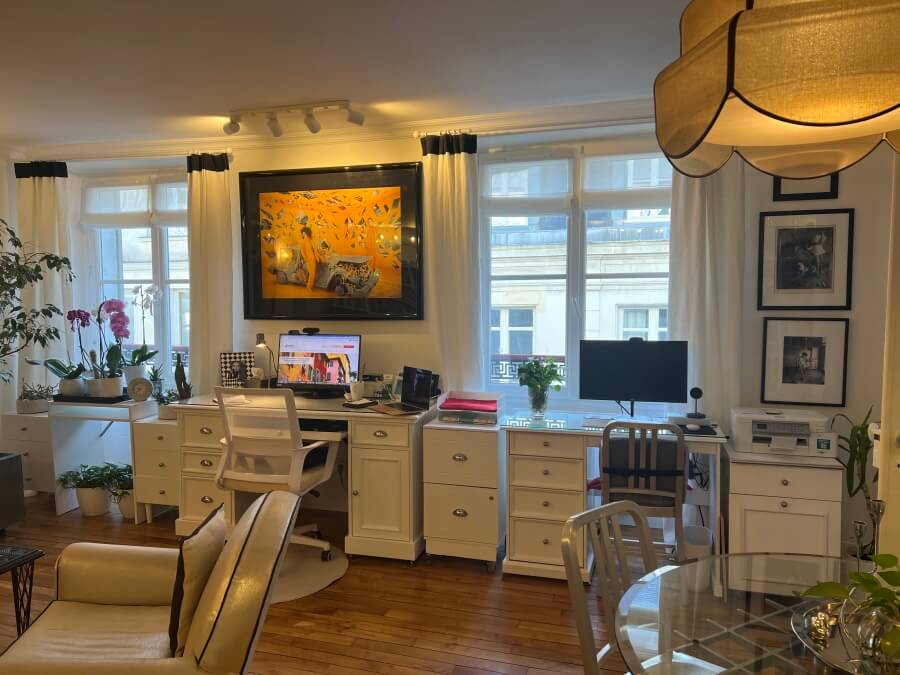
Nothing could replace that original custom-built desk.
Now you see the dilemma we faced? Where to store all those files? And were the files really important or necessary? We began scanning all our docs and tossing the paper years ago, so why keep any of it, or at least most of it?
Since last August when we moved back into the apartment, the files were stored under the bed in the guest bedroom. They sat there until we could find the time to open and sort them, set aside the documents we no longer needed to then be shredded and destroyed. This was not a job to which we looked forward!
Diane, my personal assistant, and I designated this past Saturday as THE DAY to do the “spring cleaning,” bite the bullet and open the boxes. We had it all figured out, except for one thing: How to get the boxes out from under the bed!
With my bad back, I couldn’t lift the bed or lean over to pull them out. Diane had to do all the heavy lifting. The boxes had been pushed all the way to the back to make room for so many, so the only option was for Diane to crawl under the bed on her back and push the boxes to the front, then shimmy out and lift the bed while I got down on the floor and dragged them out…one at a time. At one point, Diane get stuck between the mirrored closet and the bed frame with no where to go!
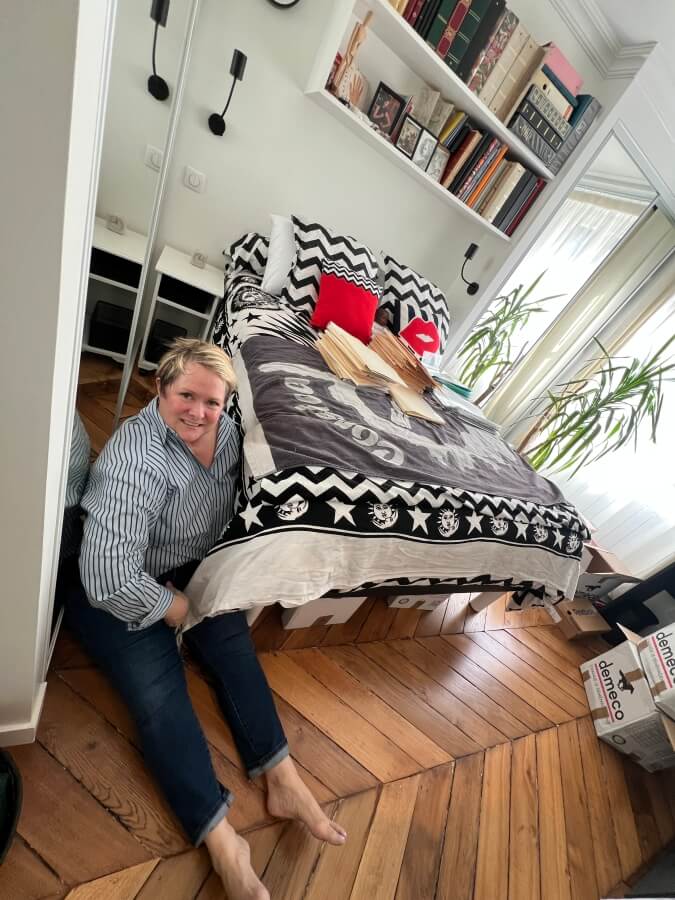
Get the picture?
It was like the “blind leading the blind” (as the expression goes) and we could hardly stop laughing long enough to just make it happen! But, happen it did, and by the end of the day (about 4.5 hours of heavy-lifting) we were able to sort the files, refill the boxes with the unwanted paper, and re-box that which was to be kept.
It’s not done. There is still quite a bit on which to make decisions: Do we keep it? Do we not? Do we need it? Do we want it? Can you imagine the conundrum?
Fortunately in today’s world, everything is digital and paper is a thing of the past…almost. We set aside collectibles to be scanned. Special docs that can’t ever be replaced will be re-boxed and stored. My daughter will be happy that when I leave this earth, I will only leave a legacy and not a lot of garbage files for her with which to deal! And Diane and I will feel very accomplished indeed, while we smile remembering the day she got stuck under the bed.
Wednesday the shredding company comes to pick up the boxes of discarded material and we can then call the move 100% accomplished.
IT’S NOT GETTING EASIER…NEW FRENCH CITIZENSHIP RULE
France quietly introduced one of the most significant changes in decades to its citizenship requirements at the start of 2026—and it has already sparked controversy, particularly among retirees.
A ministerial directive now instructs prefectures to apply a much stricter economic integration test. Applicants for naturalization must demonstrate five consecutive years of stable and sufficient income, usually earned in France. In practice, this typically means holding a permanent employment contract (CDI) for at least a year when the application is reviewed, or a series of fixed-term contracts totaling two years or more.
The change that has caused the most alarm is how foreign income is treated. Under the new interpretation, pensions, dividends, and salaries earned from abroad—along with most social benefits—generally do not count toward the income requirement, except in rare circumstances.
As a result, many applications are reportedly being rejected at the first stage if the income test is not clearly met. The group most affected? Retirees living in France whose income comes primarily from foreign pensions. Even long-time residents who pay French taxes and have deep ties to the country have been turned down because their income is not considered “French-sourced.”
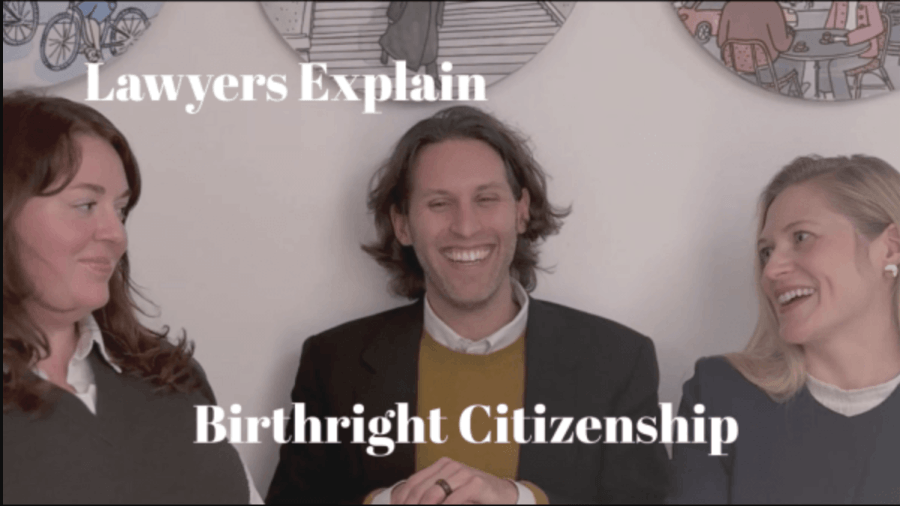
Now, after mounting complaints and questions raised in the Senate, the government appears to be reconsidering how strictly the rule should be applied. Officials have acknowledged that exceptions may be possible for retirees, though these will be assessed individually and the criteria remain unclear.
Another reason the policy may face revision: the French Civil Code itself does not explicitly require income to originate in France, leaving the rule potentially vulnerable to legal challenge. In short, this is a developing story—one that could significantly affect foreign residents hoping to become French citizens.
I asked our favorite immigration attorney, Daniel Tostado, to comment on the news:
“The position that the French Ministry of Interior took, in May 2025, is that they truly want to see the ‘center of one’s economic interests’ in France, which means that 50%+ of your money comes from France. For decades up until last May, the Interior ministry’s position was that they’ll take into consideration owning stocks abroad, but essentially ignore retirement income. Then, last May, under Minister Bruno Retailleau’s “ahem” zealous lead, they expanded that to also account for retiree pension.
Retailleau, who would love to run for Président in 2027 as a Républicain, is no longer in the Ministry of the Interior. I wonder if there’s going to be a softening of the position in the French government? A French Sénatrice, Nicole Bonneyfoy, pronounced herself in favor of allowing retirees to naturalize. I reached out to her in February to show my support, and she wrote back glad to hear that on the front lines, this is what the retirees want to be able to qualify for.
At this point, I would assume that the status quo is maintained, but I’d be curious to see if the pendulum swings back a little in the future in our direction.”
My advice to you, if you are interested in French citizenship, is to apply NOW, and be sure to let Daniel and his team help you through it. Currently, I’m waiting for the results of my own applications which is forthcoming within the next six months.
A la prochaine…
 Adrian Leeds
The Adrian Leeds Group®
 P.S. As of this writing, there are only 2 shares of Le Bijou de l’Hôtel de Ville left! We don’t expect them to last long, so if you have any interest at all, now is the time to secure your share. Visit our site for more information.

Let Us create a custom strategy for you
You can live or invest in France-now.
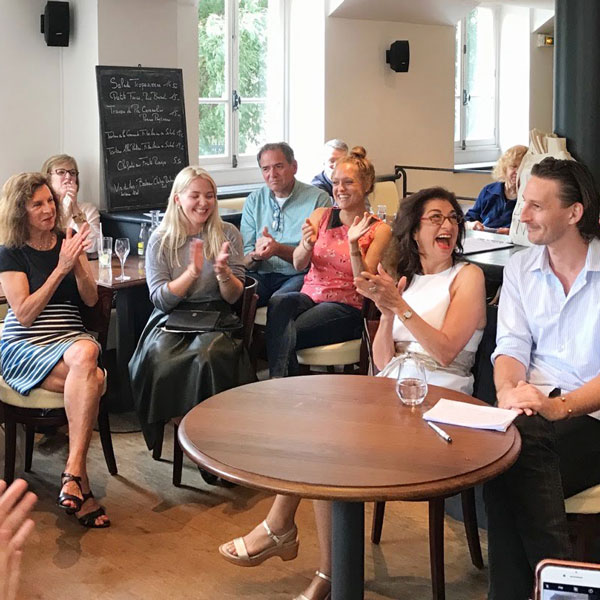
Join us at our monthly Après-Midi.
Become a part of the Paris community.
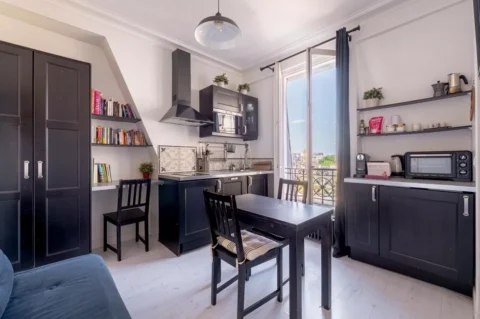
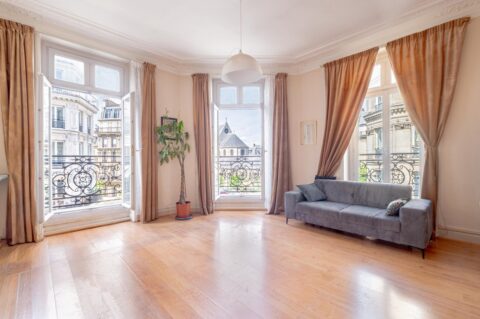
Property for sale
Read & Subscribe
Dive into more by reading the French Property Insider
Better yet, subscribe to both and get the updates delivered to your inbox.
Global Money Services
Our contacts will help you invest in France.


See Adrian on HHI

Join us on Youtube
Dive into more on how to live, invest & escape to France
Be sure to subscribe!
To read more, click the links below.