


Weekly insights about property in France!
Subscribe and don't miss an issue!
Buyer Beware: Know Who are the Players in the French Real Estate Game
Volume XI, Issue 46

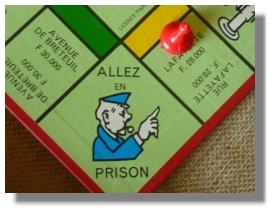 As a foreign buyer, you cannot enter the French real estate game thinking that it’s similar to what you are familiar with in the U.S., or anywhere else for that matter. The French have their own ways of working, their own systems and laws and their own cultural mores that have little to do with any other country. The mistake most foreign buyers make is simply to think they can do business in the same way they have in the past in their own native environments and be successful. In all honesty, it’s why consultants like us exist.
Let’s start out by looking at the real estate agency network. In the U.S., there is the Multiple Listing Service (MLS) that dramatically changes the way the agents work. Because all agents have access to all properties country-wide via this universal system, an agent fully expects to share his/her commission with another agent and is more concerned with ‘making the customer’ than ‘making the sale.’ For this reason, a buyer can go to one agent who has the ability to show any property on the market and in effect, the agent becomes the buyer’s representative, not the seller’s…as all agents effectively represent the sellers of all properties.
It is exactly the opposite in France. While there are Web sites, associations and franchised agencies which have created networks for showing many properties, the agencies still remain very independent and are loathe to share their commissions. Their main goal is to acquire listings and sell their own listings at the maximum commissions. Their listings which don’t sell well may be offered up via other agents, but their best listings will be held back so their commissions are not in jeopardy of being shared. For this reason, they work solely for the seller and will do or say what is necessary to make the sale without consideration of the buyer’s needs.
 Because the agents do not view the buyers as their clients, they are not willing to work extra hard to educate a foreign buyer, or take responsibility for a foreign buyer’s naiveté…and there is much to be naive about! Foreign buyers are normally not native French-speakers and are not familiar with the laws and procedures. They need tons of ‘hand-holding’ for which an agent doesn’t have the time nor patience.
You may be able to recall an agent or two you’ve worked with in the past that doesn’t fit this description, but in general, the system creates this scenario and therefore, agents that behave more like a buyer’s agent do so because they want to, not because it benefits them financially.
We work with agents we trust and work with effectively, but they are not responsible for the buyers’ well being, nor do we share in their commissions, plus we bring them qualified clients, therefore we are treated like royalty and the buyer benefits greatly.
Properties advertised for sale include the agency commission. This is not a set amount — it is determined by the agency and seller in their own mandate, although the standard is five per cent. A seller can employ many agencies to market their property and each mandate can differ — so can the selling price. A seller may even choose to advertise their property directly (for sale by owner) at a reduced price (less the commission) or at the same price, as a way of earning more money from the sale (the commission that would have been paid to an agent).
When a property is found by a potential buyer, and he/she wishes to make an offer, this begins a whole new set of rules for the playing field. In the U.S., offers are made in the form of an offer letter, and can become legally binding when all parties involved have signed ‘and something of value’ is exchanged. It does not matter what kind of paper the agreement is written on — even a napkin can be considered legally enforceable.
 Not so in France. Regardless of how the negotiations have bounced back and forth, until a “Compromis de Vente” or “Promesse de Vente” (pre-sale agreement) is signed and officiated by a Notaire, is there a legally binding contract. The Notaire is an integral part of the system that cannot be avoided.
A Notaire is a legal specialist with a public authority mission who draws up authenticated contracts on behalf of his clients. He is self-employed, and is a public officer who operates in every area of law including family, property inheritance, asset, company law, countryside law, local authorities, etc. (Learn more about the role of a Notaire by visiting notaires.fr/) The Notaire collects the taxes, verifies the deed and is also held culpable for the transaction to the state.
A seller or agent would be very pleased to encourage you to use one Notaire to simplify and speed the transaction process, but never agree to that…unless the other party has agreed to use YOUR Notaire. Always have representation — a legal officer who is working solely on your behalf. They share commissions, therefore it costs nothing to have this protection.
Keeping in mind that the agent is only interested in making the sale, and is not hired to protect the buyer, it is not unusual for an agent to ‘coerce’ a buyer into signing the pre-sale agreement in their office the very day of the first visit. They want to achieve a legally binding contract as quickly as possible and will sometimes create concerns that the buyer will lose the rights to the property if it isn’t made legally binding immediately.
This is not true, but it is valuable to have your offer letter accepted in writing so that you have proof of the seller’s intentions to sell you the property. Once that takes place, and the two Notaires are in communication, you can rest assured that you will have the right to purchase the property. Too many foreign buyers believe the agents, thinking they play the same role as a U.S. agent working for the buyer, and do just that — sign a pre-sale agreement without the proper due diligence done by the Notaire to verify the liens or titles. This is where big mistakes can take place.
When you make an offer on a property, consider the amount carefully. In our North American world, we are familiar with negotiating broadly, but the French are not hagglers. Offering too low a sum can insult the seller and that alone may hinder your ability to make the purchase! Normally there is about 5% built into the selling price for ‘wiggle room.’ Keep this figure in mind when making an offer.
 Should you offer the asking price, the seller is ‘morally’ obligated to accept it!…although other conditions could apply. For example, a buyer with no loan contingency is more likely to have his offer accepted than one which is obligated to take a mortgage. But if you want to virtually guarantee your success in purchasing a particular property, don’t be ‘penny wise and pound foolish’ by attempting to negotiate — that small savings could cost you purchasing the property at all!
Getting your financing in place prior to making an offer is key…unless of course you are prepared to make a cash purchase. A loan contingency (called a “clause suspensive”) protects the buyer from the obligation to make the purchase and lose his/her deposit (10%) if a loan cannot be achieved after having applied to at least two lenders. The pre-sale agreement will stipulate the requirements of the contingency and the buyer must comply or risk losing their deposit.
The deposit (normally 10%, sometimes 5%) is paid to the Notaire’s escrow account upon signature of the pre-sale agreement and held until closing. If a buyer defaults on the purchase, the deposit will be transferred to the seller and the property reverts to the seller. Neither the Notaire nor the agent retains commissions or fees…and in effect, everyone loses.
The process takes two to three months between the signing of the pre-sale and the final “Act de Vente” — deed of sale. Within this time, if there is a mortgage, the loan must be achieved, insurance assigned to the property and all parties have to be ready to transfer the property from seller to buyer.
The price recorded on the deed is not always the selling price in total as the ‘parts’ can be broken down and noted separately as a way to reduce taxes. If furnishings are sold with the property (kitchen appliances, cabinetry, furnishings, etc.), the value of those furnishings can reduce the sales price and therefore reduce the taxes and fees associated with the purchase. If the agency fees are paid by the buyer, rather than the seller, the taxes and fees are further reduced, but may not be considered part of the mortgage as a result, therefore the buyer must have more cash at hand. The taxes and fees are highly regulated and paid solely by the buyer. The total will be between 7 and 7.5% of the recorded purchase price of the property. (See
http://www.paris.notaires.fr/outil/immobilier/calcul-de-frais-dachat) for more information.
When you set out to purchase a property, you can’t think “I have X amount in U.S. dollars and that will buy me a property worth Y in euros.” First consider all the benefits of taking a mortgage (of which there are many — adrianleeds.com/french-property-loan/). Most banks will lend 70% to 80% loan-to-value, of the appraised value! Then, be sure to allow up to 10% in cash for your closing costs and assume there will be renovation/decoration necessary (luxury properties will cost 2,500€-3,000€ per square meter to renovate and decorate).
We find that if you take a mortgage, you will still need about 50% of the purchase price of a property in cash to successfully make it happen. It is that 50% which will be subject to the current rate of exchange, not the full amount — one good reason you cannot simply translate what you have in dollar cash compared to what that will buy you at that moment in euros.
 The way to win the property game in France is to know the rules and the strategy of the game. Unless you have been in the game for a long time and have been through many transactions can you be as well versed as a consultant. Without this professional advice, you risk making mistakes — we call them ‘pitfalls’…of which there are many.
I have a letter from a French Property Insider reader just this week who is in the throes of purchasing an apartment in Paris on his own, without having asked for assistance. After a long description of his trials and tribulations, he wrote: “I know it’s late asking for your involvement. I didn’t appreciate how difficult and time consuming this can be…and tiring.”
Don’t make the same mistake. Value professional advice. It’s not a cost, but a savings…an insurance that you won’t fall into the many pits along the way.
A bientôt,
 Adrian Leeds
Editor, French Property Insider & Director of The Adrian Leeds Group, LLC
Email: [email protected]

P.S. Happy Thanksgiving!! FPI will NOT be published on Thursday, November 28th in honor of the holiday.
 P.P.S. Gather the family around to watch the newest House Hunter’s International episode on November 27 at 10:30 p.m. E/P and November 28 at 1:30 a.m. E/P “Living a Teenage Dream in Paris, France.” Can a former Paris exchange student who has long dreamed of living in France find a Parisian apartment when she hasn’t given much thought to what she wants in her new home? Tune in and find out!

Let Us create a custom strategy for you
You can live or invest in France-now.
Property for sale
what's happening
Check out upcoming events, conferences, or webinars. Join us!
GET FINANCING
Learn about French Property Loan Information.

Read & Subscribe
Dive into more by reading the Adrian Leeds Nouvellettre®
Better yet, subscribe to both and get the updates delivered to your inbox.

Get started with your dream of owning property in Paris.
Join us on Youtube
Dive into more on how to live, invest & escape to France
Be sure to subscribe!
To read more, click the links below.