

Weekly insights about property in France!
Subscribe and don't miss an issue!
Making the Move to France…With Your Kids!
Volume XXIII, Issue 13
By Jay Corless, edited by Adrian Leeds
Are you dreaming of trading your SUV for strolls along cobblestone streets, swapping your oversized fridge for daily market runs, and leaving behind suburban sprawl for a life filled with flaky croissants, ancient architecture, and perhaps even a view of the Eiffel Tower? Fantastique! However, if you plan to leap across the pond with your family—kids, partner, and maybe even a four-legged friend—let’s sit down and have a little heart-to-heart.
The Adrian Leeds Group has spent over two decades helping North Americans create beautiful, vibrant lives in France. And we can tell you this: raising a family here is not only possible but it can be the best thing you’ve ever done for your kids, if not for yourselves.
Like all great adventures, it requires planning, patience, and a healthy sense of humor (especially when entangled in the endlessly charming web of French bureaucracy). One of the first and most pressing questions for families is, of course, education. If you have children, their schooling is at the heart of your relocation plans—and rightly so. Thankfully, France offers many educational options, but they may not look—or feel—like what you’re used to back home.
The French public school system is deeply ingrained in the country’s culture and identity. It’s nationalized, meaning children across France follow the same curriculum and are free of charge. Schools are rigorous and highly structured and emphasize academic discipline from an early age.
If your children are young—say…under ten—public schools can be an excellent way to immerse them in the French language and social culture. Kids that age soak up new languages like little sponges, and before you know it, they’ll be correcting your French at the dinner table.
The catch? Your child’s assigned public school is based on where you live. This is called the “carte scolaire,” and it means that before you fall in love with a particular apartment or neighborhood, you’ll want to research which school your address places you in.
Not all schools are created equal, and if you have a preference, you may have to prioritize your address based on the school rather than the real estate itself. You can find your school district via your local “rectorat” (academic district office) or the Ministry of National Education’s website.
International schools are a godsend for those seeking a softer landing—mainly older children or those who don’t speak French. France has a healthy selection of them, particularly in major cities. These schools typically offer instruction in English or bilingually and often follow a curriculum more aligned with British, American, or International Baccalaureate systems.
For instance, schools like École Active Bilangue Jeannine Manuel and the International School of Paris are highly regarded in Paris. In the south, the International School of Nice is a popular choice, while in Bordeaux, Bordeaux International School offers bilingual programs for all ages. Tuition at these schools varies but typically ranges from 10,000€ to 30,000€ per year. Admission can be competitive, so applying early and being thorough with documentation is wise.
Then there’s the world of private French schools, which can offer a middle ground. Many are Catholic in origin (though often secular in practice) and provide smaller class sizes and a more traditional approach. Some of these schools are “sous contrat” with the government, which means they follow the national curriculum but operate privately. In contrast, others are “hors contrat” and function more independently. A valuable tool for locating and comparing these schools is Letudiant.fr, a French site with rankings, reviews, and educational insights.
France is slowly evolving for children with special educational needs. While inclusion is encouraged at the national level, the availability of services—particularly in public schools—can vary significantly by region. If your child needs additional support, inquire specifically about available services, staff training, and whether the school has a dedicated Auxiliaire de Vie Scolaire (AVS) to help students with learning challenges. The French government’s guide to inclusive education (in French) is a good place to start.
Of course, choosing a school naturally ties into choosing where to live. French homes, especially in Paris and other large cities, are often smaller and older than what North Americans are used to. The idea of a walk-in closet is practically mythical, and if you’re moving with teenagers, prepare to hear complaints about the Wi-Fi and the washing machine. But you’ll also gain a home filled with charm, history, and the ability to walk to school, the bakery, the butcher, and back—all without needing a car.
Renting in France can be tricky without a local employment contract. Landlords tend to be risk-averse, and the paperwork can feel invasive to North American sensibilities. Be prepared to provide proof of income, a guarantor, and many documents. On the other hand, buying is surprisingly accessible—even to non-residents.
Many North American clients purchase their French property outright and skip the renting phase altogether. The French notarial process may initially feel foreign, but it’s thorough and protective for buyers. You can find property listings on popular websites. Still, we always recommend working with a trusted property consultant who understands French and North American perspectives (yes, that would be us!).
Culturally, France offers families something truly special: time. The pace of life is slower, and the family unit is sacred. Children are expected to integrate into adult life—from polite greetings to sitting through multi-course meals—and while that might feel formal initially, it nurtures independence, good manners, and a sense of belonging. The rhythm of the school year includes frequent breaks, there’s a vacation every six weeks! So be ready to plan for holidays, but also take advantage of the opportunity to travel and explore Europe together.
Of course, challenges will arise. There will be days when the paperwork drives you to tears, when your child comes home frustrated by a language barrier, or when you miss the convenience of Target and Trader Joe’s. But those days pass, and in their place come moments of profound beauty: a first parent-teacher meeting in French, your child ordering a baguette on their own, or a lazy Sunday afternoon spent picnicking by the Seine.
Moving to France with your family isn’t just a relocation—it’s a reinvention. It’s a chance to raise your children in a culture that values quality of life, education, balance, and beauty. It’s choosing a life that is just a little more intentional, flavorful, and a little more French.
And when you’re ready to leap, we will be here, café crème in hand, ready to help you find the perfect school, the right home, and that neighborhood where your family can thrive. After all, you’re not just moving to France, you’re creating a new life.
Special notes from Adrian about raising her daughter in France:
I raised my daughter in France from the age of just before she turned 9 to 16 when she graduated a year early…believe it or not, she was advanced a full year after only two weeks living in France due to her level of math! At the age of 16 she went to a university in New York on her own (having lived in Paris and learning city living) and just admitted recently that when I asked her if university was difficult, she replied “It was a joke”—meaning that university in the U.S. was simple compared to the academic level she experienced in France.
She attended Ecole Active Bilangue Jeannine Manuel her first year, then attended a public international school for two years free of charge (Honoré de Balzac), before attending public French neighborhood schools all the way through her senior year. (Yes, international public schools are offered in France.) She was able to take the International Baccalaureate exam…which pretty much writes your ticket into almost every university in the U.S.
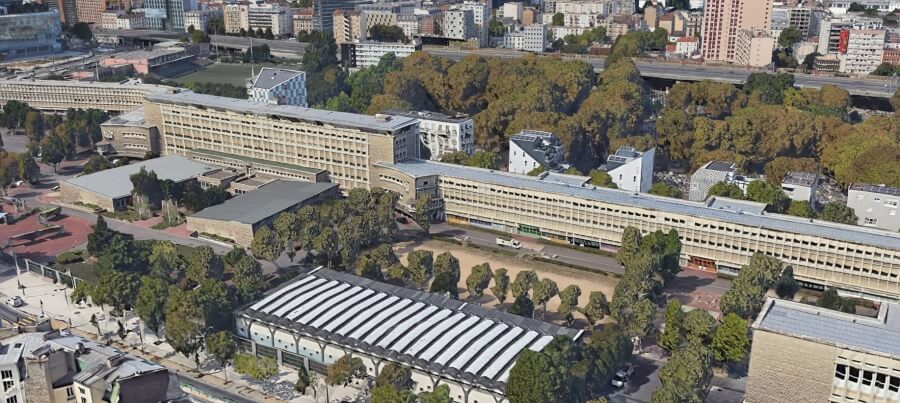
Honoré de Balzac
When I first discovered the French method of teaching, coming from a very liberal California school curriculum, I got very worried that she would not become the free-thinker I’d hoped for. They taught “dictée”—a longstanding educational exercise where teachers read a passage aloud, and students transcribe it as accurately as possible. Having experienced “creative writing” when the kids wrote volumes without worrying about spelling, punctuation or grammar, I literally asked the teacher (in front of a room of parents), “How will this benefit my child?” They looked at me as if I was nuts and I realized then, I needed to ensure my daughter didn’t turn into a “sheep.” (Meaning, just following the rules.)
Dictée remains integral to the French educational system, valued for its comprehensive benefits in language mastery, but I didn’t care about mastery! I wanted her to be creative and think critically, so I told her, at the ripe old age of 8, that she could say anything to a teacher and I’d back her up, but then she had me to deal with! And that might not be fun…so she should choose her battles wisely. The bottom line is that I had to bail her out on a few occasions, but she got the best of both worlds—the U.S. open-minded resourcefulness and the French discipline and memorization. And she was accepted into the first university to which she applied, then graduated with the highest of honors. She admits that the rigorous and academic French system benefited her greatly.
The point to my story is advice to enter your children into French schools prepared to cross the cultural divide, them give them the best of both worlds, and in the end, they will be way ahead of the rest of the crowd…on both sides! And what they get is not only a much better level of education, but they get influenced from living in Europe, among many countries, languages, cultures and will become citizens of the world, not just “an American.” You’ll be doing them a very big favor by educating them in France…as long as you provide the other side of the coin!
Notes from Katie Friedland, Property Consultant for the Adrian Leeds Group in Nice, a message she recently wrote to one of our clients:
“I have a young daughter named Tallulah who is turning 6 in July. We have had an excellent experience with her public school in Nice and Tallulah has close international friends who are also thriving in their public schools.

Katie and Tallulah
These are ones I can highly recommend based on our friends direct experiences:
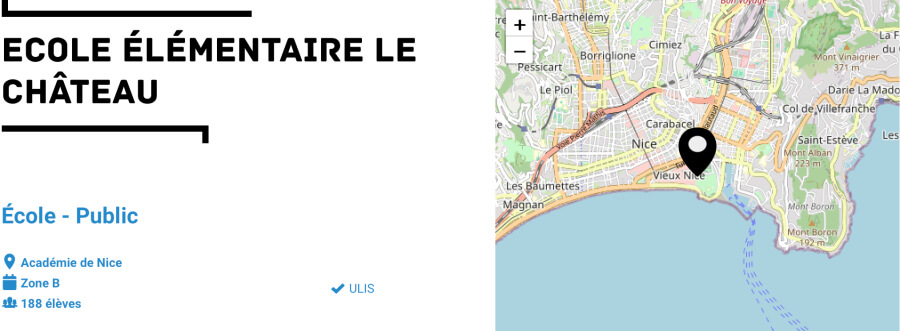
Ecole Elémentaire Le Château: this one is located in the Old Town, but because there are so few kids who live in the old town the class sizes are very small. Also, the principal is very accustomed to connecting with International families.
Ecole Elémentaire Jousé Garibaldi-Port: Another school that our friends love: this is located right on the port and students can actually see the yachts from the windows!
One that I can recommend based on the curriculum making it a smoother transition for you little one in terms of language:
Ecole élémentaire Rothschild 2, on 22 rue Delille, is a highly rated school with an Enseignement d’une Matière Intégrée en Langue Etrangère (EMILE) in English! So math and reading/writing are taught in both English and French!!
This would actually be our zoned school, since we live in the same block corner! I was tempted to transfer Tallulah into this EMILE program, but we feel very lucky to have her in a Public School up near Liberation in a Bilingual Immersion Program, where she spends half the day with all communication and instruction in Niçois and the second half of the day in French! It is a small three- age level class, with only 16 kids, but unfortunately they aren’t accepting any more kiddos into the group.
Also, I’ve regularly walked by École Papon, near Place Garibaldi/Rue Bonaparte and have consistently been impressed with the displayed student artwork!!
So, just to say, neither Tallulah nor any of Tallulah’s close international English speaking friends are in private schools where there is English immersion, so we are all just pretty dedicated to supporting their English skills at home!
And to summarize, yes, your address designates your public school and you can research them here.
Great schools are located in Nice Centre/Durandy/Carabacel (Rothschild II with the English EMILE program), the Port/Garibaldi and the Old Town. There are also likely great schools in other areas, but those are my general recommendations, and of course student body numbers matter, so I think it’s good to look for ones with around 250 or less students!
Also, for Wednesdays, we cannot speak more highly of AnimaNice and the Center Costanzo. For about 20 euros a month, Tallulah does three hours of awesome activities on Wednesday afternoons. She does drawing/painting class, pottery class and then belly dancing!”
Katie Friedland
Bring your kids to France as young as they can be, so they learn French and acclimate as early as possible. You and they will never regret it.
A bientôt,
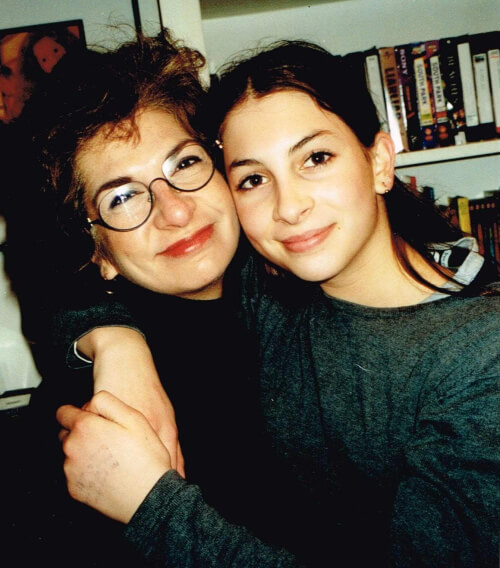 Adrian Leeds
The Adrian Leeds Group®
Adrian with then teenage daughter, Erica
P.S. We offer a mix of Fractional Ownership properties and individual apartments/homes for sale in Paris, Nice, and other parts of France. Visit our site today to view the properties on our roster.
1 Comment
Leave a Comment

Let Us create a custom strategy for you
You can live or invest in France-now.
Property for sale
what's happening
Check out upcoming events, conferences, or webinars. Join us!
GET FINANCING
Learn about French Property Loan Information.
Read & Subscribe
Dive into more by reading the Adrian Leeds Nouvellettre®
Better yet, subscribe to both and get the updates delivered to your inbox.

Get started with your dream of owning property in Paris.
Join us on Youtube
Dive into more on how to live, invest & escape to France
Be sure to subscribe!
To read more, click the links below.
Thank you for this Adrian (and team)!! I have been searching for this kind of information and this is so reassuring. I have been thinking about moving to France for the past year+ but have been hesitant because I have young school aged children (aged 6 and almost 10). Moving countries as an adult is hard enough but with children it can seem overwhelming.
Today’s blog has lowered my anxiety as I move into planning phase!
Janet