


Weekly insights about property in France!
Subscribe and don't miss an issue!
Property Taxes in France: The Little Declaration That Can Make a Big Difference
Volume XXIV, Issue 24

By Jay Corless, edited by Adrian Leeds
There is a moment in almost every French property owner’s life when the romance of owning a pied-à-terre in Paris, a stone village house in Provence, or a sea-view apartment in Nice meets the reality of French administration.
And that moment often arrives in the form of a tax notice.
If you own property in France and have never completed the déclaration d’occupation (occupancy declaration), you must do so by July 1st, 2026, even if nothing has changed recently.
The French government specifically states that a declaration is required if the occupancy status changed between January 2nd, 2025 and January 1st, 2026; you failed to report a previous change; or you have never filed the declaration before. The declaration is made through Gérer mes biens immobiliers (Manage My Real Estate) on the French tax website. If you don’t file, the tax administration can impose a penalty of €150 per property for missing, incomplete, or incorrect declarations. Everyone who owns property is required to complete the occupancy declaration. Read on to learn more.
For North Americans, French property taxes can be surprisingly reasonable compared to many parts of the U.S. or Canada. But they are not always simple. The names are different, the logic is different, and since 2023, there is one additional administrative step every homeowner in France must understand: the déclaration d’occupation—the declaration of how your property is occupied.
It may sound like just another bureaucratic hoop, but it matters. It is how the French tax authorities determine whether your property is your primary residence, a second home, rented, vacant, or otherwise occupied. And from that, they decide which local taxes apply.
THE BIG CHANGE: “TAXE D’HABITATION” IS GONE… BUT NOT FOR EVERYONE
For years, French households paid two main annual local property-related taxes: taxe foncière and taxe d’habitation.
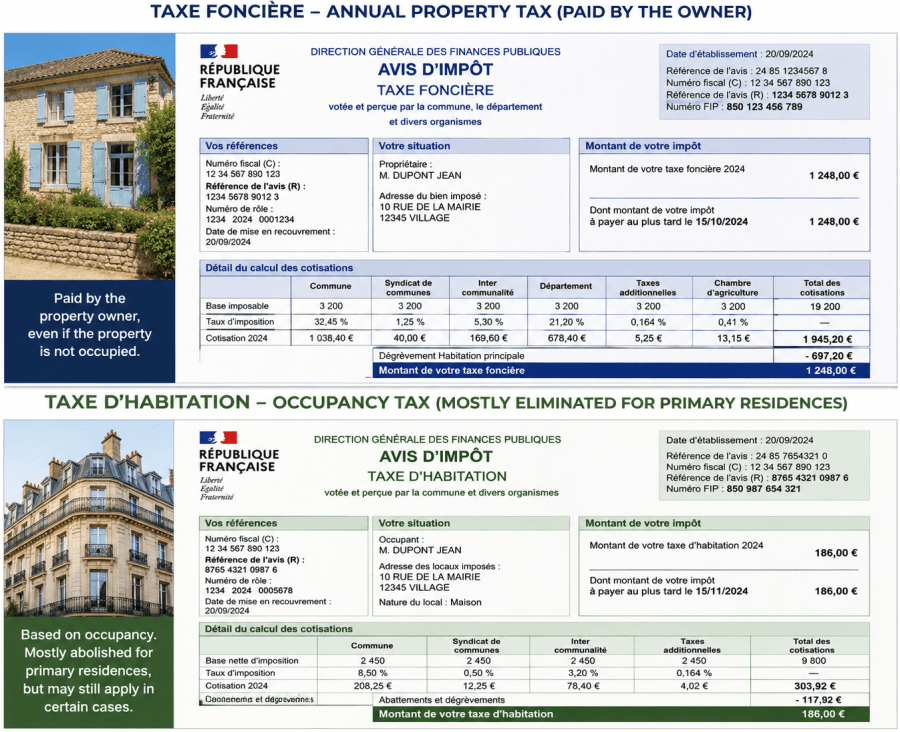
The taxe foncière is the property tax on the true owner’s property. If you own a property in France on January 1st of the tax year, you are generally responsible for paying it, whether you live in the property, rent it out, or leave it empty.
The taxe d’habitation, once paid by occupants of main residences, has now been abolished for primary residences. That was the headline many people heard: “The taxe d’habitation is gone!”
But as with most things in France, there is an important nuance.
The taxe d’habitation still exists for second homes. It may also apply in certain forms to vacant properties. So if you own a second home in France—even if you are a non-resident, even if you only visit a few weeks a year, and even if the property sits quietly waiting for your next arrival—this tax may still very much concern you.
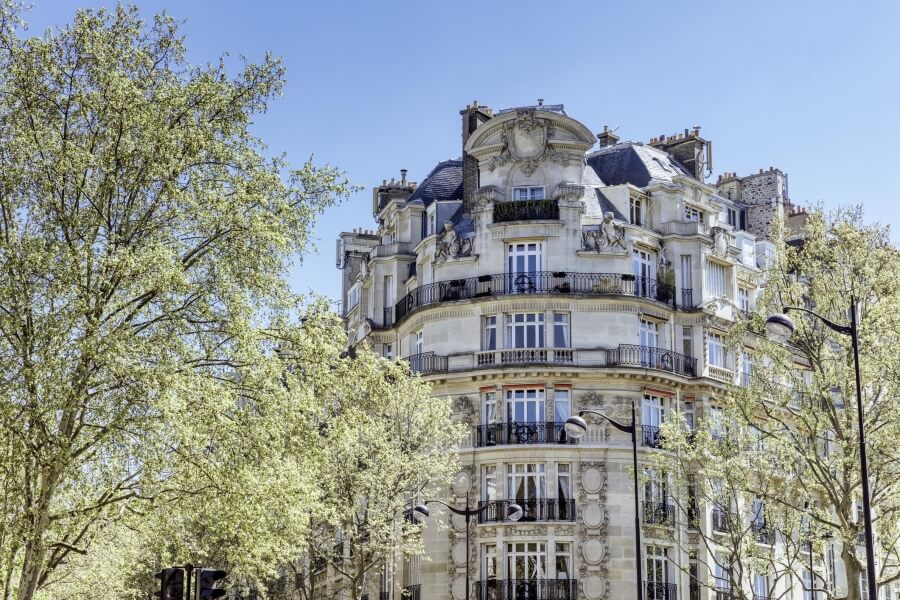
In fact, in many high-demand areas, including popular cities and tourist zones, local authorities may impose a surcharge on second homes. The goal is political as much as it is fiscal: to increase housing availability in areas where residents struggle to find places to live.
TAXE FONCIERE: THE ONE EVERY OWNER PAYS
The taxe foncière is the annual property tax paid by owners. It is based on the theoretical valeur locative cadastrale—the rental value of the property—adjusted by local tax rates voted by the commune and other local authorities.
This is why two apartments of similar size can have very different tax bills depending on their location. A Paris apartment, a house in the Dordogne, and a villa outside Nice are not taxed in exactly the same way because local rates vary.
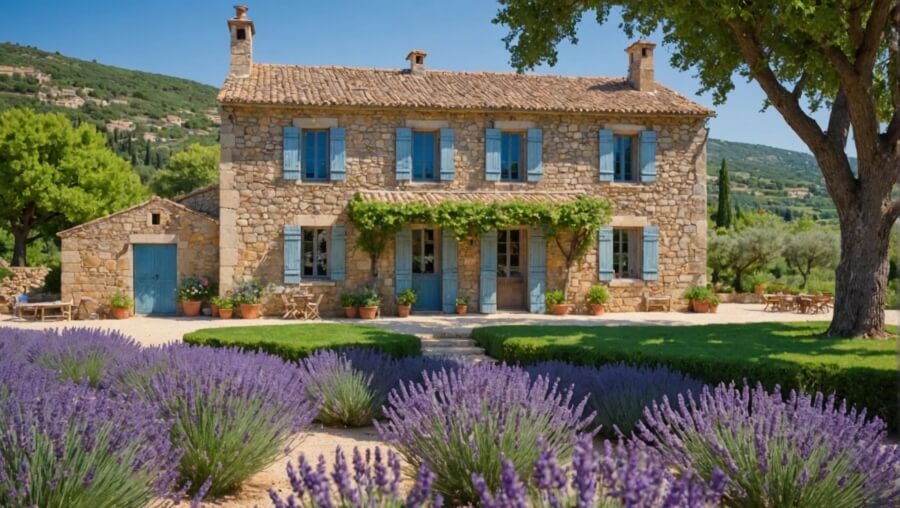
The bill usually arrives in the fall and is available through your personal account on the government’s website. If you sell during the year, the tax authorities still look at who owned the property on January 1st. In practice, the buyer and seller often split the year’s taxe foncière pro rata at the signing with the notaire, but that arrangement is between the parties. The tax administration still sends the bill to the owner of record on January 1st.
Also note the taxe d’enlèvement des ordures ménagères—the household waste collection tax—is commonly included on the same notice. If the property is rented long-term, this portion may generally be recovered from the tenant as part of recoverable charges.
THE OCCUPANCY DECLARATION: SMALL FORM, BIG CONSEQUENCES
Since 2023, all property owners in France have been required to declare the occupancy status of their residential properties through the online service Gérer mes biens immobiliers in their personal tax account.
This declaration tells the tax authorities whether the property is:
– your main residence
– your second home
– rented on a long-term lease
– rented seasonally
– vacant
– or occupied by someone else
You must also account for annexes such as a cellar, parking space, garage, or other dependency linked to the dwelling.
The good news: this is not necessarily an annual form that needs to be redone from scratch every year. Once you have made the declaration, you generally only need to update it if something changes.

Important news: if something changes, you must report it.
For 2026, changes that occurred between January 2, 2025, and January 1, 2026 must be declared in the Biens immobiliers section of online form before the 2026 deadline. This includes a change of tenant, a property becoming vacant, a former main residence becoming a second home, a newly purchased property, or any other change in occupation.
If nothing has changed since your last declaration, there is no new action to take.
“BUT I DIDN’T GO THIS YEAR”
This is one of the most common misunderstandings among foreign owners.
For French tax purposes, a second home is not defined by how often you use it. It is generally a furnished property that is not your primary residence, and that remains available for your use.
So, if you own a furnished apartment in France and can go there whenever you like, it may be treated as a second home even if you did not visit at all during the year.
That distinction matters because a furnished second home is not the same thing as a vacant property. A vacant property is generally unfurnished and unoccupied. The fiscal consequences are different.
In short: a closed-up, furnished Paris apartment waiting for your next trip is not necessarily “vacant.” It is more likely a second home.
VACANT PROPERTIES: A DIFFERENT CATEGORY
France is increasingly attentive to unused housing, particularly in tight housing markets. An unfurnished, unoccupied property may fall under rules for vacant housing taxes.
In certain zones, a tax on vacant housing can apply. In other communes, a local vacant housing tax may apply under different conditions.
There are exceptions, particularly where the vacancy is beyond the owner’s control. For example, a property genuinely on the market at a fair price, a property requiring major works to become habitable, or other documented situations. But owners must be prepared to justify the status.
This is why the occupancy declaration is not a casual formality. It is the administration’s way of sorting properties into the right tax basket.
WHY FOREIGN OWNERS SHOULD PAY PARTICULAR ATTENTION
Many North American owners do not file a French income tax return because they have no French income. They may own a second home, pay their bills, visit for part of the year, and assume that if anything is needed, France will find them.
France usually does find you—eventually—but not always in the way you want.
Your impots.gouv.fr account is becoming the central hub for property administration. Notices, declarations, messages, and tax bills increasingly pass through this online space. If you own property in France, you should know how to access it, inspect it, and keep it up to date.
This is especially important after a purchase, a sale, a change of tenant, a move from a second residence to a primary residence, or a decision to rent the property seasonally.
And yes, there is a fine for failure to declare or for inaccurate information: €150 per property/local. That may not sound catastrophic, but the greater risk is receiving the wrong tax bill and having to untangle it later.
WHAT BUYERS SHOULD ASK BEFORE PURCHASING
When advising buyers, we always remind them that the purchase price is only one part of ownership. Before buying, ask:
• What was the last taxe foncière?
• Is there a taxe d’habitation because the property is a second home?
• Is the commune in a zone where second-home surcharges may apply?
• Are there annexes—cellar, parking, garage—that appear separately in the tax record?
• Has the seller kept the property information up to date?
• If you intend to rent the property, will it be long-term, furnished, seasonal, or occasional?
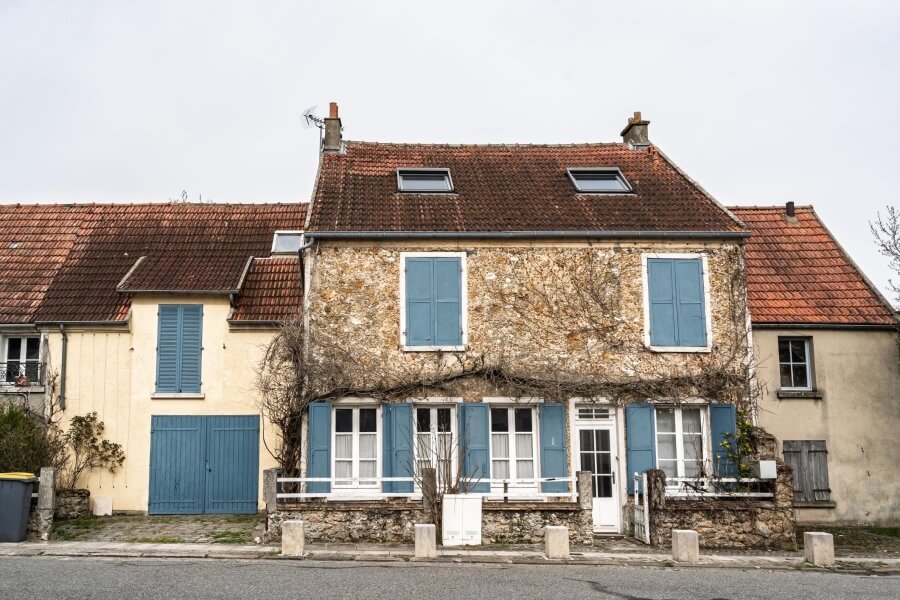
Each path carries different administrative and tax consequences.
And if you intend to make it your primary residence, make sure your tax profile and your property declaration tell the same story.
OUR PRACTICAL ADVICE
First, log in to the government site and check the “Biens immobiliers” section. Make sure each property and dependency appears correctly.
Second, verify the occupancy status. Is it marked as your main residence, secondary residence, rented, or vacant? If it is rented, are the tenant’s details correct?
Third, keep documents. Lease agreements, état des lieux, utility bills, proof of sale, proof of moving, renovation estimates, or listing mandates can all become useful if you need to correct or contest a tax notice.
Fourth, do not ignore autumn tax notices. The taxe foncière usually arrives first, and the taxe d’habitation on second homes arrives later in the year. If you believe you have been taxed incorrectly, you can file a claim through your secure messaging system—but filing a claim does not automatically suspend payment unless you specifically request a stay of payment.
Finally, when in doubt, ask. A notaire, accountant, fiscal adviser, or experienced property professional (such as us!) can help you avoid small errors that become large headaches.
THE BOTTOM LINE
Owning property in France remains one of life’s great pleasures. It connects you to a neighborhood, a market, a “boulangerie, a rhythm of life, and perhaps a dream that began long before you had the keys in your hand. But ownership also means becoming part of the French administrative ecosystem. The trick is not to fear it. The trick is to understand it, stay organized, and respond on time.
Because in France, the romance is real—but so is the paperwork.
A bientôt,
 Adrian Leeds
The Adrian Leeds Group®
 P.S. Podcaster and author Oliver Gee wowed us at Tuesday’s Après-Midi with his top five Paris secrets as well as talking about the books he and his wife, Lina, have written. Read the report, see the photos and watch the entire event on our website.
1 Comment
Leave a Comment

Let Us create a custom strategy for you
You can live or invest in France-now.
Property for sale
what's happening
Check out upcoming events, conferences, or webinars. Join us!
GET FINANCING
Learn about French Property Loan Information.

Read & Subscribe
Dive into more by reading the Adrian Leeds Nouvellettre®
Better yet, subscribe to both and get the updates delivered to your inbox.

Get started with your dream of owning property in Paris.
Join us on Youtube
Dive into more on how to live, invest & escape to France
Be sure to subscribe!
To read more, click the links below.
Howdy and Bonjour from Tejas! Well I must say Adrian that this article is extremely informational. It’s clear, concise & to the point. My partner and I will be going to France this year to do a pilgrimage for our future endeavors and semi retirement. Even though our physical move will not take place until 2029. Your articles, blog and emails are golden to us! Thank you for all the thoughtful and witty anecdotes that keep us smiling!!