


Weekly insights about property in France!
Subscribe and don't miss an issue!
The Market is Waking Up—and Paris is Still the Place to Be
Volume XXIII, Issue 44
By Jay Corless, Edited by Adrian Leeds
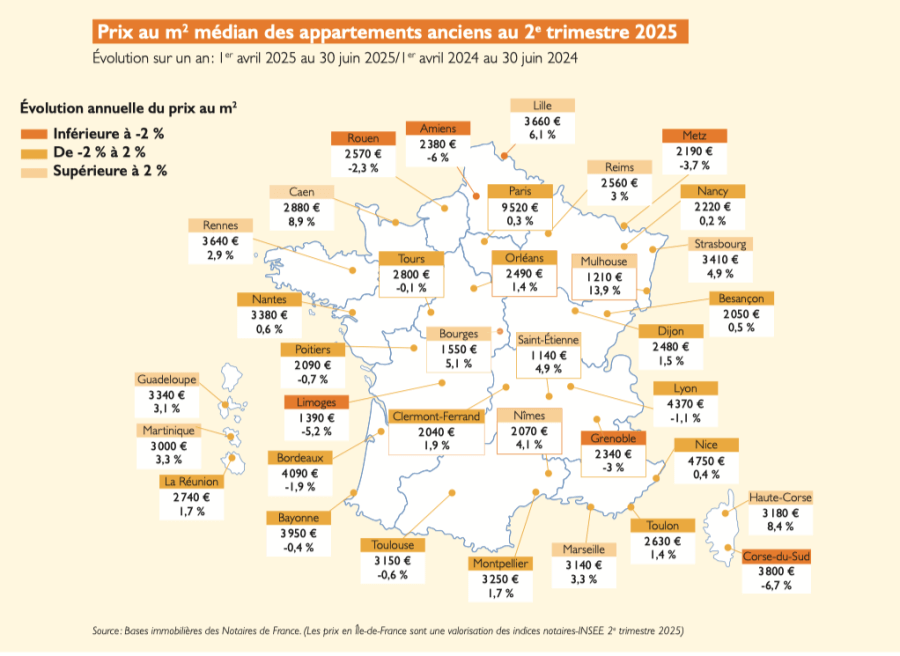
The autumn light has returned to the boulevards. The chestnut vendors are back at their posts. The property market, after months of lethargy, is beginning to stir. According to the latest analysis from the Notaires de France, the long-awaited rebound in French real estate is finally taking shape. The numbers tell an encouraging, if uneven, story. Across the country, 916,000 transactions have occurred over the past year. National price growth has returned to positive territory, with an annual increase of 10 percent. But as always in France, the details matter. Not every region is moving in step. (View the entire report PDF, in French)
The first reason for optimism is the European Central Bank. It lowered its key rate to two percent after eight consecutive cuts, refreshing the borrowing climate, though it’s far from a complete thaw. Ten-year government bonds are currently hovering at 3.45 percent. Banks stay cautious. Lending standards remain strict. While the best-qualified borrowers see doors reopen, modest households still face scrutiny. The rebound remains selective, with lively areas amid quiet zones. Metropolitan centers and coastal regions are energized, while many small towns and rural markets still wait for the wave to reach them.
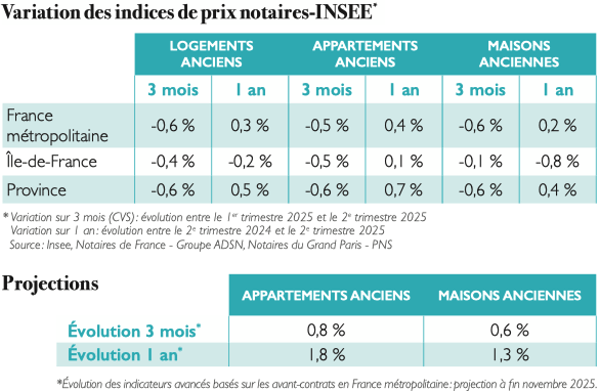
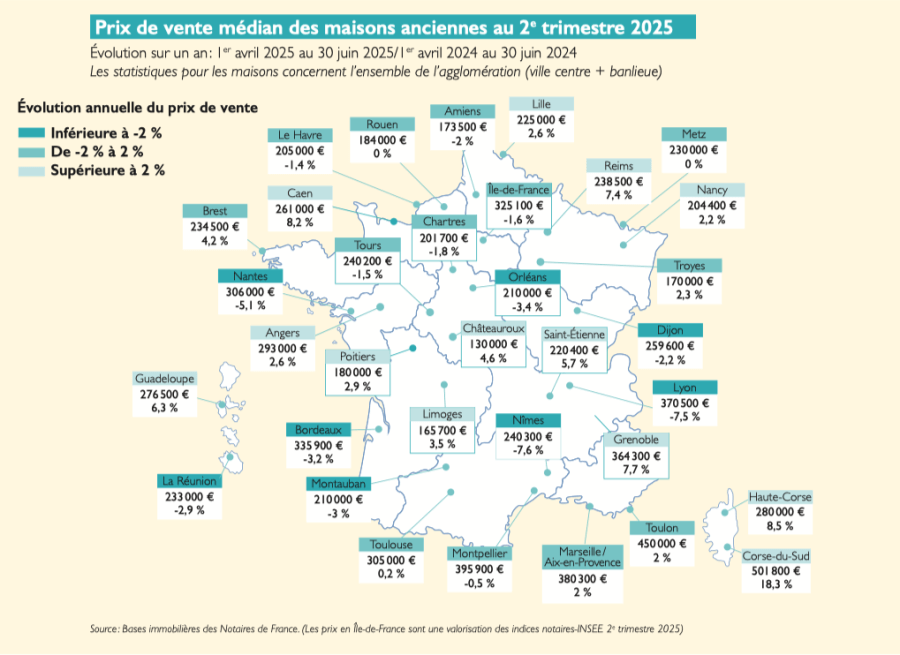
France’s real estate landscape is as varied as its cheeses. In the provinces, prices are edging up: apartments by 0.7 percent and houses by 0.4 percent compared to last year. Across all dwellings, the increase settles at 0.5 percent—a small but significant stabilization for the provinces. In contrast, Paris and Île-de-France present a more nuanced story. Overall, prices are down 0.2 percent, but within the capital, apartments have increased by 0.2 percent. The Petite Couronne, or close-in suburbs, are up 0.3 percent, while the outer belt remains slightly negative, though the decline has softened. This more precise regional comparison suggests a market seeking equilibrium.
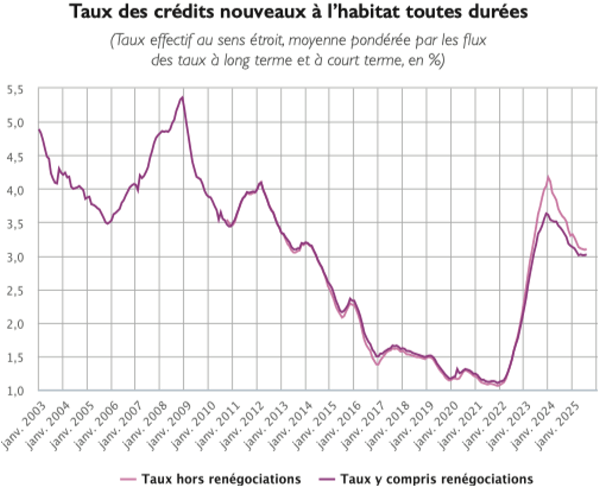
Credit conditions remain the true gatekeeper. At August’s end, new mortgage volume (excluding renegotiations) reached 12.2 billion euros monthly. Average rates hovered at 3.1 percent—a plateau from midsummer, but still far from the recent dizzying highs. Now, confidence is the difference. Buyers’ sense rates have stabilized. Sellers are gradually aligning expectations with the new normal. For North American expats—especially those with capital or stable income—this is a favorable time to engage with French banks.
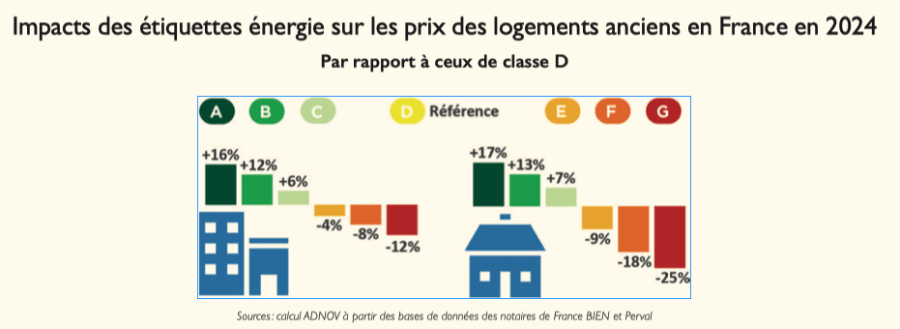
One of the year’s most striking trends is energy performance. Notaires’ data mirrors what we’ve seen on the ground: a property’s DPE label now directly impacts value. “A”-rated apartments sold for about 16% more than “D” units. “G”-rated houses lost about a quarter of their value compared to mid-range ones. In plain English, energy inefficiency is now a black mark against companies. Buyers, especially investors, are wary of costs and regulatory constraints on “passoires thermiques.” Yet there’s a silver lining for renovators. Properties that once sat unsold due to low energy ratings can be purchased at a discount, upgraded, and transformed into high-performing assets that attract tenants and command higher resale premiums.
Where does that leave us as we consider next steps? In one sense, the French market is stabilizing after a long period of silence. Prices are steady, transaction volumes are rising, and confidence—though fragile—is returning. For buyers planning to live in France, this is a time for careful yet bold decisions. Paris remains resilient. It has consistently defied predictions, weathered crises, and rewarded those with a long-term view. For investors, the decisions are more nuanced. The best opportunities are in energy-efficient properties in established cities or provincial areas with increasing rental demand.
We mustn’t forget that France’s beauty is its diversity. This mosaic complicates statistics but creates endless possibilities. A Dordogne farmhouse, a Lyon loft, a Basque seaside retreat—each tells a story, each has its own rhythm. An emphasis on sustainability, quality of life, and long-term value unites all these aspects.
As we head toward the end of 2025, the market’s mood is best described as cautiously optimistic. The panic has faded. The fundamentals are firming. Smart money is quietly returning. The French property landscape is never static. It’s an ongoing dialogue between history and modernity, restraint and indulgence. For those ready to join that conversation, now is the moment to listen carefully. Perhaps it is time to make your move.
Despite its complexities, France remains one of the most compelling stories in real estate.
A bientôt,
 Adrian Leeds
The Adrian Leeds Group®
P.S. Paris, Nice or anywhere in France, we can help you make the best investment you can make while creating a whole new and exciting life for you in France. To learn more, contact us today!

Let Us create a custom strategy for you
You can live or invest in France-now.
Property for sale
what's happening
Check out upcoming events, conferences, or webinars. Join us!
GET FINANCING
Learn about French Property Loan Information.

Read & Subscribe
Dive into more by reading the Adrian Leeds Nouvellettre®
Better yet, subscribe to both and get the updates delivered to your inbox.

Get started with your dream of owning property in Paris.
Join us on Youtube
Dive into more on how to live, invest & escape to France
Be sure to subscribe!
To read more, click the links below.