


Weekly insights about property in France!
Subscribe and don't miss an issue!
Understanding “Plus-Value Immobilière” in France: What Sellers Need to Know
Volume XXIV, Issue 16

By Jay Corless, Edited by Adrian Leeds
If you own property in France, or are thinking of buying with the eventual goal of selling, it is essential to understand “plus-value immobilièr,” the French tax on capital gains from real estate sales. It is one of those topics that sounds intimidating at first, but once broken down, the logic is fairly straightforward. The challenge is that many foreign owners assume the rules will work the way they do back home. In France, they often do not.
In simple terms, plus-value immobilière is the gain realized when you sell a property for more than its acquisition value. If you bought a property for 300,000€ and later sell it for 500,000€, you have not automatically made a taxable gain of 200,000€. France allows certain deductions, adjustments, and exemptions before arriving at the taxable figure. That is where the real story begins.
The first major distinction is whether the property is your primary residence. If the home you are selling is your principal residence at the time of sale, the gain is generally fully exempt from capital gains tax. For many owners, that is the single most important rule in the entire system. But “principal residence” is not a casual label. It means the property is your habitual and effective main home, the one you occupy most of the year. A pied-à-terre, holiday home, rental apartment, or second residence usually does not qualify.

That is why so many foreign buyers are surprised. They may think of their Paris apartment as “their home in France,” but if it is not their principal residence for French tax purposes, it is normally treated as a secondary residence. In that case, the gain is generally taxable. The standard framework remains 19% income tax plus 17.2% social levies, for a combined headline rate of 36.2%, before any reductions for time held or other exemptions.
And yes, there can be more. If the taxable gain is high enough, France can also apply an additional surtax on large gains. The notaries’ guidance notes that this supplementary tax ranges from 2% to 6% for certain gains above 50,000€ after the applicable abatements.
Fortunately, France does not treat every euro of appreciation the same way forever. The tax system rewards long-term ownership through an abatement for the duration of ownership. For income tax purposes, the gain becomes fully exempt after 22 years of ownership. For social levies, full exemption arrives later, after 30 years. In between, the taxable base is reduced gradually according to a set schedule. From the 6th through the 21st year, the income-tax base is reduced by 6% per year, then by 4% in the 22nd year. For social levies, the reduction is 1.65% per year from the 6th through the 21st year, 1.60% in the 22nd year, and 9% per year beyond that until full exemption after 30 years.
If you are affiliated with another EU/EEA social security system, as is the case for North Americans not tax resident in France, you may be exempt from most of the charges related to social security. Instead, you pay a “prélèvement de solidarité” (reduced levy) of 7.5%. Here’s the catch: you will be assessed the full amount at the time of the sale, and it will be up to you to file a claim for a reimbursement! You won’t find this written anywhere, but we know it to be true.
This means that time can be one of the most valuable tools in tax planning. Someone selling after eight years of ownership may face a very different result from someone selling after twenty-three. For some owners, simply waiting can dramatically lower the tax bill. In France, patience is often part of the strategy.
But the calculation itself starts before these abatements. The gain is generally the difference between the sale price and the acquisition price, with adjustments allowed on both sides. The seller may deduct certain sale-related costs from the sale price, such as some agency fees or required diagnostics, when borne by the seller. On the purchase side, the acquisition price may be increased by eligible purchase costs and qualifying works. If the actual acquisition costs cannot be justified, a flat 7.5% allowance may be added to the purchase price. And if the property has been held for more than five years, owners may, in many cases, use a flat 15% works allowance instead of documenting actual qualifying works.
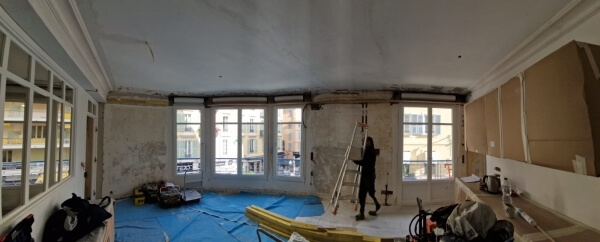
That is an area where good record-keeping matters enormously. Owners who have retained invoices for major improvement works may be able to significantly reduce the taxable gain. Those who have not may still benefit from the 15% flat allowance after five years, but not all improvements and costs are treated equally, and the choice between real expenses and the flat method should be reviewed carefully with the notaire.
There are also several important exemptions outside the principal residence rule. For example, France provides an exemption for property held for more than 22 years for income tax and 30 years for social levies. There is also a one-time exemption in certain circumstances for the sale of a property other than the principal residence if the proceeds are used within two years to buy or build a principal residence, provided the seller has not owned a principal residence during the preceding four years. Additional exemptions may apply in cases involving small sales, some retirees or disabled persons under income conditions, or certain former principal residences sold after moving into a care facility.
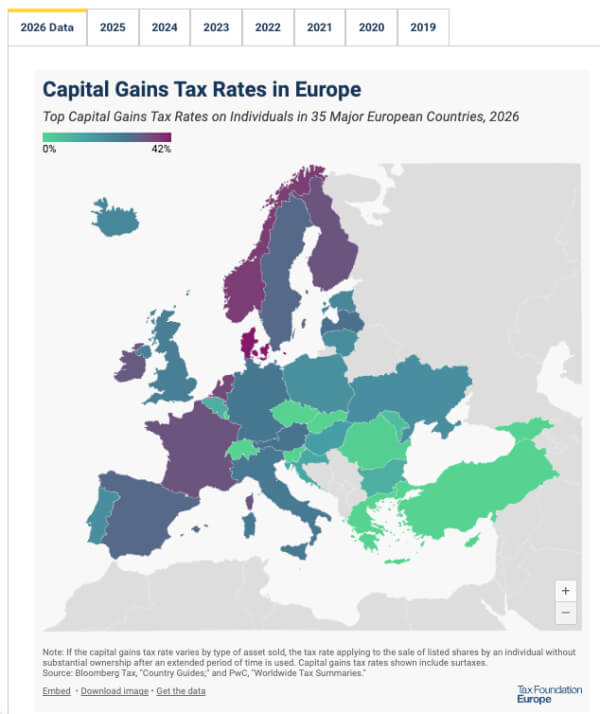
For non-residents, the picture can become more complex. France still taxes many gains on French real estate even when the seller lives abroad, subject to treaty rules and specific exemptions. Notaires de France notes that non-residents may benefit from a specific exemption on the sale of a dwelling in France under certain conditions, though it is limited and technical. Also worth noting: current 2026 commentary from the Paris notaries highlights a change affecting some non-residents outside the European Economic Area, with an increase in CSG on capital income, which can affect real estate capital gains. That is exactly the kind of detail that makes personalized tax advice essential before a sale.
The good news is that sellers are not generally left to wrestle with this on their own. In most cases, the notaire calculates the taxable gain, prepares the required declaration, withholds the tax from the sale proceeds, and remits it to the authorities. Even so, the seller should understand the basics well in advance, because once a sale is underway, it may be too late to correct missing invoices, misunderstood residency assumptions, or unrealistic expectations about net proceeds.
For foreign owners, the most important takeaway is this: France does not simply tax your profit on the back of an envelope. The result depends on the nature of the property, how long you have owned it, whether it qualifies as your principal residence, what purchase and improvement costs can be added back, whether any exemption applies, and, in some cases, where you are tax-resident when you sell. Two sellers with the same sale price can end up with very different outcomes.
A tax representative may be required when the seller is non-EU/EEA resident and the sale price is over 150,000€, and if the property is not exempt (e.g., not a primary residence). Then the seller must appoint a “représentant fiscal accrédité” (tax representative) to verify the capital gains calculation, guarantee the tax payment to the French state, working alongside the notaire. This service typically costs 0.5% to 1% of the sale price.
For North American sellers, you will almost always need a tax representative because the U.S. is outside the EU/EEA…even though there’s a tax treaty! That is why “plus-value immobilière” should not be treated as an afterthought. It is part of the investment from day one. Keep your records. Understand your occupancy status. Think ahead before selling. And above all, do not assume your French tax result will mirror what you knew in the U.S. or Canada. In France, the details are not just details—they are the difference between a pleasant surprise and a very expensive one.
Note: Only major improvements to a property can count against your tax liability. Decorative changes do not qualify. Major improvements could include a bathroom or kitchen that didn’t exist before. So, be careful if you think your major renovation will save you tons of taxes! It won’t. It does mean, however, you’ll pay tax on those expenditures. Be sure to keep good records, regardless!
Special Note: No one wants to pay taxes, but wanting not to pay capital gains tax is not a reason not to invest in property. If the property has increased greatly in value, then the tax you pay is on the gain, and therefore you have still profited from your investment. With tax rules such as these, France encourages long-term ownership, so “flipping” properties to make a quick buck is difficult to achieve.
Let us help you assess the financial benefits and rewards while finding the perfect property in France for you, that meets all the requirements and your list of wishes.
Visit our website for more information.
References
• Service Public, Impôt sur le revenu – Plus-value immobilière
• Impots.gouv.fr, Je vends un bien immobilier
• Impots.gouv.fr, Je vends mon bien immobilier, vais-je payer de la plus-value immobilière ?
• Notaires de France, Calculer une plus-value immobilière
• Chambre des Notaires de Paris, Loi de finances pour 2026 : ce qu’il faut retenir
A bientôt,
Adrian Leeds
 The Adrian Leeds Group®
P.S. We’re the folks who can make your French property investment dream come true, while protecting you from making serious mistakes. Review the services we offer to help you find the perfect property in France!

Let Us create a custom strategy for you
You can live or invest in France-now.
Property for sale


what's happening
Check out upcoming events, conferences, or webinars. Join us!
GET FINANCING
Learn about French Property Loan Information.

Read & Subscribe
Dive into more by reading the Adrian Leeds Nouvellettre®
Better yet, subscribe to both and get the updates delivered to your inbox.

Get started with your dream of owning property in Paris.
Join us on Youtube
Dive into more on how to live, invest & escape to France
Be sure to subscribe!
To read more, click the links below.