

Adrian Leeds Nouvellettre®
Your taste of life in France!
Subscribe and don't miss an issue!
A Neapolitan Saint Patrick’s Day, Part II
NICE IN NAPLES
The last Nouvellettre® was written at the very beginning of our sojourn in Naples. was written at the very beginning of our sojourn in Naples. And now, by the time you read this, my friend Marcia and I will have had four days in Naples and four days in Nice under our belts. Both cities were new experiences for Marcia. Naples was a new experience for me, although I am very familiar with Italy and the Italians.
Marcia’s goal was to celebrate her birthday by visiting Herculaneum and Pompeii, which have special interest to her. She’s a docent at the Getty Villa in Los Angeles and as a result, has learned a lot about the ancient cultures of Greece and Rome. She’s been talking about Pompeii and Herculaneum to her museum visitors for years, but never been there to see them both for herself. As a birthday gift to her (with me also benefiting), we indulged in a full-blown private tour by car from Naples of both sites with a professional guide. It was all arranged with Di Sarno Car Services, a local company that’s been offering Neapolitan tours for over 30 years.
To describe Naples, it can’t be done in a “What I Did Last Summer” kind of way. It’s better to break this down into parts:
• A CULTURAL AND ARCHEOLOGICAL ADVENTURE
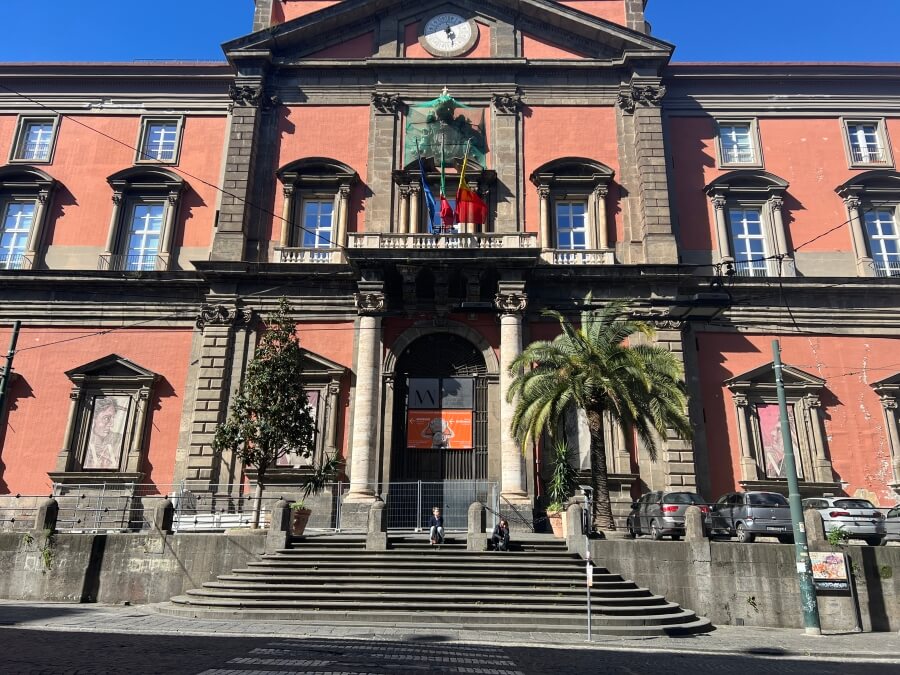
This was the highlight of the trip and the primary reason for it. First, we spent many hours Sunday perusing the amazing works on display at the Museo Archeologico Nazionale di Napoli. It’s an enormous building, vast in every respect, filled with some of the most beautiful and important artifacts from Greek, Roman, and Renaissance periods. Notably, it houses an array of relics from the ancient cities of Pompeii, Herculaneum, and Stabiae, which were buried during the catastrophic eruption of Mount Vesuvius in AD 79.
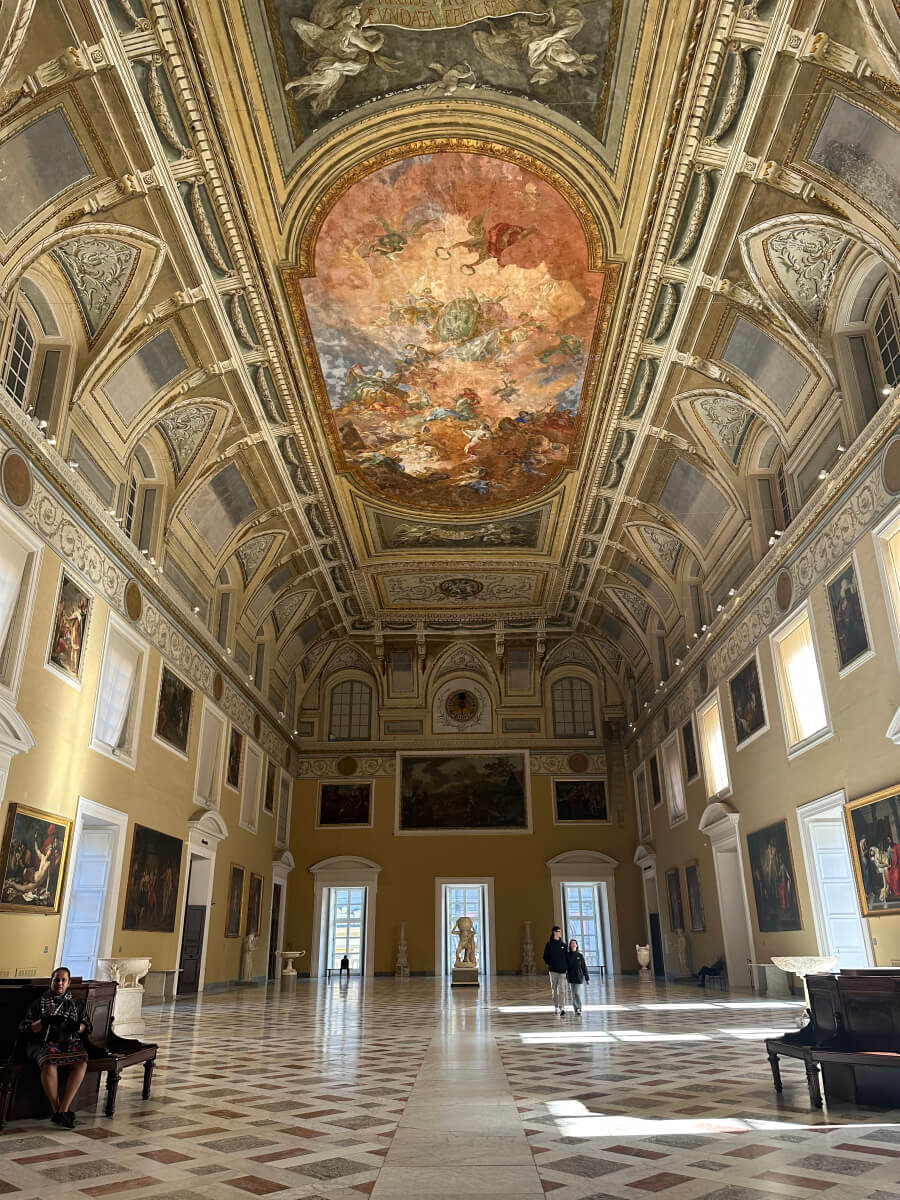
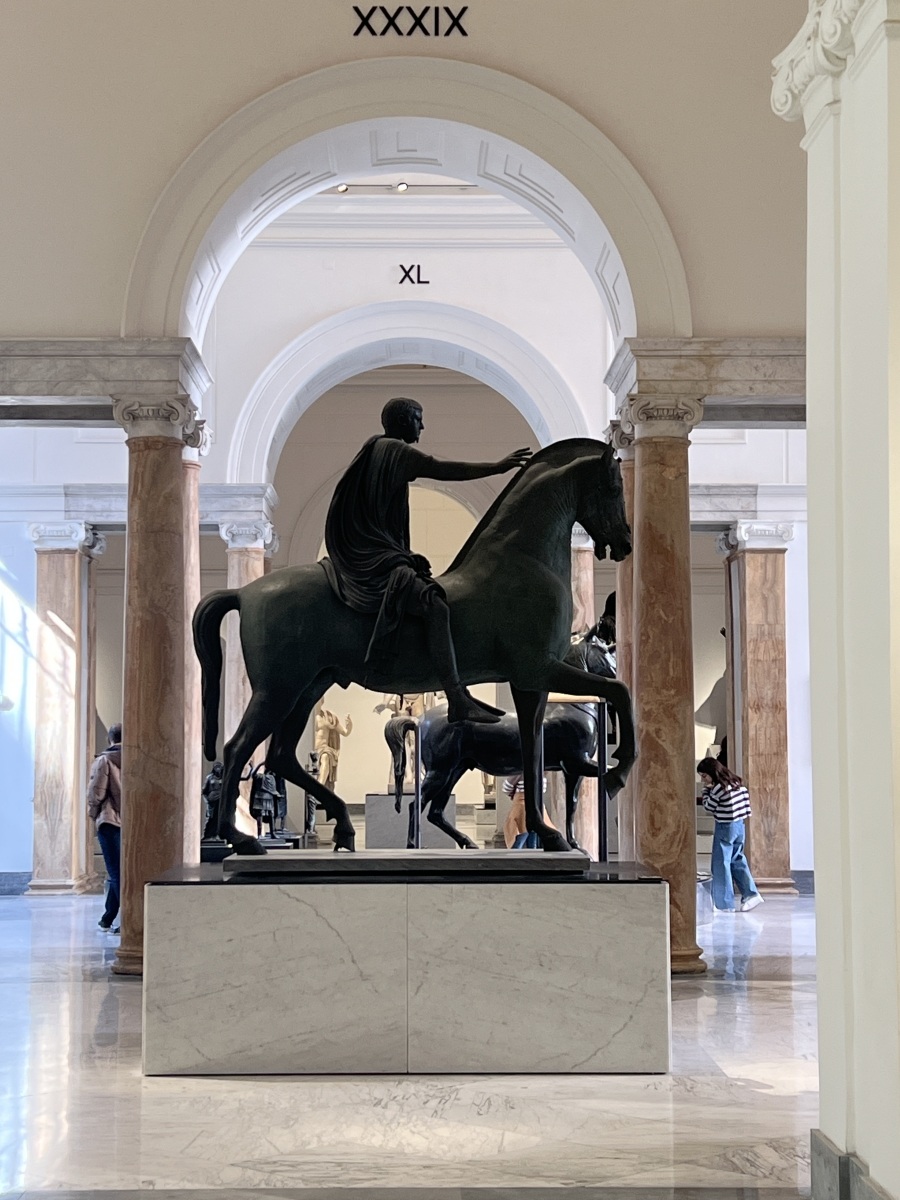
Marcia was like a kid in a candy store, as she discovered the originals of the works that were copied and on display at the Getty Villa. She took a zillion photos, as did I, as we oohed and aahed in every room. The rooms devoted to the Villa dei Papiri (Villa of the Papyri) were the most special, as the Getty Villa recreated many elements of the ancient Roman villa in Herculaneum. Copies of Roman bronzes excavated at the Villa are scattered throughout the garden at the Getty.
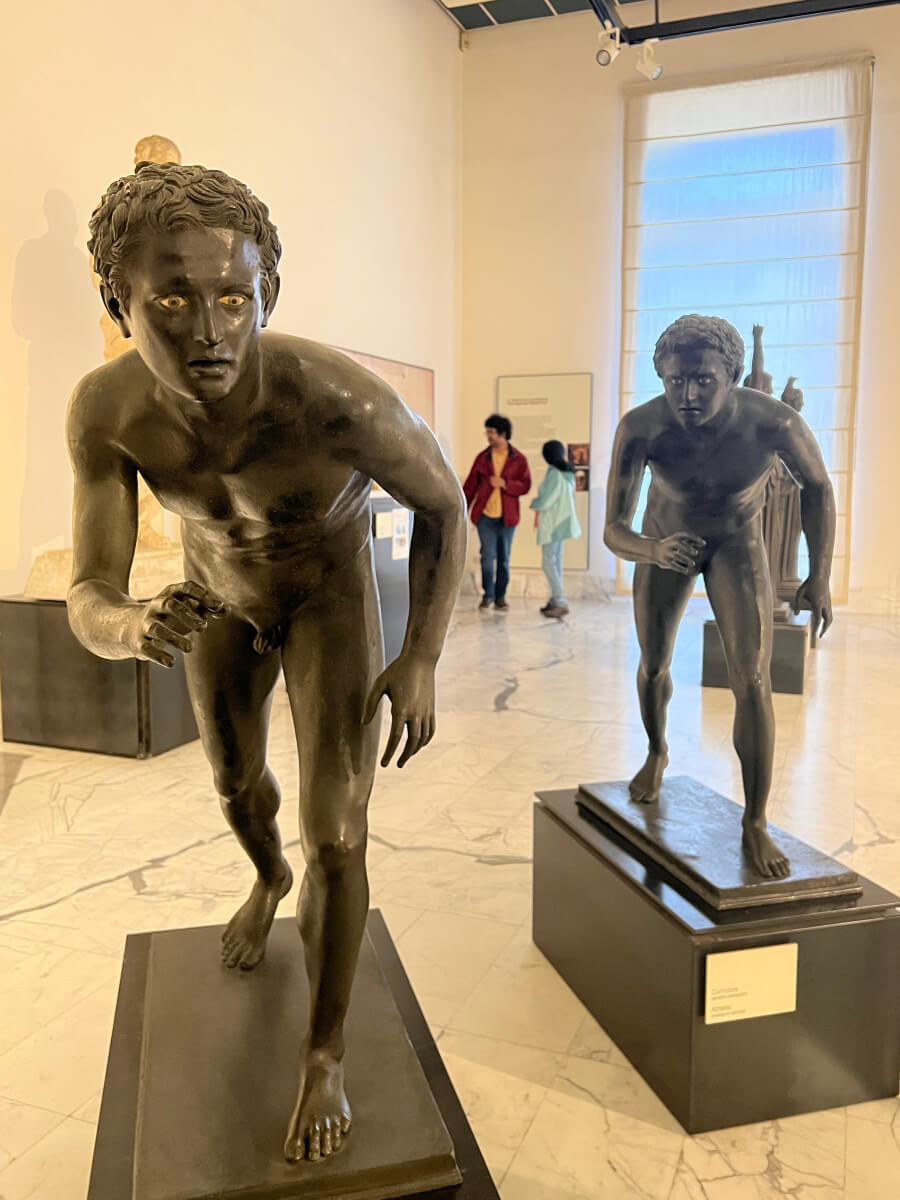
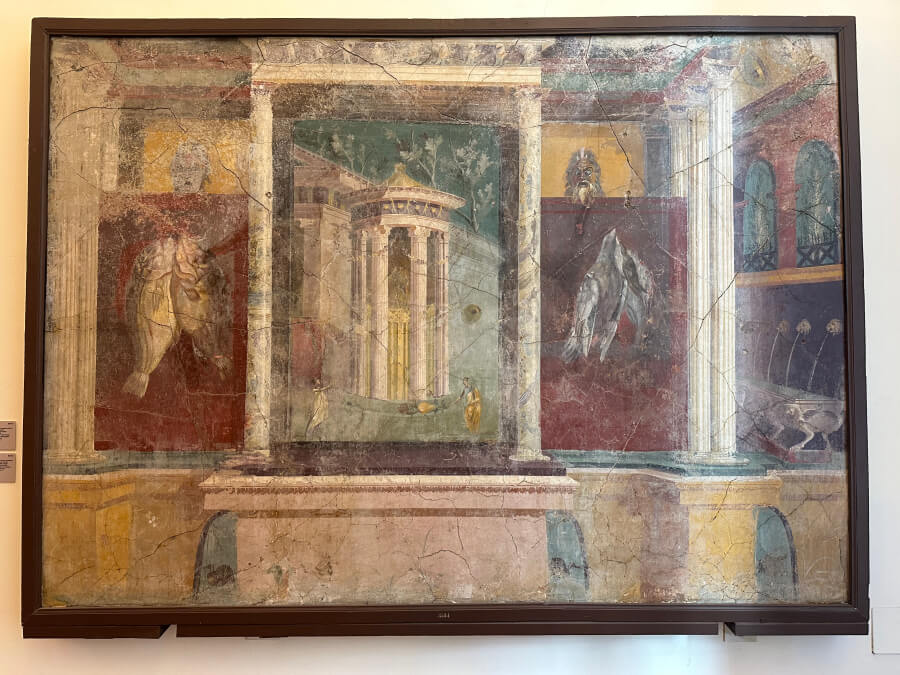
The frescoes amazed me even more, and while the museum is filled with a vast array of magnificent specimens, there was nothing like seeing them in Herculaneum and Pompeii on the walls as they were at the time. Our tour of the museum was the perfect introduction to our day at Herculaneum and Pompeii the next day.
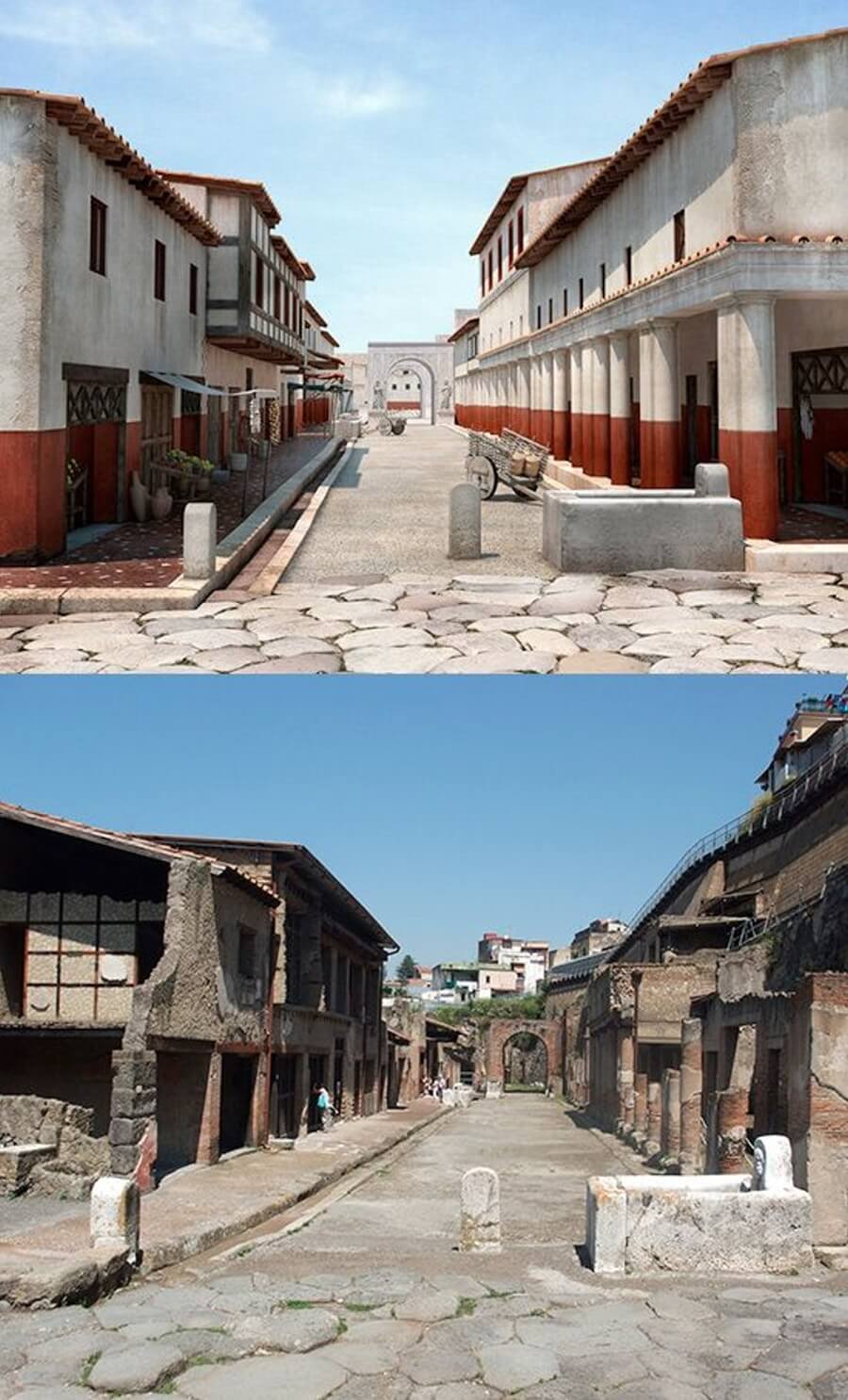
Hurculaneum as it was and as it is today
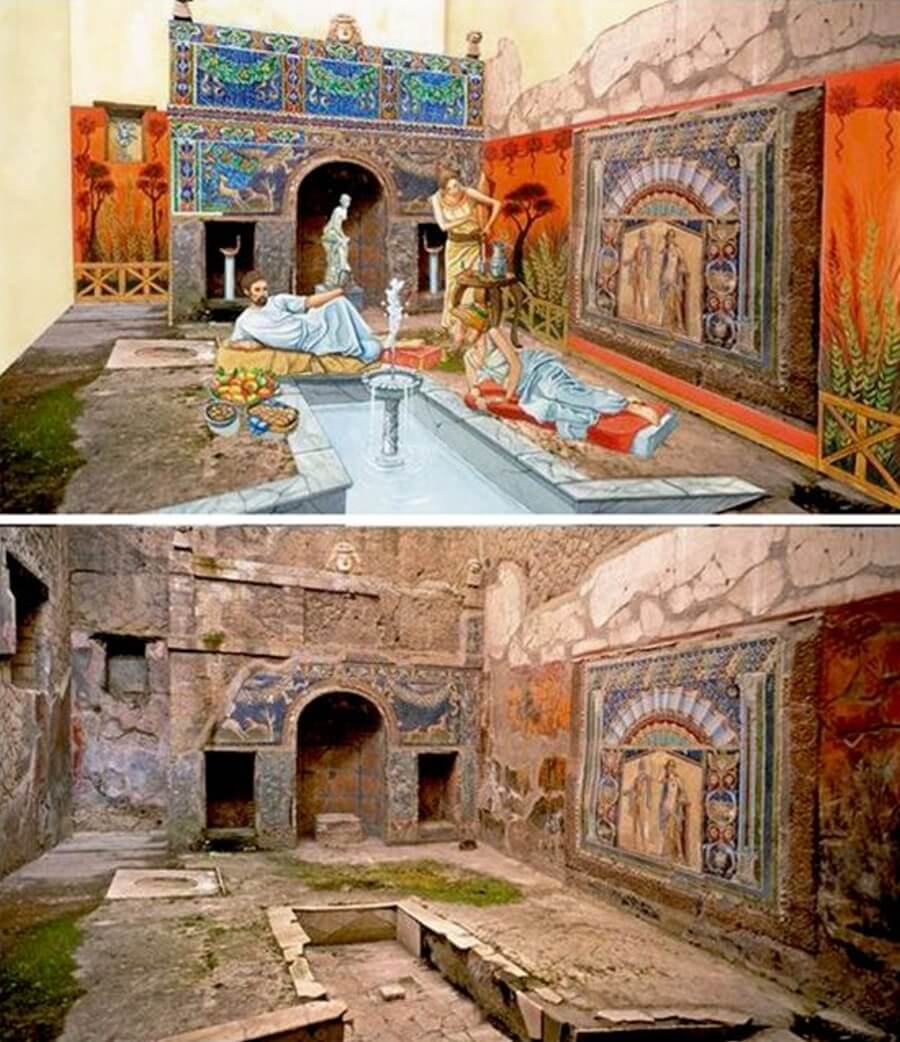
Pompeii as it was and as it is today
The tours to the two sites that were devastated by Mount Vesuvius were perfect thanks to Di Sarno Car Service and our guide, Miriam da Rosa. She was hired by the car service at our request to have a very professional and knowledgeable guide. She was all of that and more. We began by visiting Herculaneum in the morning, having lunch at Malatia (scroll down to read about all about that) and then going to Pompeii for the afternoon.
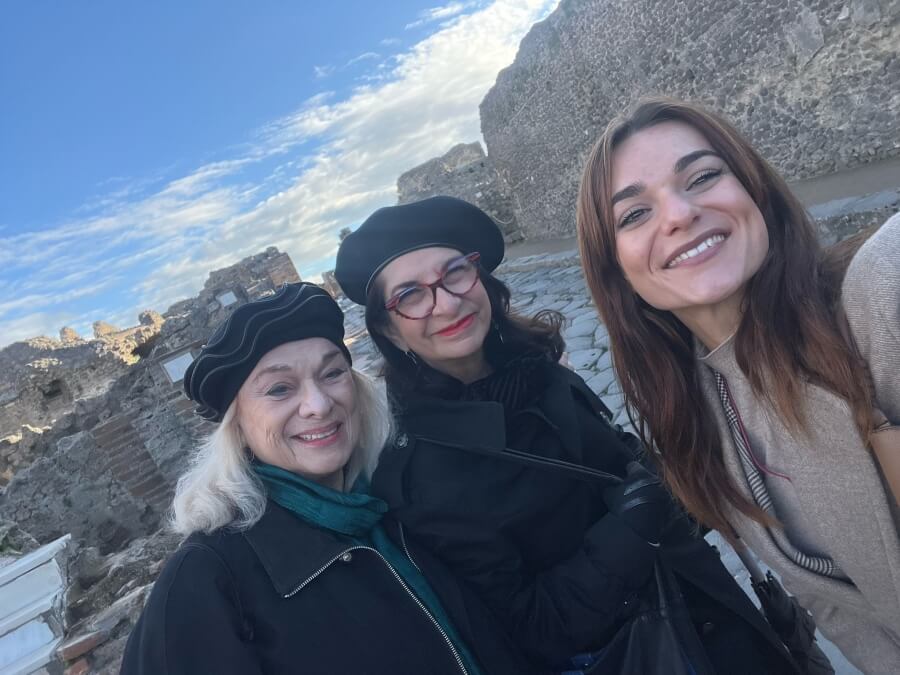
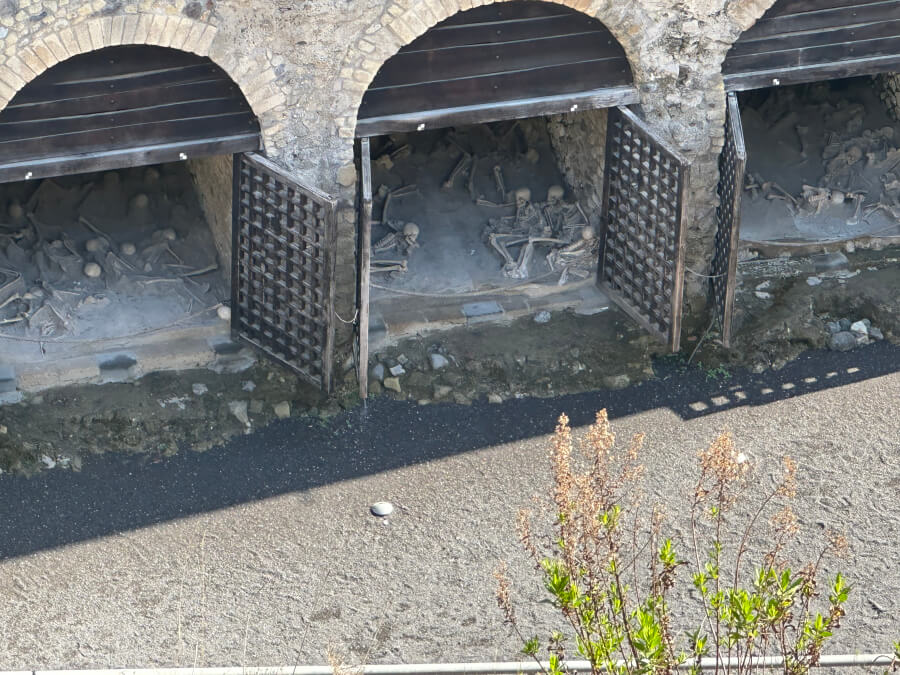
Herculaneum was buried under the massive pyroclastic flow during Mount Vesuvius’s eruption, just like Pompeii was, but it is renowned for its exceptional preservation. The volcanic material that covered the town protected it from looting and environmental damage. Notably, the pyroclastic deposits carbonized and preserved wooden structures such as roofs, beds, and doors, as well as organic materials like food and papyrus. Smaller than Pompeii, Herculaneum had an estimated population of around 5,000 and was considered wealthier. It served as a seaside retreat for the Roman elite, evident from the numerous luxurious houses adorned with colored marble cladding. Significant structures include the Villa of the Papyri and the “boat houses,” where the skeletal remains of at least 300 individuals were discovered.
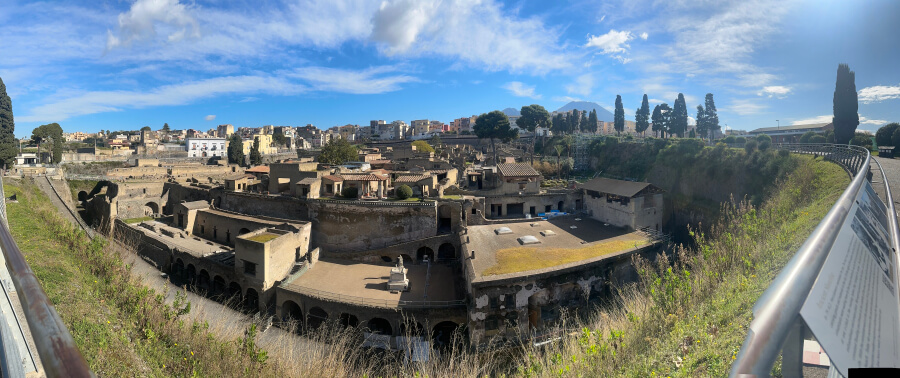
Herculaneum
Of the two sites, Herculaneum was (for me) the jewel. It is intimate, manageable and magnificent, even in its ruinous state. Pompeii, on the other hand, is vast and unimaginable. The first time I visited Pompeii in 1979 I was impressed by the “thermopolia,” as I was this time, too.
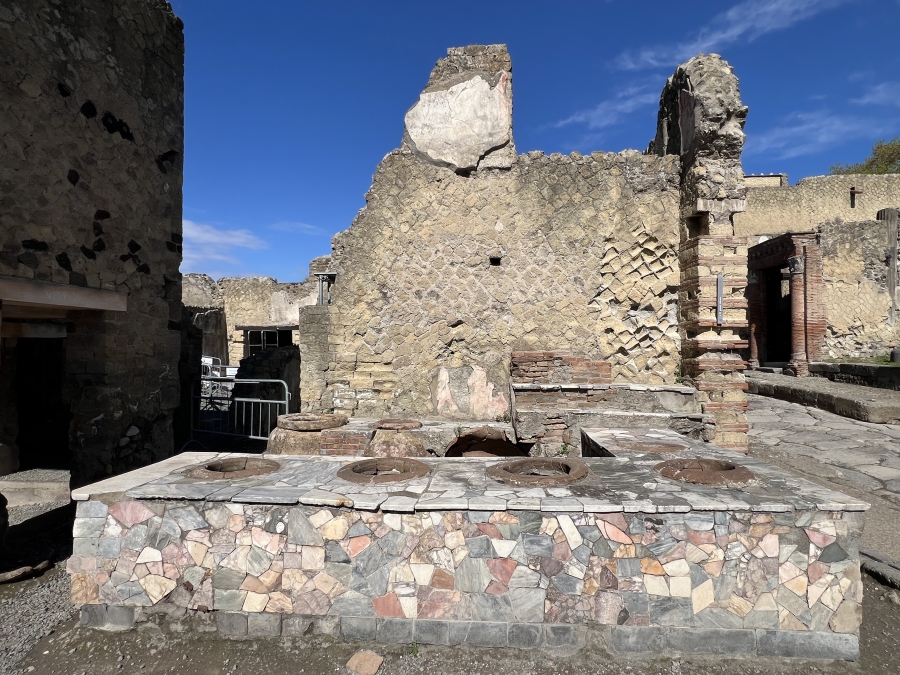
A thermopolium
“Thermopolia (plural for thermopolum) means “a place where something hot is sold.” It was a commercial establishment offering ready-to-eat food and hot beverages…much like a fast food restaurant in today’s world! These establishments primarily catered to individuals who lacked private cooking facilities, such as residents of “insulae”” (multi-family apartment buildings). Archaeological findings indicate that the menus included staples of the Roman diet such as grains, olives, cheese, and dried fish, along with more exotic dishes influenced by the Roman Empire’s trade. Wine, typically diluted with water, was also commonly served.
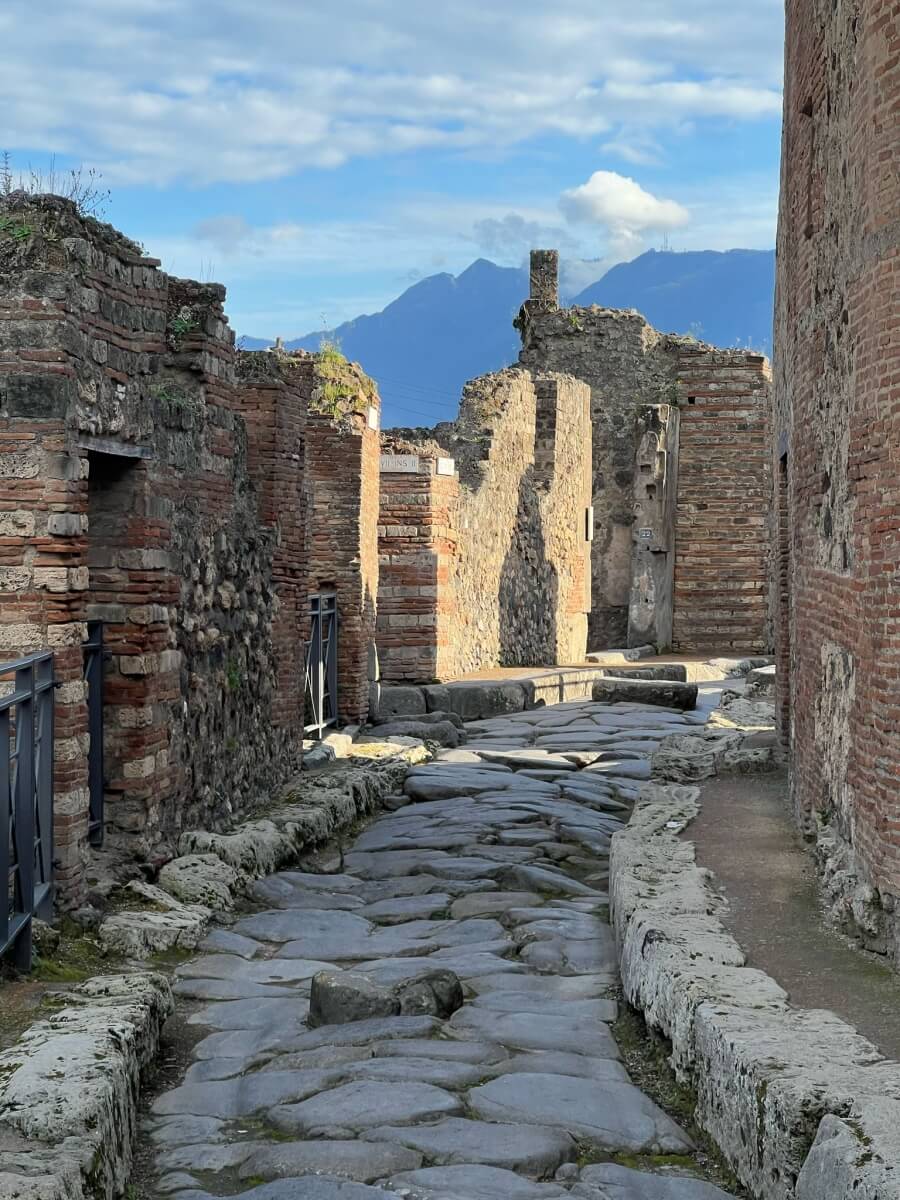
A curved street in Pompeii
The most remarkable part at Pompeii (again, for me) was the House of the Vettii, a well-preserved Roman “domus” named after its owners, freedmen Aulus Vettius Conviva and Aulus Vettius Restitutus, which showcases their wealth and status. Excavated between 1894 and 1896, the house is renowned for its intact frescoes exemplifying the Pompeiian Fourth Style, completed after the 62 AD earthquake. Spanning the entire southern section of block 15 in region VI near the Vesuvian Gate, it lacks a “tablinum”—a common feature in Roman homes, generally situated on one side of the atrium and opposite to the entrance. What’s most impressive are the frescoes, many of which are erotic in nature, and there are many enlarged penises pictured or in sculptures, denoting fertility, virility and prosperity. Miriam warned us from the beginning that the culture of the time was quite open to such displays! We got a lot of good laughs out of that and as much as I’d like to show you some of the more impressive phalluses, I fear censorship or shocking you!
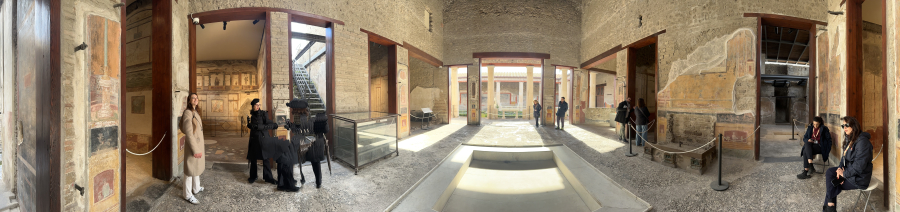
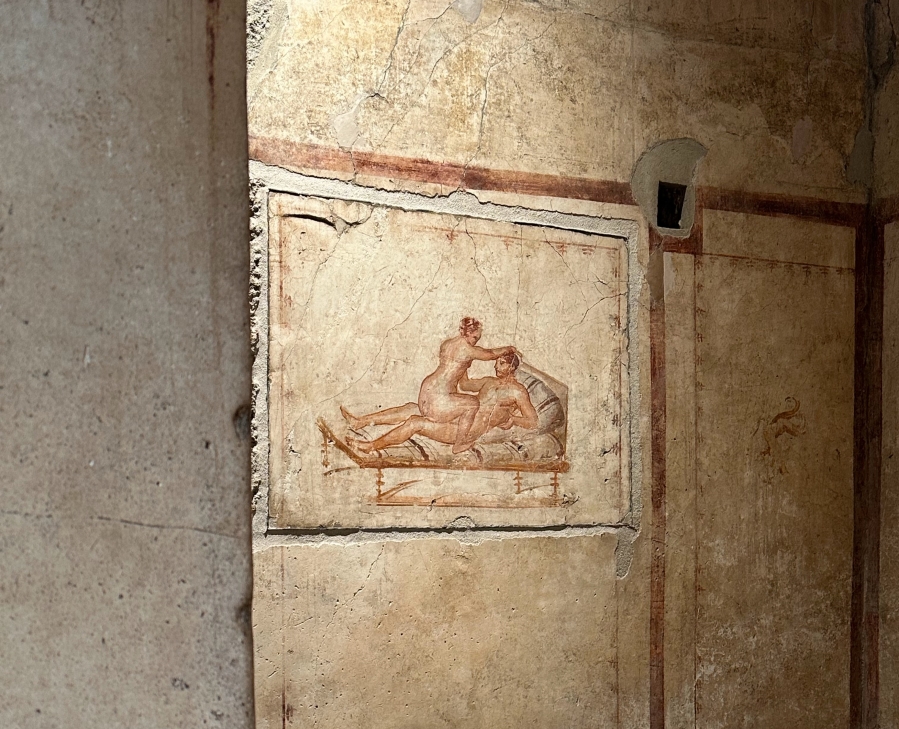
If you go to Naples for the sole reason of discovering these archeological sites…it will be well worth it.
• DINING OUT NAPOLITANO STYLE
Every since I got sick, and refrained from eating for almost a week, I’ve been making up for lost time by eating just about everything I want, with the exception of sugar and dairy. That meant going back to enjoying bread and pasta without guilt. Getting to Naples to eat well was very high on my agenda. I had reserved several restaurants in advance, not wanting to be caught without a plan or end up in a mediocre restaurant.
Re Lazzarone turned out to be our best find, so much so that we returned for lunch our last day. It was the pre-museum visit Sunday lunch that energized us for hours to wander the halls of the museum. We over-ordered and overate, then mmmed through every bite of every dish. Two young guys waited on us exclusively for a long time before other diners filled the room, giving us plenty of attention. We weren’t complaining and couldn’t wait to go back for more “punishment.” My favorite of all was the “Linguine aglio olio peperoncino e gambero imperiale” (Linguine garlic oil chili pepper and imperial shrimp), but we relished every bite of everything else. It’s the perfect stop before or after a museum visit.
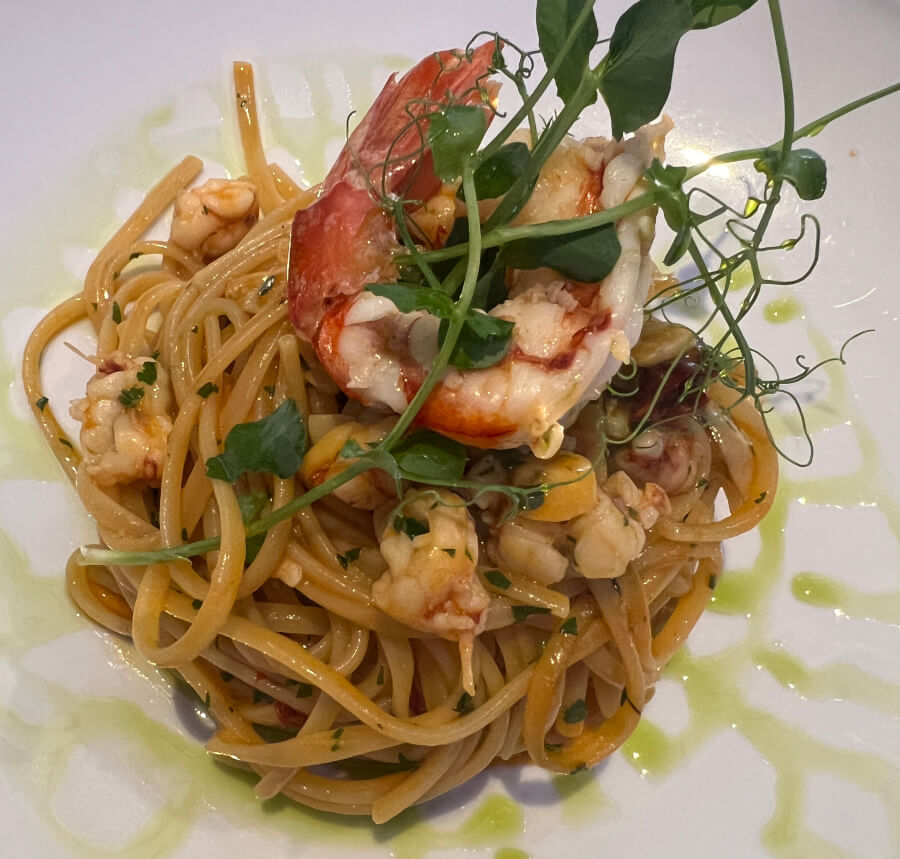
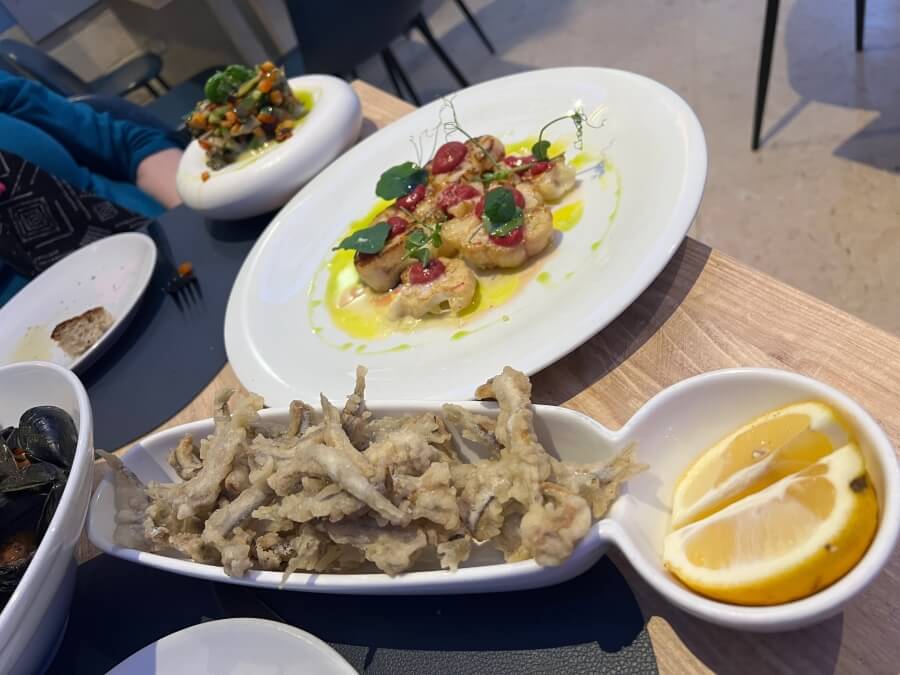
Anchovies and cauliflower at Re Lazzarone
Lunch in Pompeii before our visit was a special treat as the chef of Malatia custom-made a Spaghetti alla Puttanesca upon my request! It’s a pasta recipe typically Neapolitan made with tomatoes, olive oil, garlic, black Gaeta olives, capers, anchovies, fresh parsley and chili pepper or pepper to taste. I used to make it often when I was cooking Italian at home alla Marcella Hazan. It wasn’t on the menu, but I had a feeling he could do it…and he did…exceptionally so. The meal there was again, a cornucopia of delight, all Neapolitan, and delish. My pants were getting tighter by the minute.
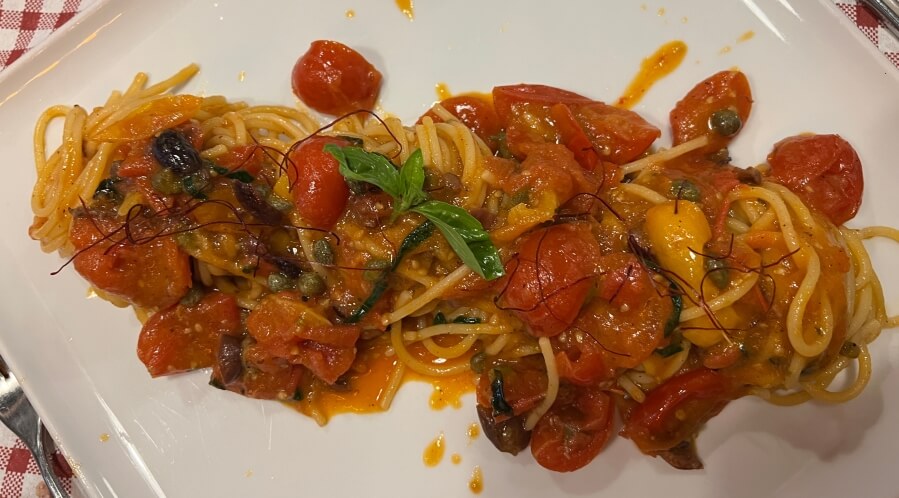
Specially made Spaghetti alla Puttanesca
It would not have been a trip to Naples if we hadn’t eaten pizza at least once. I hate pizza, mostly because of the cheese that I don’t like, but it’s a must if you’re visiting the city that made pizza famous. A shopkeeper told us to walk down Via Tribunali to find Antica Pizzeria Di Matteo, what he claimed was the best pizza in Naples. As it turns out, it “represents an institution in the history of traditional Neapolitan pizza” from its 1936 beginning. Bill Clinton is pictured on the cover of their menu as he must be their big claim to fame after the local news covered his taste of the place.
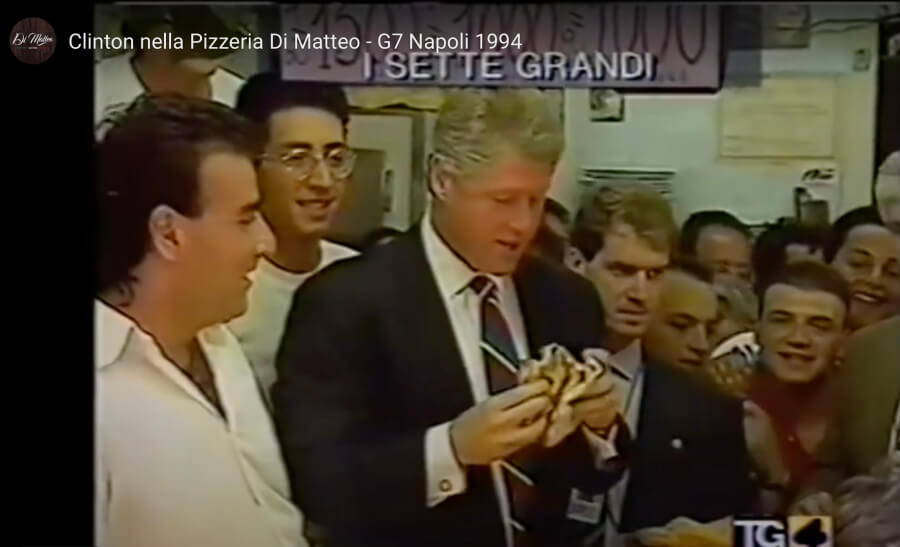
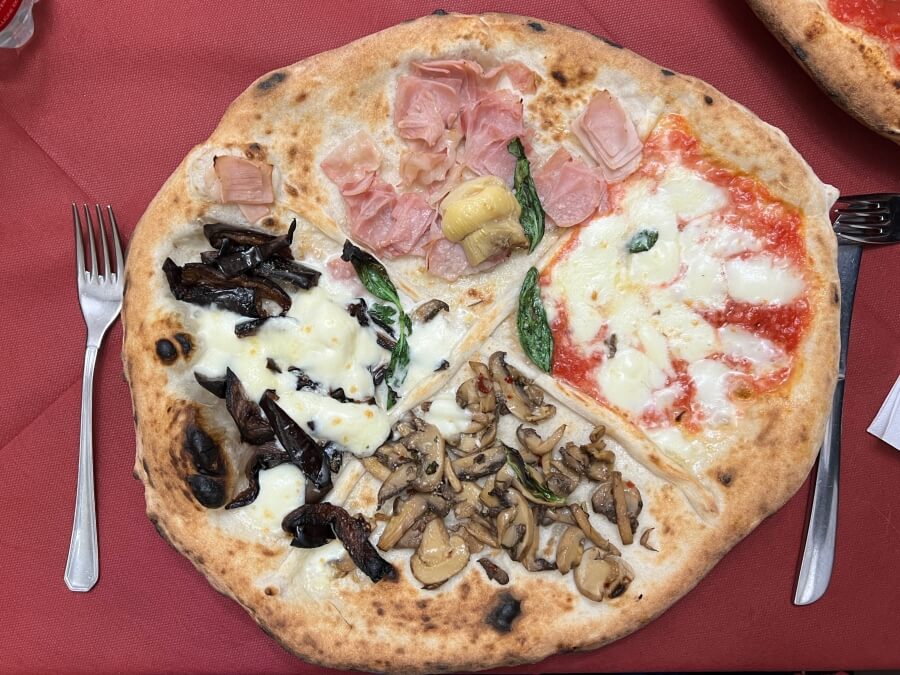
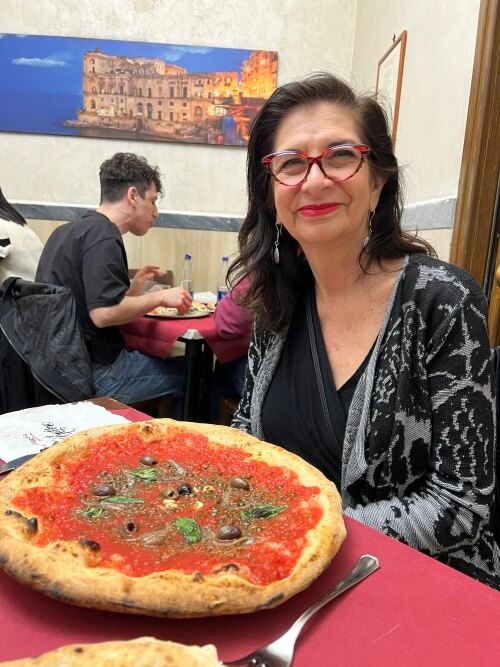
We were directed up the very steep stairs and to a table in a corner. I ordered a Tarantina for a whopping 7€: tomato, anchovies, olives, capers oregano, garlic, oil, basil—much like a puttanesca sauce. Marcia ordered a Quattro Gusti for 9€: Mozzarella, Ham, Mushrooms, Artichokes Aubergines, Cheese, Oil. The crust was soft and soggy and you had to eat it with a fork and knife. Mine was too salty, so I sent it back and ordered a different one—Marinara al Tonno for even less, 6,50€: tomato, tuna, olives, garlic, oregano, oil, basil. Neither wowed me and I left with indigestion. It confirmed my dislike of pizza, so now I can say, “Been there; done that.” Certainly there is lots of great pizza to have in Naples…if you like pizza.
Our last night in town we made it a special birthday dinner at the restaurant of Marcia’s choice: Osteria da Antonio. “Osteria da Antonio is a timeless place, where to eat and feel at home. Warmth and love for this ancient craft, come together in over 35 years of traditional values, and refined flavors of Neapolitan cuisine.” Antonio and his son were waiting on tables. He hobbled around and fell in love with Marcia who schmoozed him up and flirted enough to get us a lot of special attention. While it was excellent and we were satisfied, I knew we could do even better in Nice!
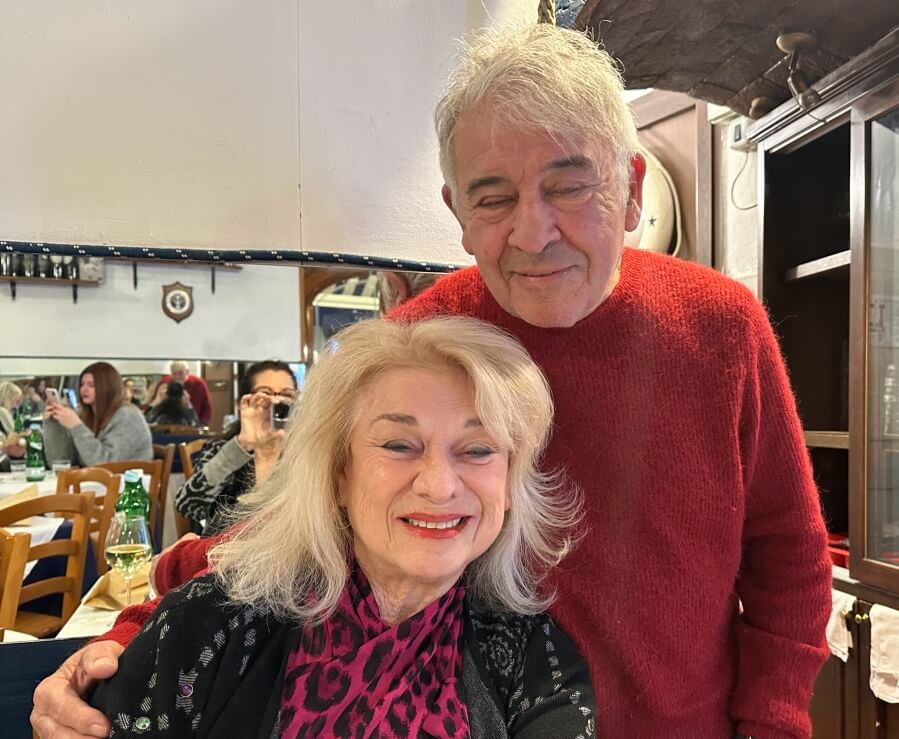
Marcia with Antonio
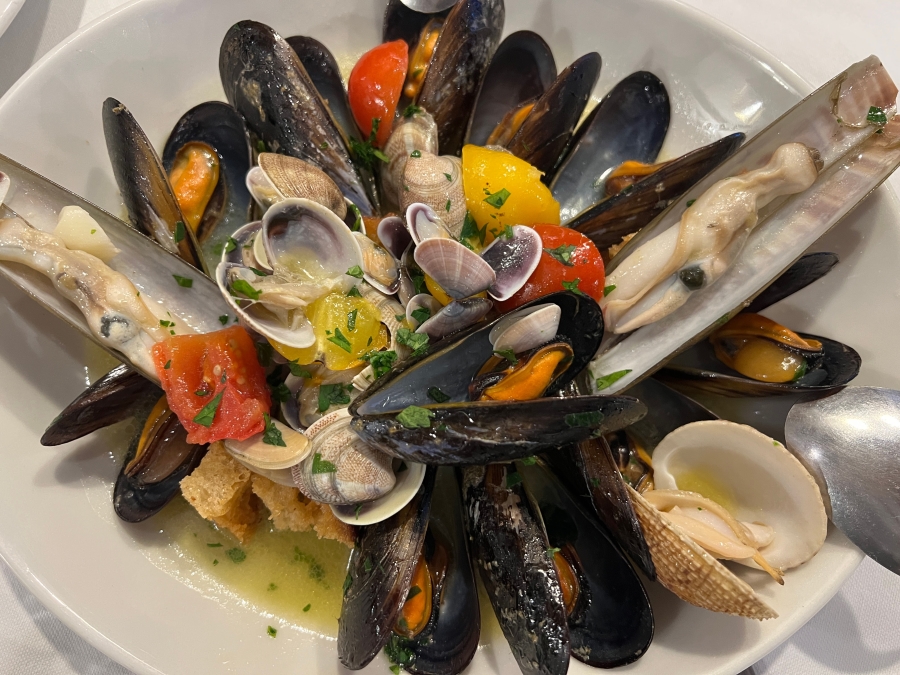
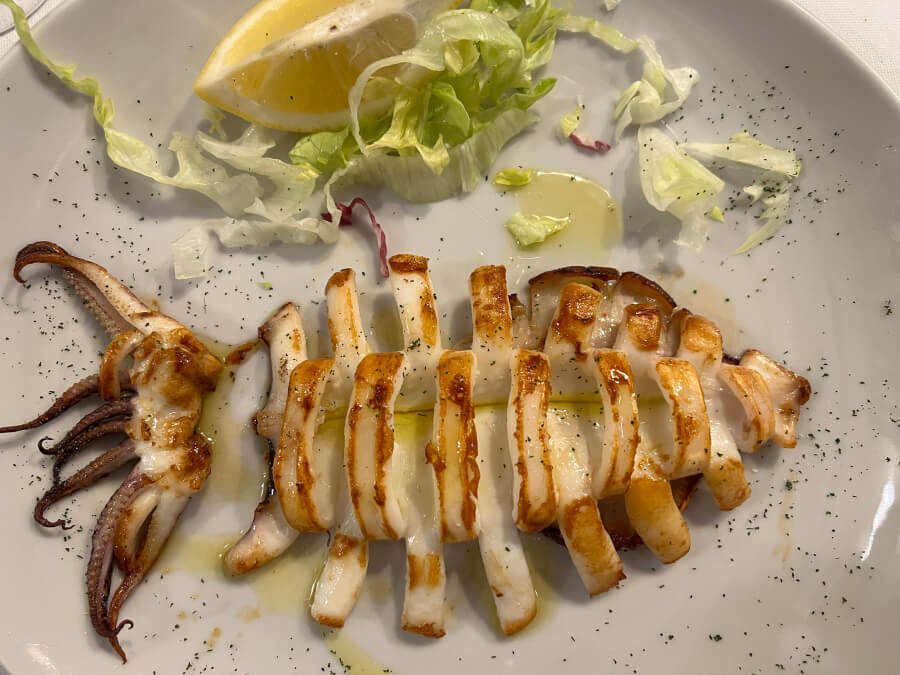
Grilled calamari at Osteria da Antonio
• SHOPPING IN THE OLD TOWN
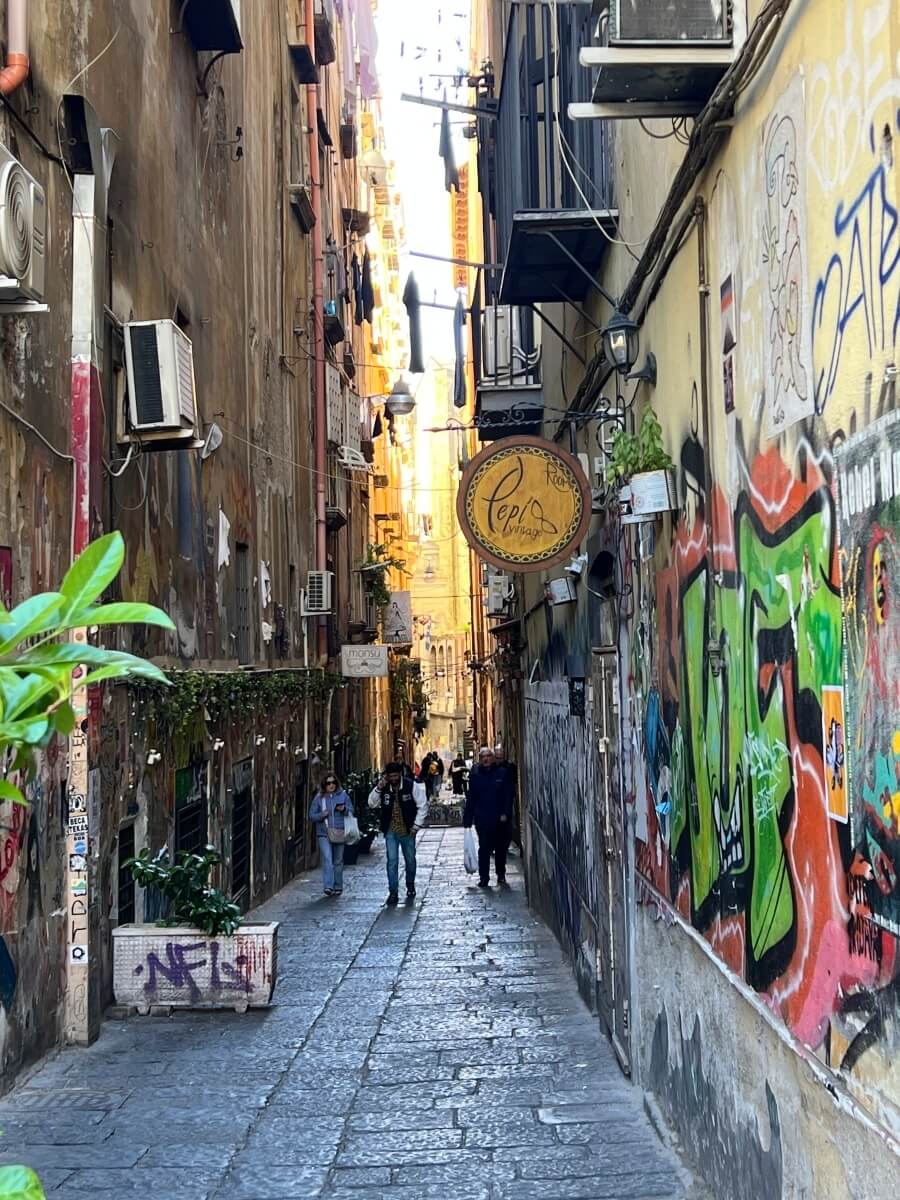
A trip to Italy would not be complete without a bit of shopping. Handmade Italian leather shoes are my thing, along with other leather goods. Naples wasn’t teeming with luxury goods—in fact most of the shops we encountered were pretty plebeian and old-fashioned—but then we stumbled upon a tree-lined street filled with tiny specialty shops that wowed us…the Via San Sebastiano between Vico San Pietro a Maiella and Via Benedetto Croce. The shop doors and walls are covered in graffiti, but don’t let that fool you. There are several music shops filled with interesting instruments, a stationary shop with beautiful plume pens and papers, a shop wall-to-wall with handmade leather bags, belts, wallets and other goods, plus a large shoe store filled with handmade shoes with real style.
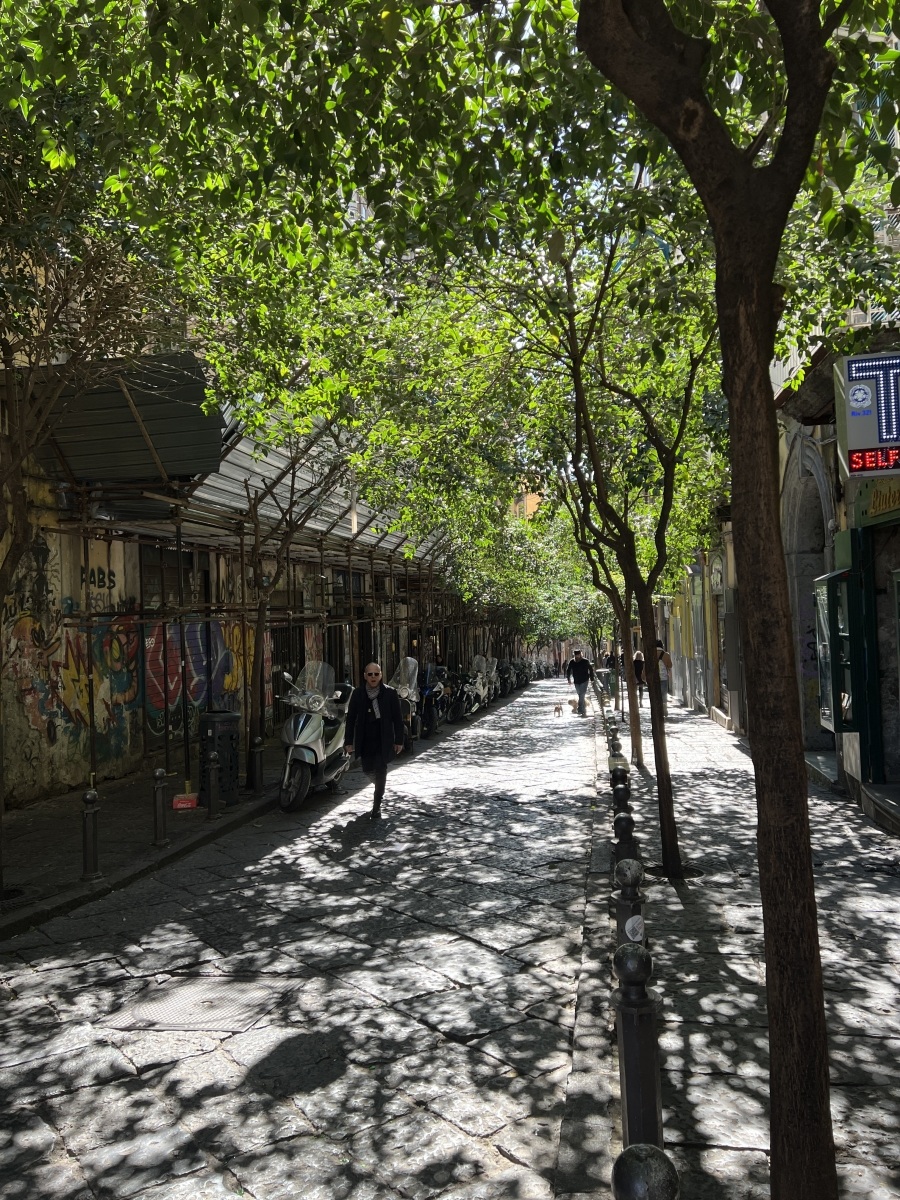
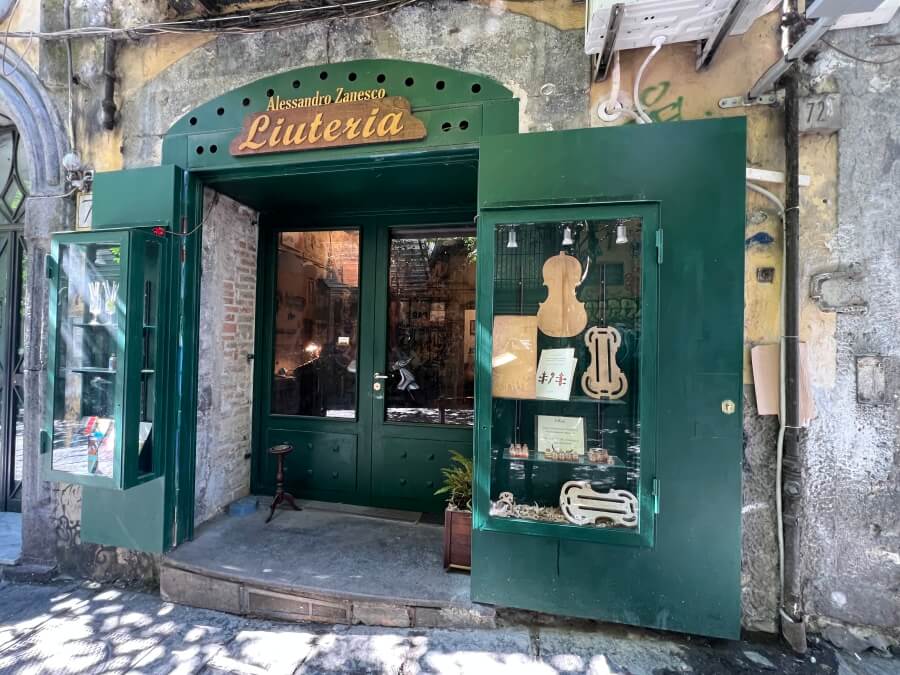
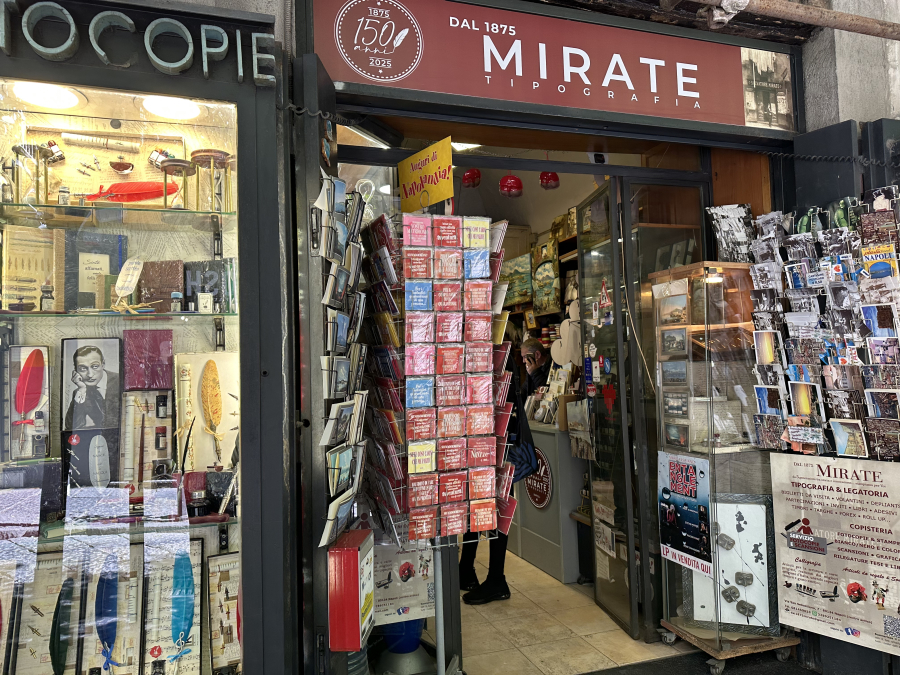
The prices were silly inexpensive. I purchased two pair of shoes at 100€ each that would be impossible to find elsewhere at any price (Blu Tasmania at No. 56). I found a beautiful woven belt for 65€ (Armonicordi at No. 17), and left with handmade gifts for my daughter and her son from the other shops I know she will love for the price of breakfast. The rest of the city shops in the “Centro Storico” didn’t compare, although perhaps we just didn’t know where to look?
• SLEEPING OVER
We chose to stay in the Ciao Bellini B&B, in the historic center between the Piazza Dante and the Museo Archeologico Nazionale di Napoli. It turned out to be the perfect spot, within walking distance of everything we wanted. The staff was particularly nice and helpful. Mario, the primary concierge, had just had a baby two months ago, named Edouardo, and two pretty sisters were our housekeepers, Maria and Rusi. The room we had was like a one-bedroom apartment named the “Sophia Loren,” very nicely appointed and furnished, all newly appointed and functional. (Only one thing bugged us—the stupid rainhead shower that men must love and every woman I know hates. When will women start designing bathrooms?)
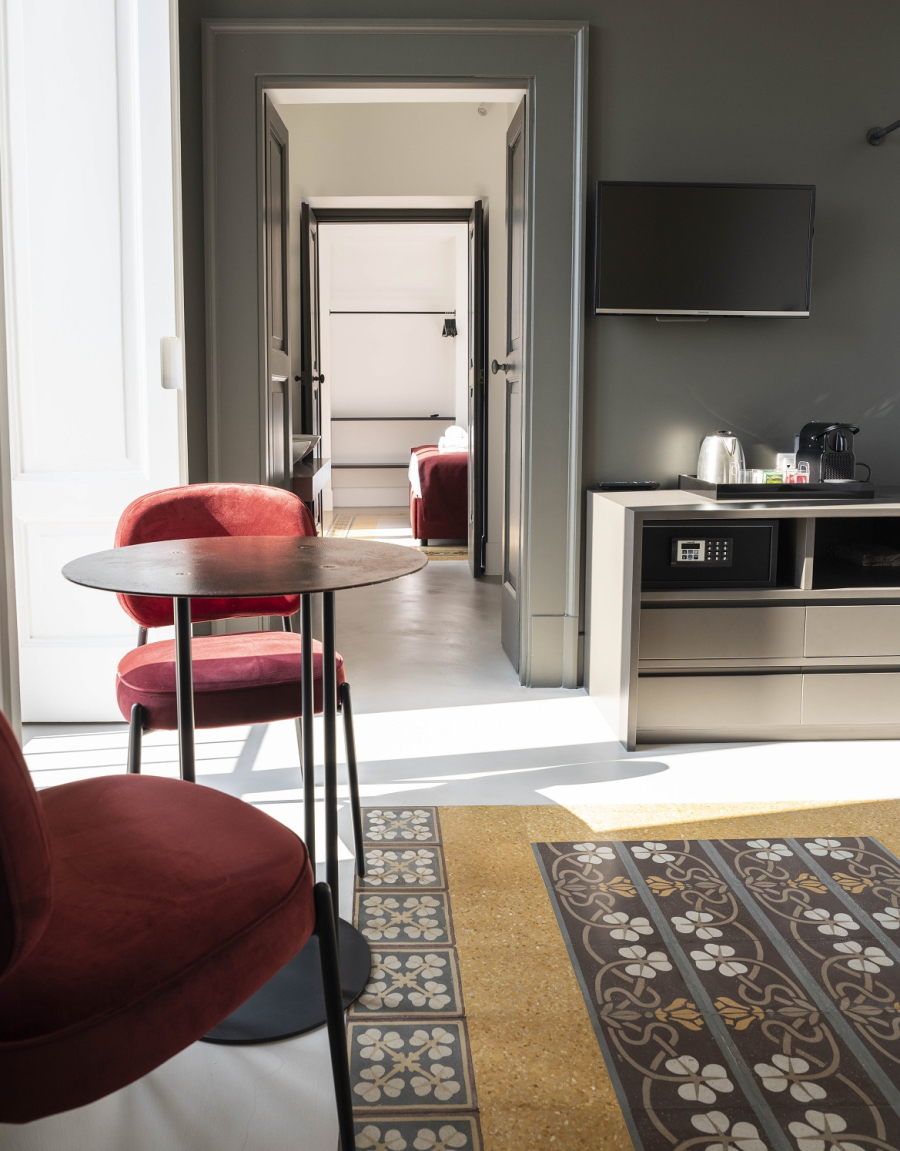
The Sophia Loren room
The point is that we would highly recommend it. And if you book a stay, please tell Mario I sent you!
THE DIFFERENCE BETWEEN NAPLES AND NICE
The rest of the week we spent in Nice, having arrived last Wednesday. EasyJet to Nice from Naples was super easy and inexpensive. When we arrived in Nice, Marcia, who was new to Nice, was shocked by the difference in the two cities. The moment we arrived at the airport it was evident. Everything about Nice was easy, well organized, pristinely clean, well taken-care of, no graffiti in sight, etc. She remarked that it was like the difference between Beverly Hills and Venice Beach!
I couldn’t argue with that!
A la prochaine…
 Adrian Leeds
The Adrian Leeds Group®
P.S. Ciao Bellini B&B in Naples is offering a special discount to all of my “friends!” Use this link and the Secret Code “Comeback” to get your special discount! Please be sure to mention that you were referred by Adrian Leeds! Grazie!
3 Comments
Leave a Comment

Let Us create a custom strategy for you
You can live or invest in France-now.
Join us at our monthly Après-Midi.
Become a part of the Paris community.
Property for sale
Read & Subscribe
Dive into more by reading the French Property Insider
Better yet, subscribe to both and get the updates delivered to your inbox.
Global Money Services
Our contacts will help you invest in France.


See Adrian on HHI

Join us on Youtube
Dive into more on how to live, invest & escape to France
Be sure to subscribe!
To read more, click the links below.
So memorable, and fabulous times you all had, for sure. Thanks for sharing the interesting tour details, your experiences. And nice photos of you and friends and mouthwatering dishes. Reading about your trip rekindles interest to learn more and tour these world renowned historic sites and towns that should be on anyone’s bucket list. Maybe you can organize for a scholar to come and speak on these sites’ history, at un apres-midi in Paris.
Hi Adrian,
I usually enjoy your nouvellettres, but this one is a keeper. I was in Naples, Pompeii and Herculaneum with my grandson two years ago. I wish you had written this before our visit. We had a great time and we learned a lot, but your photos and your recommendations are priceless.
Thank you for your articles and the wonderful information that you give. It sounds like you and Marcia had a lovely time.