

Adrian Leeds Nouvellettre®
Your taste of life in France!
Subscribe and don't miss an issue!
The Peter Mayle Syndrome

In Saturday’s webinar with AT Frenchies, “Crossing the Cultural Divide,” I referred to how we make dreams come true, and how rewarding that is for me and everyone on our team.
It’s true, too. People come to us with their dreams of living in France and don’t know how to go about making it a reality. While our core business is real estate—finding property to rent or purchase—that’s almost a sideline to the real service: making the dream of living in France come true.
The dream of living in France comes with images of what that life will be like. Those images may come from your past travels to France, books you’ve read or movies you’ve seen. Your imagination can take you to rolling hills of grapevines, open-air markets in the village centers, stone cottages surrounded by pasture-land, glistening aqua-blue water of the Mediterranean, Haussmannian apartment buildings lining the grand boulevards of Paris, centuries-old châteaux in the Loire Valley, etc., etc., etc. And you may see yourself sitting at a tiny round table at a café, sipping on a foamy “café crème” while savoring a buttery croissant or fresh-baked baguette and watching the world go by.

The dreamy images are endless. And many of them can become reality, but some can also become your nightmare. It’s our job to help you determine what dreams you have that can effectively become reality and fulfilling vs those that can end in a life you weren’t expecting.
The number one threat to turning a dream into a nightmare is choosing the wrong place in France to settle. I call it “The Peter Mayle Syndrome.” Peter Mayle was a British author best known for his charming books about life in Provence, France. His most famous book A Year in Provence (1989), is a humorous memoir about his experience moving to and living in a small village in southern France. He made rural French life seem idyllic, quirky, and full of small (and funny) everyday adventures. His Provence books became so popular that the quiet little village where he lived was overrun with tourists—and he had to move farther into the countryside to escape the crowds! (He and his wife moved to Lourmarin…not really so far away.) Another notable book of his was A Good Year, which was later made into a movie starring Russell Crowe.
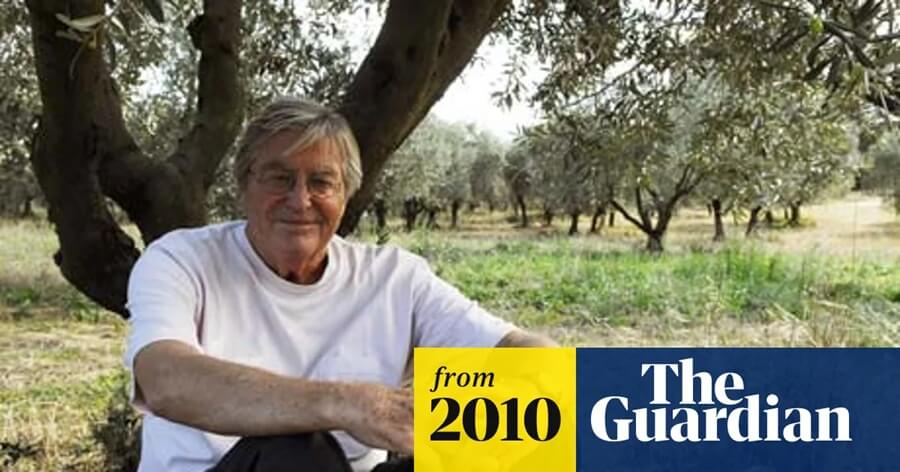
Peter Mayle

So, Mayle managed to conjure up a cornucopia of great images about living in a Provençal village in France, and they stick in our minds, adding to those dreams. If you dig deeper into his memoirs, however, past the humor, you will find some of the trials and tribulations he actually experienced.
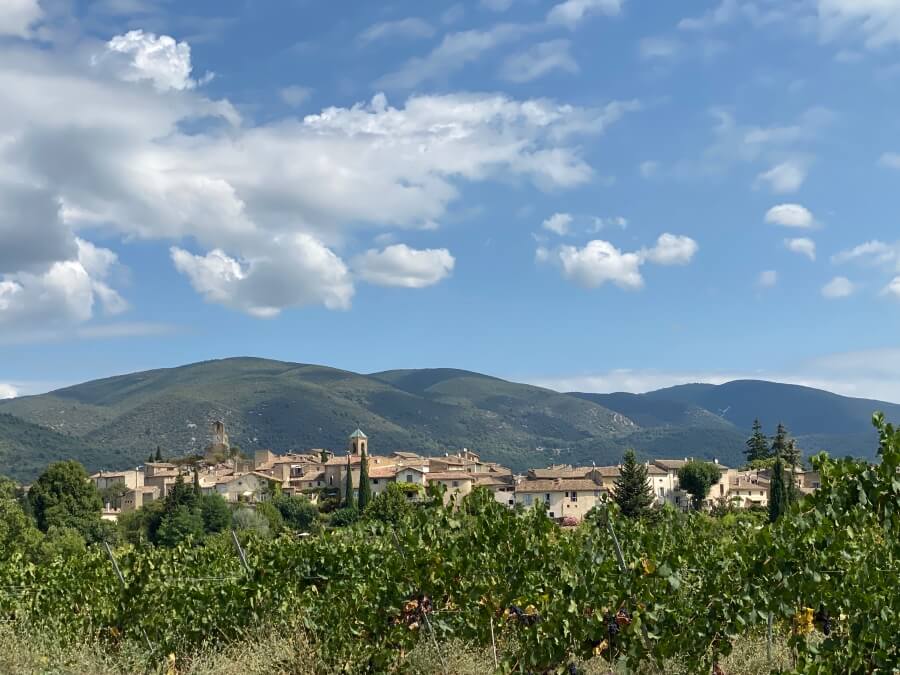
This part of France is one of my favorites—Le Luberon. It’s the heart of Provence, dotted by ancient hilltop villages connected by fields of grapevines, lavender and poppies. It’s about as beautiful as any landscape can be. Lots of Americans live there. Traveling from town to town is a heavenly escape. For bikers, it’s ideal. If I were to choose a country house, this is where it would be. But, at this age (retirement), life in the countryside, or even in a small village, would end up being less than the dream I had in mind.

Why? Because it lacks the practical aspects of what makes life in France really a dream.
It means there is no choice, but to own and operate a car and spend many hours behind the wheel to access amenities…or be tied to infrequent public transport.
If you want to travel to other parts of Europe, now that you have the time and money, getting to major train hubs and airports could become difficult and time-consuming.
There is not likely to be an array of medical professionals within fast and easy reach, or a substantial hospital for emergencies. That might mean the difference between life and death. And even if there are, how many of those medical professionals will be able to speak English if your French isn’t good enough?
Making friends in these remote spots is not easy, since the locals aren’t interested in opening up their lives to foreigners, and again, language could be a barrier, not to mention cultural differences.
When it comes time to shop for important things, you could end up driving to ugly bigbox stores located between the towns, reminiscent of life in the U.S…not my idea of heaven at all!
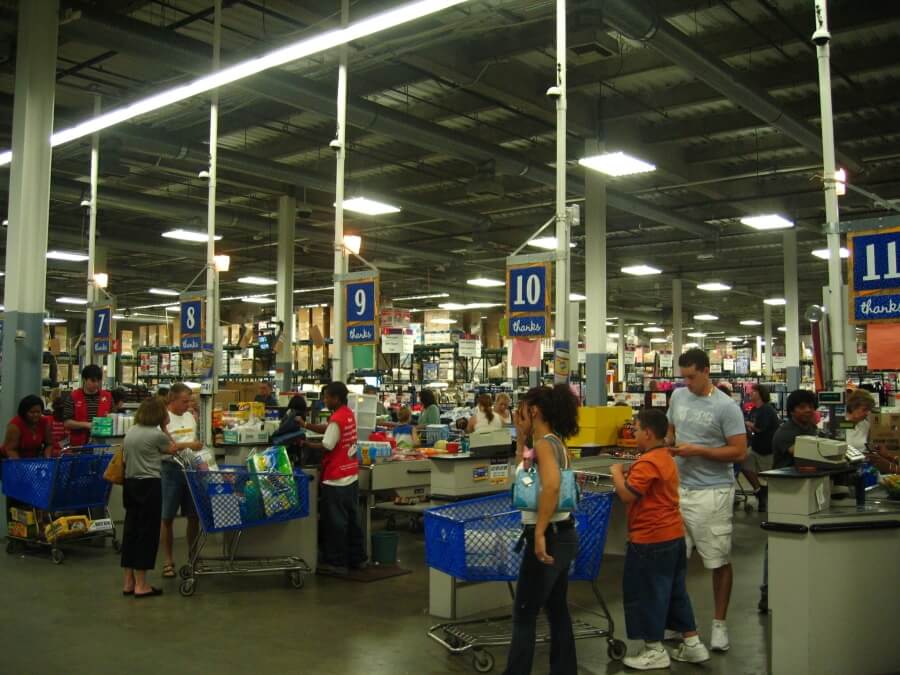
So, it’s true. For our clients who are mostly retirees who want to change their lives for the better, the Peter Mayle Syndrome can color their dreams and ultimately be their big mistake to a truly happy life in France.
Don’t get me wrong. I am not against living in the countryside. A weekend there exploring the lavender fields in full bloom is a perfect way to experience France. A house in the country in which to retreat on holidays and weekends could be perfect, but full-time in La France Profonde can be a serious trade-off that ends less than ideal…for a lot of people.
There’s a lot of France to love…but you have to determine what location checks off all or most of the boxes. Here’s our list of important considerations:
• Climate—where are you most comfortable? Cool and rainy like Paris? Moderate and sunny like Nice? Snowy and icy like Strasbourg in the winter?
• Fast and easy access to transportation—an international airport, TGV hub, local transport. There are four international airports in France: Paris (2), Marseille and Nice.

• A thriving American community—ease of making friends. You can make more friends in 90 days than you have your entire life in the States, if you choose a town with a good-sized community.
• Urban vs rural environment—apartment living vs village house or house in the countryside? Consider the necessity, or not, of having a car at your disposal…and the difficulty of getting a French Driving License.
• Cost of living—mainly cost of housing, for rent or purchase. Paris is the most expensive and Nice is half the price. Living in the countryside can be even less expensive…except add back the cost to own and operate a car for up to 9,000€ a year, according to ChatGPT!
• Access to good healthcare and hospitals.

• Language level—do you need or want to speak English?
• Business opportunities or cultural activities? Which is more important or are both?
We hear from many people that they plan on driving all over France looking for that ideal spot to land. And while that can be a whole lot of fun, we can help them target which towns are worth exploring and how to view them with the right eye, saving lots of wasted time.
Visiting a town isn’t the same as living there. On the surface, a particular village, town or home can seem like a slice of heaven, but you must look deeper and use our checklist as a guide. And really explore who you are as a person and how you imagine the rest of your life.
Ask yourself:
– Do you really want to be driving past the age of 70? Or 80? Or do you prefer the convenience of having amenities within walking distance?
– Do you only want to garden because that’s how you’ve spent your time in the past, or would you prefer to have more cultural activities to fill your days…but still have an herb garden on your balcony?

– Are you really a loner, or is that because there aren’t a lot of people around with whom you can relate, or is it that there just aren’t a lot of people around at all?
– Do you cook at home a lot because you love to cook, or are there no restaurants near where you live, and if there are, are they expensive?
– Are you happiest in a cool, rainy climate, or does the sun make you shine?
– Do you need a cultural fix weekly, such as art exhibitions, theater or dance? Or do you prefer taking long walks on quiet roads offering beautiful views?
– And how about just locking the door and walking away from an apartment, rather than the care and upkeep of a home with land around it?
These are all things to think about, especially as you get older. We only have so many years left and want to make the most of them. Most of us have our “bucket list”—a list of experiences, goals, or dreams that we want to do or achieve before we die—or sometimes before a certain point in life. And I’ll bet many things on that list include traveling to parts known or unknown, at least by you. And where better to do that than from France?
Being based in France is like having a golden ticket to see a lot of the world, especially Europe. France is right in the heart of Europe. You can easily reach Spain, Italy, Germany, Switzerland—all just a few hours away! Flights to North Africa (Morocco, Tunisia) are super short. Direct trains to Belgium, the Netherlands, even London (via the Eurostar) are a piece of cake. High-speed trains (TGV) can zip from Paris to the south of France in a few hours, or to Switzerland, Belgium, etc. Budget airlines, such as Ryanair, EasyJet, and Transavia, offer crazy cheap flights everywhere in Europe (like €20-€50 round trip sometimes). The international airports fly directly to the U.S., Asia, Africa, and South America. Buses: FlixBus and BlaBlaBus offer very cheap travel between cities and countries. And this is all true from Nice, too!
But, I digress. There is a reality living under the haze of the dream, when you try to cross the cultural divide and discover that your U.S. default mode creates expectations that can’t be fulfilled. France is not the U.S. You will learn to live differently and think differently. Hopefully you will be able to remove expectations from your psyche so that you have fewer disappointments.
Some of the acute differences in our lifestyles of which to be aware include:
• The size of property compared to the U.S. We live in smaller spaces and have come to realize that “size is overrated!” Trust me—you can be every bit as happy in a smaller space with fewer possessions to take up space, need cleaning, or moving around.

• A toilet is separate from the bathroom. Get used to it and you’ll see it’s a big advantage, now that you won’t have to wait for your partner to finish showering if you need to use the loo…right away! As long as it has a small sink in which to wash your hands, isn’t that more convenient?

• With supermarkets very nearby and within walking distance, you won’t need (or want) that huge refrigerator that takes up space, is ugly as hell, and where food ends up rotting in the back. Downsize, shop daily, and enjoy eating fresh food! (That is, if you’re in the city. If you’re in the countryside, better stick with the big fridge.)

• Your washer might not have a dryer. Or your washer might be a washer/dryer combo. And they don’t work the same way a U.S. machine works, using vented air to dry the clothing. Nor do they hold as much laundry. And they take a lot of time. It’s a blessing. Big U.S. machines use too much energy and water for smaller loads. And they agitate your clothing to death, then dry them to death, too! Learn to hang your clothing on a rack, which treats them much gentler and less wrinkly. Set the machine and let it run while you’re out having a great time.

• AC is not likely to be central. In Paris, it’s the most difficult to air-condition a property because putting a compressor on the exterior of the building requires permission from God (actually, the copropriété and the city). But there are workarounds, including portable units that are piped out a window. If you must have AC, then choose a geographic location that is cool most of the year. Nice, btw, is not as hot as you think…thanks to being seaside and breezy.

• Take public transportation. Public transportation in the U.S. is…let’s face it…for those who can’t afford to have a car. So, we (who can afford a car) wouldn’t think of taking public transportation, would we? But, that’s not the way it is in Europe. Public transport, especially in France, is well-designed and organized, clean and efficient, safe, and meant to reduce the number of cars, and therefore pollution. Learn the Métro, tram and bus routes. Get your tickets and let them do the driving for you. You’ll be so much happier than being behind the wheel of a car that you have to take care of and park!

This list could go on forever…but it’s best if you discover the differences for yourself. The one thing I ask of you is to “hope” rather than “expect”…and let go of your U.S. default mode so you can see all of these “blessings in disguise” living in France!
My recommended cities in France, for people over the age of 50, are…in this order:
1) Paris: it has it all, but it’s very urban and the weather isn’t perfect, not to mention expensive.
2) Nice: it has it all, entirely walkable, the weather is the best in France and it’s beautiful.
3) All of Provence: Country living at its finest, but a car is a must, and it can be very hot in the summer and lonely in the winter.
4) Aix-en-Provence: beautiful, cultured, small-town living, 30 minutes to the Marseille airport.
5) Lille: the best thing about Lille is the TGV that takes you to Brussels, Paris, London and Amsterdam in no time at all!
6) Strasbourg: an international community, beautiful, but cold!
All of these cities, and Provence, fulfill the requirement list! And each has its assets and liabilities to consider. We can help you decide which might suit you best. Meanwhile, visit these six areas of France and surely, you will find the place of your dreams!
A la prochaine…
 Adrian Leeds
The Adrian Leeds Group®
P.S. Happy May 1st Labor Day! Join us tomorrow on the Coulée Verte in Nice to celebrate! You’ll find us in the quadrant between rues Alberti and Gubernatis, where there are trees for some shade and close to the statue of Marshal André Masséna. See you there!
12 Comments
Leave a Comment

Let Us create a custom strategy for you
You can live or invest in France-now.
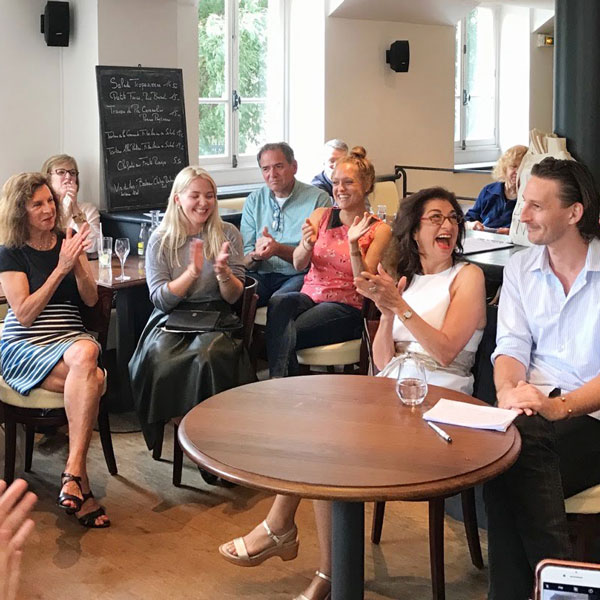
Join us at our monthly Après-Midi.
Become a part of the Paris community.
Property for sale
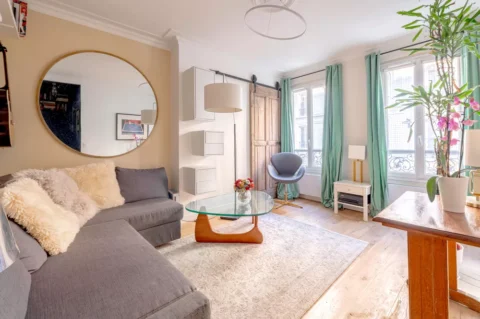
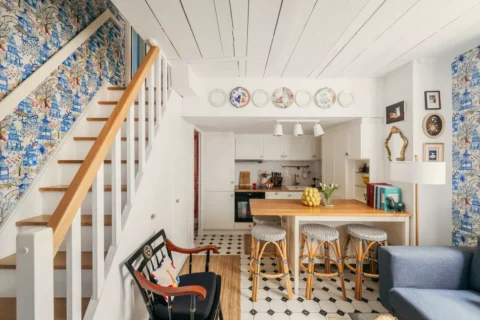
Read & Subscribe
Dive into more by reading the French Property Insider
Better yet, subscribe to both and get the updates delivered to your inbox.
Global Money Services
Our contacts will help you invest in France.


See Adrian on HHI

Join us on Youtube
Dive into more on how to live, invest & escape to France
Be sure to subscribe!
To read more, click the links below.
Bonjour, Adrian.
Thank you for an excellent article. We are retired and have stayed in Nice, and it is everything and more. We liked Toulon, but when the cruise ships docked and the visitors swarmed, it lost its appeal. However, Toulon is still easy to navigate. We like how easy Toulon and Nice were, but Nice is pricey. Perpignan is affordable, quaint, humid, and remote.
Now we are looking at Montpellier. What are your thoughts?
Merci.
Dean et Cindy
As you know, we LOVE Nice. You can read Adrian’s thoughts about Montpellier here: https://adrianleeds.com/subscribe-to-our-publications/nouvellettre/making-the-most-of-montpellier/
I’m curious about Marseille, and your opinions on whether it’s even close to making this list. Seems it has alot of the criteria. Thoughts?
Marseille is an acquired taste for many. You won’t know until you visit.
Cute picture of you, Adrian! I enjoy reading your Nouvelles Lettres so much. I somewhat disagree that you don’t have access to good public transport from smaller towns across France, though. For the intrepid travelers who enjoy the challenge of mandatory French speaking, life in the smaller cities is most rewarding, and savvy Francophiles can find a place with a train station; the world is your oyster.
One thing I do agree with, though, is the necessity of having a car if you’re out in the boondocks – even in a village or small town, it can be very helpful to have a car. Trains often run only at certain times during the day, and if you need to do a more ambitious grocery shop or buy home goods for your house, for example, the car is nice to have.
What one should do, in my opinion, if looking for a rural existence beyond the big cities and the lovely Cote d’Azur/Nice area, is try to find a livable option with a train station nearby so you can access Paris and CDG airport (and other parts of Europe) without too much hassle. If you try to drive from Paris, the car will take you MUCH LONGER than the trains, which are more efficient, always on time, and very clean and safe. I rented a car to drive from CDG to my place in Montmorillon last November, and it took over SIX HOURS to go just ~250 miles… by contrast, the TGV to Poitiers from Montparnasse is just 90 minutes. From Poitiers, you can hop on a train to Montmorillon to arrive in another half hour or rent a car and drive in about 30-45 minutes, depending on traffic or how fast you drive (you must stay within speed limits, so drive time can be slower).
There are tons of Brits (and a few Americans) scattered throughout Nouvelle-Aquitaine — and Normandy — so you’ll have plenty of people living around you who speak your native tongue. I used a Franco-British real estate agent, and the entire purchase process was smooth and fairly easy.
Ironically, the former owner of my townhome in Montmorillon was from the Midwest USA — a single, retired lady who did NOT want to live anywhere near a big city, ever, and who moved to a rural community not too far from Dijon, which she told me she never intended to spend much time in — and her French was rudimentary. She got by in rural France pretty easily: Her banker spoke English in Montmorillon, as did her pharmacist. She found plenty of British retirees and other English-speakers from Australia, the US, and Canada in and around town…. While it’s not for everyone, “different strokes for different folks,” as we say!
Just trying to offer a different perspective. Tres amicalement, Stephanie
Such a fantastic article! Looking forward to exploring Nice in the next year or so, stay for a couple of months and see how we fit. Thank you for a sensible, realistic article on a life change to Europe.
I’ve been living in the south of France for 16 years (Languedoc and Provence) and you got it just right. Its a public service to bring up the difficulties as well as the benefits. I hope everyone is reading!
En France il y a beaucoup plus que 4 aéroports internationaux, merci pour votre texte sur la France et les français.
These are the only airports with direct flights to the US.
What about Brittany? This region never gets discussed. My wife and I loved the time we spent in St. Malo and would consider this our top choice (intramuros, the Old Town). The Celtic vibe and proximity to Britain (ferries!) are major pluses. Plus it’s a beautiful and historic seaport. What can you tell us about St. Malo et Bretagne en general?
Brittany can be remote. I would also be concerned with access to medical care.
Your remarks are right on target. My daughter (American) lives in Lille with her French husband. Everyone thinks she lives in Paris, of course. But as a visitor, I see the advantages of Lille. Her home is walking distance to everything. She can walk, bike or take the Metro to work. The public transportation is nearby and efficient. Costs are reasonable. There’s lots of culture, historic sites, good libraries and the rest of Europe is easily accessible by plane or train. And you can even get to North Africa by bus and boat. Beautiful countryside is only a short distance out of town. The weather might not be ideal, but in Lille when the sun shines, it’s glorious. And there is an active Anglophone community as well as schools that teach English and a European school that teaches in English. My grandchildren are getting a far richer education in some ways than in the affluent suburb when my kids were raised. And France takes care of its elderly. I could go on and on……