

Adrian Leeds Nouvellettre®
Your taste of life in France!
Subscribe and don't miss an issue!
The Truth About Toulouse
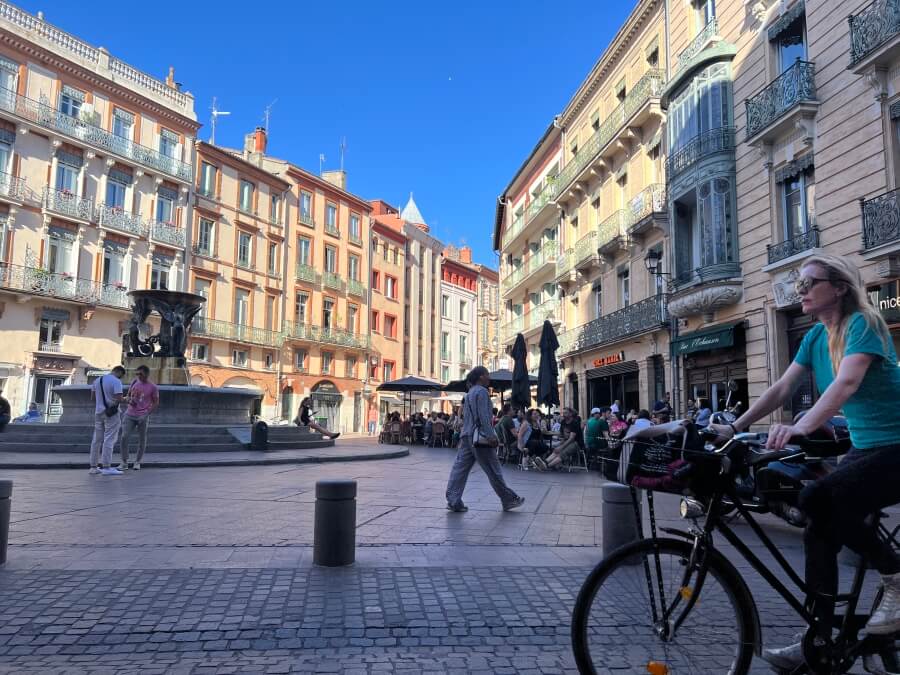
LA VILLE ROSE
Friday morning, Clista Fischer and I hopped on the train from Gare Montparnasse to the southwest city of Toulouse. It has been about 30 years since I’d visited “La Ville Rose” (“The Pink City”) as it’s simply not on the usual path between Paris and Nice, where most of my trajets (routes) are spent. My goal in visiting the city was to learn as much as I could about it as a possible future home for North Americans moving to France…and just to experience another face of France.
Paris and Nice will always be our two top destinations for retiring expats, but not everyone wants the urbanity of Paris or the resort life of Nice. Many are seeking a more profound experience with France and while that could be just about anywhere in the country, it’s important that we help our clients find those areas of France that meet important criteria for a great place to live: easy travel access, rapid healthcare access, and a strong expat community.
Getting to Toulouse is surprisingly easy…from Paris, that is. France’s fourth-largest city is served by an airport with direct flights from Paris and many European cities. From Paris, the high-speed TGV train takes about 4½ hours, offering a comfortable journey through the French countryside. In our case, the train stopped in Bordeaux before going on to Toulouse. The easiest route from North America is usually a connecting flight through Paris, Amsterdam, London, Frankfurt, or Madrid, followed by a short flight or TGV ride to Toulouse.
If your goal is to travel like crazy, now that you’re retired and living in the center of Europe, then Toulouse is one step away from simple, fast and inexpensive like it is from Paris or Nice. But, maybe you don’t care? That’s certainly an important question to ask yourself.
Jennifer Parrette, our ALG Regional Manager, lived in Toulouse for years, so she was our perfect tour guide. She made a lot of suggestions of things to do our first day, then she joined us Saturday morning by meeting us in the nearby town of Albi with her car. The train to Albi Saturday morning was a regional train and the trip took a little more than an hour.
We had booked a hotel in Toulouse that had easy in-and-out-of-the-city car access, the Novotel Toulouse Centre Compans Caffarelli. I wouldn’t recommend it if you just want to hit the town running on foot—there are more than enough choices in the center of town. The accommodations were adequate, the outdoor pool was a real luxury and the views overlooking the Jardin Compans-Caffarelli were lovely. Still, it wasn’t quite as accessible into the heart of town as I might have liked.
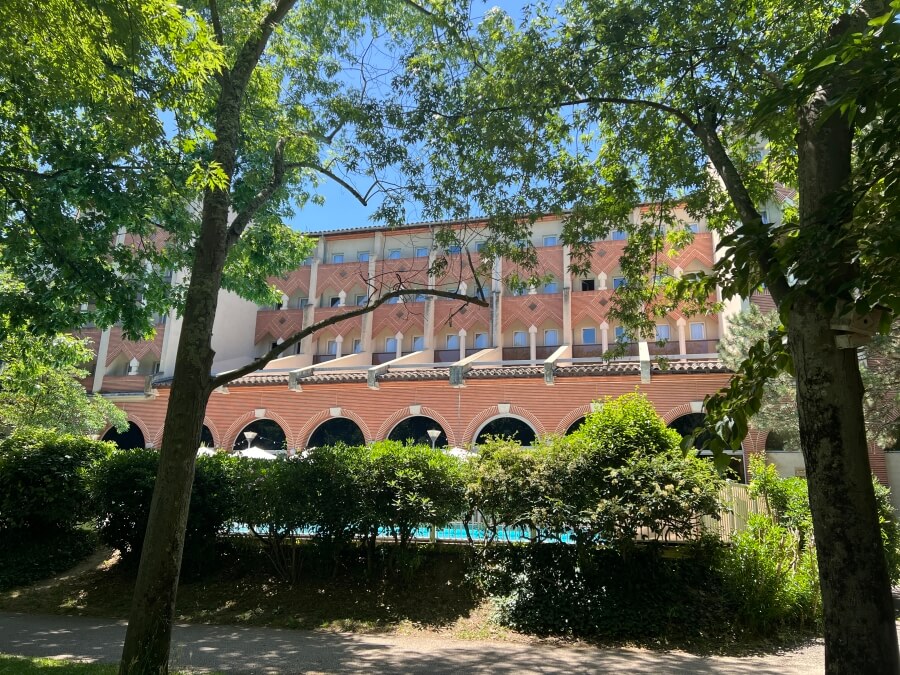
The Novotel Toulouse Centre Compans Caffarelli
I liked the look of the city even from the taxi we took to the hotel. The pink brick, the wrought iron balconies, shutters and general architecture, does remind me of the French Quarter of New Orleans, exuding a kind of natural friendliness. It is sunny, colorful…and very clean. I felt immediately at home.
Once we checked in and unpacked, we strolled from the hotel through the beautiful park, surprised by the number of people in the park, and followed Jennifer’s suggestions to a T. The route was perfect to focus on the places that best capture the character of France’s Pink City.
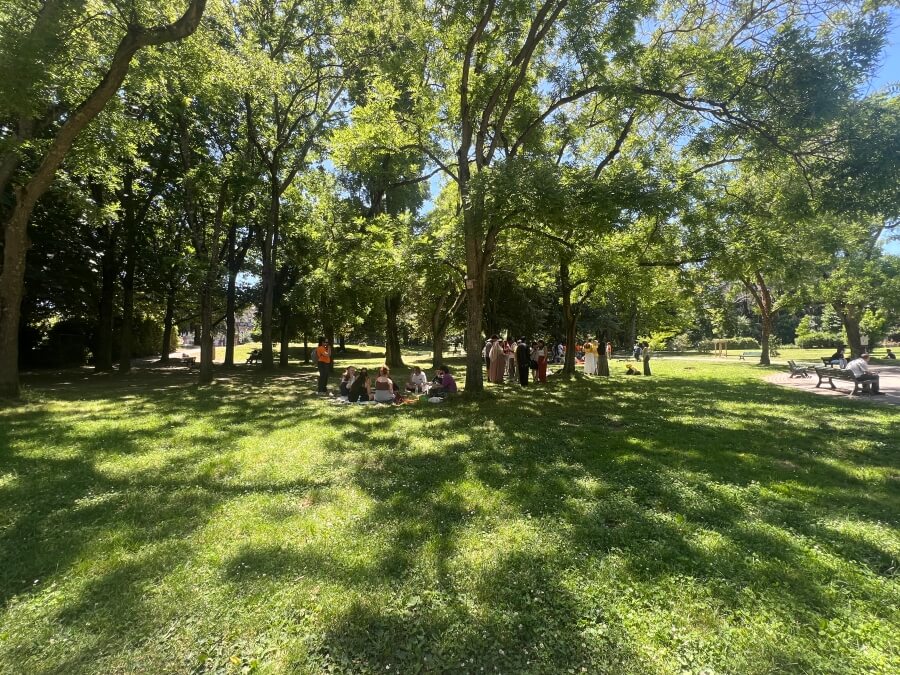
The Jardin Compans Caffarelli
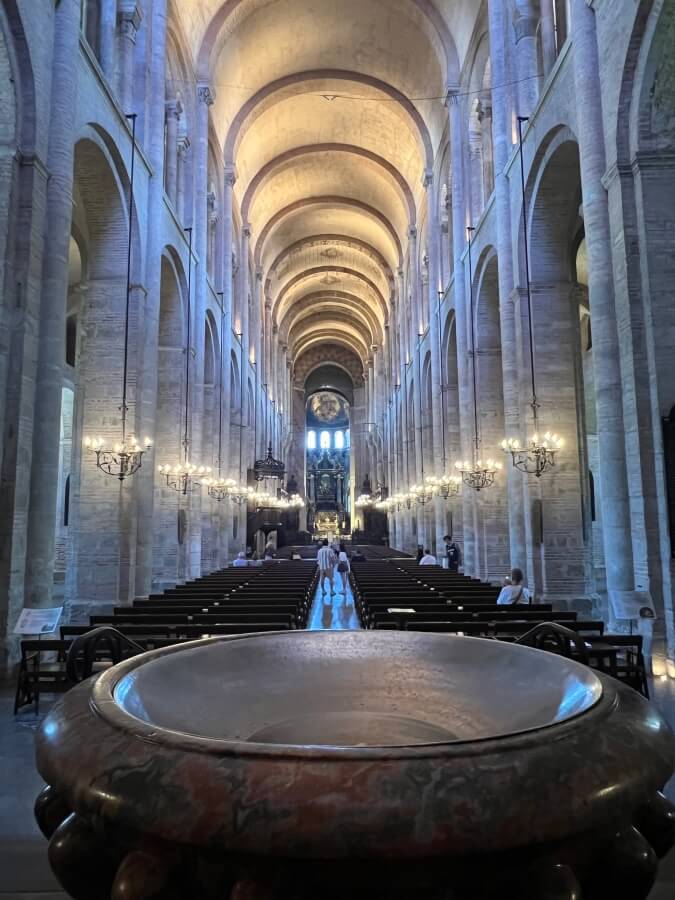
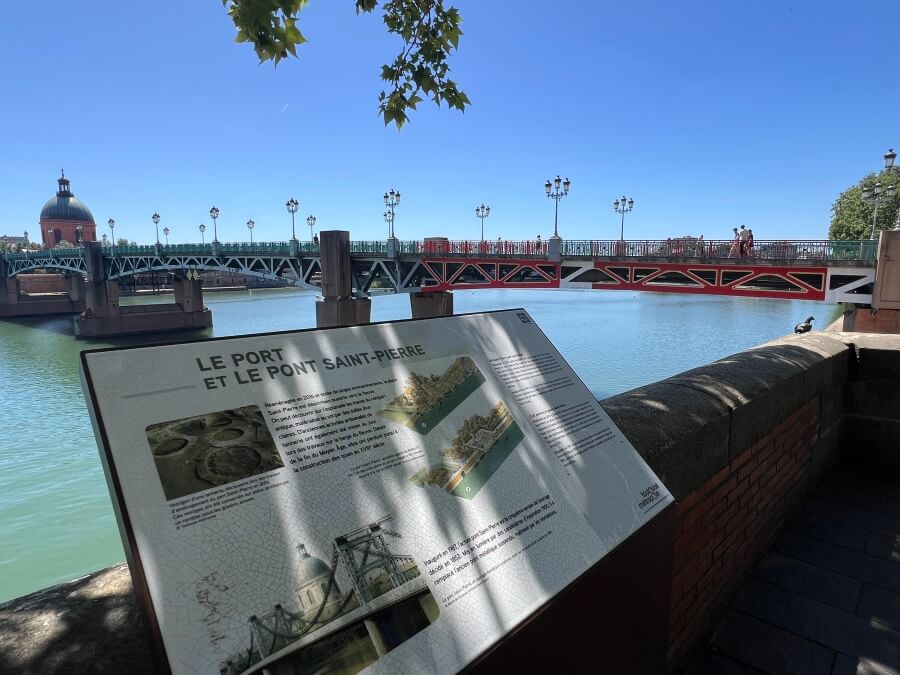
Our first stop was to the magnificent Basilique Saint-Sernin, one of Europe’s finest Romanesque churches. After a brief visit inside the basilica, we headed by foot south toward the River Garonne, Place Saint-Pierre and Pont Saint-Pierre, where there are some of the best river views in the city.
BIKE DODGING
The city has a very tasteful deco about it—they’ve made a point of not being too colorful or flashy, but at the same time, for pedestrians it could be a bit dangerous. The pace is not slow and one must beware of the bikers. It was here we realized that there was little distinction between the bike and pedestrian lanes and were nearly run over by bikes at every turn. They are everywhere and anywhere. The bike lanes are marked, but not clearly like in Nice (with its green snaking lanes), or in Paris (where they are separated by curbs), so don’t step off a curb without looking in every direction, or you will find yourself with tire tracks on your tooshy!
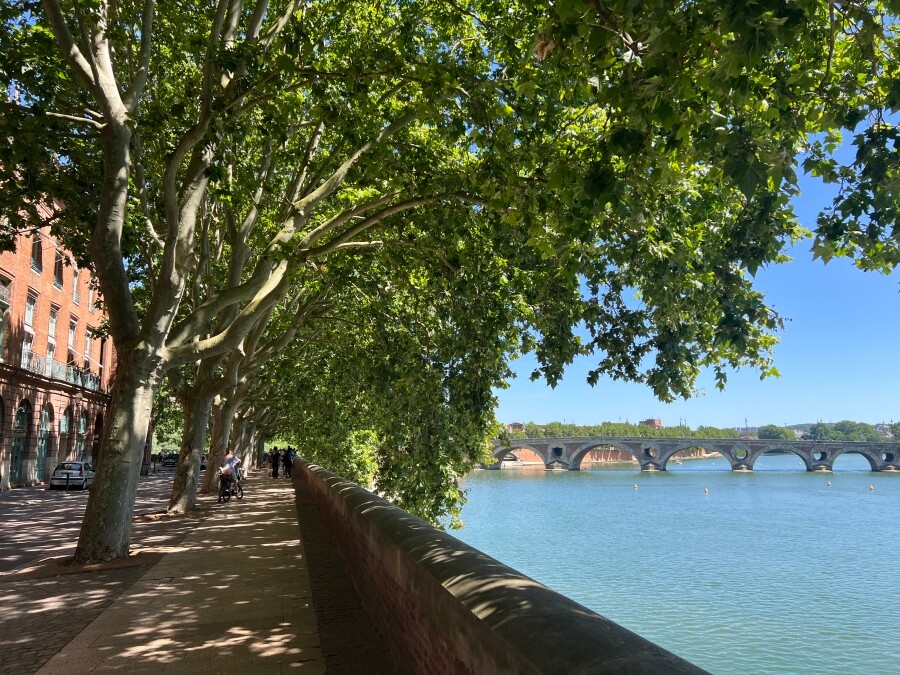
Per Jennifer’s suggestion, we continued south along the tree-lined riverbank past La Daurade to the Pont Neuf, Toulouse’s oldest bridge. (Funny how in both Toulouse and Paris the oldest bridges are both named “New Bridge!”)
The city is divided by the Garonne River, but it doesn’t seem very connected between the two sides, from the outside looking in. There aren’t a lot of bridges and not all the bridges allow cars (at the moment). Bikers are crossing, but there is not a string of pedestrians as one might expect. The river is quite wide. It certainly isn’t like the Seine that is constantly crossed keeping the Right and Left Banks in more unison. One Uber driver we had took a very circuitous route to get us back to the hotel by crossing the river twice. It seemed totally unnecessary to me, but it was the simplest route considering the one-ways and pedestrian streets. For me, this was a conundrum at the time, but once we got the lay of the land, it make perfect sense. It struck me, though, that having a car in the city would not be a lot of fun.
PLACE DU CAPITOLE
From the river we circled back into town to the Place du Capitole. The city’s grand central square is Toulouse’s “living room” and the perfect place to get a sense of the city. Surrounded by elegant pink-brick façades and lively cafés, it’s the heart of local life. We were told to be sure to look down and spot the giant Occitan cross embedded in the pavement, but it was blocked by rows of tents being set up for the annual Fête des Associations taking place over the weekend, when 500 organizations gather there for a big weekend of festivities to celebrate the vibrancy of the local nonprofit sector.
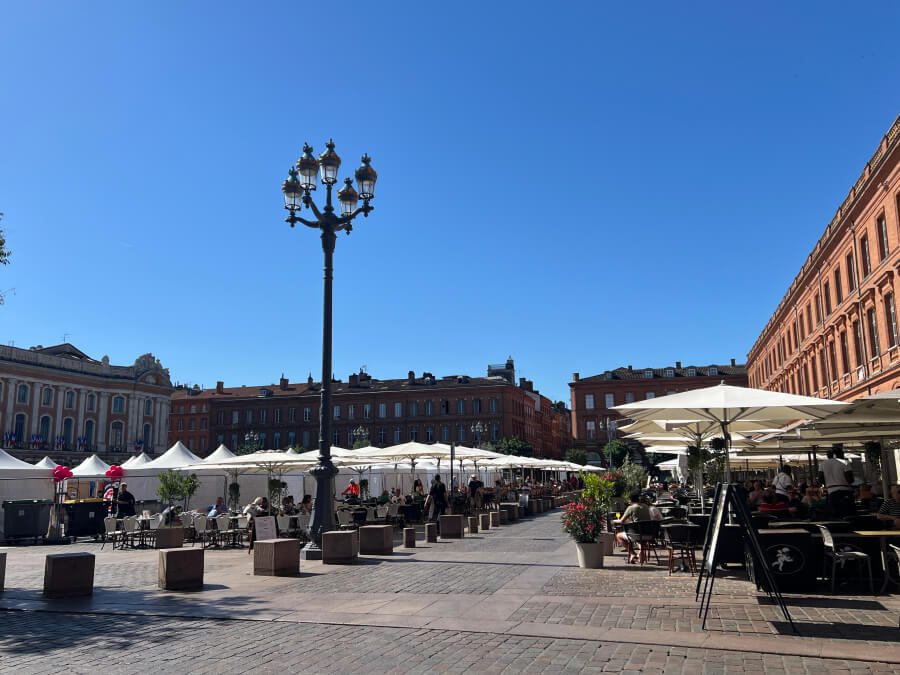
Place du Capitole in Toulouse
The area around Place du Capitole and nearby Place Wilson buzzes with activity throughout the day and evening. That afternoon we explored the streets between Place du Capitole and rue de Metz, particularly rue de la Pomme and rue Saint-Rome, shopping a bit along the way. In anticipation of our dinner at Le Genty Magre, we walked them all thoroughly, stopping at cafés a couple of times to wet our whistle.
Young people are everywhere. Toulouse is one of the youngest and most university-oriented cities in France. That’s one reason it feels so lively, energetic, and less formal than many French cities.
ONE OUT OF EVERY FOUR TOULOUSAINS IS A STUDENT!
Historically, the ancient University of Toulouse was founded in 1229, making it one of the oldest universities in Europe. Today, the university system is organized around several major institutions: Université Toulouse Capitole, Université Toulouse Jean Jaurès, Université Toulouse III Paul Sabatier and numerous grandes écoles and specialized institutions, including aerospace, engineering, business, political science, and veterinary schools. Between 110,000 and 130,000 students study in Toulouse itself and is regularly ranked as one of the best student cities in France. With a population of about 515,000, for real, the students make up one-fourth of the city. That’s enormous!
And while I love the youthful feeling one gets, I question what that means for retirees who want a quieter life? From first glance, it seems there are more bars than cafés and noise could play an unpleasant factor. The question I had was about where one might live that would be more convenient for people “our age.” I hoped to answer that before the weekend was over.
Dinner at Le Genty Magre was so very Toulousain—we opted for the traditional cassoulet, after which you can’t do much more than lazily stroll home. (We were too tired to even do that!) At Le Genty Magre, you’re getting a polished version of a dish that has been at the heart of southwestern French cooking for centuries—cassoulet one of the most iconic local dishes you can order. In fact, if you have only one traditional meal in Toulouse, cassoulet at Le Genty Magre is a strong contender. It satisfied my urge for many years to come!
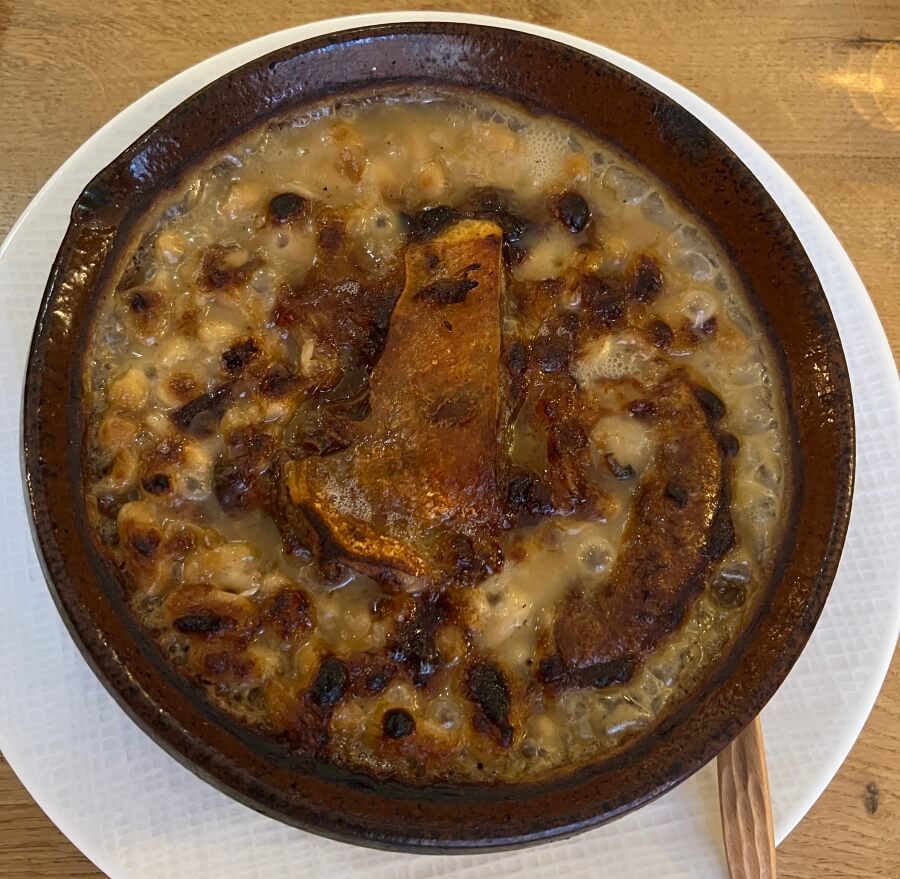
The Cassoulet at Le Genty Magre
ALBI AND TOULOUSE-LAUTREC
In one afternoon, we had done quite a bit to get to know central Toulouse. Saturday morning we went back to the train station to hop on a train to the town of Albi where Jennifer Parrette was meeting us to explore Albi and the Lauragais countryside. The ride was a bit more than an hour. Little did we realize we had landed in Albi on the day of the Urban Triathlon, that combines open races with the French D1/D2 Championships. All the bikes and bikers we saw getting on the train were explained at that moment.

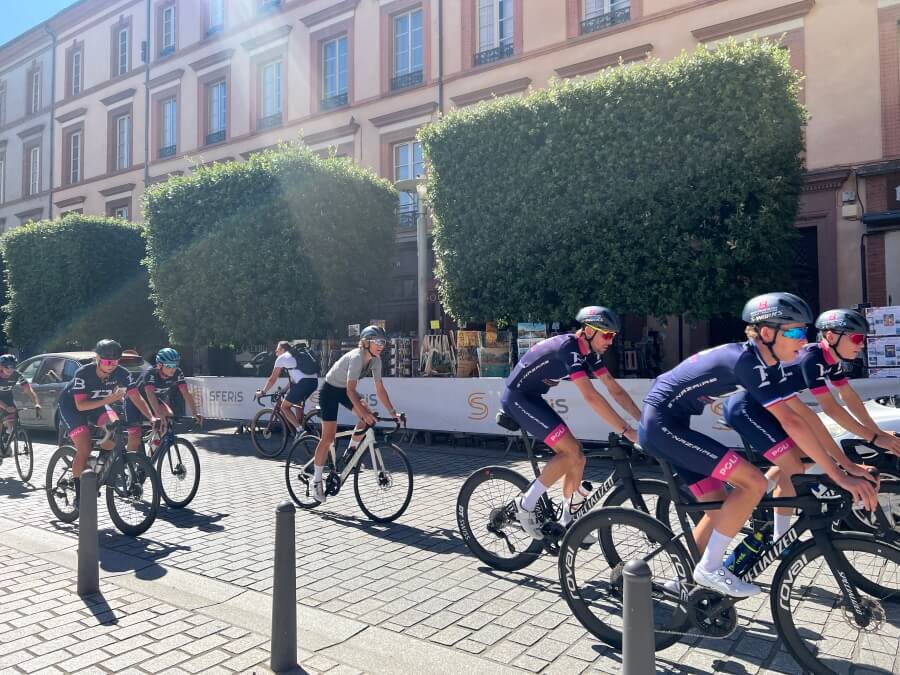
No parking was allowed inside the ancient city as a result of the Triathlon, but Jennifer’s parking karma found a perfect spot on the other side of the river that afforded magnificent views of the town and an easy walk in.
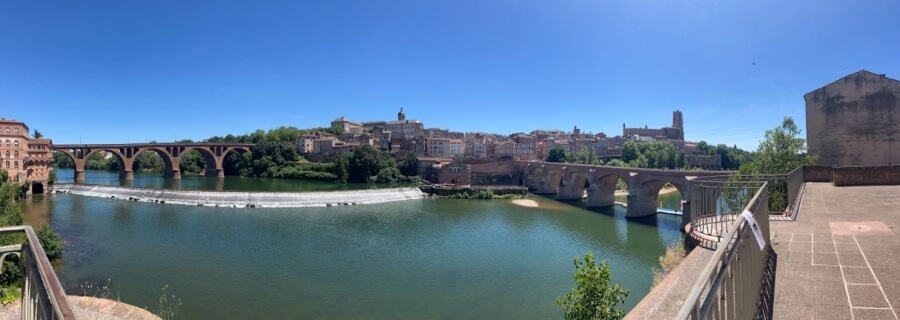
Panoramic view of Albi
Albi is a jewel of southwestern France—a beautifully preserved red-brick medieval city dominated by a spectacular cathedral and forever linked to Toulouse-Lautrec.
That was our first and most important stop—the Musée Toulouse-Lautrec. It’s the world’s largest collection of works by Henri de Toulouse-Lautrec, Albi’s most famous son.
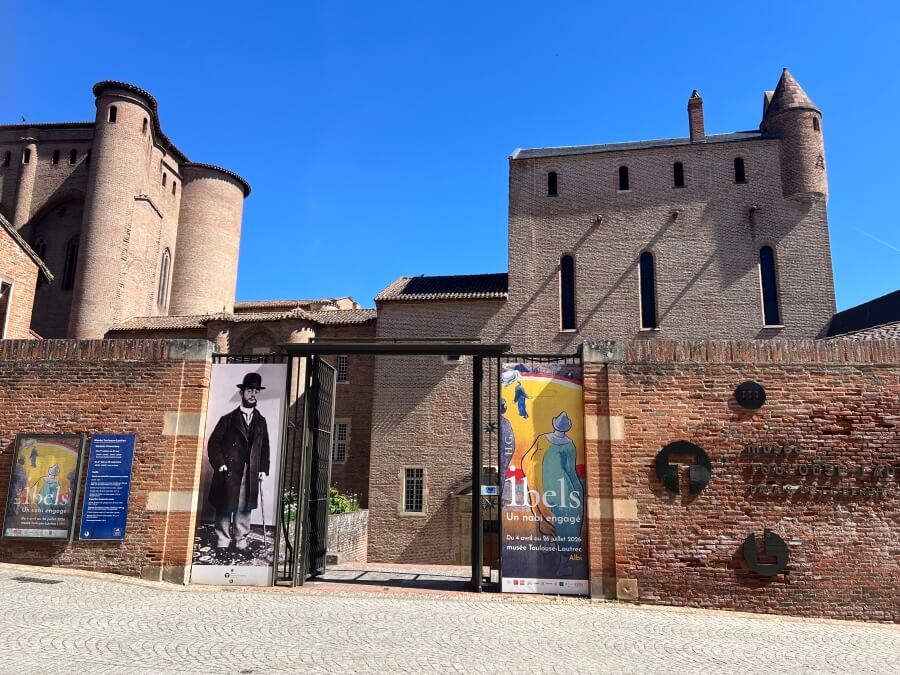
Exterior of the Toulouse Lautrec Museum
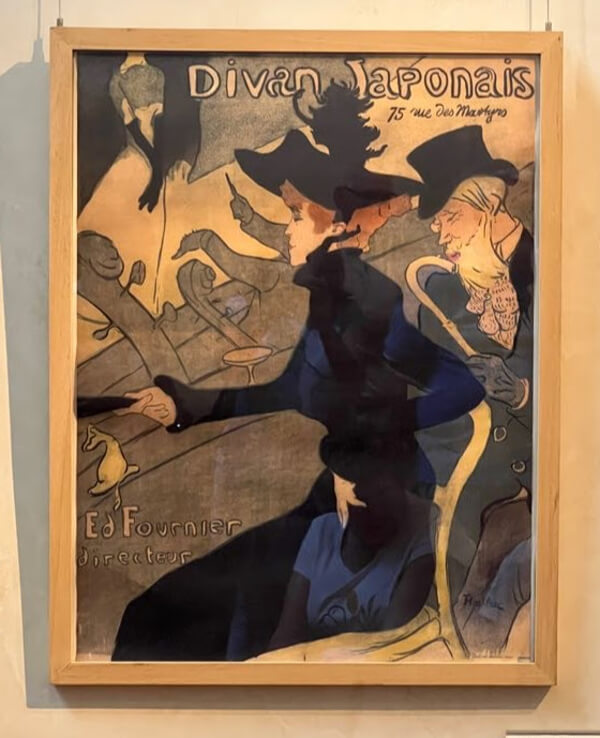
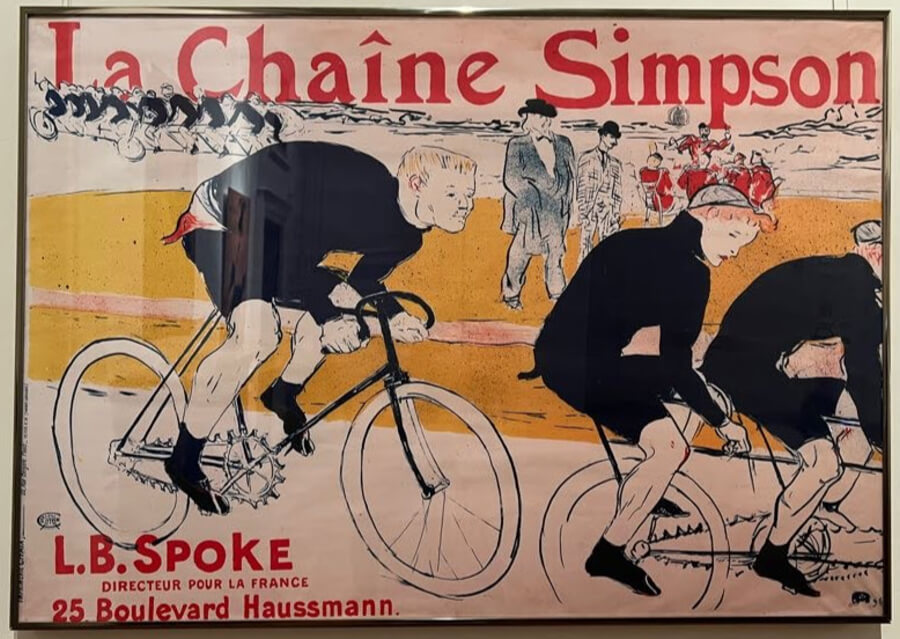
Toulouse-Lautrec was born into an aristocratic family in Albi, but he became famous for capturing the nightlife of Paris during the Belle Époque. His posters, paintings, and sketches immortalized the cabarets, dancers, singers, and colorful characters of Montmartre, including the legendary Moulin Rouge. The museum is housed in the magnificent Palais de la Berbie, a 13th-century fortified bishop’s palace that overlooks the Tarn River. The setting alone is worth the visit, but the collection of more than 1,000 of his works will not disappoint you.
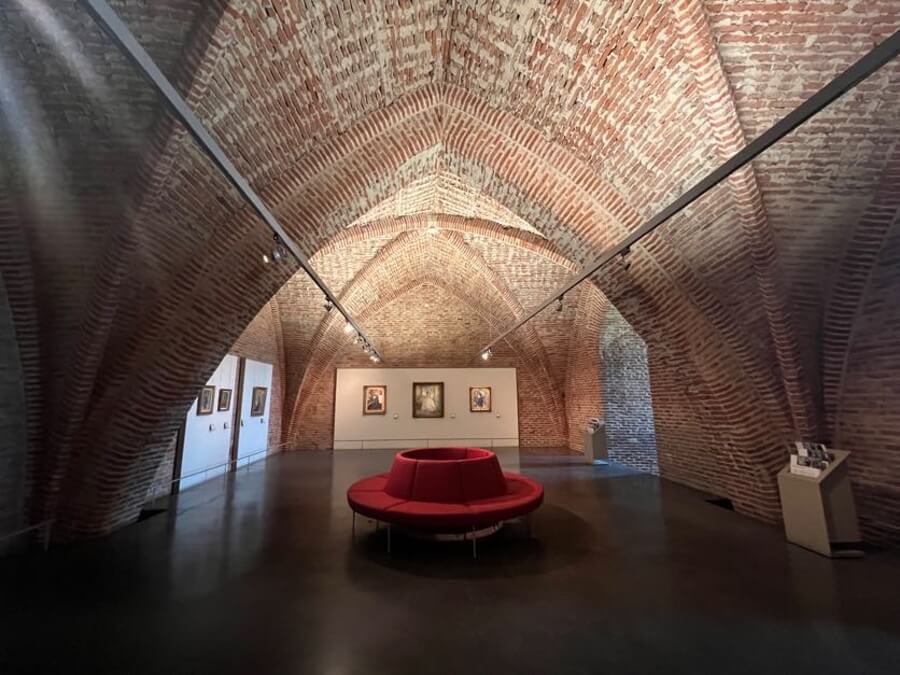
Interior of the Toulouse Lautrec Museum
Don’t miss the iconic Moulin Rouge posters, the portraits of dancer La Goulue, the panoramic views from the palace terraces over the Tarn River, the contrast between the austere medieval palace and the vibrant, often scandalous world depicted in Lautrec’s art. I left fascinated by the story of the man, his extraordinary talent, and the world he captured…then indulged in quite a few mementoes from the museum gift shop to take the feeling with me forever.
In Albi we met for lunch at one of Albi’s nicest restaurants, Le Cascarbar, with some long-time clients of ours, Peter and Lilith Fondulas. They once stayed in my Nice apartment and now they live in a large home just outside of the city on several acres of land, loving every minute of what they deem their idyllic life. They spent a lot of time, energy and money renovating it to their perfection and expounded on their love with their house, its location and their life here.
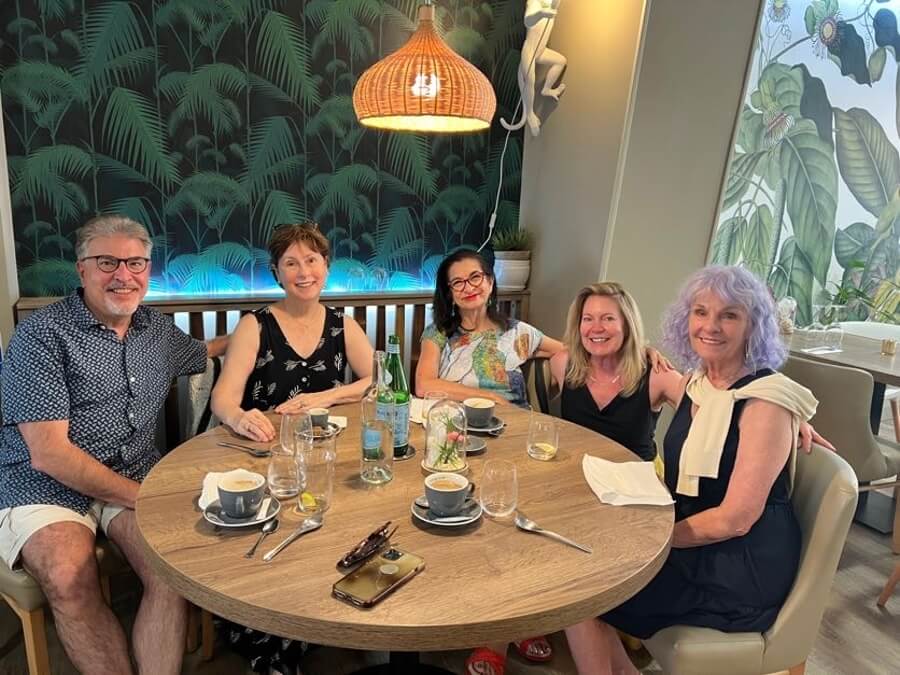
Peter and Lillith, Adrian, Jennifer, and Clista Fischer
For them, it’s just what they wanted. They don’t mind driving and spend a lot of time enjoying their solitude and exploring the region. Lilith joked that I’d probably hate it, and perhaps she was right…but I’m a single woman and they are a couple fully committed to one another. They are also younger and all that makes a big difference.
From Albi we took a long and circuitous drive that took us through some of the most beautiful landscapes in southwestern France. Our route included the town of Castres, known for its colorful houses lining the Agout River and relaxed provincial atmosphere. From there, we road through the fields and the tiny villages to Revel, known to be a beautiful market town and gateway to the Canal du Midi region.
REVEL REVELATIONS
Revel was a big surprise because the central marketplace, which had been the morning’s main meeting spot for the entire area, was void of any life whatsoever. There was not a single sign of the market having been there only a couple hours earlier and only a handful of people sitting at the cafés. It was like a ghost town. Even the shops were virtually empty. I found photos online of what it must have been like earlier in the day, but our timing simply missed it all.
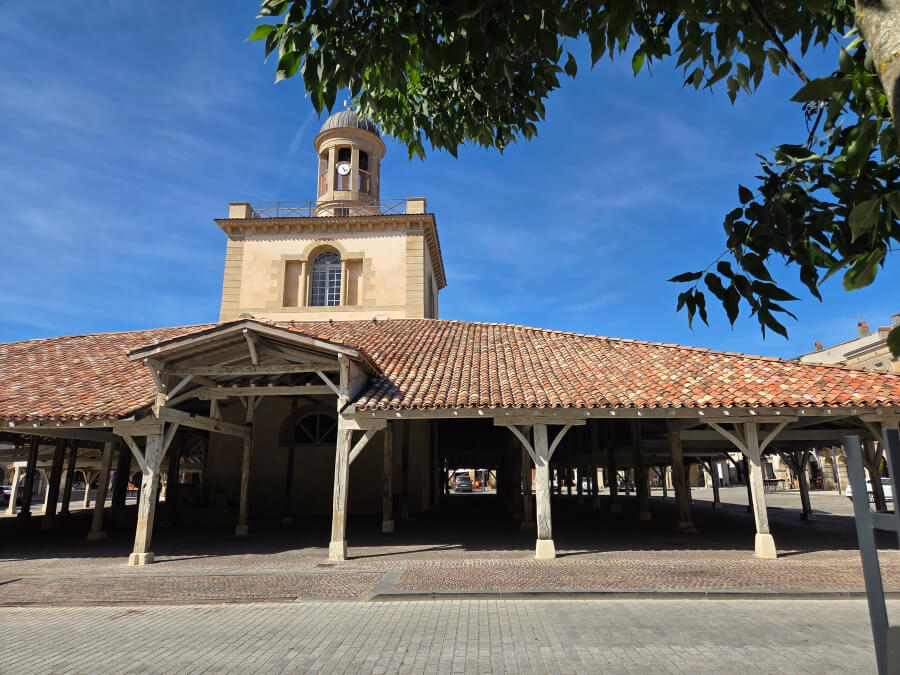
The empty Revel Market
The route through the countryside offered a wonderful contrast to Toulouse itself, revealing the villages, landscapes, and slower pace of life that can make the Southwest so appealing…for some.
Sunday was a busy day, starting off with a visit to the Marché Victor Hugo in the morning. It’s Toulouse’s most famous food market and, in many ways, the culinary heart of the city. If you want to understand how people in Toulouse really eat, this is the place to go.
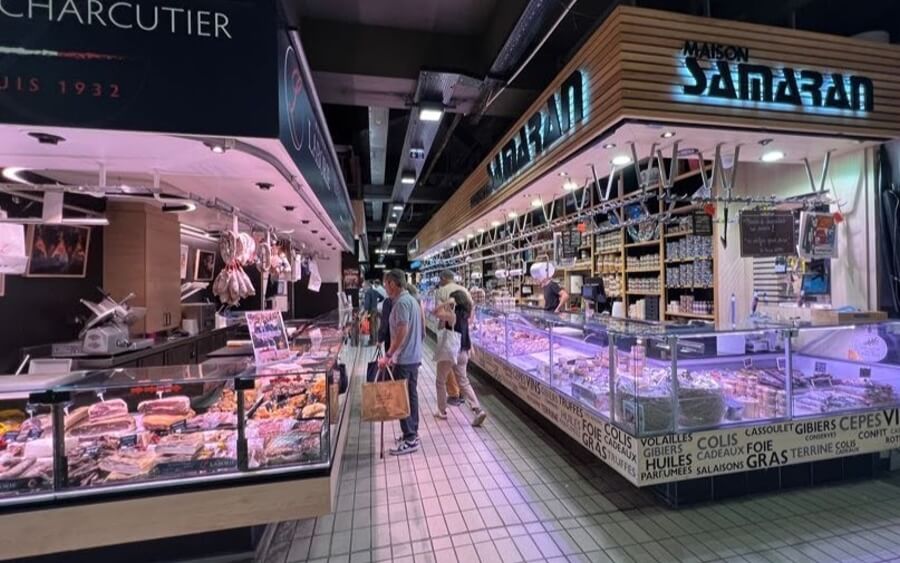
The market opened in 1896 (the current hall dates from the 1950s), a short walk northeast of Place du Capitole. The traditional covered market is downstairs with restaurants upstairs. I couldn’t wait to go and check-out the local goodies as well as eat in one of the popular restaurants.
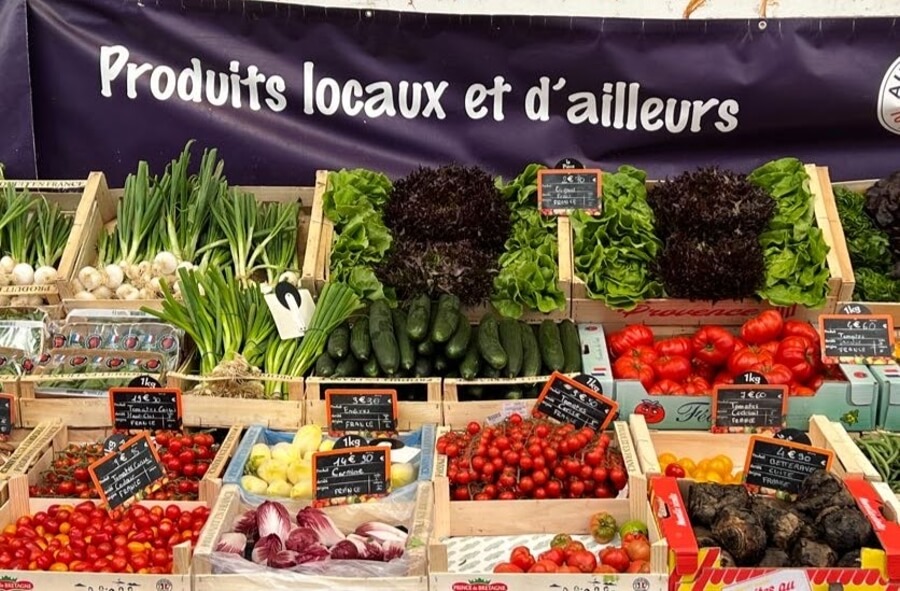
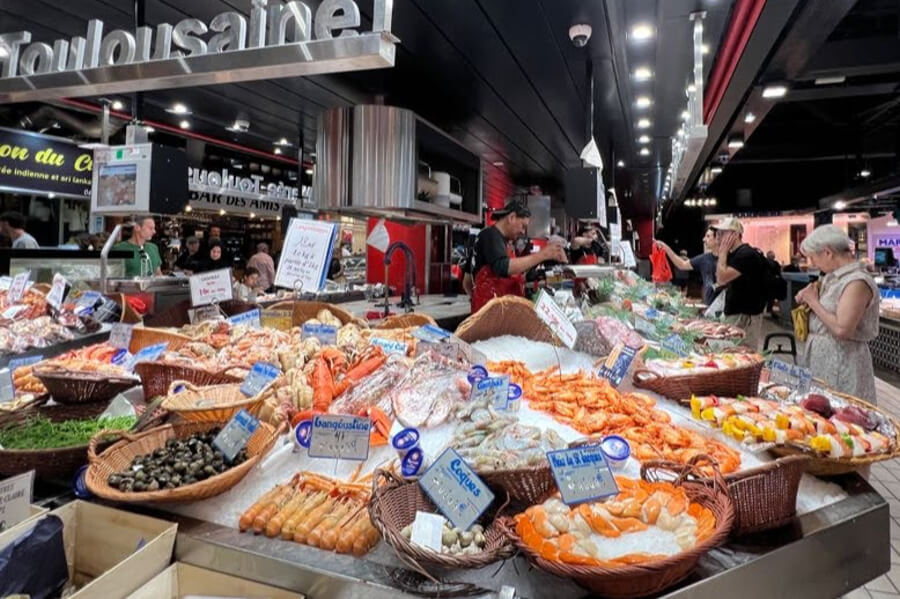
Wow! This is the real thing, when it comes to markets. The bouchers (butchers) and poisonniers (fish mongers) were impressive, not to mention the traiteurs (prepared foods) and Toulousain specialty shops. We stopped at one oyster vendor to down a half-dozen raw babies on the half-shell from Normandie (that were delicious), while talking with the Toulousain couple next to us about which were best.
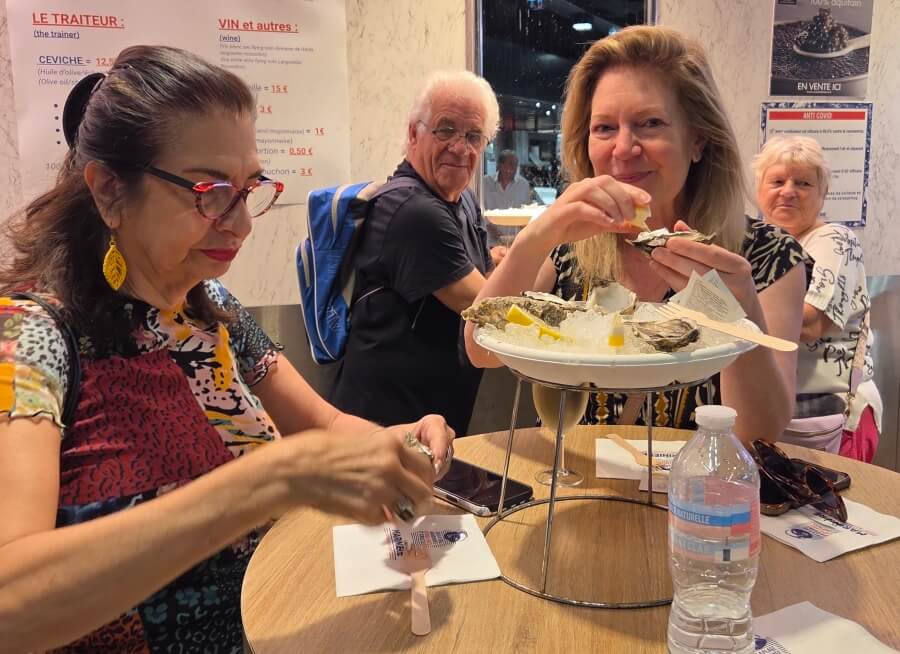
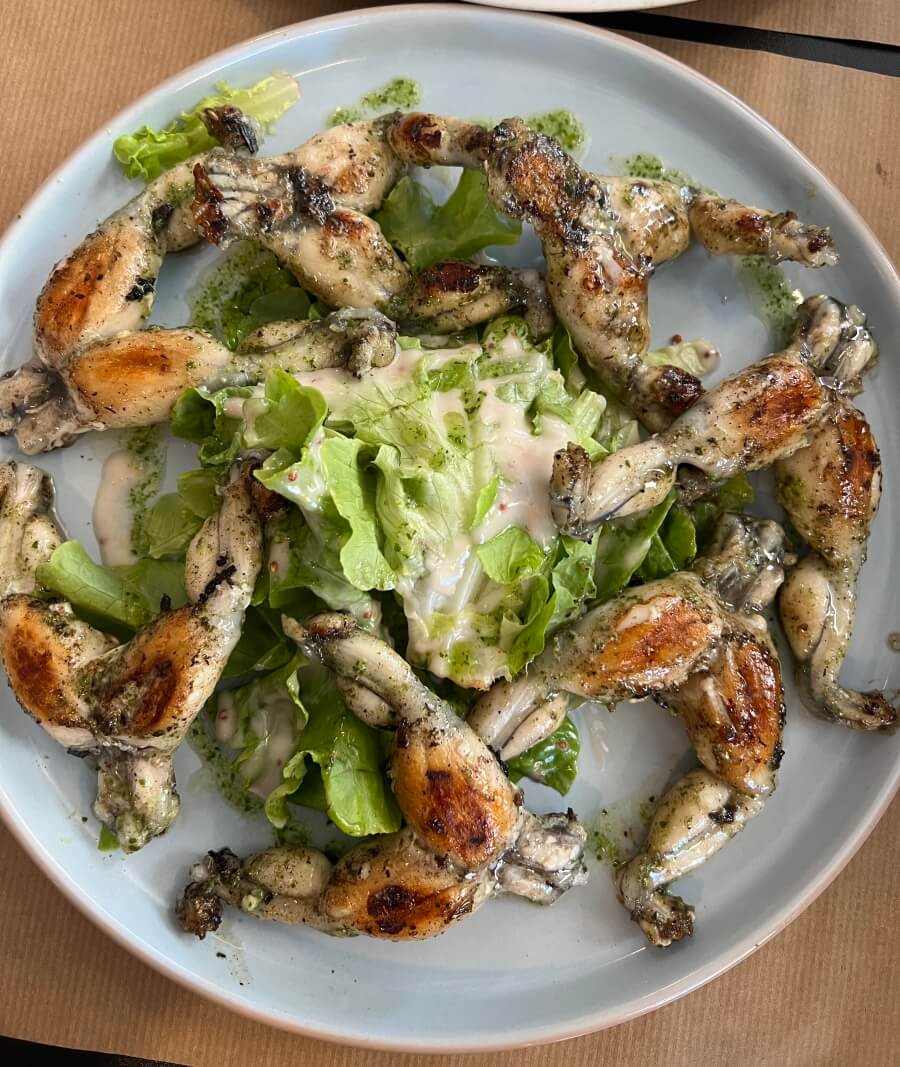
Before noon, we headed upstairs to Le Magret, the restaurant widely recommended. We were some of the first to arrive, which was a good thing considering how quickly the tables filled. It was easy to totally pig-out on the local fare, including a melon gazpacho, cuisses de grenouille (frogs legs) and confit de canard. For €30 a person, it was absolutely delicious and copious. At that moment, the thought of having dinner later that evening seemed like an impossible task.
THE GOLDEN TRIANGLE
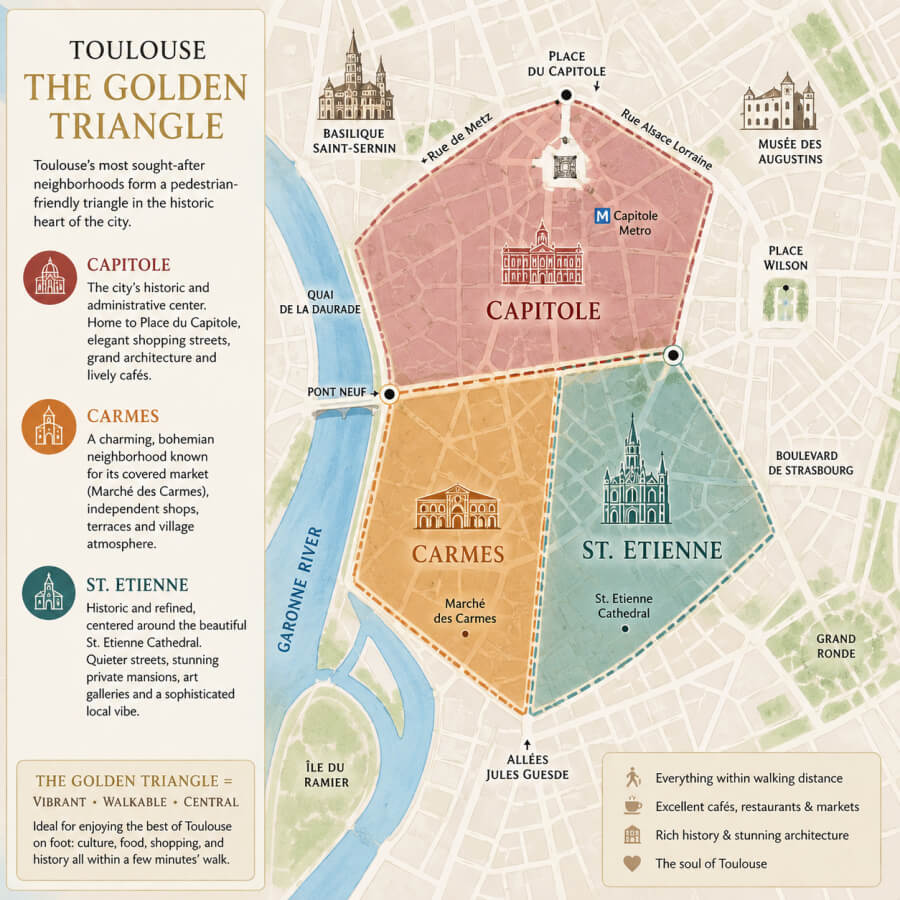
In the afternoon we took a tour of the city by car to get to know the neighborhoods. I learned a lot. There are three areas of the city that make the most sense for our clients, and they all fit into what is known as “The Golden Tiangle”—the neighborhoods of Carmes, Capitole and Sainte-Etienne. It is in these three districts that one can find the amenities one would want for a car-free life in Toulouse. Otherwise, while there are beautiful boulevards lined in leafy trees, and the number of parks and greenery is overwhelming, without having super markets near by, life without a car would be pretty tough. So, the answer is to stick with the city center, where you really can’t go too wrong.
MEET-UP AT LE FLORIDA
At 5 p.m. we met up with a group of Toulousain expats who answered my invitation for a meet-up at Le Florida. Among the mix was a buyer’s real estate agent with whom we work to find good properties, an agent for a currency broker, a couple who were testing out Toulouse as a place for them to land and a woman who had been there for not yet a year and getting to know the city.
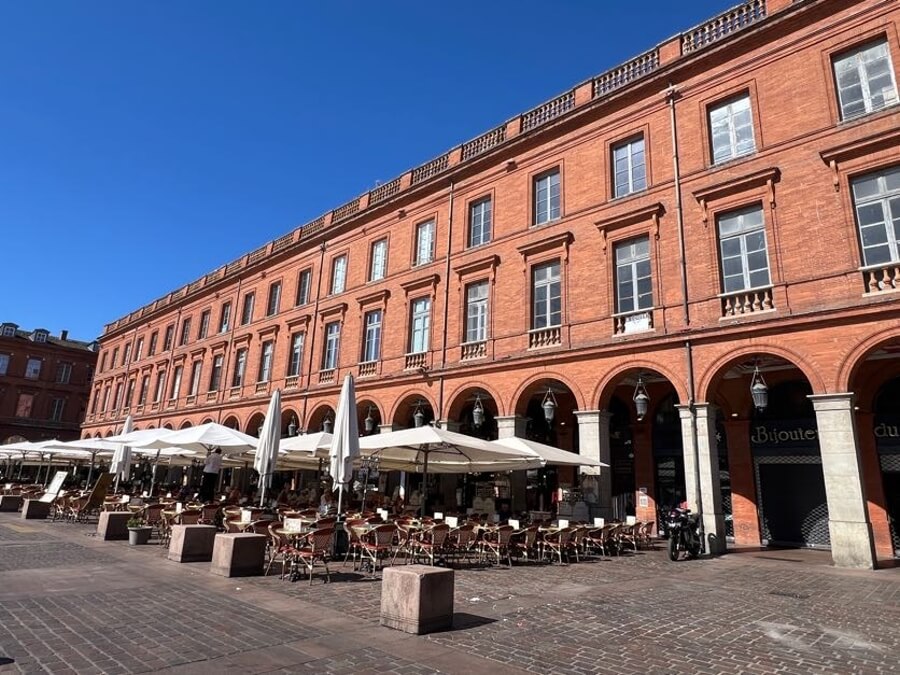
Le Florida at Place du Capitole
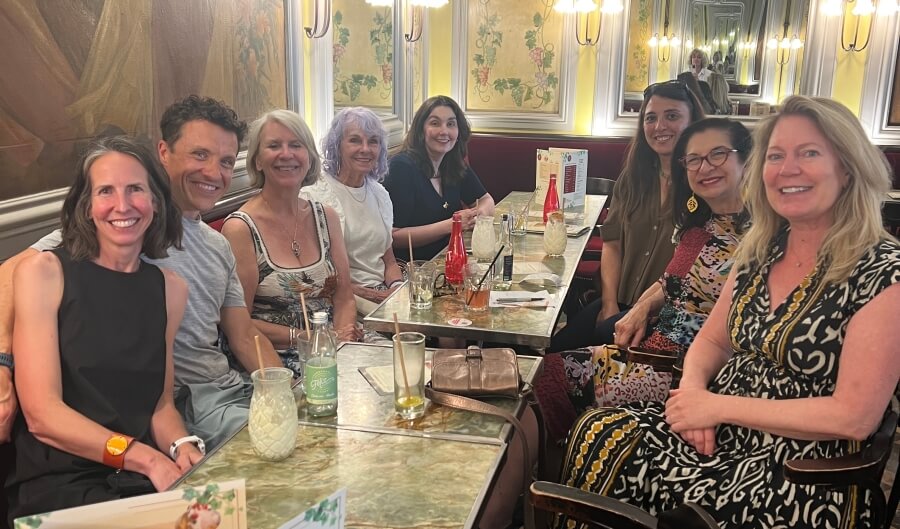
What we were missing were expats who had enough experience living in Toulouse to tell us their truth about the city…what they liked and didn’t like about it. On that level, I was no further along, but I can tell you my own impression:
It’s a beautiful city oozing with charm and curb appeal. The students give it a vitality that is unlike most other cities in France and that keeps it almost innocent in some respects. For smaller budgets, your money goes further. But, it’s not as ideal as one might think. One must pick a very central location to be free of a car. And then there is the question of how easy it is to get in and out of the city to travel outside of France.
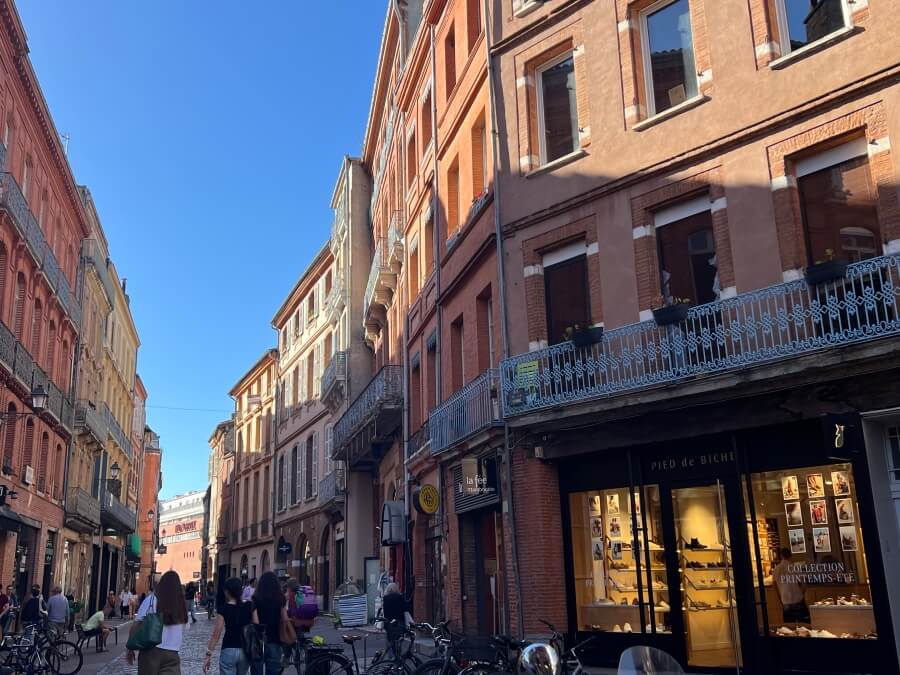
Toulouse Old Town
Toulouse is a great French city…but not necessarily for an expat trying to fulfill certain important criteria. So, if you visit it with the same kind of eye, look closely at the assets and liabilities before deciding to call it home.
A la prochaine…
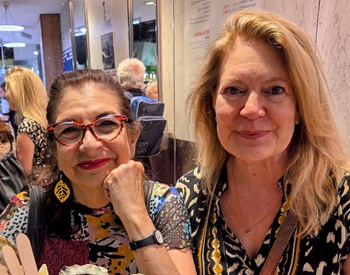 Adrian Leeds
The Adrian Leeds Group®
P.S. In addition to our property services, we also focus on living in France on a practical level—like shopping, dining, getting around, and exploring, etc. Our website is the perfect place to begin your education into everyday life in France.

Let Us create a custom strategy for you
You can live or invest in France-now.
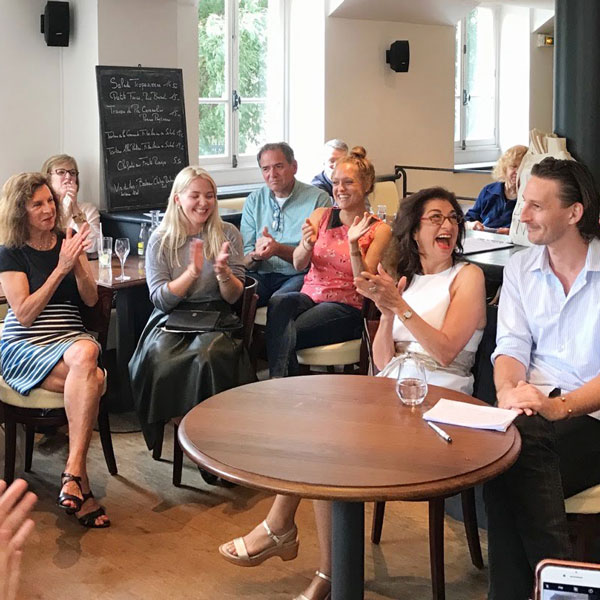
Join us at our monthly Après-Midi.
Become a part of the Paris community.
Property for sale
Read & Subscribe
Dive into more by reading the French Property Insider
Better yet, subscribe to both and get the updates delivered to your inbox.
Global Money Services
Our contacts will help you invest in France.


See Adrian on HHI

Join us on Youtube
Dive into more on how to live, invest & escape to France
Be sure to subscribe!
To read more, click the links below.