


Weekly insights about property in France!
Subscribe and don't miss an issue!
France’s Rental Market is Shifting—Are You Ready to Invest Wisely?
Volume XXIII, Issue 20
By Jay Corless, edited by Adrian Leeds
For years, we have been singing the praises of owning property in France—especially in Paris, Nice, or any charming corner of the country that tugs at your heartstrings. There’s nothing quite like waking up in your pied-à-terre, coffee and croissant in hand, and knowing it’s not just a vacation spot—it’s a piece of your future. However, if you’re considering buying in France with rental income in mind, especially short-term rental income, you’ll want to pay attention: the game has changed and is ever-changing.

SHORT-TERM RENTALS IN FRANCE: THE DREAM VS. THE LAW
Special Note: In France, a “location meublée de courte durée” (short-term rental), is typically defined as the rental of a furnished property for a period of less than 90 consecutive days to the same tenant. This classification is particularly relevant in cities like Paris and other designated high-demand areas. However, every lease in Paris comes with a 30-day cancellation, therefore I would argue this definition and call “short-term” less than 30 days.
There was a time when buying a lovely little studio in the Marais or the Carré d’Or meant you could list it on Airbnb or other platform, keep it booked nearly year-round (65% to 80%), and enjoy a handsome return on investment—easily up to 10%! We once represented 35 short-term rental apartments in Paris and two of them were mine personally. In 2008, when the financial crisis rendered everyone’s savings almost worthless, no one was buying real estate, but the short-term rentals were lucrative. Not only did we survive those years, thanks to the rental income, but so did our clients who owned those properties.

Those were the golden years, bit I’m afraid they’re over, or at the very least, under serious scrutiny.
In recent years, French cities have cracked-down on short-term rentals to preserve housing for residents. And it’s not just talk. In Paris, for example, unless your property is classified as a “résidence principale” (your primary home), you cannot rent it for more than 120 days a year. Want to do more than that? You’ll need to go through an arduous process of converting your property’s usage to commercial status, often requiring equivalent commercial space to offset your residential-to-commercial conversion. In the city center, that could mean spending hundreds of thousands of euros on top of your investment to get permission to rent out your property short-term.

Moreover, some arrondissements in Paris, and cities like Lyon, Marseille, and Bordeaux—are tightening controls even further. No new short-term rental authorizations are being granted in certain areas. And new legislation, particularly in the wake of housing shortages and the Olympics, may bring even more restrictions. The short-term rental business in major French cities is no longer for the faint of heart or the under-informed.
KNOW BEFORE YOU BUY: LEGAL CLASSIFICATIONS AND PITFALLS
Let’s clarify one thing: the rules differ significantly depending on the type of property you buy and where you buy it.
Résidence Principale: You can rent it on a short-term basis for up to 120 days per year.
“Résidence Secondaire”: You need commercial authorization for any short-term rental.
“Meublé de tourisme classé” (Classified Tourism Properties): Offers slight tax advantages but doesn’t exempt you from local rules.
“Co-ownership Restrictions”: Many buildings prohibit short-term rentals altogether, regardless of the city’s regulations.
That charming Haussmannian building you’ve been dreaming about? Its “règlement de copropriété” (building by-laws) may include a clause forbidding furnished rentals for less than a year. That means short-term is off the table, no matter how well your apartment is located.
The bottom line is that it’s not enough to love a property—you need to understand what you’re legally allowed to do with it.
MID-TERM RENTALS: THE SMART, LEGAL, AND LUCRATIVE ALTERNATIVE
Special Note: In France, a mid-term rental is typically defined as a furnished rental lasting between one month (30 days) and 12 months. Most commonly, one to 10 months for students or professionals on temporary assignments; up to 12 months for certain lease types like the “bail mobilité” (mobility lease).
Now you see why I argue the definition of “short-term?”
So, where does that leave the savvy investor who wants to generate income in France? Enter: the mid-term rental market. Mid-term furnished rentals have become a sweet spot in cities like Paris and Nice, where expats, professionals, and international students often need housing for three to 12 months. They’re perfectly legal, more stable than short-term lets, and carry fewer maintenance headaches.
This is where we shine. We help clients find properties that are legally suited for bail mobilité, bail meublé, or bail étudiant leases—each tailored to different tenant profiles and rental durations. In many cases, rental yields are nearly as attractive as those from short-term platforms, considering lower management costs and reduced vacancy risks.
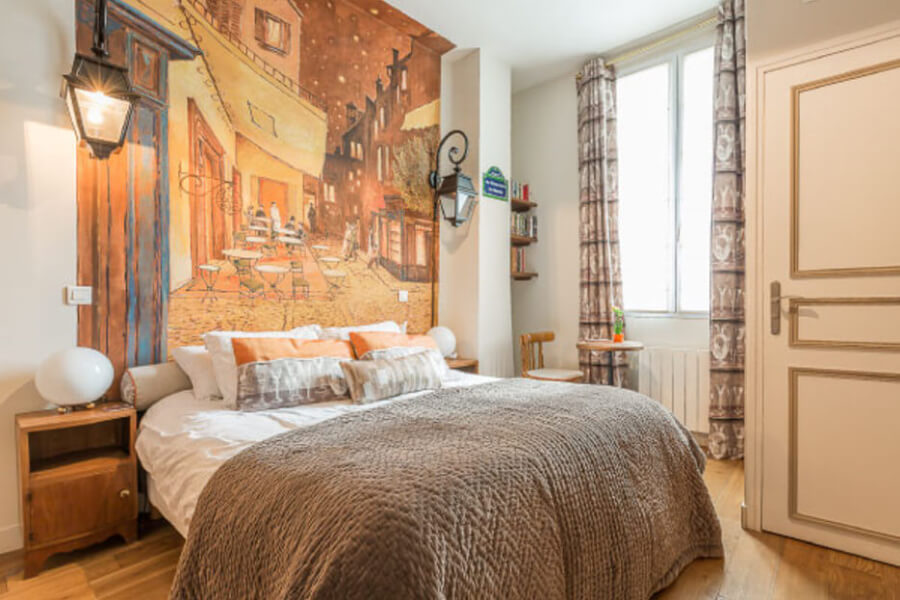
Plus, mid-term tenants tend to be more respectful of your property—no revolving door of suitcase-lugging tourists; just people who are here to live, work, and love France for a little while.
GOING LONG: CLASSIC INVESTMENT RENTALS
There is also the classic long-term furnished rental model, which, while offering lower monthly returns, provides a stable and dependable income over time. These leases, typically one year and renewable, can be structured as “location meublée non-professionnelle” (LMNP). This tax-friendly structure allows you to deduct depreciation and operational expenses from your taxable rental income.
Unfortunately, this lets you out of using your own property and it becomes purely investment.
The French government continues to encourage LMNP and LMP (professional status) investment to alleviate housing shortages. It’s a smart way to combine asset appreciation with monthly cash flow—all while enjoying favorable tax treatment under the “régime réel” accounting option.
With Paris property values historically climbing at an average rate of 4-5% per year over the long term, the capital gain on your investment may one day be the real prize.
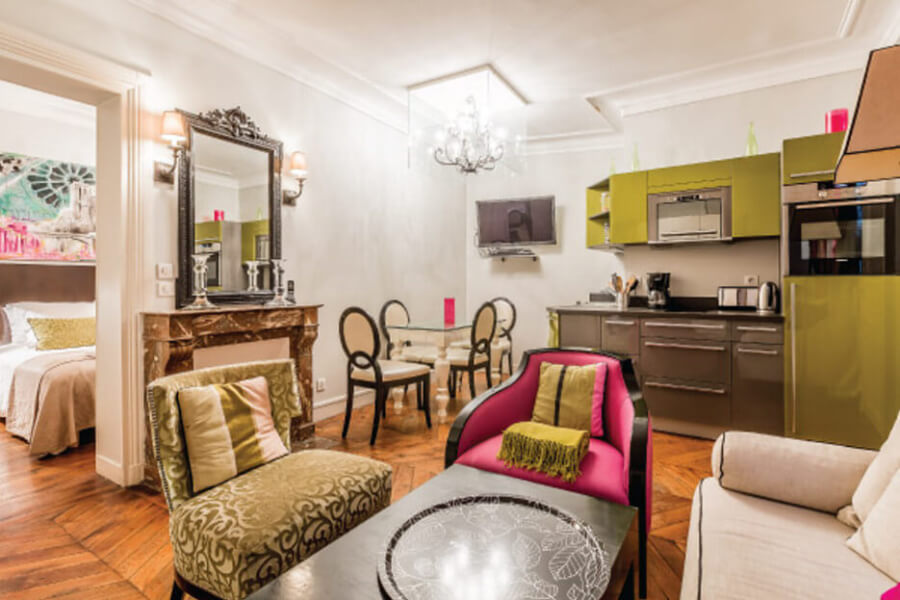
LOCATION MATTERS: LOOK OUTSIDE THE BOX (AND PARIS)
Paris may be the heart of France, but it’s not the only smart place to invest. If your dream is short-term rental income, Nice and other cities along the Riviera remain more flexible. Specific neighborhoods still allow secondary résidences to be listed on vacation platforms without jumping through the same hoops as in Paris.
Even smaller cities, such as Montpellier, Strasbourg, or Rennes, offer attractive returns, lower entry prices, and a student population or international workforce eager for furnished housing.
Rural properties or homes in wine country are also back in vogue. With the rise of remote work and slow tourism, areas such as the Dordogne, Provence, and Pays Basque are experiencing increased demand for high-end seasonal rentals.
Of course, with any location, the key is knowing the local rules, the local market, and the right strategy for your needs. That’s where working with professionals, like the Adrian Leeds Group, makes all the difference.
FINAL THOUGHTS: INVESTMENT IS STILL A GOOD IDEA—JUST BE SMART ABOUT IT
We won’t sugarcoat it: buying a property in France for short-term rental purposes is no longer as easy as it once was. But that doesn’t mean investing here isn’t worthwhile. It simply means that the smartest investors are adjusting their approach.
The secret to success today? Do your homework. Understand the regulations. Think mid- to long-term. And lean on trusted advisors who know the landscape.
If you’re ready to explore French property investment—not just as a romantic notion but as a strategic financial move—we’re here to help you every step of the way. We know the rules, we’ve built the relationships, and we’ve helped hundreds of clients navigate this ever-changing terrain with confidence and clarity.
You can still have that croissant in your sunlit French apartment. You need to know when, where, and how to make it yours.
A last special note: If you do invest in a rental property, please get advice on how to furnish and equip it to make it a successful rental. Those 35 properties we once represented were all purchased, renovated and decorated with short-term rental in mind and were hugely successful.
A bientôt,
 Adrian Leeds
The Adrian Leeds Group®
P.S. Talk to us to discuss whether to rent or buy? It’s a conversation I have almost daily with our clients. Buying, at least for now, isn’t always the answer, but don’t be afraid of buying property. I’ve never regretted any of it, even if I am the Poster Child for property problems! Visit our site to learn more and book your personal consultation today.
2 Comments
Leave a Comment

Let Us create a custom strategy for you
You can live or invest in France-now.
Property for sale
what's happening
Check out upcoming events, conferences, or webinars. Join us!
GET FINANCING
Learn about French Property Loan Information.
Read & Subscribe
Dive into more by reading the Adrian Leeds Nouvellettre®
Better yet, subscribe to both and get the updates delivered to your inbox.

Get started with your dream of owning property in Paris.
Join us on Youtube
Dive into more on how to live, invest & escape to France
Be sure to subscribe!
To read more, click the links below.
Can owners rent their properties for 3-12 months to people who do not qualify for the Bail Mobilité ?
In most cases, no. Not in Paris, unless you have your own network to find tenants.