


Weekly insights about property in France!
Subscribe and don't miss an issue!
Getting “Carrez” or “Carré,” Getting Square on Property Purchasing
Volume XXIII, Issue 26
By Jay Corless, edited by Adrian Leeds
Bonjour from the sunny café-table that doubles as our Paris offices! During last week’s Financial Forum with Notaire Carole Vangioni*, we ran out of time before we could tackle every question pouring in from our North American friends. We promised we’d circle back—and here we are. What follows is a no-nonsense, FAQ-style roundup sprinkled with a pinch of Parisian panache so you can move from curiosity to confident action.


Notaire Carole Vangioni
1) If my U.S. home is still on the market when I become a tax resident in France, will France tax my capital gain when I eventually sell it?
Yes, French tax residents (having lived in France more than 183 days) are taxed on worldwide capital gains. France will ask you to declare the gain and then provide a credit for any U.S. tax paid under the U.S.–French tax treaty. Timing is generous if you sell soon after the move (the French administration refers to a “reasonable period”). Still, the safest approach is to budget for French CGT plus social surcharges and claim the treaty credit afterward.

We recommend that you consult with our tax advisor, Jonathan Hadida, in advance of your move to learn how to reduce any tax expectations.
2) IFI Real Estate Wealth Tax (threshold 1.3€M): who decides the value? Will the threshold rise with inflation?
You declare the value yourself each year on form 2042-IFI. The tax office merely reviews and can challenge your numbers; no automatic government appraisal is performed. For peace of mind, many owners commission an independent valuation (about €600-€1,000 in Paris). The 1.3€M threshold hasn’t been indexed since 2018, and as budget debates stand today, no inflation adjustment is on the docket for 2026.

Reference (in French)
Reference
3) Buying and owning a second home—anything special?
For those with a second home in France, you can expect to pay Taxe d’Habitation and when you sell, you’ll pay capital-gains tax on a reduced scale if you sell within 30 years.

4) How much should I add to the asking price of an apartment I am buying for Notarial fees and taxes?
Count on 7–8 % on top of the negotiated price:
Notaire duties and stamp tax = 5.8%
Notaire’s own fee = is 0.8% (sliding scale)
Misc. disbursements = 0.3%
New-builds run closer to 2–3%
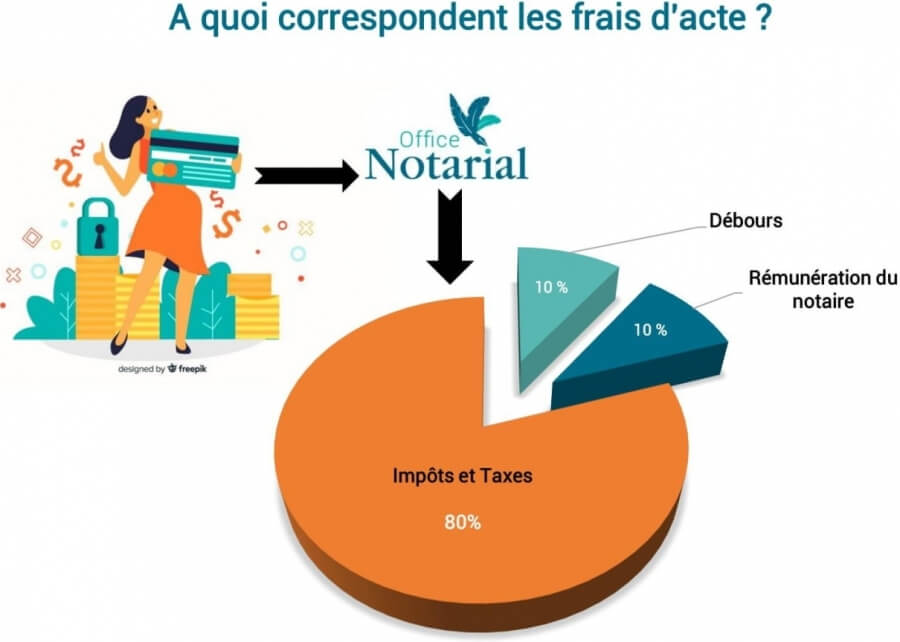
Reference: Calculate the “Frais de Notaire” (in French
5) Is there an official registry of Carrez surface? What if the square-meters are under-reported in the DVF database (Demande de Valeur Foncière)?
The Loi Carrez, named after French politician and finance specialist Gilles Carrez who introduced it, is a law designed to protect property buyers. It guarantees that buyers get precise details about the surface area of the property they’re purchasing. This law is particularly relevant for properties in co-ownership, like apartments or units within shared buildings.

The Carrez area is certified by a private surveyor and attached to the deed, but there’s no national registry to search; each Notaire files the certificate. DVF shows “surface réelle bâtie,” not Carrez, and Notaires only fill the Carrez column sporadically—hence the smaller numbers you might see.
If the actual size of the apartment is more than 5% smaller than what was stated in the sale contract, the buyer has the right to ask for a price reduction. The buyer has one year from the date of signing the final “acte authentique” (deed of sale) to make this claim. The reduction is proportional to the missing square meters. For example, if the reported size was 100m² but it’s actually 94m² (6% smaller), the price can be reduced based on the price per square meter times the 6m² shortfall. If the error is less than 5%, the buyer cannot claim a reduction—small discrepancies are tolerated under the law.
Note: “Carrez” is not to be confused with “carré” meaning square, as in “metre carré” means “square meter!”
6) Are U.S. retirement accounts (401K, Roth) treated differently for French inheritance tax?
France taxes worldwide assets left by a French-resident decedent. 401K and Roth plans are treated as movable financial assets, taxable to the beneficiary on a sliding scale after allowances are applied. The U.S.–France tax treaty often limits double taxation, but you still must file in France.
In France, a fixed portion of your estate must go to your children (or other heirs if no children), regardless of your will. This applies automatically to real estate located in France. However, since August 2015, Americans (and other non-EU nationals) can choose the law of their nationality to govern their French estate. Include a clear clause in your French will specifying that you choose U.S. law (or the law of your U.S. state of residence) to govern your worldwide estate, including your French property. French notaries will therefore apply U.S. inheritance law, meaning you can generally leave your French property as you wish. French law allows you to give away property while alive (within tax limits), which allows you to reduce the value of your estate this way, but large lifetime gifts may still be subject to clawback rules if challenged by reserved heirs.
There are other ways of reducing the inheritance tax burden on your heirs. We always recommend consulting with professionals: a French Notaire and a U.S. estate planning attorney experienced in Franco-American estates.
7) Who pays estate agency commissions in France? What does a buyer’s agent cost?
Sales listings must state whether the honorarium is for the buyer or seller, but in practice, they’re baked into the asking price. So the buyer ultimately pays, no matter how you look at it. The typical agency fee is 4–6 % of the sale price. Dedicated buyer’s-agent/search mandates (like our own Property Search Service) runs 3–4% of the budget. If the agency is willing to share commissions, the buyer can benefit. In our own case, we apply whatever commission shares we receive to offset the buyer’s fees. (This NEVER happens in Paris and about 50% of the time in other parts of France.)
Note: The sales mandate between the seller and agency dictate who pays the fees. If the buyers pays the fees, the price on the deed is reduced and therefore the Notarial taxes and fees are reduced. It changes nothing for the seller.
8) “Obligation morale” to accept a full-price offer—is it legal?
It’s precisely that: moral, not statutory. A seller may refuse even a full-price offer until a “Compromis de Vente” or “Promesse de Vente” is signed; only then does a binding contract exist.
9) Visas—who can help and should I secure one before signing on a property?
Immigration has nothing to do with property purchasing. The French consulate expects you to apply before relocating to France for stays exceeding 90 days—consider the VLS-TS “visitor” visa if you’re not working. Specialist immigration attorneys or relocation firms we recommend can assist with the paperwork.
10) I’ve seen listings that ask the buyer to reimburse the seller’s share of the condo reserve fund. Is that normal?
Perfectly normal—and negotiable. By law, the money remains with the building; the outgoing owner can request reimbursement, but while you’re free to accept, refuse, or split the difference in the final price, I’ve never seen any transaction as such. In all cases, the buyer has refunded the seller for any reserves held on account by the building.
11) Can I buy and hold French property through a U.S.-based LLC?
This is a big can of worms, but legally, yes. France will treat the LLC as a company liable to French corporate tax, plus a 3% annual tax on foreign entities holding French real estate can apply unless extra filings are made. This form of ownership is common with Fractional Ownership properties which enables the sale of shares easily without having to go via the French system with each transfer. However, most North American investors instead use personal ownership or a French Société Civile Immobilière (SCI). You will want to consult with our advisors before creating any of these structures.
12) Should I order independent pre-purchase appraisals, and where do I find experts?
Absolutely for high-value or rural properties, but for properties in any city where price fluctuations are regularly reported, no. Look for an “expert immobilier agréé REV” or “RICS” or an architect registered with the Ordre des Architectes. Fees start around €1,500.
13) Are tougher energy ratings really coming?
Yes. Rentals rated G will be banned in 2025, F will be banned in 2028, and E will be banned in 2034…unless upgraded. That clock keeps ticking even for holiday homes you later decide to rent out.
14) Is a building’s DPE the same for every flat?
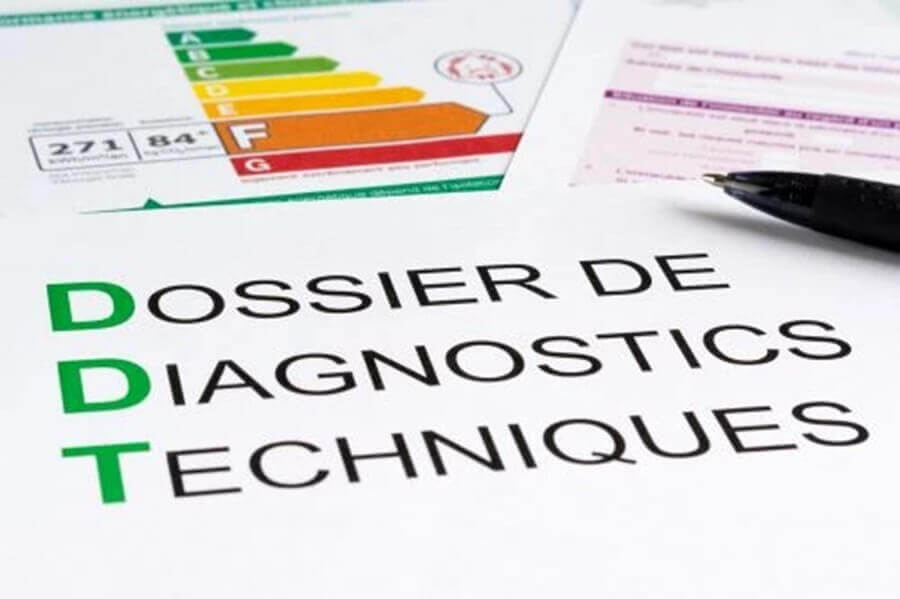
No. Each unit has its own DPE, but collective DPEs become mandatory for all condo buildings by 2026. Efficiency improvements may be voted on building-wide or addressed within your unit (e.g., windows, heating).
15) Do AdrianLeeds.com listings already have all diagnostics?
Our policy is to obtain the full diagnostic pack (DPE, lead, asbestos, electrical, etc.) before a buyer signs the “Promesse” or “Compromis de Vente.”
16) Can I hire certified surveyors to inspect the structure, plumbing, and roof?
Yes. “Independent experts bâtiment” perform “état général” surveys from €900 upward. This is not normally the practice as diagnostics and annual meeting notes are provided for review prior to purchase.

17) A previous owner made modifications without permits. Can I regularize the situation?
Infractions typically become time-barred after 10 years. Before that, you must apply for a permit modification (or risk demolition orders). Always inform the Notaire so they can advise on insurance and fines.
18) How long does due diligence with the Notaire take if I’m only in France briefly?
Gathering searches (planning, cadastral, asbestos, condo minutes) takes 3–6 weeks on average. You can sign the “Promesse” or “Compromis de Vente” in today’s new age of communications virtually (or during your visit) and you can also grant power of attorney for either the pre-sale agreement or the final deed.
19) When should I appoint my own Notaire?
Immediately after your offer is accepted. Seller and buyer may each have a Notaire; fees are shared, and it costs you nothing extra. When you work with us, we always provide our own recommended and proven Notaire with whom we have worked for years.
20) Can I wire money from my currency broker account to the Notaire?
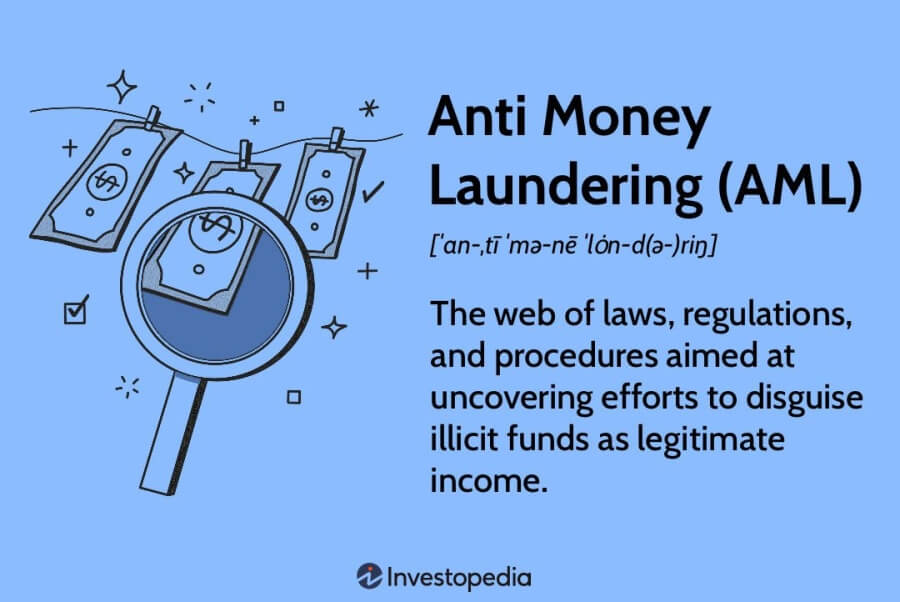
Most Notaires accept FX platforms as long as the funds arrive from an account in your name (by law, it must come from the account in the name of the buyer) and the bank must provide Anti-Money Laundering (AML) documentation.
21) If I sign a cash “Promesse” or “Compromis de Vente,” can I later decide to get a mortgage?
You can make a cash offer and still take out a mortgage later—several French buyers use this approach when interest rates are low, even for high-value properties, by explicitly renouncing the loan contingency in the “Promesse” or “Compromis de Vente.” But if you fail to close, because you didn’t secure alternative financing, you risk losing your deposit (typically 10%), and the seller can even take legal action to enforce the sale.
22) May I renegotiate the price if the Notaire’s documents reveal major issues?
Yes—nothing stops a friendly re-negotiation. But unless a specific clause in the “Promesse” or “Compromis de Vente” covers the defect, the seller can refuse and you must either proceed or withdraw.
23) Do technical surveyors certify property boundaries?
Only a Géomètre-Expert may perform a legal “bornage” (boundary survey) and place markers. Their report is the gold standard if you’re buying land or a house with uncertain limits—invaluable peace of mind!
FINAL WORD
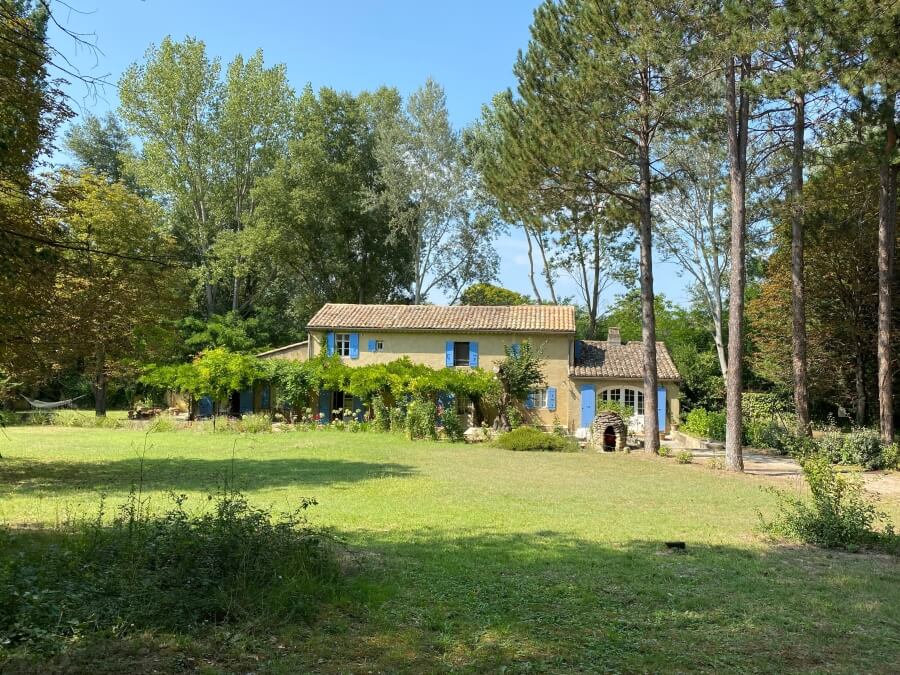
Whether you’re sizing up a pied-à-terre on the Rive Droite or a Provençal farmhouse, knowledge is your best passport. Keep these nuggets close, lean on professionals who live and breathe French real estate, and you’ll soon be sipping champagne at the closing—à votre santé!
*See the replay of the Financial Forum Webinar with Notaire Carole Vangioni on our YouTube channel.
A bientôt,
 Adrian Leeds
The Adrian Leeds Group®
 P.S. We offer a mix of Fractional Ownership properties and individual apartments/homes for sale in Paris, Nice, and other parts of France. Visit our site today to view the properties on our roster.
2 Comments
Leave a Comment

Let Us create a custom strategy for you
You can live or invest in France-now.
Property for sale
what's happening
Check out upcoming events, conferences, or webinars. Join us!
GET FINANCING
Learn about French Property Loan Information.

Read & Subscribe
Dive into more by reading the Adrian Leeds Nouvellettre®
Better yet, subscribe to both and get the updates delivered to your inbox.

Get started with your dream of owning property in Paris.
Join us on Youtube
Dive into more on how to live, invest & escape to France
Be sure to subscribe!
To read more, click the links below.
Adrian, I wanted to check if you all are ok from the terrible storm last week. I hope you and yours and all are well. Please be safe. And they say climate change is not real…. This looks like a storm we had in Colorado not so long ago. Take care.
All good! Thanks for asking.