


Weekly insights about property in France!
Subscribe and don't miss an issue!
The Paris Property Market in Spring 2025: A Wobbly Rebound or a Real Revival?
Volume XXIII, Issue 22
By Jay Corless, edited by Adrian Leeds
The Paris property market is showing the first real signs of thawing after a long freeze. With that, a cautious wave of optimism has returned. But before we pop the Champagne, let’s take a closer look at the story the numbers are telling us from the latest Paris Notaire’s report. Is this the long-awaited turnaround we’ve been hoping for—or just a momentary bounce driven by short-term incentives?

After all, the market’s comeback is happening in a fragile context. Interest rates, although improved, remain higher than buyers were accustomed to during the ultra-low interest rates of the 2010s. Inflationary pressure, fiscal policy changes, and shifting buyer sentiment all remain in the balance. And with property values still lagging behind pre-2022 peaks, many sellers are hesitating while buyers tread carefully. It’s not a full-fledged rally—at least, not yet.
THE NUMBERS SAY “UP”—BUT NOT TOO FAR
After two rocky years and a deeply quiet 2024, the property market across Île-de-France finally showed signs of life in First Quarter 2025. Sales of older homes rose 21% compared to the same period last year—an encouraging signal, yes, but one that must be taken with a grain of “sel.” That First Quarter 2024 was historically low makes the year-on-year surge a bit less dramatic than it seems.
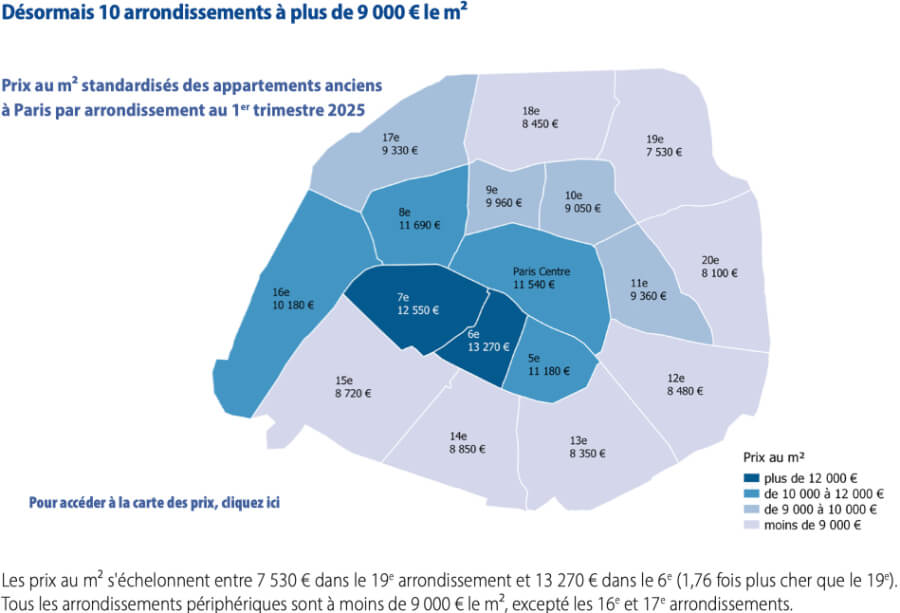
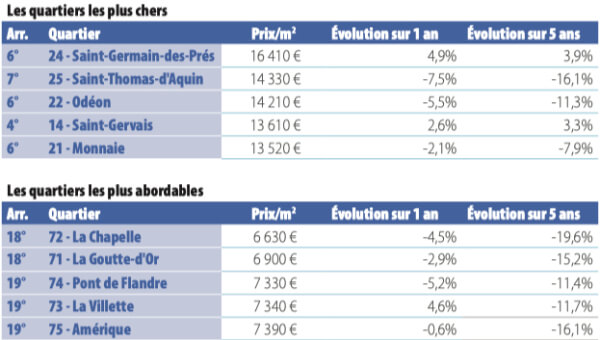
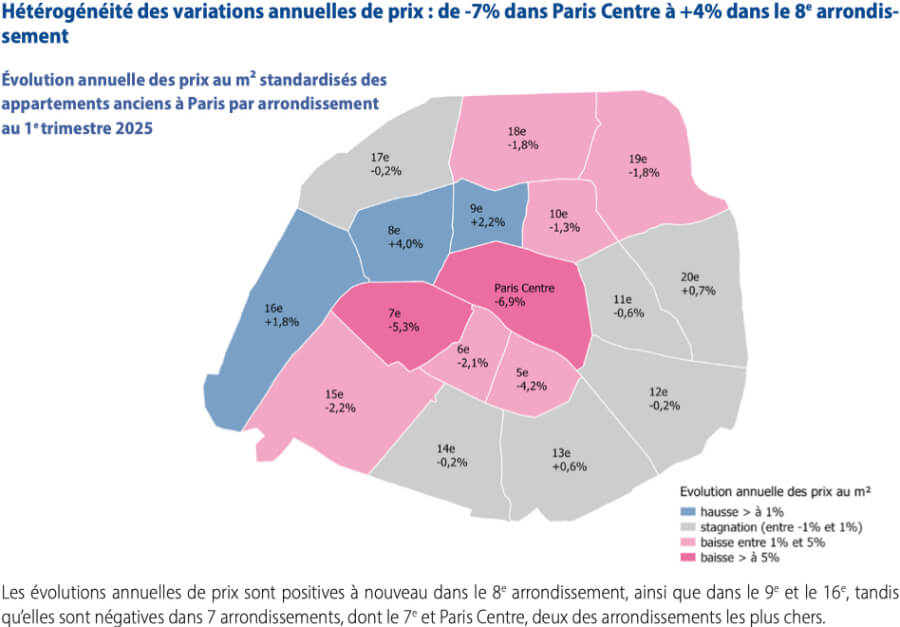
In Paris itself, sales volumes jumped 25% for older apartments. Prices stabilized, with the average per-square-meter price inching up to €9,530. And if forecasts hold, we could see that number hit €9,750 by July—a modest annual increase of 2.7%. However, let’s not forget that we’re still well below the market highs of 2021.
In the “Petite Couronne” (the ring of suburbs closest to Paris), the story is similarly mixed. Sales were up 21%—again, compared to a weak base. Prices remained flat on average, but the Hauts-de-Seine (92) and Val-de-Marne (94) saw hints of appreciation, especially in neighborhoods affected by upcoming transport links.
THE “EFFECT PORTILLON”: BUYING BEFORE THE TAXMAN COMES
One of the biggest drivers of this First Quarter sales boost? A classic case of French fiscal timing. As of April 1st, “droits de mutation” (transfer taxes) jumped by 0.5 percentage points in five departments, including Paris. It was enough to prompt thousands of buyers to rush their transactions across the finish line before the deadline. The notaries themselves called it an “effet portillon”—a gate-rushing behavior not uncommon in the French market.
So, is the rebound real? Yes—but artificially sweetened. The deeper question is whether this bump will translate into sustained momentum through the year.
DPE: THE ELEPHANT IN THE LIVING ROOM
Suppose you’ve been reading FPI for any length of time. In that case, you’re aware that we’ve been following the evolving saga of the “Diagnostic de Performance Énergétique” (DPE)—France’s energy performance rating system. And oh, what a tale it continues to tell.
Since the rollout of the “Climat et Résilience Law,” properties rated F or G (the dreaded “passoires thermiques”) are not only more complicated to rent but also increasingly challenging to sell. Owners are rushing to offload these energy-inefficient homes before further restrictions kick in. In Paris, a staggering 32.4% of apartment sales last year involved properties rated F or G, which is nearly one in three.
Meanwhile, the best-rated properties (A and B) still represent a small share of the market, accounting for only about 3-4% of sales, mainly because newer, energy-efficient buildings are relatively rare in the City of Light. So, if you’re shopping in Paris, brace yourself: most charming old flats come with charmingly outdated insulation.
TRANSPORT INFRASTRUCTURE: LINE 14 AND THE GREAT EXPECTATIONS
New transport projects in Paris are often hyped as catalysts for real estate appreciation. But reality tends to be more nuanced. The much-celebrated extension of Metro Line 14 now connects Saint-Denis to Orly Airport via eight new stations.
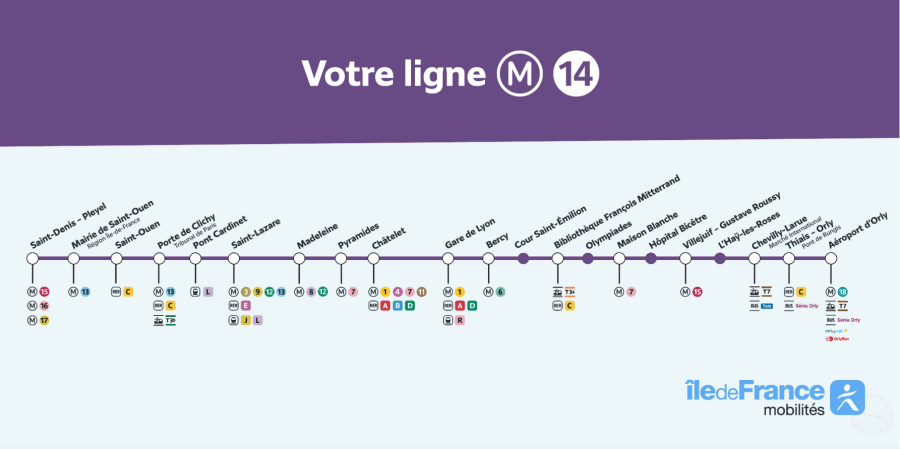
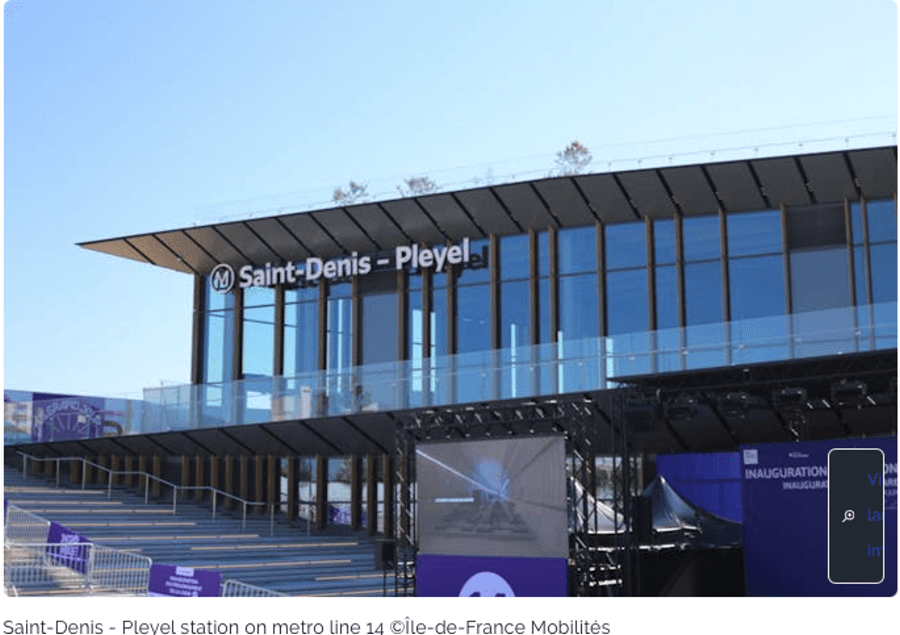
Has it led to a price boom in adjacent areas? Not exactly. While some regions, like Saint-Denis Pleyel, have seen a 2% price increase, others, such as Saint-Ouen, have seen price drops near the new stations. Still, long-term trends are positive: over the past decade, prices near Saint-Denis Pleyel have increased by 44%.
If you’re eyeing property near a future transit hub, consider the long-term implications. The dust (and construction noise) needs to settle before benefits are realized—and sometimes, the proximity to a metro station isn’t as desirable as you might think.
BOTTOM LINE: PROCEED WITH CAUTIOUS OPTIMISM
The Paris market is no longer in freefall, and that’s good news. Prices are stabilizing, interest rates are easing (albeit slowly), and buyer interest is returning. But the recovery is fragile, dependent on tax policy, inflation control, and political calm—three things France isn’t exactly known for right now.
For would-be buyers, this may be the moment to re-enter the market, particularly if you find a property with good bones and decent energy ratings. But remember: Paris isn’t just about numbers. It’s about lifestyle, community, and the timeless thrill of calling the most beautiful city in the world “chez moi.”
For expats, especially North Americans dreaming of that pied-à-terre or planning a longer-term move, the timing could be especially opportune. A stable euro, softened prices from recent declines, and a wider selection of properties—including those previously out of reach—have opened a window of possibility. Energy regulations may seem like a hindrance, but they also offer an opportunity to negotiate a more favorable price or invest wisely in upgrades. If you’re financially ready and culturally curious, now may be the perfect time to take the leap.
As always, stay smart, stay strategic—and if in doubt, ask us. We’ve been there, bought that, and lived to tell the tale.
A bientôt,
 Adrian Leeds
The Adrian Leeds Group®
Adrian circa 1986
P.S. We’re the folks that can make your French property investment dream come true, while protecting you from making serious mistakes. See the services we offer to help you find the perfect property in France!

Let Us create a custom strategy for you
You can live or invest in France-now.
Property for sale
what's happening
Check out upcoming events, conferences, or webinars. Join us!
GET FINANCING
Learn about French Property Loan Information.

Read & Subscribe
Dive into more by reading the Adrian Leeds Nouvellettre®
Better yet, subscribe to both and get the updates delivered to your inbox.

Get started with your dream of owning property in Paris.
Join us on Youtube
Dive into more on how to live, invest & escape to France
Be sure to subscribe!
To read more, click the links below.