


Weekly insights about property in France!
Subscribe and don't miss an issue!
The Country House Is Back
Volume XXIV, Issue 22
By Jay Corless, edited by Adrian Leeds
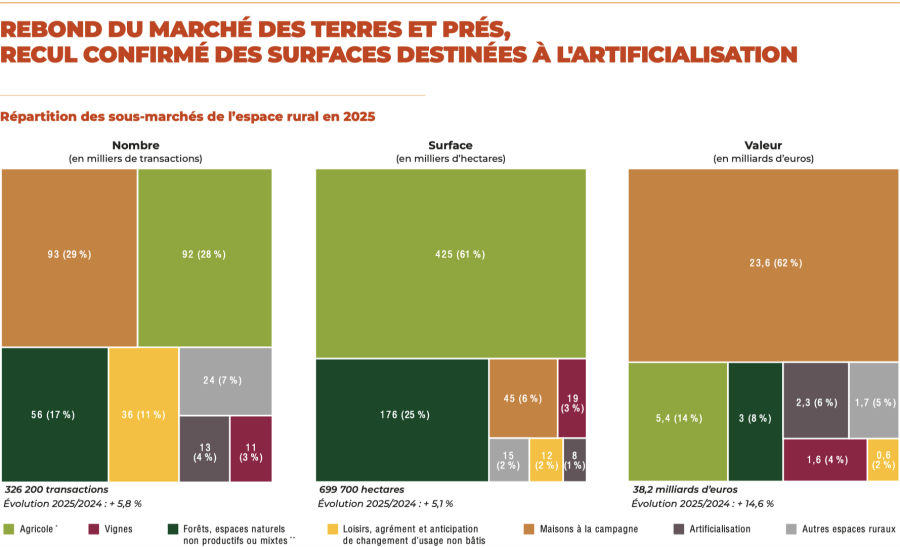
France’s rural property markets are moving again. According to SAFER’s 2025 analysis of rural land markets, transaction volumes increased across all rural market categories. In total, the rural property market recorded 326,200 transactions, covering 699,700 hectares, for a total value of €38.2 billion. That represents a 5.8 percent increase in transactions, a 5.1 percent increase in surface area exchanged, and a 14.6 percent increase in value compared with 2024.
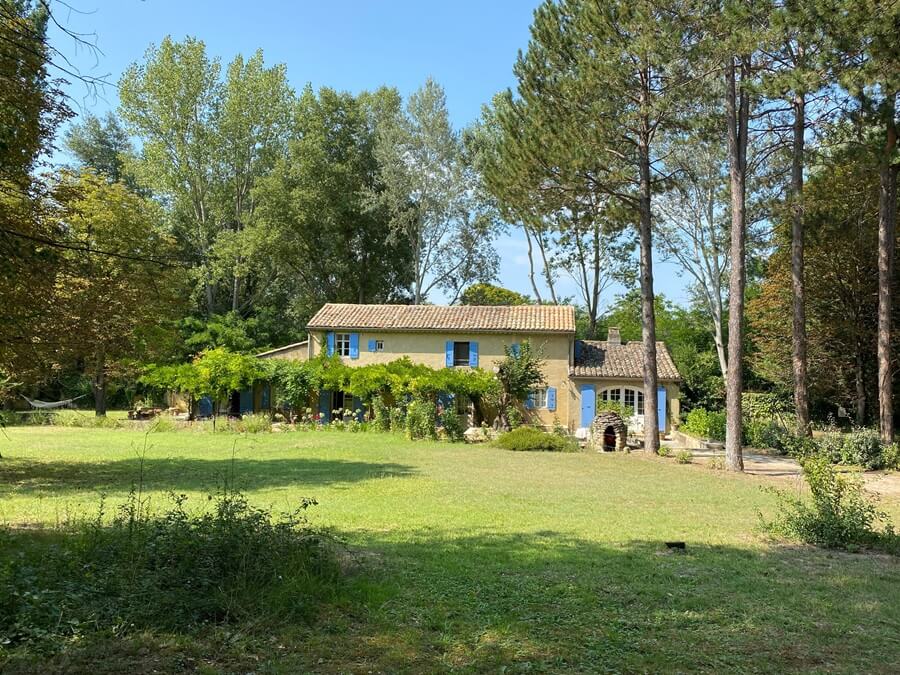
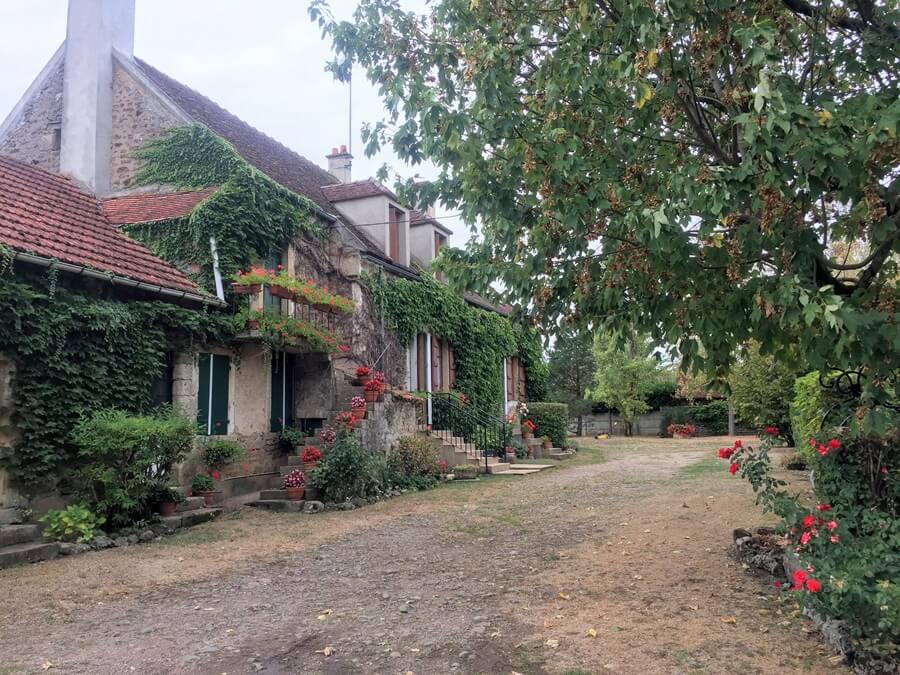
Within that wider rural market, one category speaks directly to the French dream cherished by so many buyers: the maison à la campagne, the country house.
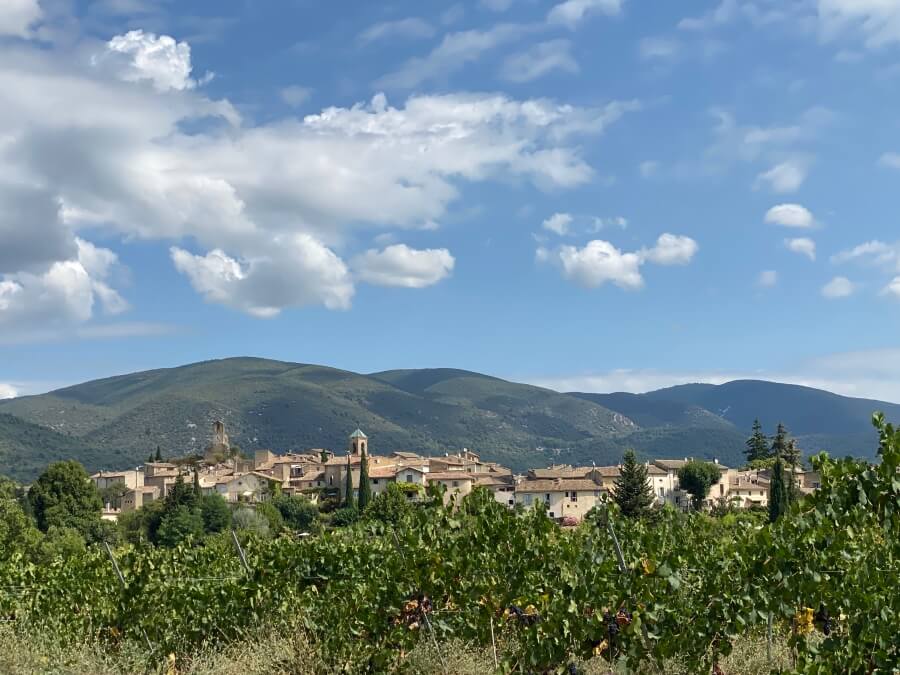
SAFER defines this market very specifically. It includes purchases of buildings used as primary or secondary residences, sold with agricultural or natural land of less than three hectares, free of rural lease, and purchased by non-farmers. In 2025, SAFER also revised its segmentation method to better identify rural residential properties outside village centers.
And this market has clearly awakened.
After two difficult years in 2022 and 2023, followed by stabilization in 2024, the country house market rose sharply in 2025. There were 93,450 transactions, an increase of 15 percent in one year. The surface exchanged reached 44,900 hectares, up 13.9 percent. The total value of the market rose even more strongly, by 20 percent, to €23.6 billion.
This rebound fits within a broader improvement in the French residential market. SAFER notes that sales of existing homes in France reached 945,000 at the end of 2025, up 11.8 percent from 2024, following a 31.3 percent decline between 2021 and 2024. Credit conditions also improved: the average interest rate for new home loans fell to 3.08 percent in December 2025, while new housing credit production rose by 33 percent during the year.
The country house market is not simply recovering in volume. Prices have turned upward again, too.
The average price of a maison à la campagne reached €210,000 in 2025, up 3.6 percent from 2024. That increase follows two consecutive years of price declines and brings the average price close to the 2022 record of €214,000. At the same time, the average lot size continued to shrink slightly, falling 1 percent to 4,800 square meters.
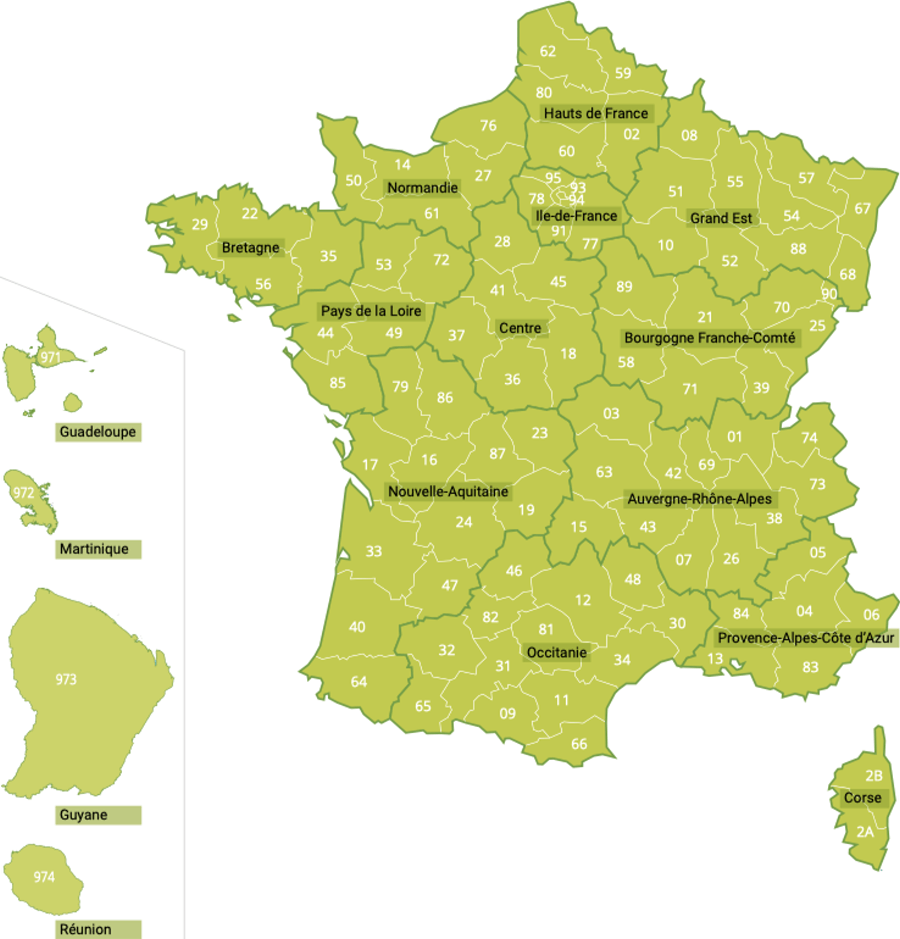
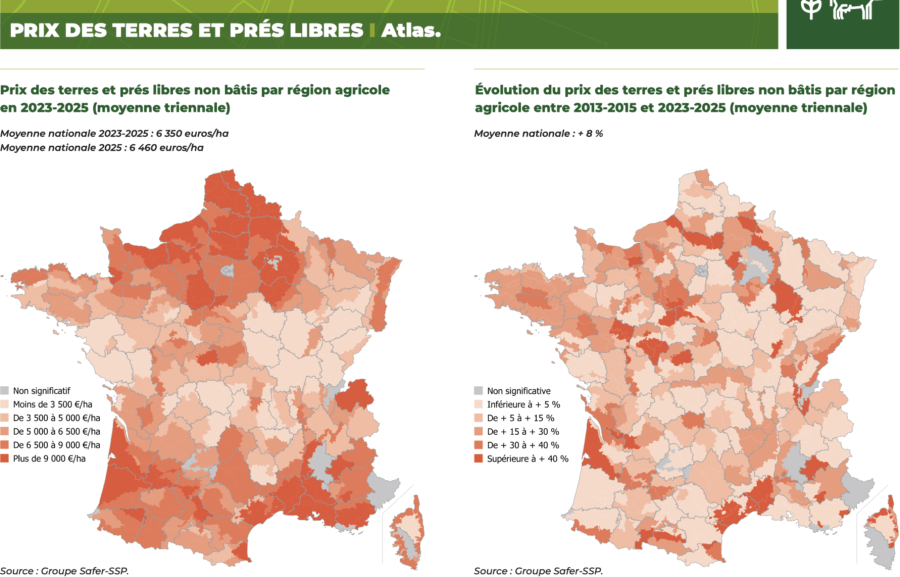
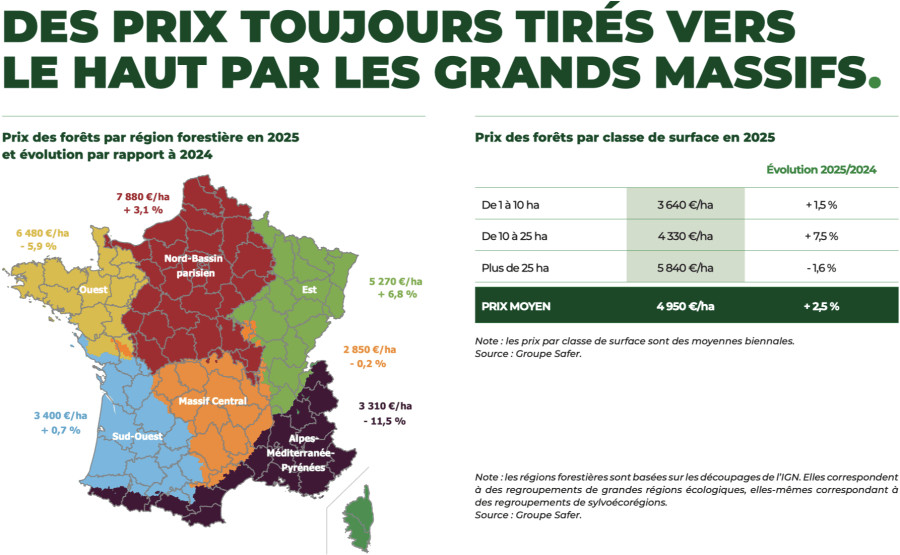
As always in France, national averages tell only part of the story. SAFER points to major territorial differences. The highest average prices are concentrated in the Mediterranean arc, including the Bouches-du-Rhône, Var, Alpes-Maritimes, and Vaucluse; in the outer Paris region, including Yvelines, Val-d’Oise, and Essonne; and in parts of Rhône-Alpes, including areas around Lyon, the Rhône valley, Haute-Savoie, and Savoie. The Alpes-Maritimes and Bouches-du-Rhône remain the most expensive departments for country houses, with average prices of €587,000 and €528,000 respectively. By contrast, less densely populated departments such as the Cher, Nièvre, Indre, Haute-Marne, and Creuse remain much more affordable. The Creuse recorded the lowest average price, at €80,000.
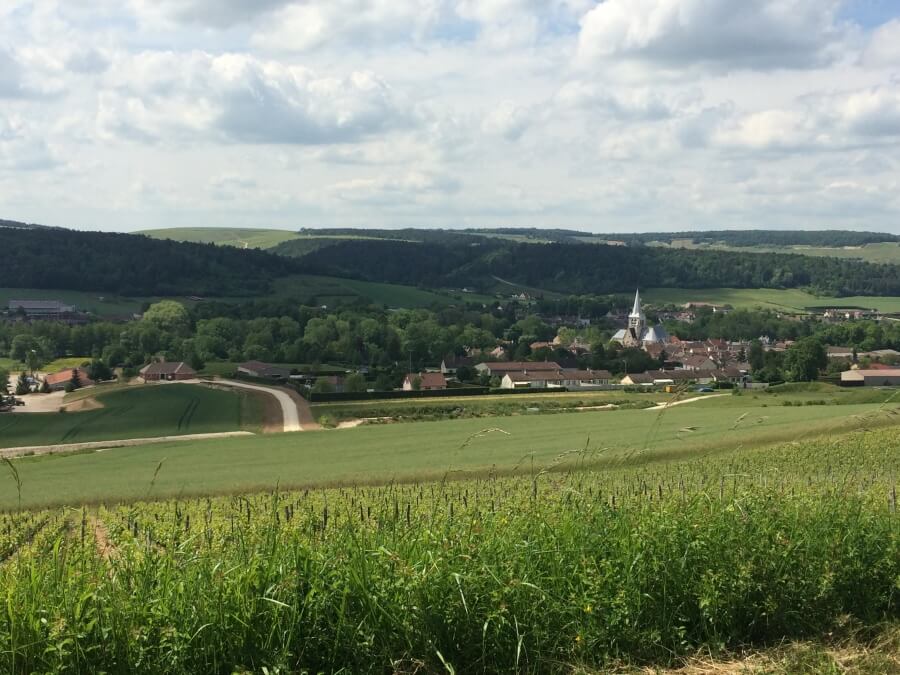
The geography of activity is just as varied. SAFER reports that the highest transaction densities remain in the northwestern quarter of France, especially Brittany, the Manche, and Loire-Atlantique; along the southeastern coast; and in the Saône and Rhône valleys. Metropolitan areas and their surrounding zones remain especially dynamic, notably around Nantes, Lyon, and Lille. By contrast, transaction densities are lower in Corsica, in a band of northeastern departments between the Marne and the Doubs, and in several departments of Occitanie.
One can read these transaction density maps as more than a property-market story. They are also a quiet map of mobility. The strongest activity appears in places where rural life does not necessarily mean isolation: the northwestern quarter of France, the southeastern coast, the Saône and Rhône valleys, and the peripheries of major metropolitan areas such as Nantes, Lyon, and Lille.
SAFER does not frame this explicitly as a question of transport, but the implication is hard to miss. The most active countryside markets are often those where buyers can combine space with access, whether by car to a nearby urban basin, or by rail connection to a larger city. The car still opens up much of rural France, especially the deeper countryside, where prices may remain lower. But rail access changes the equation: it can make a country house feel less like a retreat from modern life and more like an extension of it. In that sense, the future of the maison à la campagne may depend not only on charm, land, and price, but on how easily its owners can move between the village, the city, and the wider world.
The buyers are changing, too. The average age of country house buyers fell for the second consecutive year, reaching 43 in 2025, seven months younger than in 2024. SAFER links this rejuvenation to lower interest rates and the two preceding years of price declines, which may have helped younger buyers return to the market.
Foreign-resident buyers remain a stable presence. In 2025, buyers residing abroad accounted for 7.8 percent of purchases, only 0.3 percentage point lower than in 2024. Their share exceeds 10 percent in several attractive rural areas, including cross-border zones near Luxembourg and Belgium, the Provençal hinterland, Poitou, Limousin, Gers, and Dordogne. British buyers accounted for 1.6 percent of acquisitions, a level SAFER describes as relatively stable since 2022, with the highest share in Haute-Vienne and Charente.
The longer-term picture is equally revealing. Between 2016 and 2019, falling interest rates helped support both the country house market and the wider existing-home market. Country house transactions rose by 51 percent during that period, twice the pace of the broader existing home market. Then came COVID. In 2020, the spring confinement slowed property transactions overall, but SAFER notes that enthusiasm for houses offering a garden and a degree of isolation helped restart the country house market in the second half of the year. In 2021, that post-COVID enthusiasm continued, with a record 118,590 country-house sales.
Then the cycle turned. In 2022, interest rates rose sharply, and the number of country house sales began to fall, a decline that continued in 2023. By December 2023, mortgage rates had risen to 4.04 percent, roughly four times their 2021 level. Prices began to fall in 2023 and continued downward in 2024. But by 2025, with rates easing to 3.08 percent, sales rose again, and country house prices returned to growth.
So what does the report tell us?
It tells us that the French country house market is no longer in retreat. It has recovered in volume, value, and price. It has not returned to the exceptional post-COVID peaks of 2021 and 2022, but it has climbed back above its 2019 level in transaction volume. It also tells us that this is not one single market, but many: Mediterranean, Atlantic, metropolitan fringe, deep countryside, cross-border, post-COVID, foreign-buyer, younger-buyer, high-price, low-price.
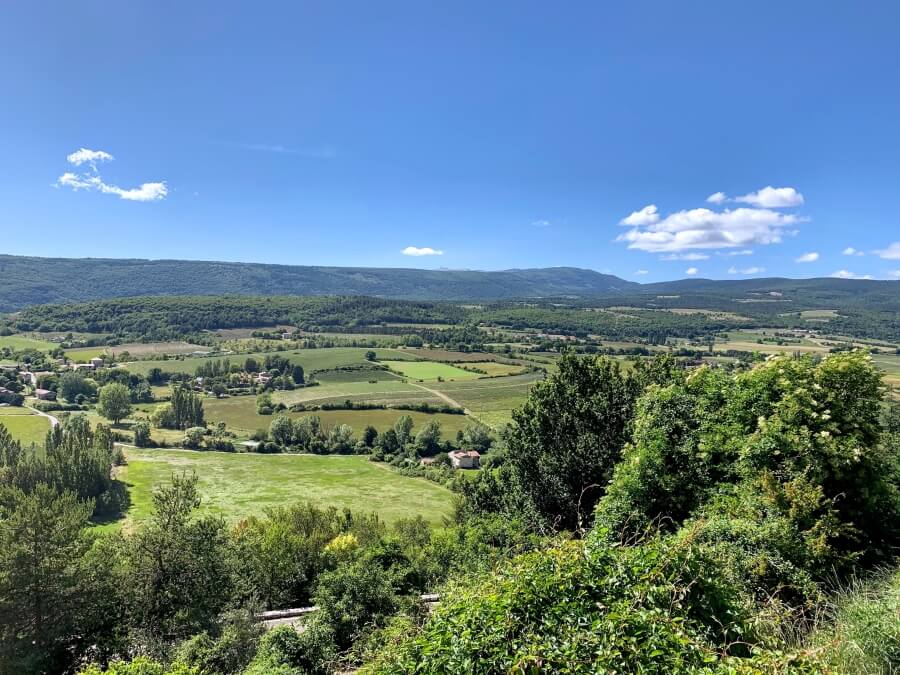
The French countryside is moving again. But it is moving differently depending on where you look.
A bientôt,
 Adrian Leeds
The Adrian Leeds Group®
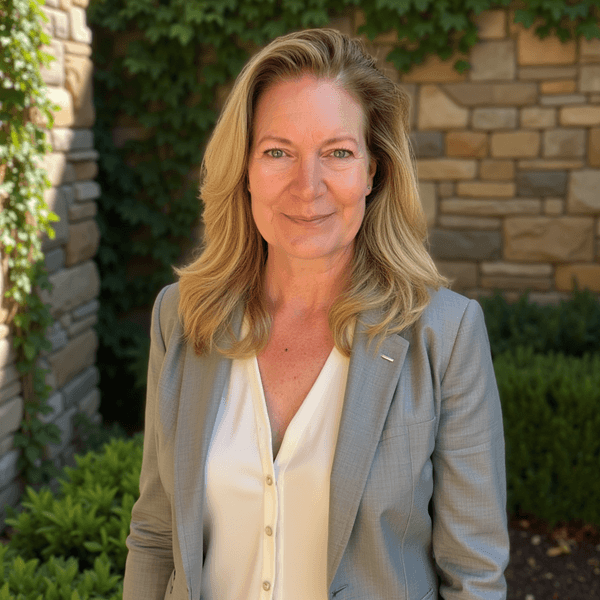 P.S. For years, you’ve come to us with a dream: France. Not just Paris. Not just Nice. But France—the villages, the countryside, the places where life slows down and becomes something altogether different. And now we can find your home anywhere in France. Which is exactly why we’ve created something new. We’ve officially launched a new division dedicated to helping you live and invest anywhere in France. And we’re doing it the only way we know how. The right way—with the right person leading it. Jennifer Parrette worked with us for years in the Alpes-Maritimes department until she moved away to southwestern France and left a gaping hole in our hearts! She now heads the division to make your dreams of living in France come true. She brings more than a decade of real estate experience—and something even more valuable…she’s lived it.
Contact us now to learn more about living anywhere in France you desire!
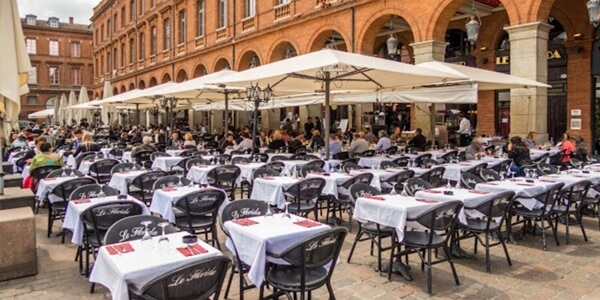 P.P.S. We’re off to discover Toulouse! Join Jennifer Parrette and me in Toulouse for a meet-up at the Grand Café Le Florida, a “brasserie traditionnelle” since 1874 in Toulouse on Sunday, June 14th at 5 p.m. for drinks (or whatever you choose to order) and fun conversation! Here’s the Google map to find it. This is a chance to get to know one another and for me to hear what you love (or don’t love) about living in Toulouse! Please reserve in advance. See you there!

Let Us create a custom strategy for you
You can live or invest in France-now.
Property for sale
what's happening
Check out upcoming events, conferences, or webinars. Join us!
GET FINANCING
Learn about French Property Loan Information.

Read & Subscribe
Dive into more by reading the Adrian Leeds Nouvellettre®
Better yet, subscribe to both and get the updates delivered to your inbox.

Get started with your dream of owning property in Paris.
Join us on Youtube
Dive into more on how to live, invest & escape to France
Be sure to subscribe!
To read more, click the links below.