


Weekly insights about property in France!
Subscribe and don't miss an issue!
France Is Moving Closer: What TGV Expansion Means for Expats
Volume XXIV, Issue 21

By Jay Corless, edited by Adrian Leeds
France has always had a way of feeling both grand and intimate. From Paris, you can be in Bordeaux, Lyon, Avignon, Strasbourg, Nice or Marseille in just a few hours—arriving in a completely different France, with its own light, food, accent, architecture, and rhythm of life.
That is the magic of this country. France is not one place. It is many different Frances.
And increasingly, what connects them is the Train à Grande Vitesse—TGV.
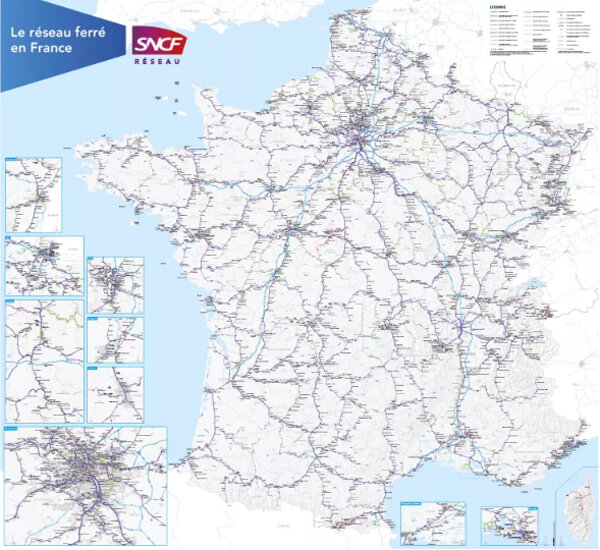
Rail lines throughout France
For North Americans thinking about living, renting, buying, or retiring in France, high-speed rail is not just transportation. It is lifestyle infrastructure. It shapes whether a second home feels practical, whether a regional city feels connected, and whether life outside Paris still allows easy access to the capital, airports, business, culture, and the rest of Europe.
France is now entering a new phase of high-speed rail development. It is not simply a matter of building brand-new lines everywhere. The story is more subtle: new infrastructure in the Southwest and along the Mediterranean, more capacity on existing lines, new-generation trains, more competition, and a stronger European rail network.
The biggest project to watch is the Ligne Nouvelle du Sud-Ouest, which would extend the high-speed network from Bordeaux toward Toulouse and Dax, with future links toward Spain. The project aims to bring Paris–Toulouse down from about 4h10 to around 3h10, and Bordeaux–Toulouse from about 2h01 to roughly 1h05. For Toulouse, this could be transformative. Bordeaux changed dramatically when it became two hours from Paris. Toulouse may be next.
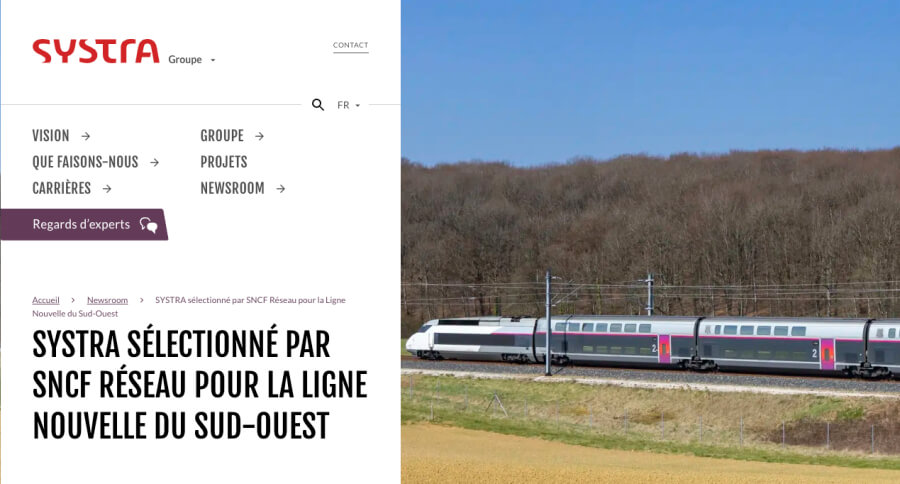
The Southwest project is also controversial. Opponents cite environmental concerns, biodiversity loss, forest impact, and cost. Supporters argue that the project will shift travel from road and air to rail, while freeing existing lines for regional trains and freight. As with so many things in France, the debate is not only technical. It is about landscape, ecology, public money, and the future of regional life.

Another major project is the Ligne Nouvelle Montpellier–Perpignan, the long-discussed missing link along the Mediterranean corridor. This line is intended to improve rail capacity between Montpellier, Béziers, Narbonne, Perpignan, and eventually Spain. For expats, this matters because Occitanie already offers so much of what people dream about: sun, markets, vineyards, sea access, Roman and medieval history, and often better value than Paris or the Côte d’Azur. Better rail makes that lifestyle more practical.

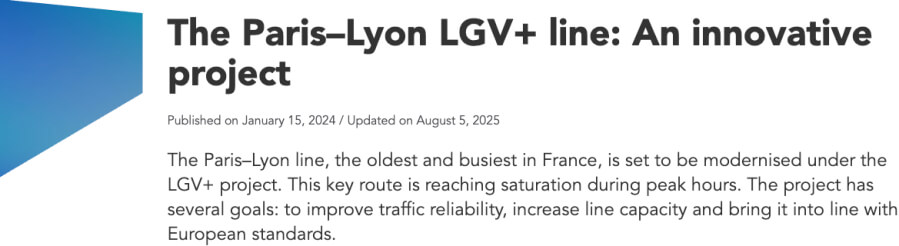
Not all expansion means a new track. On the Paris–Lyon line, France’s busiest high-speed corridor, the SNCF Réseau (network) is working on the LGV+ project, which aims to increase peak capacity from 13 to 16 trains per hour in each direction by 2030. This may sound technical, but it matters. Paris–Lyon is the backbone of the French high-speed network, feeding routes toward the Alps, Provence, the Rhône Valley, and the Mediterranean.
The trains themselves are changing, too. The new TGV M, also called the new TGV INOUI, will offer up to 740 seats—about 20 percent more than the current generation—and improved energy performance. SNCF has also ordered additional trainsets (complete trains) for future France–Belgium service, while Eurostar is investing in new high-speed trains for service across France, Belgium, Germany, the Netherlands, and the UK.
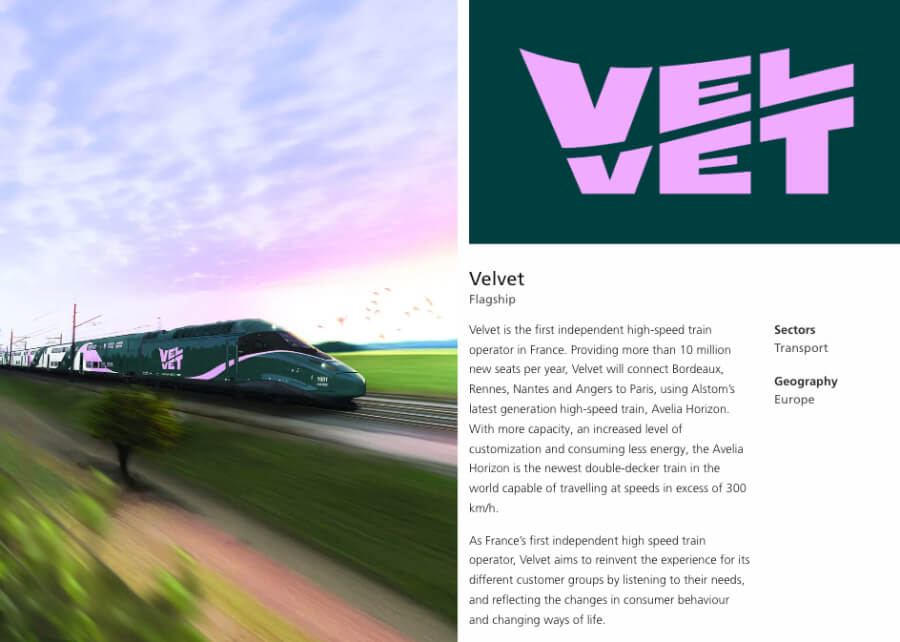
There is also a new competitive landscape. Trenitalia already operates in France, and Velvet—formerly Proxima—plans to become France’s first independent high-speed operator, connecting Paris to Bordeaux, Rennes, Nantes, and Angers. More operators may mean more seats, more service options, and perhaps more pressure on prices.
For expats, the lesson is simple: the TGV is changing the map of possibilities.
A village is not necessarily remote if it has good access to a TGV station. A regional city is not provincial if Paris, Brussels, Lyon, Bordeaux, Barcelona, or Marseille are within easy reach. A second home does not have to mean isolation. Retirement in France does not have to mean giving up cultural life, travel, or connection. Of course, the train is only one part of the equation. Local Transport Express Régional service (TER), buses, taxis, medical access, shops, schools, markets, internet, and year-round village life still matter enormously. But rail changes the conversation.
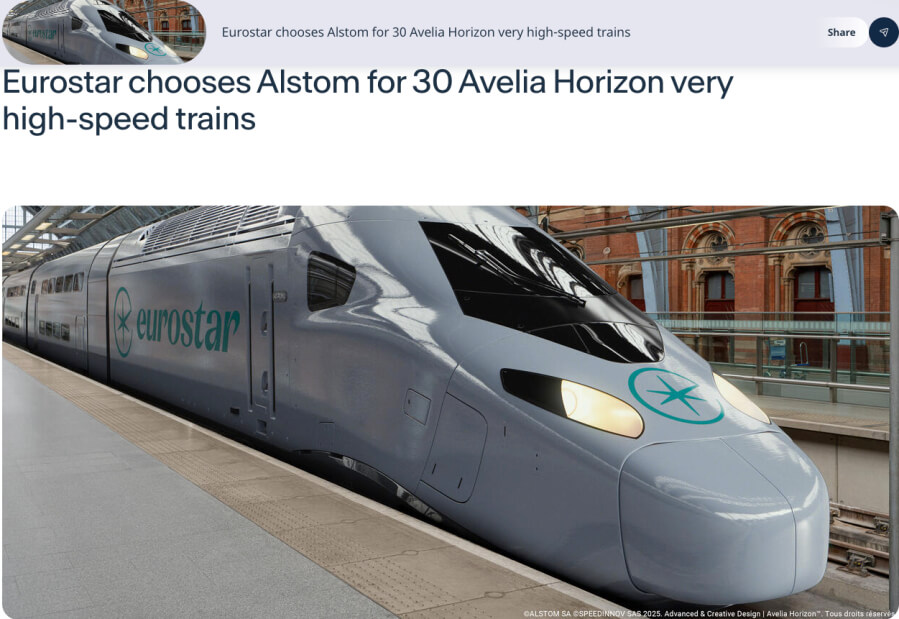
The question is no longer simply: “Where in France do I want to live?” The better question may be: “What kind of France do I want within reach?” Do you want Paris at your doorstep? Bordeaux two hours away? Toulouse newly connected? Montpellier on the Mediterranean arc? A village in the Southwest that may become more accessible? A pied-à-terre in Lyon, the great crossroad between Paris, the Alps, and Provence?
France is becoming both larger and smaller at the same time. Larger, because more regions are entering the imagination of international buyers and renters. Smaller, because the train keeps compressing the distances. That is the real promise of the TGV. It does not erase geography. It makes geography livable.
Download the latest SNCF train and TGV map.
 To learn more about the importance of France’s train network, at 1 p.m. Eastern time TODAY, during a webinar, Jennifer Parrette and I will be discussing “The Best Places to Live and Why” so that you can “Get to Know the Rest of France.” This is your opportunity to take a walk-through of our top spots to live in France outside of Paris and Nice—and learn more about how the Adrian Leeds Group new Regional Division can help you. Be sure to register so that you have full access to the event. Visit our website for more information or register directly, now.
A bientôt,
 Adrian Leeds
The Adrian Leeds Group®
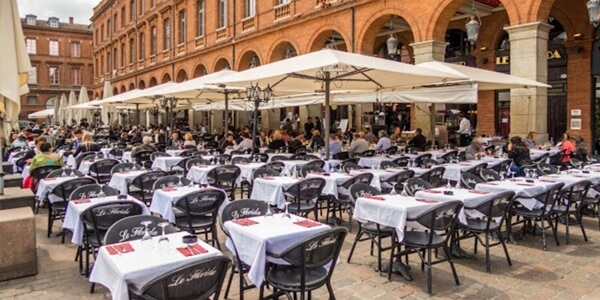 P.S. Join Jennifer Parrette and me in Toulouse for a meet-up at the Grand Café Le Florida, a “brasserie traditionnelle” since 1874 in Toulouse on Sunday, June 14th at 5 p.m. for drinks (or whatever you choose to order) and fun conversation! Here’s the Google map to find it. This is a chance to get to know one another and for me to hear what you love (or don’t love) about living in Toulouse! Please reserve by emailing me.

Let Us create a custom strategy for you
You can live or invest in France-now.
Property for sale
what's happening
Check out upcoming events, conferences, or webinars. Join us!
GET FINANCING
Learn about French Property Loan Information.

Read & Subscribe
Dive into more by reading the Adrian Leeds Nouvellettre®
Better yet, subscribe to both and get the updates delivered to your inbox.

Get started with your dream of owning property in Paris.
Join us on Youtube
Dive into more on how to live, invest & escape to France
Be sure to subscribe!
To read more, click the links below.