


Weekly insights about property in France!
Subscribe and don't miss an issue!
What You Own, What You Share, and Why It Matters
Volume XXIV, Issue 9

By Jay Corless, edited by Adrian Leeds
This overview is drawn from a practical French guide, issued by the Chambre de Notaires de Paris on “copropriété” (homeowner association), the shared-ownership system that governs most apartment buildings in France. While the subject can feel technical at first, the guide does a helpful job of breaking it down into clear, everyday questions: 1) what you truly own, 2) what belongs to the building collectively, 3) what requires approval before you renovate, and 4) what matters when it’s time to sell. For North American owners especially, it’s a useful reminder that buying in France often means joining not just a building, but a small legal and administrative community.
Buying an apartment in France usually means buying into a shared-ownership building where you own your private unit, but you also co-own the building’s common elements with everyone else. Your “lot” is therefore a two-part package: your private space (the apartment, a cellar, a parking spot, etc.) plus a defined share of the common parts, expressed in “tantièmes” (ownership shares used for voting and cost allocation). (Source)

That shared dimension is what surprises many North American owners. “Private” does not always mean “do whatever you want.” The building is governed by a foundational document, the “règlement de copropriété,” which sets the rules for how apartments may be used (residential, office, commercial), what changes are allowed, and how the community makes decisions. The guide emphasizes that some rights, like building rights tied to the land, belong to the copropriété as a whole, not to one owner acting alone. (Source)
Day-to-day, the copropriété functions through a simple governance structure. The “Assemblée Générale” (General Assembly, “AG”) is where owners vote (at least annually) on budgets, the appointment of the “Syndic,” and major works. The Syndic is the building’s executive and managing agent, carrying out decisions, maintaining the property, and managing urgent issues, while the “conseil syndical” (board of directors) acts as an owners’ oversight body that supports and monitors the syndic. Decisions don’t all pass by a simple 50% vote: depending on the topic, higher thresholds may apply under the July 10, 1965 law (Articles 24, 25, 26), especially when a decision affects the building’s structure or owners’ rights. (Source)
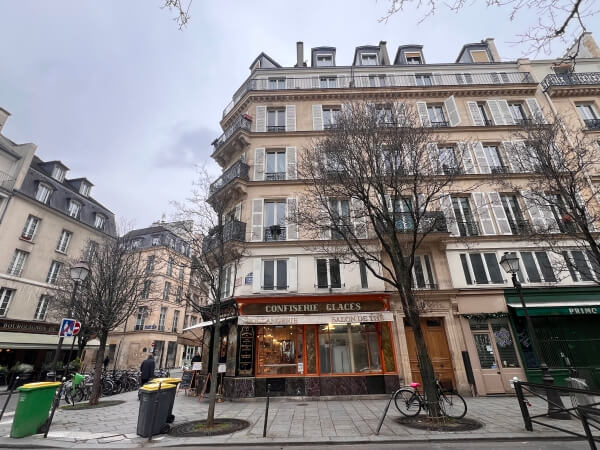
Where this becomes very real is renovations. The guide’s key message is: before doing work, determine whether it affects common parts or the building’s exterior appearance. If your changes are strictly internal and don’t impact shared elements or the exterior look, you can often proceed, provided you still respect the building’s rules, its intended “destination,” and your neighbors’ rights (noise and nuisance in particular). But if your project touches anything shared (structure, slabs, common pipes/risers, collective heating systems) or alters the exterior (windows, balcony enclosures, façade elements), you typically need a vote at the AG, and sometimes separate urban-planning approval as well. Proceeding without authorization can expose you to a demand to restore the original condition at your expense. (Source)
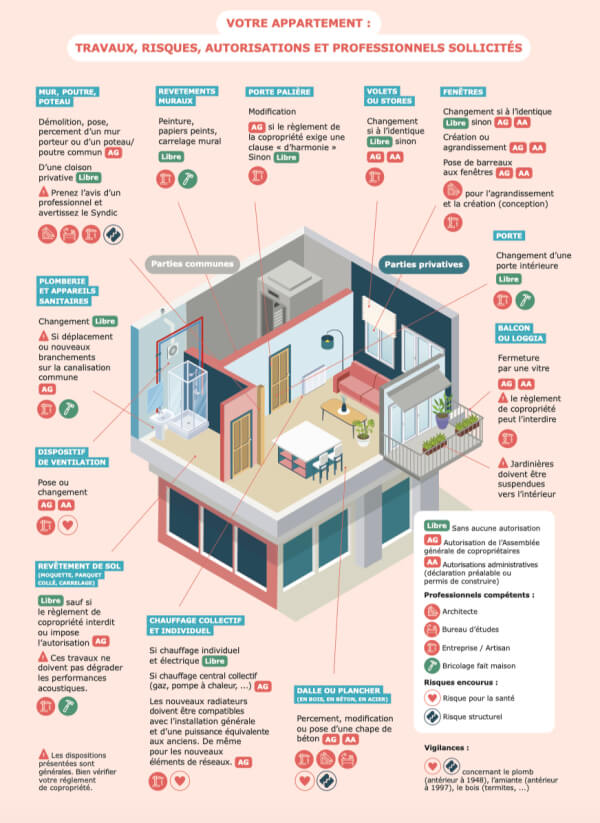
The guide includes practical examples owners run into all the time: enclosing a balcony often requires both copropriété approval and administrative authorization; changing a front door or windows can require approval if the building rules impose uniformity; structural changes are firmly in “AG territory;” and even “simple” interior choices, like new flooring, can become contentious if they worsen sound transmission or if the “règlement” requires prior permission. It also flags typical older-building constraints (lead, asbestos, timber issues) that can complicate renovation planning. (Source)
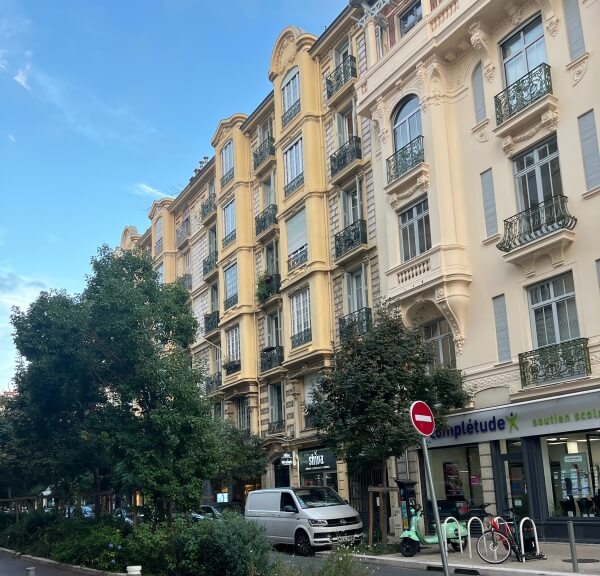
Finally, copropriété matters enormously at resale. Selling isn’t just about your apartment; it’s also about the building’s governance and finances. The seller must provide a substantial set of copropriété documents, rules, building information, AG minutes, and financial disclosures such as the “pré-état daté” (a financial snapshot of the seller’s situation with the condominium association before signing the pre-sale agreement) so buyers can assess pending works, budgets, and the building’s overall health. A core point for owners is that voted works and calls for funds have timing consequences: depending on when the funds are called and how the sale is drafted, the seller may be responsible for certain payments even if the works occur later (unless the deed allocates costs differently). (Source)
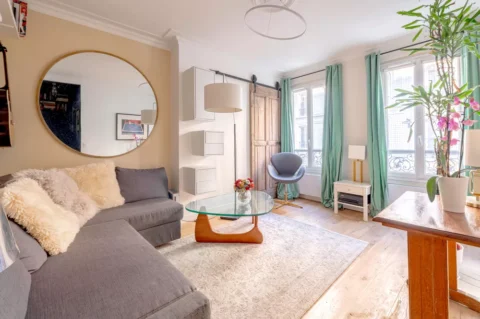
The takeaway is simple: in a copropriété, your apartment is private property, but the building is a shared system. If you read the “règlement” early, plan renovations around the AG calendar, and treat copropriété documentation as essential when buying or selling, you avoid the most common, and most expensive surprises. (Source)
A bientôt,
 Adrian Leeds
The Adrian Leeds Group®
 P.S. When you hire us to find you a property to purchase, we do all the due diligence for you, so that you understand every aspect of the property and the purchase. And we’re going to ensure that you see all the negative aspects of the property—not just the positive attributes that the selling agent will gladly point out! We act as your “insurance policy.” Learn more about how we save you time, money, anxiety and give you the confidence that you’re making the best decision on our website.

Let Us create a custom strategy for you
You can live or invest in France-now.
Property for sale
what's happening
Check out upcoming events, conferences, or webinars. Join us!
GET FINANCING
Learn about French Property Loan Information.

Read & Subscribe
Dive into more by reading the Adrian Leeds Nouvellettre®
Better yet, subscribe to both and get the updates delivered to your inbox.

Get started with your dream of owning property in Paris.
Join us on Youtube
Dive into more on how to live, invest & escape to France
Be sure to subscribe!
To read more, click the links below.